
10 Things to Look for Before Renting a Podcast Studio in Los Angeles
PAGE
By PAGE Editor
Los Angeles has become one of the more active cities in the country for podcast production. The combination of a large media industry, a dense concentration of creative professionals, and a well-established audio culture has made the demand for professional recording space both real and competitive. For anyone preparing to record — whether it's a first episode or a continuation of an established show — the studio you choose has a direct effect on the quality of your output, the efficiency of your sessions, and your ability to maintain a consistent production schedule.
Renting a studio is not a minor logistical decision. The wrong environment creates problems that editing cannot fully correct. The right environment, on the other hand, allows hosts, guests, and producers to focus entirely on the conversation rather than managing technical difficulties or working around environmental noise. Before committing to a space, there are ten factors worth evaluating carefully — each connected to how a session will actually perform, not just how a space looks in photographs.
1. Acoustic Treatment and Sound Isolation
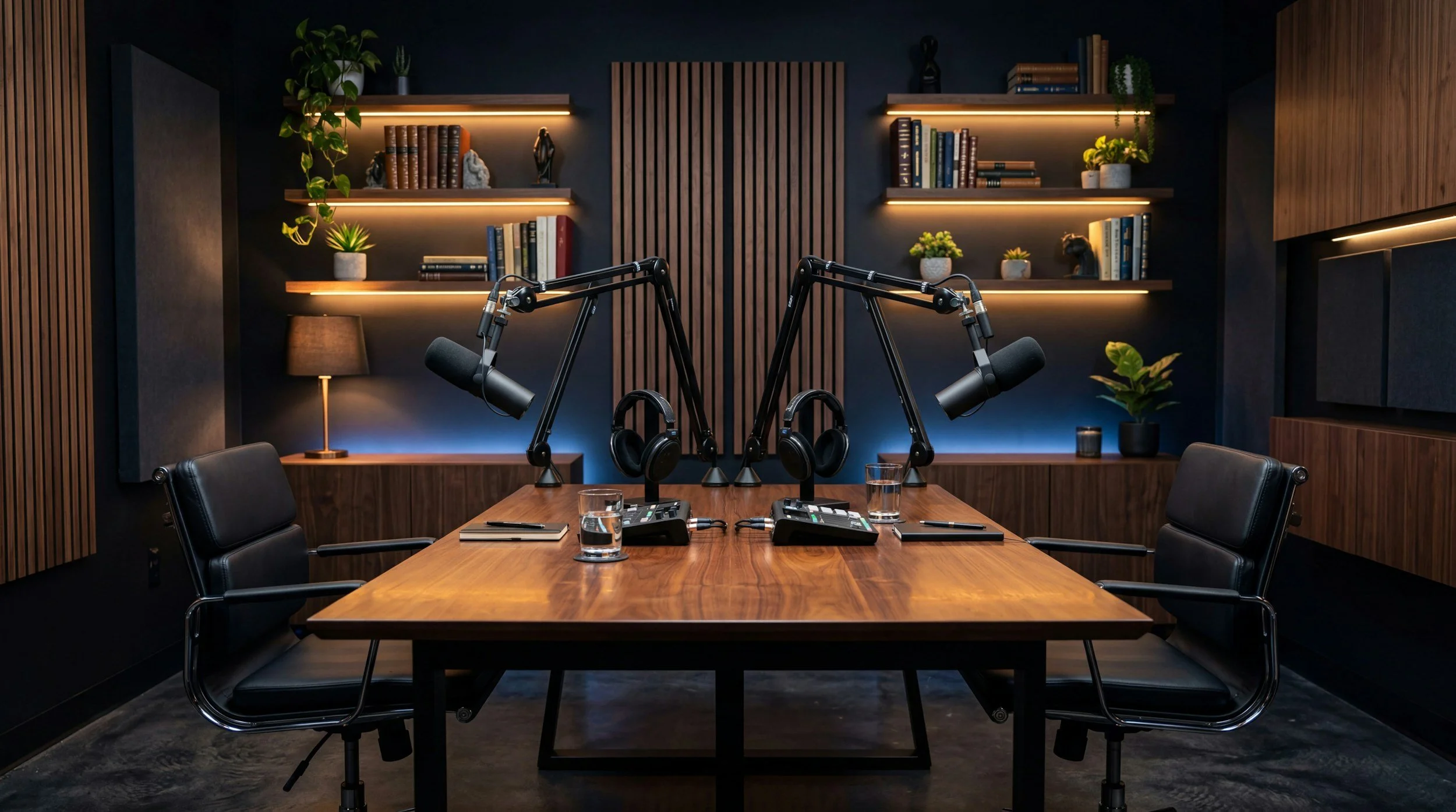
Acoustic quality is the foundational requirement of any legitimate podcast studio. When evaluating a podcast studio rental los angeles option, the first thing worth assessing is how the room is treated acoustically and how well it isolates from external sound sources. These are two separate concerns, and both matter independently.
Treatment vs. Isolation
Acoustic treatment refers to materials within the room — panels, foam, bass traps — that control how sound behaves inside the space. Untreated rooms produce reflections and reverb that attach themselves to every recorded word. Isolation, by contrast, refers to how effectively the room blocks outside noise from entering the recording environment. In Los Angeles, where ambient noise from traffic, HVAC systems, and neighboring businesses is common, isolation is particularly relevant. A room that looks clean but sits above a busy street may produce recordings full of low-frequency rumble that's difficult or impossible to remove in post-production.
2. Equipment Quality and Availability
Not every podcast producer travels with their own microphones, interfaces, and monitoring equipment. Most studio rentals include some level of equipment provision, but what's included varies considerably from one space to the next. The difference between a studio with professional-grade microphones and one with consumer-grade alternatives will be audible in the final recording.
What to Clarify Before Booking
Ask specifically about microphone models, the audio interface used, whether headphones are available for all participants, and whether a mixing board or software-based routing is in use. Also confirm whether the equipment is regularly maintained and how issues are handled mid-session if something fails. Equipment failure during a guest recording session is not just inconvenient — it can compromise a relationship with an invited guest and force a rescheduled session that disrupts both parties' schedules.
3. Room Capacity and Configuration
Podcast formats vary. A solo host recording a monologue has different needs than a panel discussion involving four guests. Studios are often designed around a particular configuration, and trying to adapt a two-person setup for a four-person session typically results in compromised audio positioning, crowded sightlines, and increased background noise from participants shifting in their seats.
Planning Around Your Format
Before booking, confirm the maximum number of microphone inputs the studio supports simultaneously, whether seating arrangements can be adjusted, and whether additional participants can be accommodated without creating acoustic problems. A room that works well for two people may not maintain its sound quality when three additional people are seated around a table. This is worth testing or confirming before committing to a recurring booking arrangement.
4. Location and Accessibility
In a city as spread out as Los Angeles, location has operational consequences beyond convenience. If your guests are coming from different parts of the city, the studio location affects how reliably they arrive on time and how much friction is involved in coordinating sessions. A studio in a central or well-connected area reduces scheduling complications and makes it more practical to bring in external guests without imposing significant travel burdens on them.
Parking and Transit Considerations
Confirm whether the building offers dedicated parking, validated parking, or proximity to public transit. Sessions that start late because a guest is circling for street parking introduce stress before the recording even begins. Studios in areas with accessible infrastructure allow both hosts and guests to arrive composed, which affects the tone of the session itself.
5. Booking Flexibility and Scheduling Systems
Production schedules are not always predictable. Guest availability shifts, episodes get rescheduled, and production timelines adjust. A studio that offers rigid booking windows, penalizes last-minute changes heavily, or operates on a system that makes reschedules difficult creates friction that compounds over time — particularly for producers maintaining a consistent release schedule.
Understanding Cancellation and Rescheduling Policies
Review the studio's cancellation policy, advance booking requirements, and whether off-peak hours are available for sessions that don't require a full production team. The ability to book a half-day session on short notice, or to shift a booking by a day without penalty, has real value when operating within a dynamic content production workflow.
6. Studio Staff and Technical Support
Some studios operate fully unattended, relying on clients to manage their own setup, recording, and breakdown. Others provide a technical operator or engineer who manages equipment throughout the session. The value of in-room support depends on your experience level and the complexity of your production needs.
When Technical Support Matters Most
For producers who are new to the format, or who are bringing guests unfamiliar with microphone positioning and headphone monitoring, having someone present who can adjust levels and resolve technical issues in real time prevents wasted time and unusable recordings. Even for experienced producers, having a dedicated technical operator allows the host to focus entirely on the content of the conversation rather than managing the recording environment simultaneously.
7. Recording and Delivery Formats
The format in which your audio is recorded and delivered affects how much work your editor or post-production team will need to do afterward. Studios that record all participants on separate tracks give editors far more control in post. Studios that record a single mixed track offer less flexibility in correcting issues after the fact.
Multitrack Recording and File Delivery
Confirm whether the studio records each participant on an isolated channel, what file format is used, and how recordings are delivered after the session. Some studios provide immediate file transfer via cloud link; others require manual handoff or on-site file copy. Knowing this in advance allows you to plan your post-production workflow without unexpected delays between the recording session and the editing stage.
8. Internet Connectivity and Remote Guest Capabilities
Remote guest recording has become a standard part of podcast production. Many episodes feature guests who are not physically present in the studio, participating instead through video conferencing or dedicated remote recording platforms. According to research published by the Pew Research Center's journalism division, distributed media production formats have expanded significantly, reflecting how content workflows now routinely span multiple locations simultaneously.
What to Verify Before Recording Remotely
Confirm that the studio has a stable, dedicated internet connection — not shared consumer-grade bandwidth that degrades under load. Ask whether the studio supports platforms commonly used for remote podcast recording, and whether their technical setup integrates cleanly with those platforms for capturing both local and remote audio at the highest possible quality. Connectivity problems during a remote session create audio artifacts that reduce production quality regardless of how well the local environment performs.
9. Cleanliness, Professionalism, and Environment
The physical condition of a studio communicates something about how it is managed and maintained. A well-maintained space indicates that equipment is cared for, that the operator takes bookings seriously, and that the environment is stable. A studio with worn-out furniture, visible dust on equipment, or disorganized cable management is more likely to experience technical issues and less likely to project a professional atmosphere to visiting guests.
The Impression the Space Creates
For hosts who invite notable guests or record video alongside their audio, the visual and physical quality of the studio affects the impression it creates on participants. Guests who arrive at a well-maintained, professionally organized space are more comfortable and more likely to engage openly during the recording. The environment shapes the energy of the session in ways that are subtle but consistent across bookings.
10. Transparent Pricing and What's Included
Studio pricing structures differ significantly. Some quote an hourly rate that covers the room only, with equipment, technical support, and file delivery billed separately. Others bundle services into a flat session rate. Without clarity on what is included, the actual cost of a session can differ considerably from the quoted rate.
Avoiding Unexpected Costs
Request a clear breakdown of what is included in the base rate, what is billed as an add-on, and whether there are minimum booking durations. Understand whether overtime is billed at a standard or elevated rate, and whether cancellations within a certain window result in partial or full charges. Pricing transparency is not just about budget management — it's an indicator of how the studio communicates with clients more broadly, which matters when issues arise during a session or when adjustments to a booking are needed.
Closing Thoughts
Choosing a podcast studio in Los Angeles is a production decision, not just a logistical one. The environment where you record shapes the audio quality of every episode, the experience of every guest you invite, and the reliability of your release schedule. Each of the ten factors covered here connects directly to outcomes that affect the professionalism and consistency of your show.
The market for podcast studio rental los angeles includes a range of options — from basic room rentals to fully staffed production environments. Knowing what to evaluate before making a commitment means you arrive at your first session with realistic expectations, a clear understanding of what you're paying for, and confidence that the space will support the work you're there to do. Take the time to verify each of these factors before signing a booking agreement. The quality of your recordings, and the ease of your production workflow, will reflect that preparation from the first episode onward.
HOW DO YOU FEEL ABOUT FASHION?
COMMENT OR TAKE OUR PAGE READER SURVEY
Featured



Digital rewards strengthen luxury through practical service, selective access, and thoughtful personalization that keeps each purchase valuable for longer.