
Cosmetic-Grade vs Research-Grade Peptides: Why the Same Molecule Has Two Standards
PAGE
By PAGE Editor
Quick answer: "Copper Tripeptide-1" on an ingredient list and "GHK-Cu" on a research vial are the same molecule: the tripeptide glycyl-histidyl-lysine bound to a copper ion. The difference is the standard each one is made and documented to. Cosmetic grade answers to cosmetic regulations, research grade to laboratory specifications, and pharmaceutical grade to drug manufacturing rules.
Search for GHK-Cu cosmetic grade and you'll find the phrase on ingredient boxes, raw-powder listings and lab catalogs alike, often next to a purity figure. So does the label tell you anything about what's in the container? It does, once you know which rulebook it points to.
Here's the short version of what follows: one molecule, two names, three grades, a blue color with a simple chemical cause, and a certificate that shows what a given batch actually contains.
For Research Use Only. Not for use in diagnostic or therapeutic procedures.
Same Molecule, Two Names: GHK-Cu and Copper Tripeptide-1
GHK-Cu and Copper Tripeptide-1 are two names for one compound. "GHK-Cu" is the chemist's shorthand, built from the one-letter codes for glycine, histidine and lysine plus the symbol for copper. "Copper Tripeptide-1" is its INCI name, the standardized label cosmetic ingredient lists use worldwide.
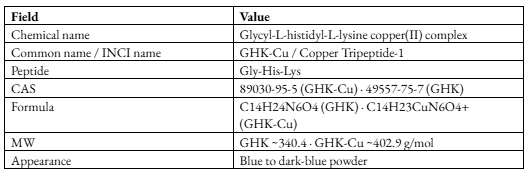
The peptide was first isolated from plasma by biochemist Loren Pickart in 1973. Warren Ladiges, a University of Washington professor who worked with Pickart, summed up its origin for NPR in September 2026: "It's a naturally occurring peptide."
Some suppliers list GHK-Cu at 403.9 g/mol. The extra unit is one hydrogen atom: GHK releases it as copper locks on, and 403.9 counts it anyway. Either figure refers to one and the same molecule.
One naming trap to know about: Copper Tripeptide-3 is a different molecule. It's the name commonly used for AHK-Cu, where alanine replaces glycine at the first position. Same metal, different peptide, different CAS number.
Why Is GHK-Cu Blue?
The blue comes from copper. A copper(II) ion held by the peptide soaks up red and orange wavelengths of visible light, so what reaches the eye is the blue that's left over. Strip the copper away and GHK is a plain white powder.
The binding happens at three nitrogen atoms: the free amino group of glycine, a nitrogen in the peptide backbone, and a nitrogen in histidine's ring. How tightly those atoms hold the copper sets the exact shade, which is why GHK-Cu solutions and powders range from sky blue to deep violet-blue.
So color carries real information, but only up to a point:
What blue confirms: copper is present and bound to something.
What blue can't confirm: purity, the peptide-to-copper ratio, or whether the peptide is GHK at all. Plain copper salts such as copper sulfate are blue too, and a batch with excess unbound copper can look just like a correct one.
That's why every grade backs up appearance with instrument data. The color is the first glance, and the batch report does the rest.
What Do "Cosmetic", "Research" and "Pharmaceutical" Grade Mean?
A grade describes the rulebook a material is made and documented under. It isn't a quality ranking. Cosmetic grade means the ingredient is intended for finished cosmetics, research grade means it's sold as a laboratory reagent, and pharmaceutical grade means it meets drug manufacturing rules.
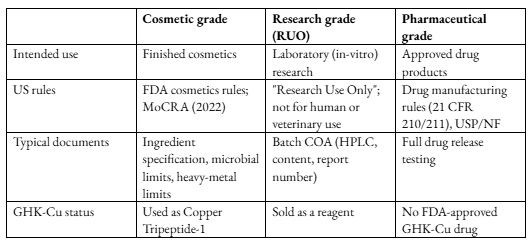
The cosmetic column is still being filled in. The Modernization of Cosmetics Regulation Act of 2022 (MoCRA) told the FDA to write manufacturing rules for cosmetics, with a proposed rule due by December 2024. As of 2026 that rule hadn't been issued, so cosmetic ingredient suppliers lean on industry standards and their own specifications.
The paperwork looks different as well. A cosmetic ingredient usually ships with a specification sheet that lists the INCI name, appearance, assay range and contamination limits for that supplier's product. A research reagent comes with a batch certificate tied to one lot and one test date. A drug ingredient carries release testing against an official monograph, signed off by a quality unit before anyone can use it.
Is "pharmaceutical-grade GHK-Cu" a real thing?
Not in the strict sense. Pharmaceutical grade describes material made for an approved drug or one with an official compendial monograph, and no FDA-approved drug contains GHK-Cu. The FDA has said GHK-Cu will go before the Pharmacy Compounding Advisory Committee at a meeting expected before February 2027. A committee vote is advice to the agency, and it doesn't create an approved product.
Is research grade "better"?
No. The two grades answer to different standards and serve different purposes. Research-grade GHK-Cu is a laboratory reagent, not a cosmetic, and it isn't sold for use on skin. Cosmetic-grade material is made for formulating finished products. A high HPLC figure on a research certificate doesn't turn a reagent into a cosmetic ingredient, and the reverse holds too.
Same Molecule, Different Checks: What Each Standard Tests
Each standard asks its own questions about the same powder. Here's what the common tests actually measure:
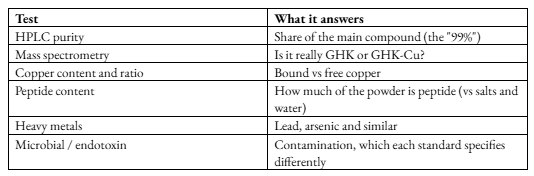
The table explains a common mix-up. People read "99% pure" as "99% GHK-Cu by weight," but HPLC purity only compares the main peak with the other peaks the detector sees. Water, counter-ions and free copper don't show up as peptide peaks, so a 99% purity result can come with a peptide content well below 99%.
Copper deserves a closer look too. GHK binds copper one to one, so a well-made batch has the two in balance. Too little copper leaves free GHK; too much leaves loose copper ions that HPLC purity won't flag. Only a copper assay or mass spectrometry answers that question.
Peptide content is the figure listings leave out most often. It's measured separately, usually by quantitative HPLC against a reference standard or by nitrogen analysis, and it explains why two containers with the same purity figure can hold different amounts of actual peptide.
GHK-Cu by mass: copper 15.8% (63.5 Da) and GHK 84.2% (339.4 Da), with a 1:1 copper-to-peptide ratio, 24.8 micromoles and 1.58 mg copper in 10 mg of GHK-Cu.
Contamination tests follow the end use. Drug rules set strict microbial and endotoxin limits, cosmetic suppliers follow microbial limits set for personal-care products, and research reagents usually list these tests only when a lab requests them.
Comparing pharmaceutical, cosmetic and research grades by test: identity and purity, microbial (USP 61/62, ISO 17516), endotoxin (USP 85) and metals (USP 232, FDA 10 ppm lead guidance), with research-grade extras on request.
How to Read a Research-Grade GHK-Cu Certificate
Start with the report number, and search for it on the website of the lab that ran the test. Then check four things: the compound name, the HPLC result with its chromatogram, the test date, and which tests the report includes and which it leaves out.
Some research suppliers, such as Cellugenix, publish a report number for each batch, so a lab can confirm the document at its source instead of relying on a supplier's PDF. If the lab's database returns a match, the figures on the page belong to that one lot.
Its GHK-Cu batch certificate, report CEP-GHK-50-112625 from Testides, reports HPLC purity (see the batch result) and content. Like many research certificates, it doesn't list copper ratio, mass-spec identity, or endotoxin. Labs that need those answers can request them as added tests, and the report date tells you how recent the data is.
Reading a certificate this way turns a grade label into something you can check. Name, number, method, and date either line up with the batch in hand or they don't.
Red Flags in "Grade" Claims
A grade claim is only as good as the document behind it. These signs suggest the label is doing more work than the paperwork:
A purity figure with no report. "99% pure" with no report number or chromatogram can't be checked.
"Pharmaceutical grade" GHK-Cu. With no approved GHK-Cu drug, the term has no regulatory basis for this molecule.
One listing sold as both "topical and injectable". Cosmetic and drug standards cover different routes, and a single powder can't meet both by default.
DIY recipes sold with raw powders. A raw-material listing that comes with mixing instructions is selling a use, and its grade label says little about the powder itself.
None of these proves a product is poor. Each one means the claim needs a document behind it before anyone relies on it.
Frequently Asked Questions
Is Copper Tripeptide-1 the same as GHK-Cu?
Yes. Cosmetic ingredient lists use the INCI name Copper Tripeptide-1, while chemists write GHK-Cu. Both describe glycyl-histidyl-lysine bound to copper(II), CAS 89030-95-5. Copper Tripeptide-3 is a different compound.
Why is GHK-Cu blue?
The bound copper(II) ion absorbs red-orange light, so the compound looks blue. GHK without copper is white. Blue confirms copper is present but says nothing about purity or the copper-to-peptide ratio.
What does "research grade" mean?
Research grade means a compound is sold as a laboratory reagent for in-vitro research, labeled Research Use Only, with human and veterinary use excluded. Its quality is shown through a batch certificate, typically with HPLC purity, content and a report number.
Is there a pharmaceutical-grade GHK-Cu?
Not in the regulatory sense. No FDA-approved drug contains GHK-Cu, and pharmaceutical grade applies to material made under drug manufacturing rules. The FDA plans to take GHK-Cu to its compounding advisory committee before February 2027, and that review is advisory.
How can I check that a GHK-Cu certificate is real?
Enter the report number in the search tool of the lab that issued it, and treat the supplier's copy as a pointer. Then match the compound name, batch, test date and methods to the vial. A certificate that can't be found at the source can't be verified.
Closing Thoughts About Research Grade VS Cosmetic Grade GHK-Cu
GHK-Cu and Copper Tripeptide-1 are one molecule with two names, made to three different standards. The grade tells you which rulebook applies: cosmetic, laboratory or drug. The batch report tells you what's actually in the container, and only when its number checks out at the lab that issued it.
For Research Use Only. Not for use in diagnostic or therapeutic procedures.
Disclaimer: This article is written for education and isn't medical or skincare advice. Research-grade products are for laboratory research only and aren't cosmetics. GHK-Cu isn't an FDA-approved drug. Facts are dated October 2026.
HOW DO YOU FEEL ABOUT FASHION?
COMMENT OR TAKE OUR PAGE READER SURVEY
Featured


An all-inclusive can go one of two ways. It's either the easiest holiday you'll ever book, or a week of beige buffets and plastic cups you spend the whole flight home complaining about.