
Hidden Plumbing Problems to Check Before Renovating an Older Home
PAGE
By PAGE Editor
An older home's appeal often lies in the details worth keeping: timber trim, generous windows or a kitchen that has grown around family life. Renovation brings a chance to make those rooms work better. It also exposes services that may have been altered several times, sometimes without clear records of what sits behind the walls.
Before choosing the final tiles or booking the cabinet installation, give the plumbing a place in the investigation. A small leak can damage a beautiful finish, while a poorly planned repair can require opening work that has only just been completed. Knowing what needs attention makes it easier to spend the renovation budget in the right order.
Look for the history of water
Staining inside a sink cabinet, softened material around a pipe opening and a persistent musty smell are useful reasons to investigate. They are not enough to identify the source. Water can travel before it becomes visible, and an old stain may remain after a repaired leak.
Ask when the area was last wet and whether its condition changes during fixture use or after rain. Keep photographs and note the dates. A plumbing leak, condensation and water entering through the building envelope need different remedies, even when the resulting mark looks similar.
Do not cover unexplained dampness with new wallboard simply because the surface has dried. The cause matters more than the appearance on the day the contractor visits. Finding it while the room is open can prevent a second round of disruption later.
Assess supply pipes by condition
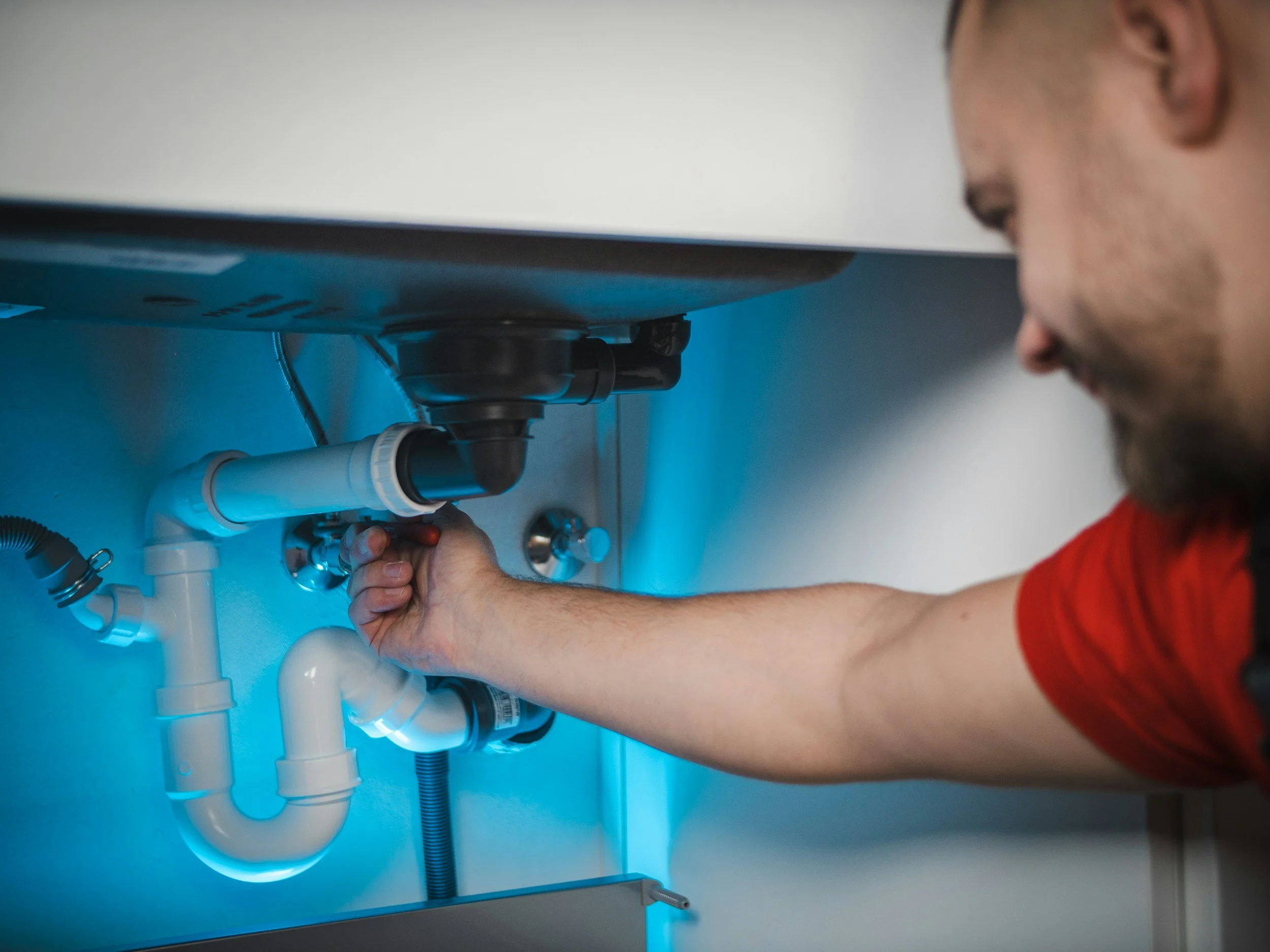
Older homes may contain several pipe materials and a mixture of original work and later repairs. Age is a reason to look carefully, not proof that every pipe needs replacement. Ask the plumber to identify accessible materials, inspect joints and explain the evidence behind any proposed work.
Corrosion, repeated patches and a history of pinhole leaks deserve discussion. So does a valve that is difficult to operate or positioned where new cabinetry will block access. Keep the investigation practical: which parts can be inspected now, which remain concealed, and what uncertainty will remain if the wall stays closed?
Where replacement is justified, coordinate it with the renovation sequence. Opening a wall once for a planned repair is usually less disruptive than returning after painting. That does not mean removing sound pipework simply to make the entire installation look uniform.
Watch how the drains behave
Run through the household's experience before the room is dismantled. Does the basin empty slowly? Does a nearby fixture gurgle when a toilet is flushed? Has the basement floor drain ever backed up? These details can be more informative than a freshly cleaned room during a brief visit.
A new fixture does not correct an existing restriction or a poorly arranged drain connection. If drainage has been unreliable, allow for investigation before approving the final layout. A camera inspection may be useful for some inaccessible drainage problems, but it should be recommended for a reason rather than added automatically.
Also consider access to cleanouts. A drain that can be reached today may become difficult to service once shelves, a vanity or a built-in appliance occupy the same space. Agree on a workable access route before that space is used for storage.
Investigate disappointing water flow
A weak shower or a kitchen tap that slows when another fixture runs can have several explanations. The fault may be local to a fitting, or it may involve the broader supply arrangement. The right investigation distinguishes pressure from available flow and checks what happens during simultaneous use.
Bring fixture specifications to the discussion. A larger shower system, an additional bathroom or a relocated laundry can change demands on the existing plumbing. Checking suitability before buying equipment is more useful than discovering after installation that the desired combination performs poorly.
Before opening walls in a Barrie property, homeowners can use Sureflow's Plumber Barrie service overview to arrange an assessment of the existing system. Share the renovation plan and the symptoms, and ask what can be verified before demolition. The aim is a clear assessment and scope, not an assumption that every concern requires a complete replacement.
Use an opened wall carefully
Once a wall is open, it can reveal plumbing that was impossible to assess from the room. Allow time for the relevant trades to inspect what has been exposed before treating it as ready to cover again. Unexpected connections, signs of leakage or crowded service routes may require a revised plan.
Do not make casual cuts through framing to gain space for a new pipe route. Structural work and service alterations need coordination with the people responsible for them. If unfamiliar materials are uncovered, pause before disturbing them and obtain appropriate advice.
Photograph the finished installation before it disappears behind the new surface. Record valves and service points in a form the homeowner can use later. Those modest records can help a future repair avoid unnecessary exploratory holes.
Separate basement moisture from pipe leaks
Basement renovations deserve particular attention because moisture can come from several directions. A damp wall after heavy rain, water around a supply connection and a drain backup have different implications. Ask for an explanation supported by the pattern and inspection findings rather than a single product presented as the answer to everything.
Resolve the source before adding moisture-sensitive finishes. Discuss the effect of storage and cabinetry on access to valves, floor drains and relevant equipment. A room can look complete while still leaving a service problem difficult to reach.
Plan repairs before the final finishes
Set aside a decision point between opening the room and closing it. Review the findings, confirm which repairs are included and establish whether permits or inspections are needed for the actual work. Keep variations in scope clear so the plumbing and finishing trades are not working from different assumptions.
A successful renovation does not require replacing every old component. It requires understanding the parts that matter, dealing with faults at an accessible stage and preserving the features that make the home worth renovating. The tiles and cabinetry can then be installed with fewer unanswered questions behind them.
HOW DO YOU FEEL ABOUT FASHION?
COMMENT OR TAKE OUR PAGE READER SURVEY
Featured




Digital rewards strengthen luxury through practical service, selective access, and thoughtful personalization that keeps each purchase valuable for longer.