
The Complete AC Tune-Up Service Checklist: What Technicians Should Do in Every Visit
PAGE
By PAGE Editor
Air conditioning systems are expected to perform consistently across seasons that demand the most from them. Yet a significant portion of mid-season failures, inefficient operation, and premature equipment wear can be traced back not to defective equipment, but to maintenance that was either skipped, rushed, or performed without a structured approach. For facility managers, property owners, and service contractors overseeing multiple units, the absence of a reliable, repeatable process creates real operational exposure — higher energy consumption, unexpected breakdowns, and shortened equipment lifespans.
The challenge is not whether to maintain an AC system, but whether the maintenance being performed is complete and consistent. A technician visiting a unit for a routine service call may address the most visible issues while leaving underlying problems untouched — not out of negligence, but because there is no standardized checklist guiding the scope of the visit. This article outlines what a thorough, professional maintenance visit should include, organized by system area, so that every visit produces the same level of care regardless of who performs it.
Why a Structured AC Tune-Up Service Matters Beyond Basic Maintenance
A properly scoped ac tune up service is not simply a cleaning visit. It is a systematic evaluation of every component that affects how the system operates under load — including parts that rarely fail but degrade gradually over time. The difference between a surface-level check and a complete tune-up is the difference between reactive maintenance and reliable performance. When technicians follow a structured scope, they document system condition, identify early-stage problems, and verify that the unit meets performance expectations before peak demand arrives.
For service contractors working across residential and commercial accounts, a defined checklist also protects against liability. If a unit fails shortly after a maintenance visit, documentation of what was inspected and what was found becomes critical. For property and facility managers, consistent service records support warranty claims, regulatory compliance, and long-term capital planning. The value of a structured approach compounds over time — it is not just about what happens during one visit, but what the pattern of visits reveals about a system's trajectory.
Resources like those maintained by the U.S. Department of Energy on central air conditioning reinforce that proper maintenance is one of the most reliable ways to maintain system efficiency and extend equipment life — not a supplemental service, but a core operational requirement.
The Risk of Incomplete Tune-Ups
Incomplete maintenance creates a false sense of readiness. A technician who cleans the filter, checks refrigerant pressure, and leaves may have addressed the two most visible concerns while missing a deteriorating capacitor, a corroded drain line, or an electrical connection that is beginning to arc. Each of these conditions is minor when caught early and significant when it causes a system failure during peak summer heat. The operational cost of that failure — emergency service rates, temporary cooling arrangements, tenant or customer complaints — almost always exceeds the cost of the inspection that would have caught it.
Structured service checklists prevent this by requiring technicians to move through every system area in sequence, not just the areas that show obvious symptoms. They also create accountability. When a technician must document each step, the probability of skipped items decreases substantially.
Electrical System Inspection and Safety Verification
The electrical components of an air conditioning system are among the most consequential areas of any maintenance visit. Capacitors, contactors, wiring terminals, and disconnect boxes are all subject to wear, corrosion, and heat degradation over time. Because electrical failures can be sudden and sometimes dangerous, identifying problems in this area during a scheduled visit is one of the highest-value activities a technician can perform.
Capacitors and Contactors
Capacitors store and release electrical charge to start and run the compressor and fan motors. Over multiple seasons, their ability to hold charge diminishes. A weak capacitor does not always cause an immediate failure — it may cause motors to start slowly or run inefficiently for months before failing entirely. Contactors, which open and close the circuit to the compressor, are subject to pitting and corrosion from repeated switching cycles. A pitted contactor can draw excessive current or fail to make reliable contact, causing intermittent operation or outright failure. Both components should be tested for condition, not simply observed for obvious damage.
Wiring Terminals and Disconnect Boxes
Loose or corroded wiring terminals are a fire and failure risk that visual inspection may miss. Terminals that have worked loose due to vibration or thermal cycling can arc under load, producing heat and creating a path toward component damage or electrical fire. Disconnect boxes should be checked for proper seating, breaker condition, and corrosion on contact points. These are not glamorous checks, but they are among the most practically important ones in the entire service visit.
Refrigerant System Assessment
Refrigerant is the working fluid that makes the heat exchange process possible. A system operating with the wrong refrigerant charge — whether too high or too low — will consume more energy, put additional stress on the compressor, and fail to maintain consistent temperatures. Refrigerant level checks are among the most commonly listed items in any ac tune up service scope, but the manner in which they are performed matters considerably.
Identifying Leaks Before Recharging
Adding refrigerant to a system that has a leak does not solve the underlying problem — it delays it while creating regulatory and cost exposure. A properly conducted refrigerant assessment includes checking for leak indicators such as oil staining around fittings, evaporator coil frost patterns, and pressure readings that are inconsistent with ambient conditions. When a technician adds refrigerant without first identifying whether a leak exists, the added charge will gradually escape, and the system will return to the same degraded state within one or two seasons. Leak detection should precede any refrigerant addition, not follow it.
Coil Cleaning and Airflow Evaluation
The evaporator coil inside the air handler and the condenser coil in the outdoor unit are both heat exchange surfaces. Their ability to transfer heat efficiently depends on physical cleanliness and unobstructed airflow. Over time, both coils accumulate dust, debris, pollen, and biological growth that reduces their effective surface area and insulates them from the air that should be moving across them. Even moderate coil fouling measurably increases energy consumption and reduces cooling capacity.
Evaporator Coil Considerations
The evaporator coil operates in a moist environment because it removes humidity from indoor air as part of the cooling process. This moisture, combined with dust particles carried through the air filter, creates conditions favorable for microbial growth and buildup that can restrict airflow significantly. During a comprehensive tune-up, the evaporator coil should be cleaned with appropriate coil cleaner, and the drain pan and condensate line should be inspected and flushed to prevent standing water accumulation that can lead to overflow, water damage, and indoor air quality issues.
Condenser Coil and Outdoor Unit Clearance
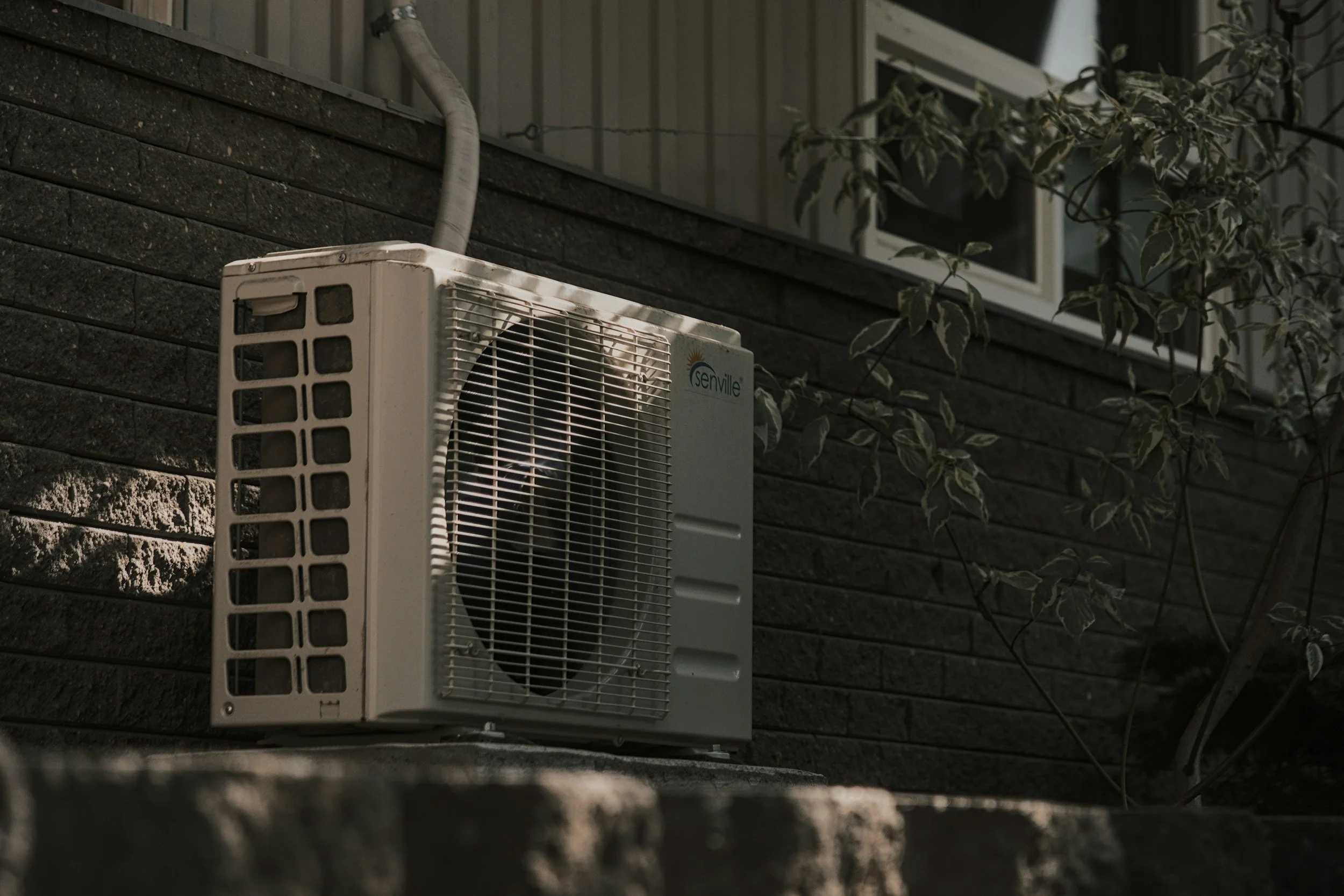
The condenser coil releases the heat extracted from the building to the outdoor air. When the fins are clogged with debris, or when vegetation has grown too close to the unit, the outdoor heat exchange becomes inefficient. This forces the compressor to work harder against higher head pressure, which accelerates wear and increases electricity consumption. During the service visit, the condenser coil should be cleaned, fin straightening should be performed where applicable, and the technician should note whether the site conditions around the unit require attention between service intervals.
Blower, Motor, and Mechanical Component Review
The blower assembly moves conditioned air through the duct system and across the evaporator coil. Its condition affects both comfort delivery and system efficiency. A dirty blower wheel moves less air than the system was designed to handle, reducing cooling capacity and increasing run time. Bearings in blower motors and fan motors are subject to wear, particularly in older systems that may not have sealed bearings or may have lost lubrication over time.
As part of a thorough ac tune up service, the blower wheel should be cleaned, motor amperage should be checked against nameplate ratings, and any signs of bearing noise or abnormal vibration should be documented. Fan blades on the outdoor condenser unit should be inspected for cracks or balance issues that could lead to motor wear or structural failure. These mechanical components tend to degrade slowly, making each service visit an important checkpoint in a longer maintenance history.
System Controls, Thermostat Calibration, and Final Operational Verification
A complete maintenance visit ends with verifying that the system responds correctly to control inputs, that the thermostat is accurately reading and responding to space temperature, and that the system cycles on and off as designed. Control system issues — including thermostat drift, faulty sensors, or staging problems in multi-stage systems — can cause the system to operate in ways that appear normal on casual inspection but are actually consuming excess energy or failing to maintain comfort.
Technicians should verify that the system enters and exits cooling mode correctly, that all safety controls respond appropriately, and that the measured output temperature differential across the coil falls within the expected range for operating conditions. Any deviation should be documented and, where possible, corrected before the visit concludes. A system that tests well in each individual component area but fails at the operational verification stage is still not ready for seasonal demand.
Closing: Turning a Checklist into Consistent Practice
A checklist is only as effective as the discipline used to apply it. For service organizations, the real value of a structured tune-up scope is not the checklist itself but the consistency it produces across technicians, properties, and service seasons. When every visit follows the same process — electrical verification, refrigerant assessment, coil cleaning, mechanical inspection, and operational confirmation — the outcomes become predictable. Systems are caught before they fail. Energy consumption stays within expected ranges. Equipment lasts longer.
For property owners and facility managers evaluating their current maintenance program, the question worth asking is not simply whether a maintenance agreement is in place, but whether the scope of service being delivered matches what a complete tune-up actually requires. A visit that only addresses obvious symptoms is not a tune-up — it is a reactive call. The distinction matters most when summer arrives and reliability is no longer optional.
HOW DO YOU FEEL ABOUT FASHION?
COMMENT OR TAKE OUR PAGE READER SURVEY
Featured





Flyknit and leather sit at opposite ends of the handbag world, and buyers get pushed into picking a side too early. One sounds modern and light. The other sounds premium and safe.