
What to Look for When Buying a Convertible Range Hood
PAGE
By PAGE Editor
Choosing the right kitchen ventilation system can make a noticeable difference in your cooking experience. From removing smoke and cooking odors to helping control grease and airborne particles, a good range hood supports a cleaner and more comfortable kitchen. However, not every home has the same ventilation setup, which is why convertible range hoods are worth considering.
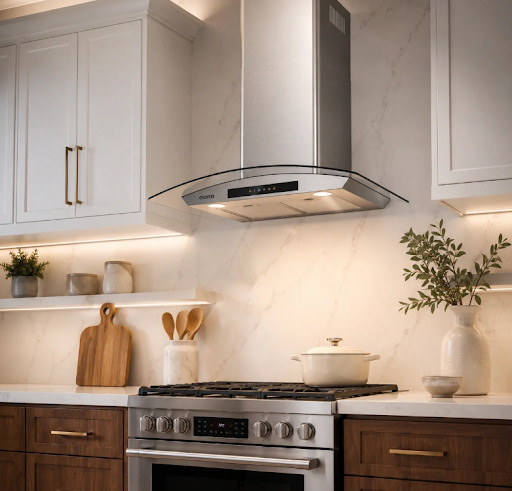
A convertible range hood gives you the flexibility to use either ducted or ductless ventilation, depending on the model and your kitchen's configuration. This versatility can be especially helpful if you are renovating your kitchen, upgrading an existing appliance, or looking for a ventilation solution that suits your current space.
What Is a Convertible Range Hood?
A convertible range hood is a kitchen ventilation appliance designed to operate in either ducted or ductless mode, provided the model supports both configurations.
In ducted mode, the hood draws in cooking fumes and directs them outside through ductwork. In ductless mode, air passes through filters before being released back into the kitchen. Many ductless configurations use charcoal filters to help reduce cooking odors, although the exact filtration system depends on the model.
For example, a homeowner renovating an older property might not have a convenient route for installing new ductwork. A convertible model can offer a practical alternative, provided its ductless configuration is approved by the manufacturer. In another home, the same appliance might be installed in ducted mode for direct outdoor exhaust.
Before buying, always check the manufacturer's specifications to confirm which configurations are supported.
Kitchen Layout and Installation Flexibility: Choose the Right Fit
Your kitchen's layout should be one of the first things you consider when shopping for a range hood. Even a feature-rich appliance may not be suitable if it cannot fit your available space or connect properly to your ventilation system.
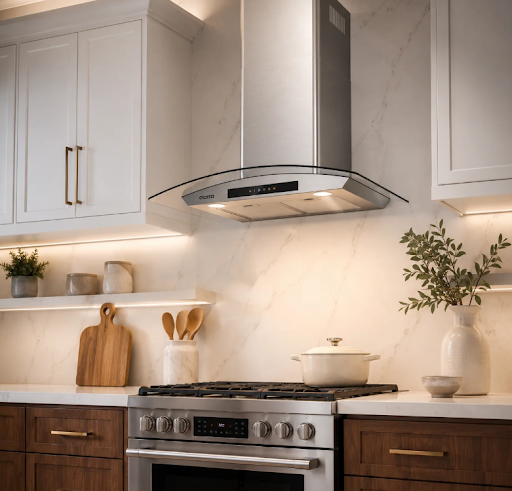
Start by checking the hood's installation style, dimensions, and compatibility with your cooking area. Common options include under-cabinet range hoods, which are installed beneath kitchen cabinets; wall-mounted range hoods, which attach to the wall above the cooktop; and island range hoods, which are designed for cooktops positioned on a kitchen island. Each style has different installation requirements, so confirm that your preferred convertible model is available in a suitable design.
Next, measure the available installation area. Check the hood's width, depth, mounting requirements, and recommended distance above the cooktop. You should also review any cabinet, ceiling, or electrical requirements.
Range Hood Airflow Capacity: How Much CFM Do You Need?
Airflow capacity, commonly measured in cubic feet per minute (CFM), indicates how much air a range hood can move. It is an important factor because your ventilation system should suit your cooking habits and the demands of your cooktop.
A hood with insufficient airflow may struggle to manage heavy cooking fumes, while choosing a model based only on the highest advertised CFM can lead to unnecessary expense or noise.
For instance, someone who regularly prepares meals at high heat may need a different ventilation setup from someone who mainly boils water or prepares simple dishes.
Rather than automatically choosing the most powerful model, look for adequate airflow for your cooking needs. Follow the manufacturer's recommendations and any applicable local ventilation requirements.
Range Hood Noise Levels: Find the Right Balance
Noise is another important consideration, particularly if your kitchen connects to a dining area or living room.
A range hood's sound level may vary depending on its fan speed, motor design, installation, and duct configuration. Higher airflow settings can produce more noise, although performance varies between models.
Before buying, review the manufacturer's published noise ratings and check how they are measured. Comparing specifications under similar operating conditions gives you a more useful picture than relying on general descriptions such as “quiet” or “powerful.”
If you cook frequently, consider how often you will use the hood's normal operating speeds, not just its maximum setting. A ventilation system that you feel comfortable using regularly is more useful than one you avoid because it is too loud.
Convertible Range Hood Features: Which Ones Are Worth Paying For?
Modern range hoods can include features designed to improve convenience, control, and everyday usability. However, not every feature is essential for every household. Focus on options that support your cooking habits instead of paying extra for features you may rarely use.
Multiple fan speeds allow you to adjust ventilation for different cooking situations, while automatic shutoff or delay functions on some models allow the hood to continue running briefly after cooking. Certain models also offer gesture controls, which let you adjust settings without touching the control panel. Other designs may include automatic capture or shield systems intended to help capture rising cooking fumes.
Lighting is another practical consideration. LED lighting can improve visibility over the cooking surface, while easy-to-clean surfaces may make routine maintenance less time-consuming.
Convertible Range Hood Cost: Consider the Total Cost of Ownership
Price matters, but the initial purchase cost is only one part of your budget. Before choosing a range hood, calculate the likely total cost of ownership.
Depending on the model and installation, your expenses may include the purchase price, professional installation, ductwork and fittings, replacement filters, routine cleaning supplies, and any electrical or cabinet modifications required.
Also, check the product warranty, availability of replacement parts, and access to customer support. A lower-priced model may be suitable if it meets your ventilation requirements and has manageable maintenance costs. A more expensive model may offer useful features or construction advantages, but those benefits should justify the difference in price.
Compare the full cost of installation and maintenance, not just the advertised price, before deciding which convertible range hood offers the best value.
Why Choose Convertible Range Hoods for Your Kitchen?
The biggest advantage of convertible range hoods is their ability to support different ventilation configurations. This flexibility can be valuable when your kitchen layout, renovation plans, or available ductwork limit your options.
A compatible convertible model can offer greater installation flexibility, particularly if outdoor ducting is not practical. Depending on the available design, you may also be able to choose from options such as under-cabinet or wall-mounted models. For homeowners planning renovations, having more than one supported ventilation configuration can provide useful choices when designing a kitchen.
However, a convertible does not automatically mean that a hood will suit every kitchen. You still need to verify its dimensions, ventilation requirements, performance, and installation compatibility.
For shoppers who value flexibility, comparing convertible models can be a sensible starting point.
Conclusion
Choosing the right convertible range hood means balancing ventilation performance, installation flexibility, maintenance, noise, and budget. Start by understanding your kitchen's layout, then compare ducted and ductless configurations to determine which arrangement best supports your cooking habits.
Pay attention to airflow capacity, filter requirements, useful features, and the full cost of ownership. Most importantly, verify the manufacturer's specifications so you know exactly what the model can do before you buy.
Ready to upgrade your kitchen ventilation? Explore FOTILE range hood options and compare available features, installation requirements, and filtration systems. You can also review Hauslane's range hood buying guide for additional guidance.
HOW DO YOU FEEL ABOUT FASHION?
COMMENT OR TAKE OUR PAGE READER SURVEY
Featured



Ask someone why they chose a natural diamond, and the first answer is usually about how it looks: the brilliance, the fire, the way it catches light across a room.