
All Black Streetwear Done Right: The Hellstar Guide to Never Looking Flat
PAGE
By PAGE Editor
Why All Black Fails for Most People
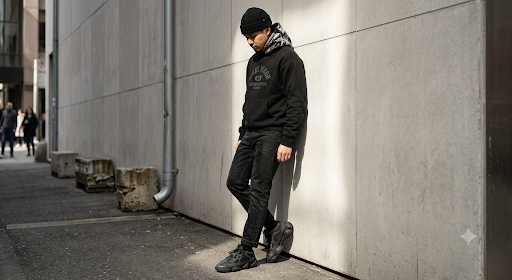
All black looks like the easiest outfit in the world, and that's exactly the trap. You grab a black top, black pants and black shoes, check the mirror, and somehow the result reads flat, like a shadow with shoes on, instead of sharp like the version you pictured. The gap has a simple cause. Black hides color differences, so the eye hunts for other information, and when every piece is the same flat cotton in the same dead finish, there's nothing left to look at. No depth, no shape, no story. Brands that live in black understand this completely, which is why a label like hellstar builds its darkest pieces around heavyweight fabric, raised prints and strong contrast graphics, because those elements give a black outfit the texture and structure that color would normally provide. That's the entire secret of all black dressing compressed into one idea. When color leaves the room, texture, weight and silhouette have to do the talking, and once they do, an all black outfit becomes the strongest look in casual clothing, slimming, photogenic, impossible to clash and quietly intimidating in the best way. The failure version and the sharp version often cost the same money too, which makes this one of the highest return lessons in streetwear. Over the next sections you'll get the full system: the texture rules that create depth, the fabric weights that build shape, where graphics fit inside one color, the shoe decisions that anchor everything, and the care routine black demands more than any other shade. Fair warning before we start. Once you learn to see flat black versus deep black, you'll spot the difference on every street you walk down, starting with your own reflection.
The Hellstar Approach: Let Fabric Do What Color Can't
Study any convincing all black outfit and you'll find at least three different surfaces working together, because texture is the color wheel of dark dressing. Matte fleece absorbs light one way, denim reflects it another, leather throws it back sharply, and knit ribbing breaks it into lines, so stacking those surfaces builds the depth that a single flat fabric never manages. This is where fabric weight earns its money twice, since heavyweight cloth doesn't just survive longer, it photographs deeper, holding folds and shadows inside its own drape. A dense piece like a hellstar hoodie in black shows the effect clearly, where thick cotton creates real shadow lines at the elbows and hem, and the raised graphic adds a second surface sitting on top of the first. Compare that against a thin black tee that collapses flat against the body, and the difference stops being subtle. Build outfits by counting surfaces, not pieces. Fleece over denim already gives you two, leather sneakers make three, and a knit beanie lands the fourth, which is usually plenty. Doubling a surface is the common mistake, meaning fleece hoodie over fleece sweatpants, and it's why matching black sets often read as pajamas while mixed fabric black outfits read as styled. Sheen deserves its own mention, because black comes in finishes from bone dry matte to washed grey black to near gloss, and deliberately mixing two finishes, like a faded wash under a saturated black jacket, creates contrast inside one color. My honest opinion after nine years of wearing mostly this: a three texture all black outfit beats a five color outfit in photographs almost every time, because the eye reads it as one confident decision instead of five separate ones.
Building Your First All Black Rotation, Piece by Piece
Starting from scratch takes six pieces, and the order matters, because each purchase should add a new surface to the stack. Buy them in this sequence:
A heavyweight black hoodie or crewneck. The anchor surface, matte and structured, and the piece worth the most money since it appears in nearly every outfit.
Black denim, straight or slightly tapered. The second surface, with the slight sheen and stiffness fleece lacks, and washed black works even better than saturated black here.
Black leather sneakers with real bulk. The third surface and the outfit's foundation, since chunky leather grounds soft fabrics above it.
A black graphic tee with a strong print. The summer anchor and the layering base, where the print itself becomes a surface.
A black knit beanie or structured cap. The fourth texture, small money, finishing power on every single combination.
One black outer layer, denim jacket or workwear style. The shell that turns four outfits into twelve, ideally in a different fabric from everything above.
Notice there's no rush toward variety, because six pieces in one color already produce more combinations than most closets use in a month. Additionally, every future black purchase faces one question at checkout: what surface does this add? A third fleece piece adds nothing and stays on the rack, while a knit, a nylon or a corduroy earns its way in immediately. Rotation stays effortless too, since everything matches everything by definition. The color did the coordinating. Your only job was the textures, and the list just handled them.
Graphics and Prints: Contrast Inside One Color
All black doesn't mean design free, and honestly, dark outfits carry graphics better than any other base, because a print on black gets a gallery wall instead of competition. White and grey prints deliver the hardest contrast, reading crisp from across a street, while red accents on black carry that classic streetwear energy, and tonal black on black prints play the quietest, most grown up version of the game, visible only when light moves across them. The shape of the print matters more on black than anywhere else too. Big chest graphics turn the torso into the outfit's center, back prints reward the walk away view, and small high placed designs keep things subtle while still breaking the flatness. Print technique changes the result as well, since raised puff prints add literal physical texture that catches light, screen prints sit crisp and flat, and embroidery brings a stitched surface that reads premium at close range. Anyone browsing the range at hellstar sees this full spectrum in action, from high contrast slogan pieces to tonal designs, and the styling rule stays the same across all of them: one printed piece per outfit, letting the graphic be the single loud voice in an otherwise quiet room. Two prints in one black outfit fight for the same spotlight, and both lose. Placement in the layer stack matters too, because a graphic buried under a closed jacket contributes nothing, so run the printed piece as your outer layer or keep the jacket open in a frame around it. Then trust the restraint. A single strong graphic floating on three textures of black is the most photographed formula in modern streetwear, and it got there by being genuinely hard to mess up.
Silhouette: The Shape Black Makes You Notice
Black hides color and exposes shape, which most people discover backwards, after wondering why their all black outfit feels off despite matching perfectly. With no color breaks to distract it, the eye traces your outline from collar to shoe, so silhouette decisions carry double weight in dark outfits. The rules aren't new, they're just louder here:
Volume needs an anchor, so an oversized black top wants tapered or straight black pants below it, never equal bagginess creating one shapeless column
The pant to shoe junction becomes the outfit's most visible point, since a clean stack or crisp break on black denim over black leather reads deliberate while a crumpled puddle reads careless
Layer lengths need staggering, meaning the hoodie hem peeking below the jacket hem, because without color separation, length differences are how the eye counts your layers
Necklines do the framing work, so a firm collar, a raised mockneck or a hood held open around the face keeps the top of the outfit structured
Proportion mistakes photograph worse in black, honestly, since nothing colorful distracts from a hem hitting the wrong spot
Meanwhile, the slimming reputation of black is real but conditional, because the effect comes from the unbroken vertical line, and it survives only when the pieces fit correctly. Baggy on baggy in black doesn't slim anyone, it just makes a wider shadow. Fit the shoulders, control the hems, anchor the volume, and the single color line does the rest of the work on its own. Shape first, then darkness. That order is the whole trick.
Footwear and the Small Details That Finish the Look
Shoes decide whether an all black outfit lands, because they're the final surface in the stack and the point where the whole silhouette meets the ground. Chunky black leather sneakers are the default answer for good reason, adding mass, structure and a third or fourth texture right where the eye finishes reading you. Black boots push the same job further into cold months, bringing a hard edge and extra height that heavyweight fabrics balance beautifully. The all black shoe question that divides people, soles included or white soles allowed, comes down to intent, since a full black shoe keeps the unbroken line and maximum slimming effect, while a white or gum sole adds one deliberate break that makes the outfit read slightly more casual and shows off the shoe itself. Both work. Choose one on purpose. Details above the ankle finish the picture, and black rewards small metal moments, meaning a silver chain, a watch, matte black rings, because tiny reflective points scattered on a dark base act like stars on a night sky, visible precisely because everything around them is quiet. Headwear multiplies outfits too, where a knit beanie adds softness and a structured cap adds sharpness to identical clothes, and this is exactly where a piece from the hellstar hat and beanie range earns a permanent spot by the door, since one small item restyles the entire rotation. Socks matter more than anyone admits as well, because a flash of white sock inside an all black outfit is either a deliberate retro move or an accident, and everyone can tell which. Keep a drawer of black socks and the problem never exists. Ground the outfit in structure, sprinkle the metal sparingly, and let the small stuff stay intentional.
Keeping Black Actually Black: The Care Reality
Black is the highest maintenance color in your closet wearing a disguise of low effort, and the fading problem is where every all black wardrobe eventually fights its real battle. Here's the hands on detail that took me years and a ruined favorite to learn: black fabrics fade at completely different speeds, so a black hoodie washed weekly turns charcoal within a year while the black denim washed monthly stays near new, and suddenly your all black outfit contains three accidental shades of grey black that never agreed to meet. The fix is managing fade rates on purpose. Wash black as rarely as hygiene honestly allows, airing fleece overnight instead of defaulting to the machine, and when washing day comes, run cold water only, garments inside out, with black pieces washed together away from anything linty. Detergent choice matters more here than anywhere, since harsh formulas strip dye, and a gentle liquid at half dose keeps color while still cleaning. The dryer remains the enemy twice over, fading dye and cooking ribbing in one hot cycle, so air drying stays law, and drying out of direct sunlight matters specifically for black since UV bleaches dark dye fastest. Lint is black's second war, because every fleck shows, and a proper lint roller by the door plus a fabric shaver for pilling keeps surfaces clean, while anyone with a pet already knows the struggle and should choose tighter weaves over fuzzy fleece where possible. Now the honest limitation this lifestyle carries: summer heat genuinely punishes all black, since dark fabric absorbs sun, and a full black heavyweight outfit in July is a decision your body will review poorly. Lighten the fabric weights in hot months, keep the color if you love it, and accept that even black has a season where it asks for compromise.
Making It Yours: From Uniform to Signature
The last step separates people who wear black from people known for wearing black, and the difference is consistency plus one signature move. A uniform emerges naturally once the rotation exists, since black removes daily color decisions, and plenty of creative people run exactly this system to save their choices for things that matter more than matching. Push it one level further by picking a single recurring element that becomes yours, maybe the same silver chain every day, the beanie in every season it survives, one specific graphic piece that shows up in your photos across years, or even just a fixed silhouette like heavyweight top over stacked black denim without exception. Repetition reads as identity when it's confident, and identity is what streetwear was always selling underneath the fabric. Building toward that also changes how you shop, because a signature system wants depth over novelty, meaning better versions of the same pieces rather than constant new shapes, and your money starts compounding into quality instead of scattering into variety. Photograph your outfits occasionally too, not for anyone else, but because black reveals its problems on camera faster than in mirrors, and a quick phone photo catches the faded top or the crumpled hem your bathroom lighting forgave. Every few months, line up your black pieces in daylight and audit the shades honestly, retiring the greyed out veterans to home wear and keeping the public rotation genuinely black. Rebuy your anchor pieces before they die, not after, since a signature look with a six week gap in it stops being a signature. One color, three textures, one graphic, one personal constant. That's a system simple enough to run forever and distinctive enough that people start describing you by it, which is the quiet endgame of all of this.
Final Words
All black works when you replace color's job with texture, weight and shape. Stack three different surfaces, let one strong graphic speak alone, fit the shoulders and hems so the silhouette earns the attention black gives it, and anchor everything in structured footwear. Then protect the investment, washing cold and rare, drying in shade, rolling the lint, and auditing the shades twice a year so your blacks stay actually black. Start with the six piece rotation, add only new textures, and let repetition turn the outfit into a signature. One color, done properly, ends up saying more than a closet full of them.
8. FAQ BLOCK
Q: Why does my all black outfit look flat and boring?
A: Usually because every piece is the same fabric and finish. Black hides color, so the eye needs texture differences to find depth. Mix at least three surfaces, like fleece, denim and leather, and add one strong graphic or metal accent as a focal point.
Q: How many textures should an all black outfit have?
A: Aim for three or four. Fleece over denim with leather sneakers covers three, and a knit beanie makes four. Doubling the same surface, like fleece on fleece, is what pushes black outfits toward pajama territory instead of styled territory.
Q: How do I stop black clothes from fading?
A: Wash cold, inside out, as rarely as possible, and never machine dry. Air dry away from direct sunlight, since UV bleaches dark dye fastest, and use a gentle detergent at half dose. Fleece usually just needs an overnight airing between wears.
Q: Can I wear graphics with an all black outfit?
A: Yes, and black is the best base for them. Keep it to one printed piece per outfit so the graphic speaks alone, run it as the visible layer, and choose white or grey prints for hard contrast or black on black designs for the subtle version.
Q: Is all black slimming?
A: Only when the fit is right. The effect comes from one unbroken vertical line, so it works with correct shoulders, controlled hems and anchored volume. Baggy top over baggy bottom in black just builds a wider shadow, not a slimmer look.
HOW DO YOU FEEL ABOUT FASHION?
COMMENT OR TAKE OUR PAGE READER SURVEY
Featured


Flyknit and leather sit at opposite ends of the handbag world, and buyers get pushed into picking a side too early. One sounds modern and light. The other sounds premium and safe.