
Unexpected Milano Design Week Encounters: When Hair Becomes Architecture

PAGE
MILANO DESIGN WEEK: NOTES ON BEAUTY, LANGUAGE AND GEOMETRY
Milano Design Week is always teeming with interesting people. It is an event that, although generally aimed at design, decoration, and furniture, brings together creatives from different industries, and the city is, once more, teeming with events, exhibitions, and workshops.
It’s by no means new to say that Italians have a very holistic approach to life with the aim to enjoy life through all four senses. Here, everything brings aesthetic pleasure, from styling a scarf to a plate of pasta al pomodoro. Within Italian fashion and design, in my experience, two main ideas consistently emerge: attention on detail and beauty in simplicity.
During 2026 Milano Design Week which took place from April 21st to 26th, I decided to move off the expected circuit of furniture design and into beauty and wellness—another domain populated by creative minds and interesting work. This time, I focused on practices connected to sustainability and innovation, especially in haircare, where discussions around chemistry, packaging, and sustainability are still relatively under-discussed in comparison to fashion, for instance.

At Hairdraw, a creative hairstyling studio just outside the bustle of the city of Milan, I met Sabrina Landini—internationally renowned hairstylist, 3D Cutting Method inventor, and a trainer at Head-Spa, a training and wellness centre based in Friuli, Italy and expanding their training in Asia, the US, and much of Europe. Her 3D Cutting Method does not only expand the stylistic possibilities of even the thinnest hair textures; it does so while respecting the environment and the client’s natural beauty.
ON MEANING AND SUSTAINABILITY
Since I am, by default (and by training), interested in what people mean when they say things and how they say them, the idea that, for Sabrina Landini, sustainability is respecting the diversity of an individual’s bodily features immediately caught my attention.
Can we talk about sustainability, among other things, as a form of respect for oneself?
Can we think about sustainable beauty as something that helps us nurture and maintain what we already have, while still allowing experimentation and change—but only within what is already aligned with our own DNA?
To do this, one needs to be a rounded individual: a researcher, a thinker, and an artist. This is very close to what I observed in Sabrina Landini’s work.
HAIR, THE ITALIAN WAY
It goes without saying that hair care is an integral part of an Italian beauty ritual. Although the media tends to make more fuss about skincare these days, Italians have always been extremely meticulous about hair. Hair can either make it or break it: healthy, well-maintained, and styled hair is never compromised.
While a middle-aged Italian woman may embrace aging naturally and refuse Botox, going around without a flattering haircut and without conditioned, healthy-looking hair is simply not acceptable, regardless of age.
Italians don’t understand “messy” when it comes to hairstyle and the same goes for personal fashion style; shoes and bags are always matching, and there’s always proportion along with a sense of harmony.
Sabrina Landini’s work goes hand in hand with this general Italian vibe. There’s harmony in it, there’s respect for one’s natural proportions, and there’s also freedom to express yourself in your hairstyle, without compromising the texture and volume of your natural hair.
“For me, individual beauty and sustainability are intimately linked. If you find a cut that truly celebrates your natural hair and your natural proportions, this is truly sustainable, as in the process, you do not compromise the nature of hair in any way. Respect for well-being means, by default, respect for nature,” explains Sabrina.
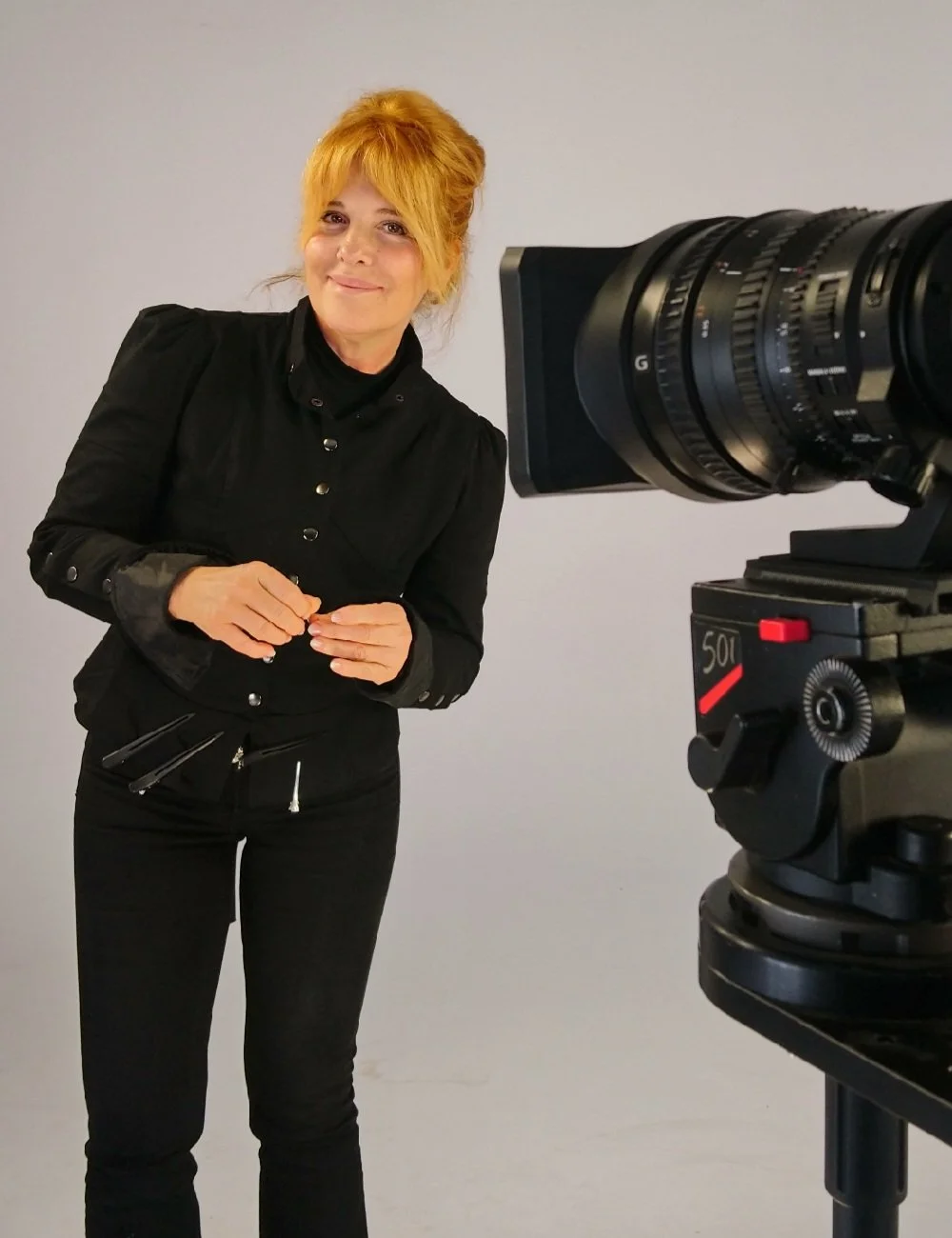
As with all artisanal work made in Italy, the Three-Dimensional (3D) Cutting Method is not just a method, it is a way of relating to sustainability, beauty, and ethics.
WHY 3D HAIRCUTS WORK BETTER
One may wonder why a 3D Cutting Method is superior to a traditional 2D one. Sabrina’s answer begins, quite literally, with geometry.
“In the hairdressing profession, flat geometry has always been the basis for the study and execution of cuts. The natural evolution of this approach is solid geometry, which operates in three dimensions—width, height, and depth—following the dynamics of the ellipse. This is a necessary transition: since the head is a sphere, the cut must adapt to this three-dimensionality”, she explains.
She found the practical benefits of the 3D Cutting Method to be, in her words, “extraordinary”. It allows fine hair to acquire volume and a more defined structure. Layering on fine hair now gives appearance of flow and vibrancy, maintaining the perception of the overall mass. Wavy hair gets transformed into light, bouncy and defined curls, while the coarse, thick hair gets easily texturized into soft, rounded shapes.
With the new cutting method, come the tools, which also had to be reinvented. The comb and scissors now take on an elliptical shape instead of being a straight line. The 3D cut literally makes the hair orbit around the head to activate its spontaneous movement and volume. The integration of plane and solid geometry in the same shape opens up new and endless creative opportunities for the stylist.
“Adopting the 3D Cutting Method isn’t just about learning a new method, it’s about shifting your paradigm: stopping looking at the cut as a series of lines on a plane and starting to sculpt the material in space”, explains Sabrina.
FROM CRAFT TO SYSTEM
However, before coming up with a radically new approach to haircuts, Sabrina Landini, like a true artisan, did her “homework” and a lot of it. She had to learn from her predecessors.
Her training started at the prestigious Vidal Sassoon Academy in London, first as a student and then as a teacher. She then spent fifteen years training in Italy, opening her own school, Hair School International which she used as a platform to collaborate with international stylists and distributors in the industry throughout the country.
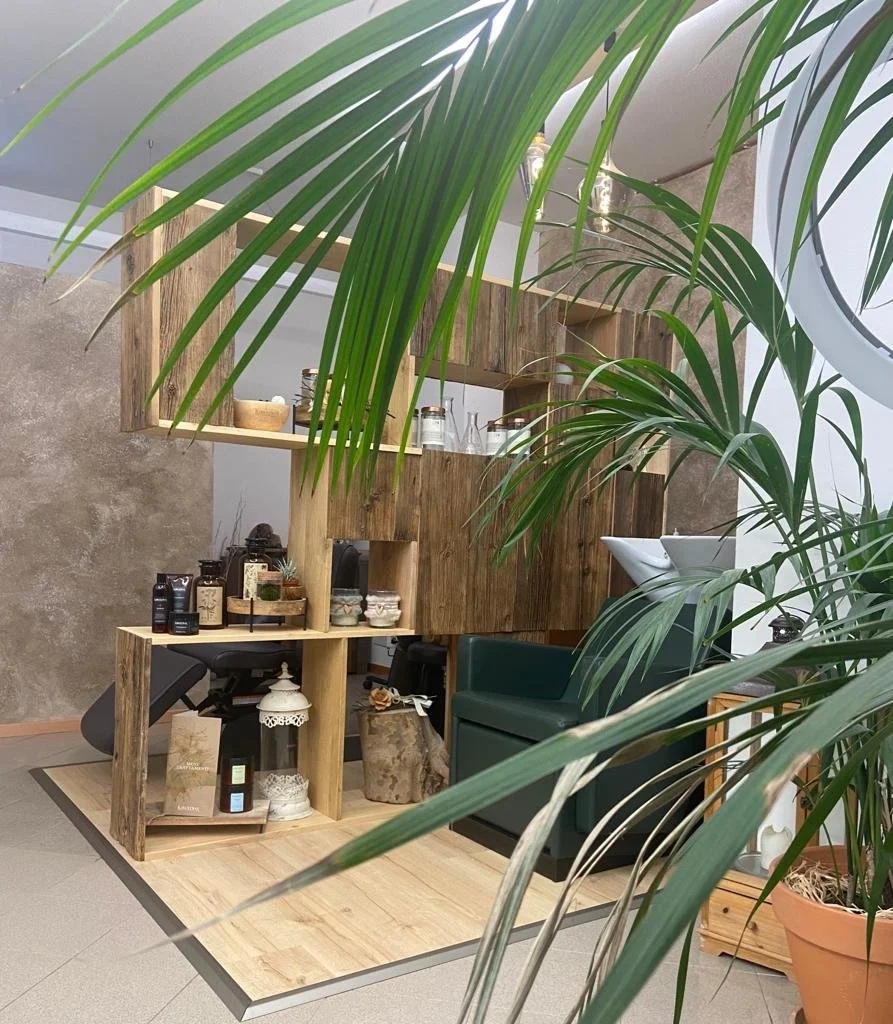
After years of intense research and practical learning, the 3D cutting project was born, and with it, the reinvention of hairstyling tools using recycled plastic, as well as her interest in “green chemistry”, or the ingredients that go into haircare products.
A SHIFT IN HAIRCARE
Today, Head Spa extends beyond the logic of a hair salon; it is a space where a client is taken care of holistically and with intention.
“From product choice to the sensorial and bioenergetic experience and the technique it all works together to welcome the client into a state of total psycho-physical well-being. Because true external beauty is simply the reflection of profound internal well-being,” explains Landini.
Here, hairdressing becomes something much closer to recalibration than maintenance.
“You don’t come to the salon only to have your hair cut, coloured, or blow-dried. You come to reset a stressed nervous system through targeted stimuli that induce deep relaxation. Stress, emotional tension, and toxins create real energy blocks, which often manifest on the scalp and, consequently, on the hair. Acupressure and holistic tools are used, alongside the hand massage, to interact with the body’s energy system.”
It comes as no surprise for what transpired to be the next step in Landini’s sustainability journey. The philosophy extends beyond the salon. In collaboration with the Friuli Mandi Nepal Namaste Association, which supports career opportunities for young women after education and training, a volunteer training project in Nepal has been developed in collaboration with Michela Picone of SA.MA.NI.
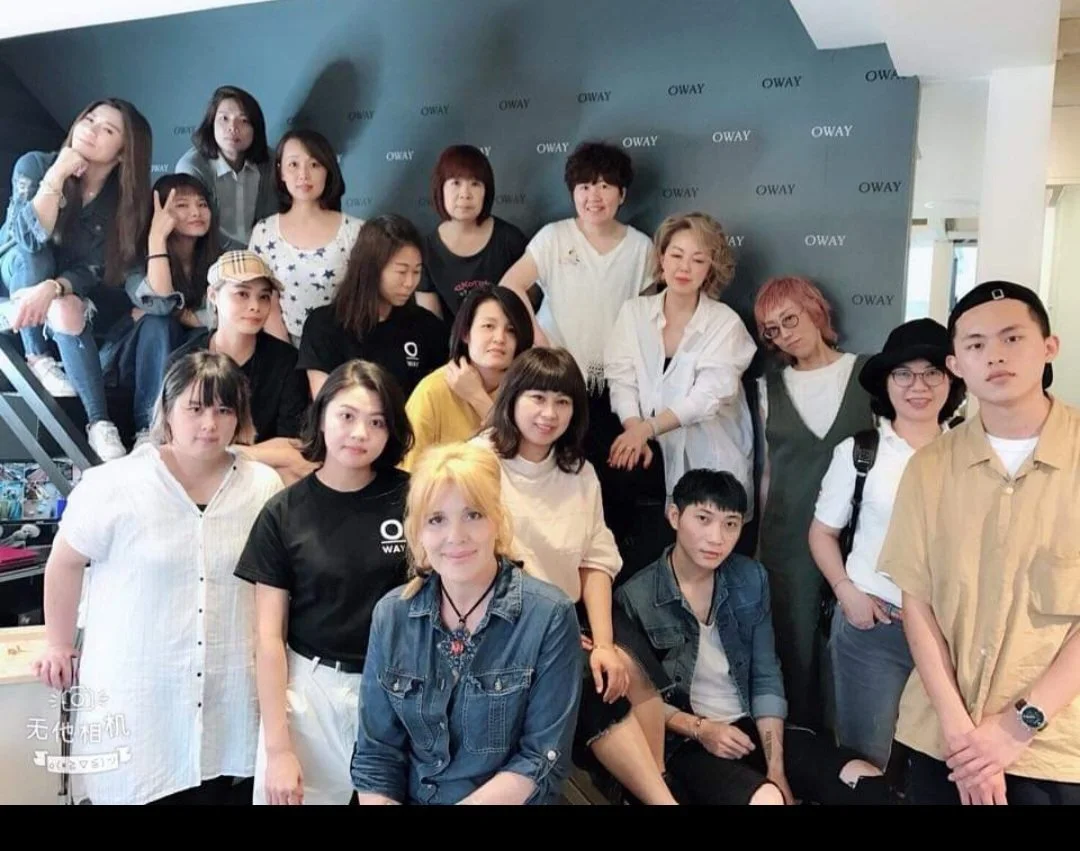
“In this way, the entire circle closes” explains Sabrina, and continues, “We accepted this mission because sustainability is not only linked to the environment and the economy, but also to the society. To give them the chance to receive the same professional opportunities that we’ve had.
GOING FULL CIRCLE
In a landscape of fast-moving aesthetics, where trends often last no longer than a single swipe, attention to what and how we consume has a measurable effect beyond the individual level.
Landini shows that beauty is not simply the application of a product or the maintenance of appearance. It is something closer to a solid system of relations between body, material, and meaning.
In this sense, beauty returns—somewhat unexpectedly—to Aristotelian philosophical roots, where it was closely linked to morality and ethics.
Once again, in Sabrina Landini’s words, beauty “becomes a universal language, capable of nurturing the individual and the ecosystem in all corners of the world.”
HOW DO YOU FEEL ABOUT FASHION?
COMMENT OR TAKE OUR PAGE READER SURVEY
Featured


Wale joins CapSole as Chief Creative Officer and equity partner, bringing his influence in sneaker culture to a business focused on preservation, sustainability, and extending the life of collectible footwear.