
Best Folding Pocket Knives for Outdoor Adventures and Camping
PAGE
By PAGE Editor
Choosing a folding pocket knife for camping means considering more than its appearance. A good outdoor folding knife should have suitable blade construction, a comfortable handle, dependable folding mechanism, and a size that fits your camping needs. The JW Steel Crafts pocket knife collection offers different folding knife designs for enthusiasts who appreciate practical features and distinctive craftsmanship.
Whether you are preparing for a weekend camping trip, exploring hiking trails, or building an outdoor gear collection, understanding the important features of folding pocket knives can help you make a better buying decision.
1. Why Carry a Folding Pocket Knife on Outdoor Adventures?
Folding pocket knives are popular among outdoor enthusiasts because they combine a compact design with a blade that can be folded into the handle when not in use.
Compared with many fixed-blade designs, folding knives can be easier to store in a suitable pouch or camping gear organizer. Their compact construction also makes them a convenient option for people who want to carry a small cutting tool.
Depending on the manufacturer's intended-use specifications, a folding pocket knife may be suitable for simple campsite tasks such as:
Cutting cord or packaging materials.
Opening food packaging.
Preparing certain lightweight camping materials.
Performing basic everyday cutting tasks.
Supporting general outdoor equipment maintenance.
Always use a knife only for tasks it is designed to handle. A folding pocket knife is not a substitute for specialized camping equipment.
2. Explore Folding Pocket Knife Designs for Camping
Not all folding knives have the same construction. Their blade shapes, handle materials, dimensions, and locking mechanisms can vary significantly.
For example, the handmade folding knife with a marble resin handle from JW Steel Crafts features a distinctive handle design that may appeal to people who appreciate decorative craftsmanship.
When evaluating a folding knife for outdoor use, consider its complete construction rather than focusing on the handle's appearance alone.
Look for clear information about:
Blade steel and corrosion resistance.
Blade dimensions and overall knife size.
Handle material and construction.
Folding and locking mechanism.
Weight and portability.
Intended uses and care requirements.
A decorative handle can make a knife visually distinctive, but its suitability for camping depends on the blade, construction, and manufacturer specifications.
3. Choose the Right Blade Material
Blade steel is one of the most important considerations when selecting a folding pocket knife.
Different steel types offer different combinations of corrosion resistance, edge retention, toughness, and maintenance requirements.
Stainless Steel
Stainless steel is a popular choice for outdoor knives because it generally offers better corrosion resistance than many carbon steels.
This can be useful when camping in environments where a knife may encounter moisture or humidity.
However, stainless steel is not completely rustproof. Cleaning and drying the blade after exposure to moisture remain important.
Carbon Steel
Carbon steel is valued in traditional knife making and can offer useful edge and toughness characteristics depending on its composition and heat treatment.
It generally requires more attention to moisture control because it can develop rust if left damp.
Damascus Steel
Damascus steel is recognized for its distinctive layered patterns. It can be an attractive option for collectors and people who appreciate traditional metalworking.
When considering a Damascus folding knife, check the manufacturer's description to understand the steel construction. A decorative etched pattern does not automatically mean the blade is made from layered Damascus steel.
What Should You Compare?
Before choosing a blade material, consider the following:
Expected outdoor conditions.
Maintenance requirements.
Manufacturer-provided steel specifications.
Corrosion resistance.
Intended cutting applications.
There is no single best steel for every camping situation. The right choice depends on the knife's construction and how you plan to use and maintain it.
4. Understand Different Folding Knife Locking Mechanisms
The locking mechanism is another important feature to consider when buying a folding pocket knife.
A folding knife needs a mechanism that controls blade movement and helps keep the blade in its intended position during use.
Common folding knife mechanisms include:
Liner Lock
A liner lock uses a flexible metal section inside the handle. When the blade opens fully, this section engages with the blade tang and helps prevent the blade from folding.
The mechanism is integrated into the handle, allowing manufacturers to create relatively compact folding knife designs.
Frame Lock
A frame lock uses a flexible section of the handle frame to engage with the blade tang.
It has a similar operating principle to a liner lock but uses the handle structure itself as the locking component.
Lockback
A lockback mechanism uses a spring-loaded locking bar positioned along the back of the handle. The bar engages with the blade tang when the blade reaches its open position.
Each mechanism has a different construction and operating feel. Review the manufacturer's instructions and inspect the locking mechanism before use.
Never use a folding knife if its lock engages inconsistently, has visible damage, or allows unusual blade movement.
5. Consider Handle Materials and Grip Comfort
The handle affects a folding knife's appearance, weight, comfort, and overall construction.
For outdoor use, consider how the handle material performs under the conditions in which you expect to carry the knife.
G10 Handles
G10 is a composite material commonly used in knife handles. It is valued for its durability and resistance to moisture compared with some natural materials.
Micarta Handles
Micarta is another composite material used in knife construction. It offers a distinctive appearance and is available in different colors and finishes.
Wood Handles
Wooden handles provide a traditional appearance with natural grain patterns. However, they may require additional care to protect the material from prolonged moisture exposure.
Resin Handles
Resin handles can feature distinctive colors, patterns, and decorative effects. Marble-style resin, for example, offers a visually interesting finish.
When comparing handle materials, consider comfort, construction quality, maintenance, and how the material is described by the manufacturer.
6. Select a Practical Size and Weight
The dimensions of a folding pocket knife influence its portability and overall convenience.
A compact knife may fit easily into a camping organizer, while a larger model may take up more storage space.
Before buying, review these specifications:
Overall length.
Blade length.
Closed length.
Handle dimensions.
Total weight.
Do not choose a knife based only on its appearance in product photographs. Check the actual measurements to understand how large it will be.
For camping, a manageable size can make storage and transport easier. However, the knife must still be appropriate for its intended tasks.
7. Look for Quality Craftsmanship and Construction
A folding knife should be evaluated as a complete product. A visually attractive handle or blade pattern does not necessarily indicate good overall construction.
Pay attention to several details before making a purchase.
Blade Finish
Check whether the blade has an even, consistent finish and whether the product description clearly identifies its material.
Handle Construction
Look for clean finishing, consistent handle scales, and secure hardware.
Pivot Assembly
The pivot connects the blade to the handle and allows it to fold. Review the manufacturer's specifications and available product photographs for construction details.
Locking Mechanism
The locking system should operate consistently according to the manufacturer's design. Any visible damage or unreliable engagement is a reason not to use the knife.
Product Information
Reliable product listings should provide clear photographs, dimensions, material descriptions, and relevant maintenance information.
These details help you understand what you are purchasing rather than relying on appearance alone.
8. How to Maintain a Folding Pocket Knife During Camping Trips
Outdoor conditions can expose a folding knife to dirt, moisture, and debris. Regular care helps preserve its appearance and mechanical condition.
Follow these basic maintenance practices:
Clean the Blade After Use
Wipe away dirt, fingerprints, and residue with a clean, soft cloth.
If additional cleaning is needed, follow the manufacturer's instructions for the blade material and finish.
Keep the Knife Dry
Moisture can cause corrosion, particularly on carbon steel. Dry the blade thoroughly after exposure to rain, humidity, or water.
Check the Folding Mechanism
Inspect the pivot and visible locking components for dirt, unusual movement, or damage.
Do not force a stiff mechanism or attempt to modify the locking components.
Use Suitable Protective Products
Depending on the steel, a suitable protective oil may help reduce corrosion. Follow the manufacturer's guidance and use products appropriate for the knife's intended applications.
Store It Properly
Keep the knife in a dry, secure storage location. Use a suitable pouch or protective cover when appropriate.
9. Camping Safety Tips for Folding Pocket Knives
A folding pocket knife should always be handled responsibly, especially when camping with other people.
Keep these safety considerations in mind:
Read the manufacturer's instructions before using the knife.
Check the blade and locking mechanism for visible damage.
Keep your hands and fingers clear of the cutting path.
Never use a knife with a defective locking mechanism.
Do not use the blade as a screwdriver, pry bar, or hammer.
Keep the knife closed when it is not in use.
Store it securely and away from children.
Follow local rules regarding knife ownership and transport.
A responsible approach to storage and handling helps reduce unnecessary accidents during outdoor activities.
10. What to Look for When Buying a Folding Pocket Knife for Camping
Before choosing a folding knife, compare the available options according to your needs.
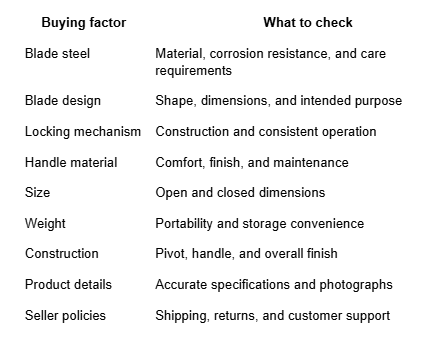
Also consider your camping environment. A knife carried on a short weekend trip may have different requirements from one included in a larger outdoor equipment collection.
Choose a product based on its actual specifications rather than assuming that every folding knife is suitable for every outdoor task.
11. Folding Pocket Knives for Collectors and Outdoor Enthusiasts
Some people purchase folding knives mainly for practical outdoor use, while others appreciate their craftsmanship and distinctive designs.
These interests can overlap. A folding knife may have an attractive handle, an interesting blade finish, and a mechanical design that appeals to collectors.
When evaluating a knife as a collectible, consider:
The quality of the materials.
The uniqueness of the handle design.
The blade's finish and construction.
The manufacturer's product information.
The overall condition and presentation.
For collectors, preserving original packaging and product documentation can also help maintain the item's history and presentation.
Frequently Asked Questions
What is the best folding pocket knife for camping?
The best option depends on your camping needs, the knife's intended use, blade material, dimensions, handle construction, and locking mechanism. Review the manufacturer's specifications before choosing.
Are folding pocket knives suitable for outdoor adventures?
Some folding pocket knives are designed for everyday outdoor tasks and convenient storage. Their suitability depends on their construction and intended purpose.
Which blade steel is best for a camping pocket knife?
Stainless steel can be a practical option when corrosion resistance is important. Carbon steel offers different material characteristics but generally requires more rust prevention. The best choice depends on the specific steel and maintenance requirements.
What is a liner lock folding knife?
A liner lock is a folding knife mechanism that uses a flexible metal section inside the handle to engage with the blade tang when the blade is open.
Are resin handles suitable for folding pocket knives?
Resin is used in some knife handles because it allows distinctive colors and decorative patterns. Check the manufacturer's specifications for information about the particular handle's construction and care.
How do I prevent rust on a folding pocket knife?
Keep the blade clean and dry, avoid prolonged moisture exposure, and apply suitable protective oil when recommended for the steel type.
How should I store a folding pocket knife after camping?
Clean and dry the knife, close the blade, and store it securely in a dry place. Follow the manufacturer's instructions for long-term storage.
Conclusion
The best folding pocket knives for outdoor adventures combine suitable blade materials, comfortable handle construction, a dependable folding mechanism, and practical dimensions.
Before purchasing, compare the knife's steel, locking system, handle material, weight, and manufacturer specifications. Regular cleaning, proper storage, and responsible handling also help preserve its condition over time.
JW Steel Crafts offers folding pocket knife designs for enthusiasts interested in distinctive craftsmanship and handle styles. Explore the available options, review their specifications, and choose a folding knife that matches your preferences and intended needs.
HOW DO YOU FEEL ABOUT FASHION?
COMMENT OR TAKE OUR PAGE READER SURVEY
Featured



In a 2024 survey of more than 2,000 adults by the retailer TK Maxx, 61% said a date's fashion choices were important on a first date, and 52% said those choices would affect the chance of a second one.