
Best Fragrance-Free Conditioners for Sensitive Scalps: Ingredients and Hair Types Explained
PAGE
By PAGE Editor
Finding a conditioner for dry hair is usually straightforward. Finding one that softens the ends, helps with tangles, doesn't leave fine hair flat, and contains no added perfume requires a closer look at the label.
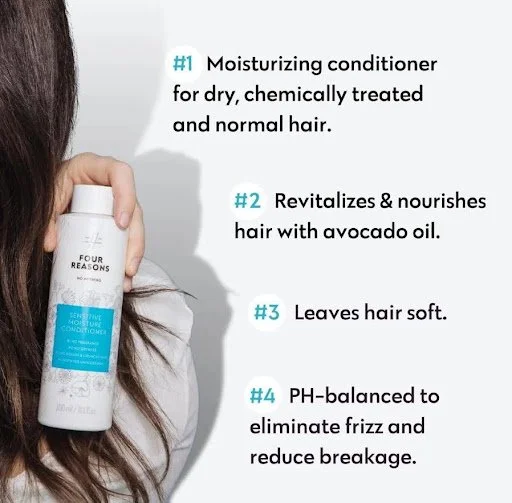
Fragrance is built into much of the haircare experience. A floral scent might be pleasant in the shower, but for someone who avoids perfume or has a known fragrance allergy, it can rule out an otherwise suitable product. Finland's No Nothing Very Sensitive addresses that preference with a range of fragrance-free haircare products, including its Sensitive Moisture Conditioner, a rinse-out formula intended for dry, normal, and chemically treated hair.
Of course, removing fragrance doesn't automatically make a conditioner good. It still needs to soften the hair, reduce friction during combing, and leave the lengths manageable after rinsing. A product can have an impressively short ingredient list and still disappoint if it doesn't provide enough conditioning.
The useful question is what the formula actually does, and whether it suits your hair.
What Makes a Good Fragrance-Free Conditioner?
Conditioner works differently from shampoo. Shampoo primarily removes oil and residue; conditioner helps improve the feel and manageability of the hair after cleansing.
Washing removes some of the oils that naturally coat hair strands. Depending on the shampoo, water quality, and condition of the hair, the lengths may feel rougher or become harder to comb afterward. Bleaching, coloring, and frequent heat styling can make those problems more noticeable.
Conditioning ingredients help reduce friction between strands, improve slip, and smooth the hair's surface. The immediate result should be easier detangling and hair that feels softer without requiring excessive brushing.
A fragrance free conditioner also leaves out intentionally added scent ingredients. That makes it relevant to people who prefer not to combine the smell of shampoo, conditioner, styling products, and perfume.
But fragrance avoidance is only one part of the decision.
The texture matters. Rich conditioners may suit dry or coarse hair, while fine strands can become weighed down when too much product is applied. Some formulas are designed for occasional intensive treatment; others work well as part of a regular wash routine.
The ingredient list offers clues about how the product is built.
Cetearyl alcohol, for example, is a fatty alcohol commonly used to give conditioners their creamy texture and support softness. Despite its name, it behaves differently from ethanol and shouldn't be grouped automatically with ingredients people associate with drying.
Behentrimonium chloride is a conditioning agent that helps reduce static and makes strands easier to comb. Quaternium-91 serves a related conditioning function.
Glycerin is a humectant that attracts water, while emollient ingredients help improve the feel of the hair surface.
The effectiveness of a conditioner depends on how these ingredients work together, not simply how many moisturizing ingredients appear on the label.
When comparing products, consider the result you need: less tangling, smoother ends, easier brushing, or a more manageable finish after washing.
Those are practical criteria that can be assessed without relying on vague promises about transforming hair overnight.
Fragrance-Free vs. Unscented Conditioner: Why Ingredients Matter
The words fragrance-free and unscented sound interchangeable. In cosmetic labeling, they can describe different approaches.
A fragrance-free product is generally formulated without added perfume or fragrance ingredients intended to create a scent.
An unscented conditioner may have little noticeable smell but still contain ingredients used to mask the natural odor of the formula.
The U.S. Food and Drug Administration specifically notes that some cosmetics labeled unscented can contain fragrance ingredients for masking purposes.
For shoppers who simply dislike strong smells, either type of product might be acceptable. People avoiding fragrance because of a known allergy or another specific sensitivity need to pay closer attention to the ingredient list.
There's another complication: fragrance doesn't always mean synthetic perfume.
Essential oils and naturally derived aromatic extracts can also contain fragrance compounds. Lavender oil, citrus oils, and certain botanical extracts may be appealing to shoppers interested in natural beauty products, yet remain unsuitable for someone avoiding particular fragrance allergens.
A conditioner without added perfume can still have a mild smell from its raw materials. That doesn't necessarily mean fragrance has been added.
Likewise, the absence of added fragrance doesn't establish that every other ingredient will be tolerated by every individual.
A person searching for a hair conditioner for sensitive skin may need to consider preservatives, botanical extracts, and other ingredients depending on their own sensitivity history.
The most useful approach is to read the complete INCI list and distinguish between a product's actual formulation and broad marketing descriptions.
Choosing a Conditioner for Sensitive Scalps
A sensitive scalp isn't a single diagnosis.
One person finds that heavily scented products cause discomfort. Another has a diagnosed contact allergy. Someone else experiences dryness or itching related to a scalp condition that requires its own treatment.
These situations shouldn't be treated as identical, even if the shoppers use similar search terms.
A hair conditioner for sensitive scalp is worth evaluating for its ingredient profile, directions, and intended use. Products formulated without added perfume can be useful options for people trying to avoid fragrance exposure, but other ingredients remain relevant.
The term hypoallergenic also needs context. It generally signals that a product is intended to minimize the likelihood of allergic reactions, but it isn't a promise that no reaction can occur.
Some brands provide additional information about testing or third-party recognition.
No Nothing Very Sensitive, for example, states that its Moisture Conditioner is dermatologist-tested and carries the Allergy Label awarded by Finland's Allergy, Skin and Asthma Federation.
Those are relevant product details, particularly for shoppers researching fragrance-conscious cosmetics. They should be understood as the manufacturer's stated testing and recognition credentials, rather than proof that the formula is appropriate for every allergy or scalp condition.
If you have a confirmed allergy, the ingredients that matter most are the substances you're specifically advised to avoid. A general label cannot replace that information.
Application is important too.
Most rinse-out conditioners are intended primarily for the lengths and ends, where tangling and dryness tend to be most noticeable. There's usually little benefit in applying a large amount to the scalp when the hair itself is the area needing conditioning.
Follow the product's directions, use an appropriate quantity, and rinse thoroughly.
If itching, redness, or persistent discomfort continues despite changes to your haircare routine, a dermatologist can help identify whether a product ingredient or a separate scalp condition is involved.
Best Fragrance-Free Conditioner for Dry Hair: Look at the Conditioning System
Dry hair needs more than an attractive ingredient story.
The ends may feel rough, become tangled after washing, or develop visible frizz as the day goes on. Chemically treated hair can be especially difficult to manage when the surface has been affected by coloring or bleaching.
A fragrance free conditioner for dry hair needs to provide enough conditioning to improve softness and combability without necessarily leaving a heavy coating.
No Nothing Sensitive Moisture Conditioner offers a useful example of how those functions can be combined.
Its formula begins with water and cetearyl alcohol, followed by conditioning and texture-supporting ingredients including Dipalmitoylethyl Hydroxyethylmonium Methosulfate, Glycol Stearate, Behentrimonium Chloride, and Quaternium-91.
The conditioner also contains Avocado Oil Glycereth-8 Esters, a modified avocado-oil ingredient used for conditioning, along with glycerin.
These ingredients serve different purposes.
Fatty alcohols help create a creamy base and contribute to a smooth feel. Cationic conditioning agents are attracted to the hair surface and help improve slip, making strands easier to separate during combing. Emollient ingredients support softness, while humectants contribute to the formula's moisture-related properties.
Together, they explain more about the product's intended performance than a simple claim about being nourishing or natural.
There's also an important distinction between conditioning and repairing hair.
A conditioner can temporarily improve the feel and appearance of damaged strands, reduce friction, and make the hair easier to manage. It cannot permanently reconnect split ends or reverse every structural effect of bleaching.
For someone comparing the best fragrance free conditioner options, the question is whether the product provides the level of conditioning their hair needs while meeting their fragrance preferences.
No Nothing positions this formula for dry, normal, and chemically treated hair, including color-treated hair. It also describes the product as moisturizing without heaviness.
That makes it relevant to shoppers who want a regular rinse-out conditioner rather than an intensive mask.
However, individual hair texture, condition, and application amount will influence the finish. Someone with extremely coarse or damaged hair may need additional conditioning, while a person with fine hair might find that a small amount concentrated on the ends is sufficient.
The product's fragrance-free formulation also makes it a candidate for people who prefer to avoid added perfume throughout their wash routine.
How Hair Type Changes Your Conditioner Choice
Two people can use the same shampoo and need completely different conditioners.
Fine hair tends to show excess product more quickly. If the lengths feel flat after conditioning, try reducing the amount and concentrating application below the roots. A smaller quantity of a regular conditioner may work better than switching immediately to an entirely different category.
Straight hair often makes rough ends and flyaways more visible because the strands lie close together. A conditioner that improves smoothness and reduces static may help create a neater finish.
Wavy hair needs enough conditioning to avoid tangling while preserving its natural movement. Heavy creams aren't automatically necessary, particularly for finer wave patterns.
Curly and coily hair may require more slip during detangling and more attention to dry lengths. Depending on density, porosity, and styling habits, a richer conditioner or an additional treatment may be useful.
Gray hair can change in texture over time, sometimes feeling coarser or drier than before. The appropriate conditioner depends on the hair's actual condition, rather than the color alone.
Color-treated hair deserves careful handling. Chemical processing can increase tangling and leave the lengths feeling rough, while frequent washing may affect color longevity. A conditioner identified as suitable for color-treated hair can be a useful starting point, although no single formula will preserve every shade equally well.
The broader principle is to match the product to the condition of the hair, not just its category.
For example, someone with fine, bleached hair may need more conditioning than a person with naturally thick, healthy hair. A curly-haired person who uses very little styling product may have different needs from someone applying rich creams and gels every day.
There is no reason to assume that everyone with the same curl pattern should use the same conditioner.
Instead, pay attention to how your hair feels after rinsing, how easily it detangles, and whether the result remains comfortable throughout the day.
Rinse-Out vs. Leave-In Conditioner: Which Do You Need?
These products perform related jobs but occupy different places in a routine.
A rinse-out conditioner is applied after shampooing and washed away. Its formulation is designed to provide conditioning benefits during the wash process, leaving hair softer and easier to manage.
A leave-in conditioner remains on the hair after application. It can provide additional detangling, smoothing, or frizz control during drying and styling.
For many people, a regular rinse-out conditioner is enough. Adding another product isn't always necessary.
Others benefit from both formats, particularly when long or chemically treated hair becomes tangled again after towel-drying.
If your hair feels comfortable immediately after rinsing but becomes difficult to comb while drying, a small amount of leave-in conditioner may provide extra slip.
If your hair already feels heavy or coated, however, layering more products may make the finish worse.
The same principle applies to masks. An intensive treatment can be useful for particularly dry lengths, but it doesn't have to replace a regular conditioner every time you wash.
For a straightforward routine, apply a small amount of rinse-out conditioner to washed, damp hair, leave it on for the period specified by the manufacturer, and rinse thoroughly.
No Nothing recommends exactly that approach for its Sensitive Moisture Conditioner: apply to damp, washed hair, leave it in briefly, then rinse.
The best fragrance free conditioner is ultimately the one that meets your hair's conditioning needs without introducing ingredients you specifically want to avoid.
That may be a richer formula for dry, coarse strands or a lighter rinse-out product for fine hair. If fragrance is your main concern, a clearly documented ingredient list is a better starting point than a pleasant-sounding description on the front label.
Your conditioner should leave your hair easier to manage after the shower. It shouldn't require an elaborate routine to compensate for the product itself.
HOW DO YOU FEEL ABOUT FASHION?
COMMENT OR TAKE OUR PAGE READER SURVEY
Featured





Finding a conditioner for dry hair is usually straightforward.