
The 60% Off Sign Is Lying to You More Often Than You Think
PAGE
By PAGE Editor
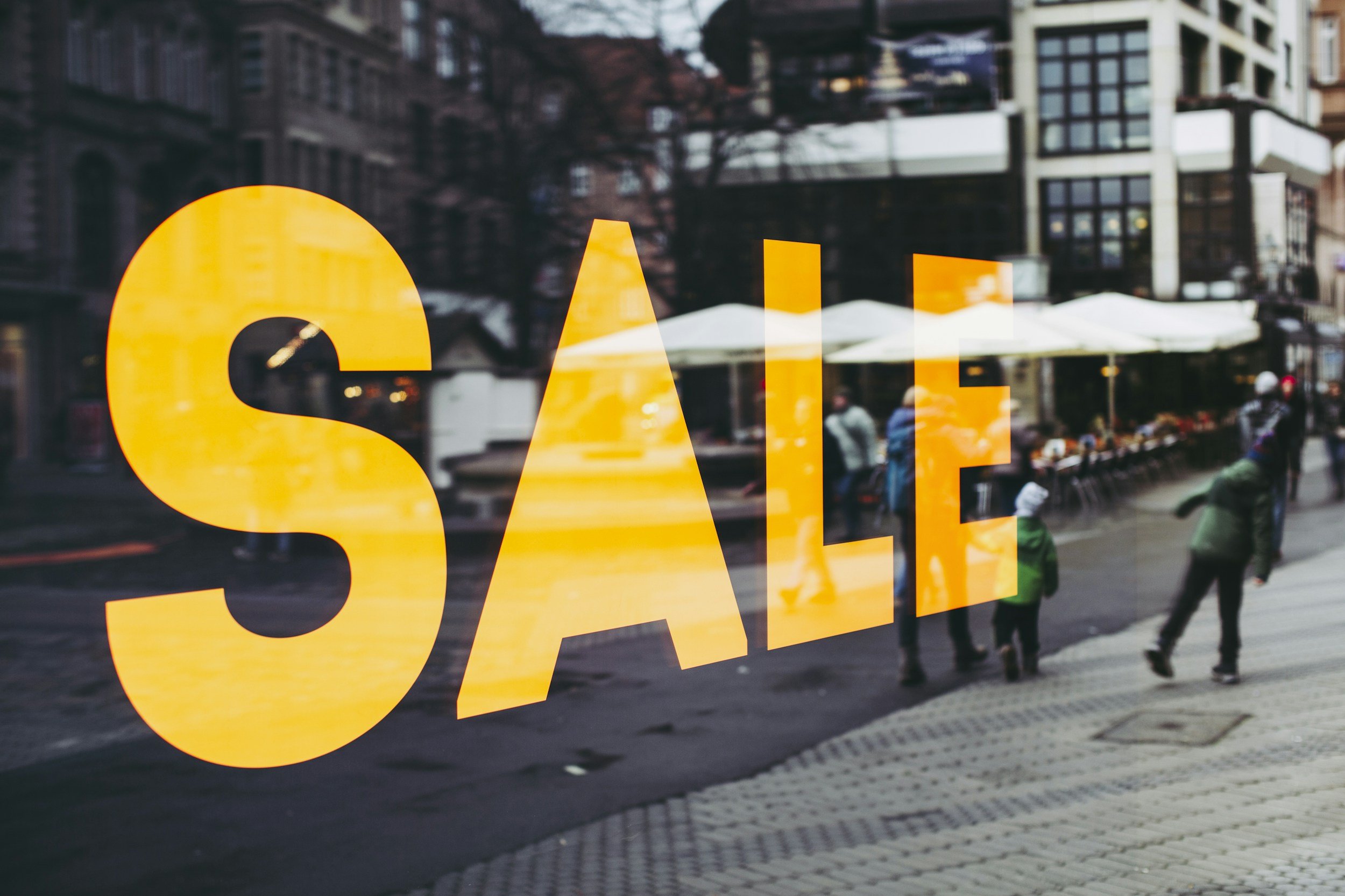
Walk into any department store this month and you'll see it: a shirt tagged $89, slashed to $34, with a red "SALE" sticker doing all the emotional work. You feel like you won something. But in a growing number of cases, that $89 was never a real price at all. It was invented specifically so the markdown would look dramatic.

This isn't a fringe theory from a coupon forum. It's the exact allegation at the center of a major retail lawsuit working through federal court right now, and it points to a pattern that shows up across both fashion and beauty shopping: brands quietly manufacturing the appearance of value while giving you less information than you assume you have.
Why "Was $89, Now $34" Isn't Always What It Looks Like
The tactic is called reference pricing, and it's been part of retail marketing for decades. A store lists an inflated "original" or "compare at" price next to the real selling price, and your brain does the math automatically: bigger gap, better deal.
The problem starts when that "original" price was never a genuine selling price. It was set high on purpose, sometimes the same day as the markdown, purely so the discount would look bigger.
That's the exact claim behind the Kohl's Apparel Lawsuit, a consumer class action alleging the retailer routinely printed inflated "Reg." and "Compare At" prices on clothing tags that were never real market prices. Shoppers who bought discounted apparel at Kohl's between roughly 2019 and 2024 may be eligible to file a claim, with individual payouts estimated between $15 and $300 depending on documentation.
Here's a concrete version of how this plays out. Say a retailer tags a knit sweater at $80, a price it never actually charged in stores, then marks it down to $32 for a splashy "60% off" sign. You're paying the real going rate for that sweater. You just believe you're getting a steal, which changes how much you buy and how urgently you buy it.
Federal law actually has something to say about this. The FTC's Guides Against Deceptive Pricing require that any "former price" used in a comparison be a genuine price the item sold at, for a reasonable period, in the recent past. Fabricating a higher number specifically to inflate the appearance of a discount violates that standard.
The Psychology Retailers Are Counting On
Reference pricing works because of a well-documented quirk in how people evaluate value: we rarely judge a price in isolation. We judge it against whatever number sits next to it.
A few things make this especially effective in apparel and footwear specifically:
Clothing has no fixed "true" price the way, say, a gallon of milk does, so shoppers have little independent basis for judging whether $34 is fair.
Sale signage triggers urgency, and urgency shortens the time you spend evaluating whether you actually want the item.
Repeated "sales" on the same items train shoppers to wait for markdowns, which paradoxically makes the inflated "original" price feel even more normal over time.
Multi-item promotions, like buy-one-get-one deals on suiting or basics, can push people toward buying more than they came in for, even when the per-item math looks reasonable.
None of this requires outright lying about the product. It only requires being vague about the number next to it.
A Quick Case Study: The Sweater That Was Never $80
Imagine a shopper, we'll call her Priya, browsing a department store's clearance rack in February. She spots a wool-blend sweater tagged "Reg. $78, Now $28," a 64% markdown that feels almost too good to pass up. She buys three, in three colors, telling herself she's stocking up smart.
Six months later, Priya sees the same sweater on the retailer's website, out of any sale period, priced at $29. The "regular" $78 never existed as an actual selling price. Her 64% discount was really a 3% one.
This is precisely the pattern described in the Kohl's litigation: tags built to manufacture urgency rather than reflect an honest price history. Priya didn't do anything wrong. She just trusted a number that was designed to be trusted.
Ingredient Labels Have Their Own Version of This Problem
Pricing isn't the only place where the gap between what's presented and what's true shows up. Beauty and haircare labeling has its own version of the same dynamic, just with chemistry instead of arithmetic.
DMDM hydantoin is a preservative used in a long list of mainstream shampoos and conditioners. It works by slowly releasing small amounts of formaldehyde to keep bacteria from growing in the bottle. Formaldehyde is classified by the International Agency for Research on Cancer as a Group 1 carcinogen, the same risk tier as asbestos.
That ingredient sits behind the Aussie Shampoo Lawsuit, which centers on claims that Procter & Gamble sold Aussie-branded shampoos and conditioners containing DMDM hydantoin without adequately disclosing the formaldehyde-release risk. Plaintiffs report hair thinning, scalp burning, and dermatitis they trace back to regular use, and multiple similar suits are now active against other haircare brands using the same preservative.
The parallel to pricing is direct. Nobody is claiming the shampoo doesn't clean hair. The complaint is about what wasn't communicated clearly, buried in small type on the back label rather than flagged where a shopper would actually see it before buying.
How to Actually Read a Sale Tag
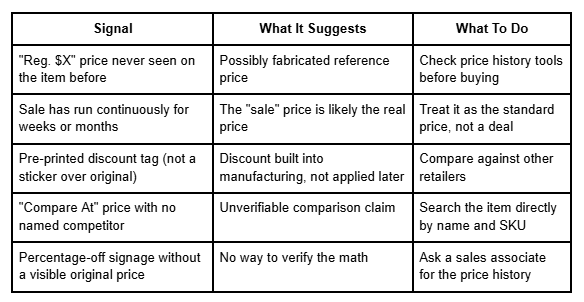
You don't need a law degree to shop smarter. A few habits go a long way toward separating a real markdown from a manufactured one.
Check the item's price history using a browser tool or the retailer's own site before assuming the "original" price is real.
Look at how long the sale has run. A "limited time" discount that's been live for three months isn't limited, it's the price.
Compare the same item across two or three retailers rather than trusting the percentage-off number in isolation.
Be skeptical of pre-printed sale tags. Genuine discounts usually involve a sticker over an existing price tag, not a tag printed with the markdown built in.
Ask what the item sold for in the last 30 days, not what a tag claims it "usually" costs.
None of these take more than a minute or two, and together they neutralize most reference-pricing tricks before you've reached for your wallet.
Kohl's Isn't Alone, and Neither Is Aussie
Neither of these lawsuits exists in isolation, which is itself informative. When one company faces litigation over a practice, it's a company problem. When several do at once, it's an industry practice that finally caught up with the industry.
On the pricing side, reference-pricing lawsuits have hit a range of large retailers over the past several years, with courts repeatedly returning to the same question: was the "original" price ever real? Comparable cases have resulted in multimillion-dollar settlements, which is part of why the Kohl's case is being watched closely by consumer attorneys.
On the ingredient side, DMDM hydantoin litigation is spreading well beyond one shampoo brand:
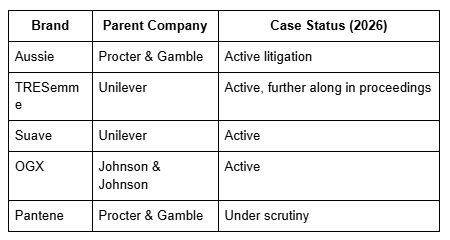
That table matters for a practical reason: if you've used any of these product lines, not just the one named in a headline, it may be worth checking your own bathroom shelf. The underlying ingredient, not the brand name, is what determines whether a product is part of the pattern.
The retail parallel is similar. If a favorite store uses reference pricing on clearance racks, and most do to some degree, the Kohl's case is a useful prompt to actually check whether your own recent "steals" were real ones.
How to Actually Read an Ingredient List
The same instinct that protects you at the register applies at the bathroom shelf. A little label literacy prevents a lot of regret.
Look specifically for DMDM hydantoin in the ingredient list on shampoos, conditioners, body washes, and styling products. It's usually listed in smaller type toward the middle of the list.
Understand that "natural" or "clean" marketing claims aren't regulated the way ingredient disclosure is. A product can carry a wellness-forward label and still contain a formaldehyde releaser.
If you notice unusual shedding, scalp burning, or persistent itching after switching haircare products, check the ingredient list before assuming it's stress or seasonal.
Consider that the EU restricts formaldehyde concentrations in cosmetics and requires warning labels past a certain threshold, while U.S. cosmetic regulation doesn't preapprove ingredients the same way.
None of this means every product with DMDM hydantoin is dangerous for every user. It means the information asymmetry, you not knowing what a name on a label actually does, is the real product being sold alongside the shampoo.
What PAGE Has Already Covered on This
This isn't the first time the gap between what a listing promises and what actually arrives has come up in these pages. Our recent guide on how to spot a quality thobe before buying one online walked through the same underlying problem from a different angle: a product photo can't show you fabric weight, stitch quality, or whether a seller actually owns and inspects the item before it ships. The tells are different from a discount tag, but the instinct required, checking past the marketing layer before you commit, is identical.
That piece focused on garment quality specifically. The pattern in this article, whether it's an inflated price tag or an undisclosed preservative, is the same one playing out at the level of trust rather than craftsmanship. Both come down to whether a brand gave you the full picture or just the flattering part of it.
The Common Thread: Trust Is the Actual Product
Fashion and beauty brands don't just sell fabric and formula. They sell a promise that the numbers and names on the packaging mean what they appear to mean. When a "Reg. $80" price never existed, or when a preservative's real function is buried in six-point type, that promise breaks quietly, usually without the shopper ever finding out.
The good news is that both problems respond to the same fix: a few extra minutes of looking past the marketing layer before you commit. A price history check. A label search. Neither takes long, and both put you back in control of a decision that retailers have, for decades, been engineering you out of.
Frequently Asked Questions
Is it actually illegal for a retailer to inflate a "regular" price before marking it down? Yes, under specific conditions. FTC guidelines require that a "former price" used in a sale comparison be a genuine price the item was actually offered at, for a reasonable period, in the recent past. A price invented purely to make a markdown look bigger violates that standard, which is the core allegation in several recent retail pricing lawsuits.
How do I know if a shampoo I'm using contains DMDM hydantoin? Check the ingredient list on the back of the bottle. It's typically listed by its full name, "DMDM hydantoin," rather than under a marketing term, and usually appears in the middle portion of the ingredient list rather than at the very top or bottom.
Do I need proof of purchase to be part of a retail pricing or product class action? Not always. Many class actions accept alternative documentation like credit card statements, loyalty account history, or in some cases a signed statement attesting to your purchase, though receipts and account records typically support a stronger claim.
Are all "clean" or "natural" beauty products free of ingredients like formaldehyde releasers? No. Marketing terms like "clean," "natural," and "gentle" aren't legally standardized in the U.S. cosmetics industry the way ingredient disclosure is. The only reliable check is reading the actual ingredient list.
The next time a sale sign or a product label makes a claim that feels almost too generous, treat that feeling as useful information. It usually means someone spent real time designing the number to produce exactly that reaction in you.
HOW DO YOU FEEL ABOUT FASHION?
COMMENT OR TAKE OUR PAGE READER SURVEY
Featured


Choosing the right footwear is essential for comfort, performance, and everyday confidence.