
Stonewashed Finishes Explained: Why EDC Collectors Love a Worn-In Look
PAGE
By PAGE Editor
A finish can change how an everyday carry item looks and feels without changing its main purpose. Some people prefer clean, polished surfaces, while others like the uneven tones and muted texture of a stonewashed finish. The latter has a worn-in appearance that can make a new item look as though it has already been part of someone's daily routine. For collectors, that character can be just as interesting as the object's shape, materials, or function.
The same design preference makes sense for a compact flashlight. A light may be carried in a pocket, attached to a bag, stored with other tools, or used outdoors. Its body can collect small scuffs from ordinary contact, particularly around edges and clip areas. A muted finish can make these signs of use less prominent while giving the light a distinctive appearance.
Stonewashing has become familiar in the everyday carry community, especially among people who appreciate knives, pocket tools, and compact lighting equipment. Its appeal is not limited to appearance. A textured, low-gloss surface may also make small marks less noticeable during regular use. However, a finish should be understood for what it is: a surface treatment, not a guarantee that an item will never scratch, wear, or need care.
Where the Stonewashed Look Came From
Stonewashed finishes are associated with a simple visual idea: a surface that looks softened by repeated contact and use. Instead of a perfectly uniform shine, the material displays a mix of lighter and darker areas, subtle grain, and a more subdued appearance. This irregularity gives each finished surface a character that can feel less formal than a mirror polish or a smooth, glossy coating.
The term is widely recognized through clothing, particularly denim, where washing processes create faded areas and a broken-in look. Similar design preferences have appeared in tools and metal accessories. In these products, the aim is not necessarily to make an object look damaged. It is to create a controlled finish that appears less pristine and more suited to everyday handling.
Stonewashing methods vary depending on the material and manufacturing process. Some metal components undergo a finishing process involving tumbling media, while other surfaces may achieve a similar appearance through different treatments. The exact process matters because two products described as stonewashed may not have identical textures, durability, or maintenance requirements. The name alone does not explain every detail of how a surface was made.
How Stonewashing Hides Everyday Scratches
Everyday carry items often share space with keys, coins, bags, clothing fasteners, and other objects. Even when someone handles an item carefully, small surface marks can develop over time. On a highly polished or uniformly dark surface, a fine scratch may stand out because it interrupts the otherwise consistent reflection. A stonewashed finish changes that visual contrast.
Its uneven grain and mixed tones can help minor scuffs blend into the existing surface pattern. Instead of appearing as a sharp line against a uniform background, a small mark may be less obvious among the finish's natural-looking variations. This is one reason some collectors prefer a worn-in aesthetic for objects that are expected to be carried regularly rather than kept untouched in a display case.
There is an important distinction between hiding scratches and preventing them. Stonewashing does not make metal immune to abrasion, dents, or deeper damage. A hard impact can still leave a visible mark, and repeated friction can gradually change the appearance of almost any surface. The benefit is mainly visual: minor signs of use may be less distracting, depending on the material, finish, and lighting conditions.
This can make stonewashed items appealing to people who actually use their equipment. They do not have to treat every tiny mark as a flaw that ruins the original appearance. At the same time, anyone who wants a surface to remain exactly as it looked on the first day should still consider how it will be carried, stored, and cleaned.
From Knife Blades to Flashlight Bodies: Why the Finish Spread
Stonewashed finishes became especially recognizable in the knife and tool world because they suit objects that are handled often. On a knife blade, the textured appearance can soften reflections and make everyday marks less conspicuous. It also creates a practical-looking style that differs from a polished blade. The finish is not automatically stronger than other treatments, but its visual character has clear appeal among collectors.
There is also a design advantage in using similar finishes across different carry items. Someone who collects pocket tools may prefer a consistent look among a knife, a key accessory, and a compact light, even when the products serve entirely different purposes. A stonewashed finish can connect these objects visually without requiring them to share the same shape, material, or function.
Still, the finish should not be treated as proof of a particular level of quality. Two items can look similarly textured while differing in construction, internal components, weather resistance, and overall durability. The surface is one part of the design, and it should be judged alongside the product's actual build and intended use.
What a Finish Should and Shouldn't Mean When Picking an EDC Flashlight
Surface appearance can be a useful part of choosing an edc flashlight, but it should not be the first or only consideration. Everyday carry means different things to different people. One person may want a small light for finding items in a bag, while another may need several lighting options for walks, repairs, or outdoor tasks. Size, attachment method, light output, controls, and charging arrangements are often more important to daily convenience than the finish itself.
A stonewashed exterior may suit someone who prefers understated equipment and does not want every minor scuff to stand out. A smooth or brightly colored finish may appeal more to someone who values a clean appearance or wants an item to be easy to identify. Neither preference is inherently better. The right choice depends on how the item will be used and which design details matter to its owner.
It is also worth separating a finish's appearance from its protective qualities. A textured surface may help disguise small marks, but it does not automatically improve impact resistance, water resistance, or the performance of the light. Those characteristics depend on the product's materials, construction, seals, and design. If a light will be used in wet or dusty conditions, its stated protection rating is more useful than assumptions based on how rugged its exterior looks.
For collectors, the finish can still be a deciding factor after the practical needs are covered. A distinctive surface may make a new model stand out in a collection or complement other carried items. The best approach is to treat appearance as a meaningful preference while checking the specifications that determine whether the light fits everyday routines.
Oclip 2 Ultra Titanium Stonewashed: A Finish, Not a Different Metal
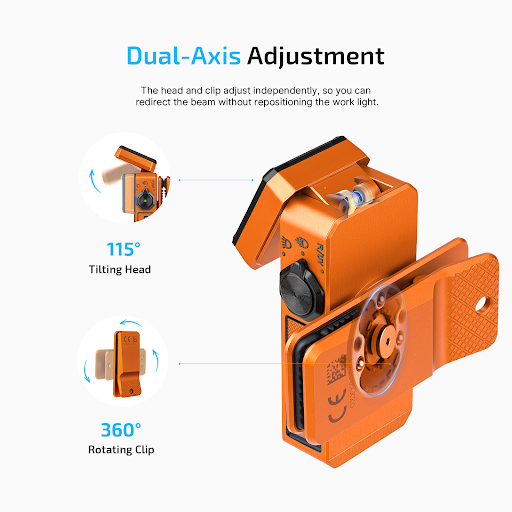
The Olight Oclip 2 Ultra Titanium Stonewashed introduces this visual style to a compact clip-on light. The name can be misunderstood if the words “Titanium Stonewashed” are read as a statement about the body's metal. Here, Titanium Stonewashed is the finish and color name; the body remains made from OAL aluminum, not titanium alloy. That distinction matters because a product's color designation and its construction material are two different things.
The stonewashed look gives the exterior a muted, textured character rather than the appearance of a perfectly uniform polished surface. For someone who likes carry equipment with a less glossy finish, this design offers a different visual option. It can also make minor signs of handling less noticeable than they might be on certain smooth finishes, although it cannot prevent all scratches or other physical damage.
The model also includes an OclipBeat breathing light and carries an IP66 rating. That rating indicates protection against dust ingress and powerful water jets under specified test conditions; it should not be interpreted as a promise that the light can be submerged. As with any compact electronic device, the controls, charging arrangements, and care guidance remain important parts of regular use.
Four Light Sources Under One Rugged Shell
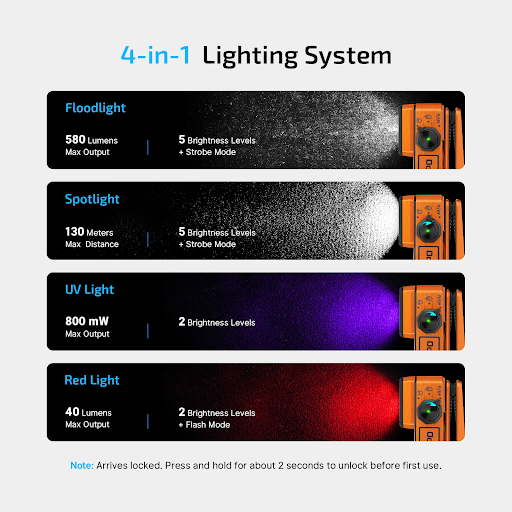
Different lighting modes can be helpful when a single carry item needs to handle several situations. A floodlight spreads illumination over a wider area, making it useful for nearby tasks where seeing a broad space matters more than reaching a distant point. A spotlight concentrates the beam more narrowly, helping direct light farther ahead. The Oclip 2 Ultra's stated floodlight output and spotlight distance describe different aspects of performance and should not be compared as if they were the same measurement.
Red light offers another option for situations where a different color of illumination is preferred. Ultraviolet output serves a separate purpose from ordinary visible lighting and should be used according to the intended application and the manufacturer's safety guidance. UV output is measured differently from visible-light brightness, so the stated 800 mW figure should not be treated as equivalent to a lumen rating. Users should avoid directing UV light at eyes or skin and follow the product's instructions.
The OclipBeat breathing light adds a visual element beyond the main illumination modes. Its presence is a reminder that a multi-function light can include features intended for visibility or personal expression as well as practical lighting. Whether that feature matters will depend on the owner's routine; someone who mainly needs a work light may prioritize the beam options, while another user may appreciate the extra design detail.
The Oclip 2 Pro provides a useful comparison within the Oclip family. Both models belong to the same general category of compact clip-on lighting, but their exact feature sets and design details should be checked before choosing between them. Buyers should compare the modes they expect to use, the physical design, the control layout, and any relevant protection specifications rather than assuming that the newer or more feature-rich model will automatically be the better fit for every person.
Caring for a Stonewashed Carry Without Overthinking It
A stonewashed finish does not need a complicated care routine. Regularly removing dust, lint, and surface grime with a soft cloth is a sensible starting point. If the item becomes dirty, follow the manufacturer's cleaning instructions and avoid harsh chemicals or abrasive materials that could alter the finish or affect nearby components. Because the Oclip 2 Ultra is an electronic device, cleaning should also account for its charging contacts, controls, and other openings.
After exposure to moisture, follow the manufacturer's guidance for drying and storage. An IP66 rating provides defined protection against dust and powerful water jets, but it does not remove the need for sensible care. Keep charging areas clean and dry before connecting the device to power, and do not assume that any water-resistant product is safe for every wet environment.
It is equally useful to check the clip and other frequently handled parts from time to time. These areas may experience repeated pressure or friction as the light is attached to clothing, a bag, or other suitable material. Gentle handling and appropriate storage can reduce unnecessary wear, though no finish can keep an everyday item looking completely untouched forever.
HOW DO YOU FEEL ABOUT FASHION?
COMMENT OR TAKE OUR PAGE READER SURVEY
Featured



A finish can change how an everyday carry item looks and feels without changing its main purpose.