
Why Google Ads Campaigns Stop Converting and How PPC Specialists Diagnose the Problem
PAGE
By PAGE Editor
It usually starts with a quiet morning. Orders are down, the ad spend looks normal, and the conversion column in Google Ads shows a run of zeros where there used to be steady sales. Panic tends to follow, along with a flurry of changes that make things worse. Even accounts handled by the best Google Ads agency go through dry spells like this. The difference is in how the problem gets investigated, and that process is what this article walks through.
Reading the Warning Signs of a Conversion Slump
A sudden fall in conversions rarely has one obvious cause. Sometimes the ads are working, and the tracking is broken. Sometimes tracking is fine, and the website is the problem. Sometimes nothing is broken at all, and the market simply shifted. Knowing which of these you are facing is the whole job. It is also one of the clearest ways to tell the best Google Ads agency from an average one, because strong teams find the cause before they touch a single setting.
Most conversion drops fall into one of three patterns:
Sudden collapse: conversions fall close to zero overnight, which almost always points to tracking or a technical fault
Gradual slide: results weaken over several weeks, usually a sign of rising competition, ad fatigue, or slow changes in demand
Traffic without sales: clicks hold steady, but buyers stop buying, which tends to point at the landing page, pricing, or offer
Spotting the pattern first saves hours of guessing later.
The Most Common Reasons Campaigns Lose Conversions
Broken or changed conversion tracking
This is the first suspect for good reason. A website redesign, a new checkout app, a theme update, or changes to cookie consent settings can all remove or break the conversion tag without anyone noticing. Orders keep arriving in the store, but Google Ads stops seeing them. Smart bidding then reads the silence as failure and pulls back, turning a reporting problem into a real sales problem.
Recent changes inside the account
Budget cuts, new bid strategies, paused keywords, switched match types, and new campaign types can all knock performance off balance. Automated bidding usually needs time to relearn after significant changes, often around a week, and stacking several changes at once makes it harder to settle.
Landing page and website problems
Slow load times, an out-of-stock bestseller, a broken discount code, a payment option that stopped working, or a price increase can all cut conversions while the ads themselves look healthy. Checking the site on a phone, as a shopper would, often reveals the issue in minutes.
Product feed and Merchant Center issues
For Shopping and Performance Max, disapproved products or feed errors can quietly remove top sellers from auctions. When a few key products disappear, conversions drop even though the account settings have not changed.
Competition and auction pressure
A competitor raising bids, a big promotion from a larger retailer, or a new entrant in the market can push your ads lower or make them more expensive. Click costs rise, impression share falls, and conversion volume shrinks.
Seasonality and demand shifts
Some drops are simply the calendar. Post-holiday slowdowns, weather changes, and shifts in consumer spending can lower demand for reasons outside the account entirely.
How PPC Specialists Diagnose the Problem
Experienced specialists rarely start by changing things. They start by narrowing down where the problem lives. A typical process looks like this.
Step 1: Confirm the drop is real
The first check compares Google Ads conversions with actual orders in the store backend. If the store shows normal sales but Google Ads shows a drop, the issue is tracking, not performance. Specialists also account for conversion lag. Google Ads reports conversions against the date of the click, so the last few days often look weaker than they really are until late conversions arrive.
Step 2: Review the change history
The Change History in Google Ads shows every edit made to the account, by whom, and when. Lining that timeline up against the date the drop began often reveals the cause straight away.
Step 3: Check the conversion setup
Next comes the tracking itself: whether the tag fires on the order confirmation page, whether the conversion action shows as active, whether consent settings changed, and whether the right actions are being used for bidding. A quick test purchase can confirm a lot.
Step 4: Segment the data
Breaking results down by campaign, device, location, product, and time of day shows whether the drop is account-wide or isolated. A drop limited to mobile might point to a checkout bug on phones. A drop in one product group might mean a feed problem.
Step 5: Look at the auction
Auction Insights, impression share, and cost per click trends show whether competition has changed. If impression share lost to rank is climbing, someone else is outbidding you.
Step 6: Walk through the customer journey
Finally, specialists click the ads and go through the site like a real buyer. Page speed, stock levels, pricing, shipping costs, and the checkout process all get checked.
Matching Symptoms to Likely Causes
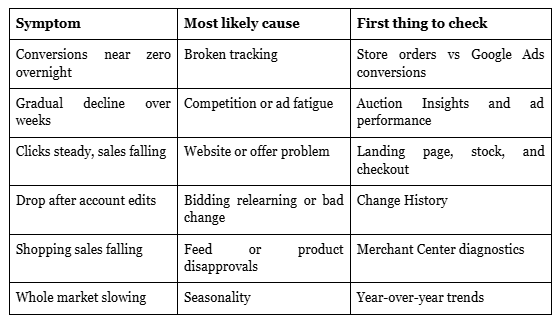
The table above is a starting point rather than a rulebook, since problems often overlap.
Frequently Asked Questions
How long should I wait before reacting to a conversion drop?
If conversions fall close to zero suddenly, check tracking the same day. For gradual declines, review a full one to two weeks of data before making big changes, so you are reacting to a trend rather than normal daily swings.
Can making too many changes make the problem worse?
Yes. Several changes at once can reset automated bidding and make it hard to know which change helped or hurt. Specialists usually change one major element at a time.
When should a business bring in outside help?
If the cause is still unclear after checking tracking, recent changes, and the website, a fresh set of expert eyes can often find the issue faster and prevent wasted spend.
Final Thoughts
Campaigns stop converting for many reasons, from broken tags and website glitches to rising competition and seasonal slowdowns. What separates a quick recovery from weeks of wasted budget is a calm, methodical diagnosis that confirms the data before touching the settings. Whether you manage the account yourself or work with the best Google Ads agency you can find, that disciplined process is what protects your results. To see how a specialist team approaches account audits and recovery for ecommerce brands, visit growwithvysta.com for a closer look, and consider a full account review the next time your conversions take an unexpected dip.
HOW DO YOU FEEL ABOUT FASHION?
COMMENT OR TAKE OUR PAGE READER SURVEY
Featured




A European vehicle that suddenly rides unevenly, bounces over bumps, or makes clunking noises while turning may have a suspension problem that needs more than a routine inspection.