
The Complete Buyer's Guide to 4x4 Pallets: Specs, Load Capacity, and Where to Source Them in the US
PAGE
By PAGE Editor
When a warehouse operation slows down because of inconsistent pallet sizing, or when a shipment is rejected at a distribution center due to non-compliant dimensions, the problem often traces back to a purchasing decision that was made without enough information. Pallets are foundational to how goods move through supply chains, yet they are frequently treated as a commodity afterthought rather than a critical operational input.
This is especially true for square-format pallets, where dimensional accuracy, structural consistency, and material quality directly affect how efficiently a facility operates. Purchasing the wrong format—or sourcing from a supplier who cannot maintain consistent standards—can introduce friction at nearly every stage of the logistics process, from forklift clearance to automated conveyor compatibility to final delivery acceptance.
This guide is written for procurement managers, warehouse supervisors, and operations teams who need clear, grounded information about square pallets before committing to a supply agreement or placing a volume order.
What a 4x4 Pallet Is and Why Dimensions Matter More Than They Seem
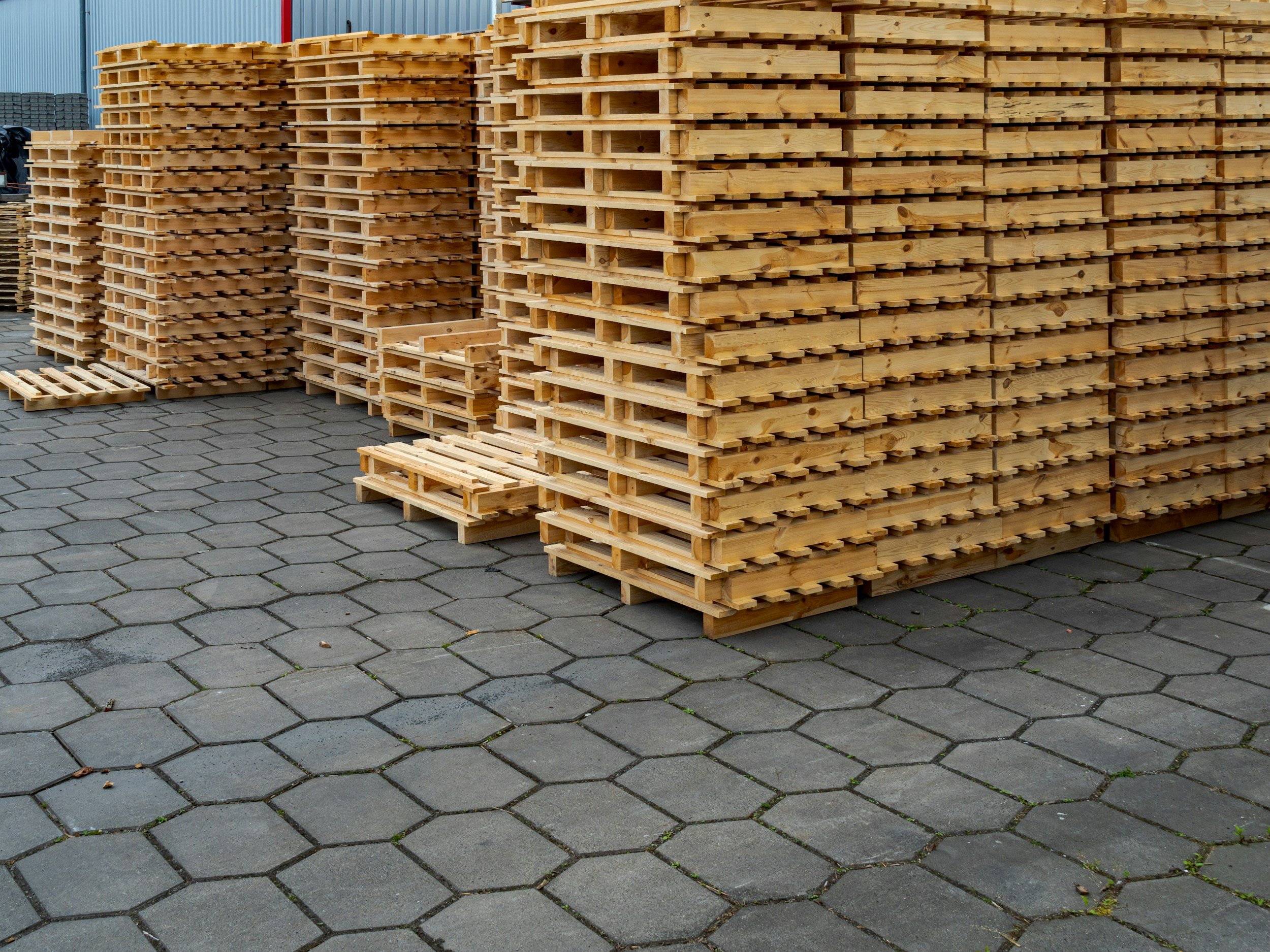
A 4x4 pallet refers to a square-format pallet with equal length and width dimensions, designed to offer symmetric handling from all four sides. Unlike rectangular pallets, which have a distinct long and short axis, square pallets allow forklifts and pallet jacks to approach from any direction without adjusting their approach angle or repositioning. This symmetry is not cosmetic—it directly affects how efficiently a facility can move product through tight aisles, racking systems, or automated handling equipment.
The dimensional consistency of square pallets is particularly important in operations where pallet rotation or reorientation happens frequently, such as cross-docking facilities, distribution centers with high throughput, and manufacturing environments where product orientation on the pallet changes between production stages and outbound shipment.
How Equal Dimensions Affect Racking and Storage Compatibility
Racking systems are built around predictable pallet footprints. When pallet dimensions vary—even slightly—the consequences show up in load overhang, beam clearance problems, and inconsistent weight distribution across racking structures. Square pallets, when specified correctly, simplify the compatibility calculation because the same dimension governs both depth and width orientation.
This matters most in facilities that use selective racking, push-back racking, or drive-in racking, where the margin between the pallet edge and the rack beam is intentionally narrow to maximize storage density. Sourcing pallets that consistently meet the stated square dimension eliminates a variable that would otherwise require manual checking or slow throughput during putaway operations.
Why Symmetry Matters in Automated Environments
Automated storage and retrieval systems, conveyor-integrated facilities, and robotic picking environments are calibrated to expect precise pallet footprints. A rectangular pallet loaded in the wrong orientation can jam a conveyor, misalign a pick location, or cause a shuttle system to fault. Square pallets reduce this risk because the system does not need to account for orientation—the pallet presents the same profile regardless of which end enters the system first.
For operations planning to integrate automation in the near term, standardizing on square pallets now can reduce reconfiguration costs later. The alignment between pallet format and equipment specification is something facilities often have to correct retroactively, at significant expense.
Load Capacity and Structural Integrity Considerations
Load capacity in pallets is not a single number—it is a range that shifts depending on how the load is distributed, whether the pallet is in static or dynamic use, and what surface the pallet rests on. A pallet rated for static storage may perform very differently under the stress of repeated forklift entry and exit cycles, and the difference between these scenarios is something buyers frequently underestimate when reading product specifications.
For square pallets specifically, the distribution of structural support across all four sides affects how weight is transferred to the deck and into the stringer or block components beneath it. A well-constructed square pallet maintains structural integrity under centered loads and off-center loads, which is important in real-world operations where perfect load centering is not always achievable.
Static Load vs. Dynamic Load vs. Racking Load
Static load refers to the weight a pallet can support when it is sitting on a flat, stable surface and not being moved. Dynamic load refers to the capacity under active movement—being lifted, transported, or transferred between surfaces. Racking load refers to what the pallet can bear when it is supported only at its edges by rack beams, with no surface beneath the center of the pallet.
Each of these ratings can differ significantly for the same pallet model. Buyers who only evaluate static load capacity may be sourcing pallets that structurally degrade much faster in racking environments, leading to premature failure, load drops, or safety incidents. When sourcing square pallets for racking applications, the racking load rating should be the primary figure evaluated, not the static or dynamic rating.
Material Choice and Long-Term Structural Performance
Wood, plastic, and composite materials each behave differently under sustained load and repeated use. Wood pallets are subject to moisture absorption, which changes their structural properties over time and can cause warping that affects dimensional accuracy. Plastic pallets maintain consistent dimensions across temperature and humidity ranges but carry a higher upfront cost. Composite and engineered wood options occupy a middle ground, offering improved moisture resistance compared to standard wood while staying closer to wood pricing.
The right material choice depends on the environment the pallet will operate in, the number of trips it will make before retirement, and whether it will re-enter the supply chain for reuse or be treated as a one-way product. Facilities that operate in temperature-controlled or food-safe environments face additional material constraints, including compliance with sanitation and contamination prevention standards that govern pallet materials in those settings. The FDA's current Good Manufacturing Practice regulations outline specific requirements for materials used in food-contact or food-adjacent storage environments, which directly affects pallet material selection for those operations.
How to Evaluate Suppliers Before Committing to a Volume Order
The pallet market in the United States includes a wide range of suppliers, from regional lumber yards that produce wooden pallets to national distributors who stock multiple formats and materials. The variability in quality, dimensional consistency, and supply reliability across this market is substantial, and it is not always visible from a product listing or a price quote.
A supplier evaluation should focus on whether they can consistently deliver pallets that meet the exact specification you have defined, not just approximately meet it. This requires understanding how they source their materials, how they quality-check outgoing inventory, and what their lead times look like under different demand conditions.
Dimensional Tolerance and Quality Consistency
Dimensional tolerance refers to how much a pallet's actual measurements can deviate from its stated specification and still be considered acceptable. Different suppliers apply different tolerance standards, and this information is rarely volunteered upfront. For operations where pallets interact with automated systems or tight racking configurations, a supplier with loose tolerance standards will introduce operational variability that compounds over time.
Requesting sample units before placing a volume order is standard practice and any reliable supplier should accommodate it. Inspecting samples for squareness, deck board spacing, fastener consistency, and structural rigidity gives a practical basis for evaluating whether the supplier's product will perform as described in your specific operating environment.
Supply Reliability and Regional Coverage
Supply reliability is distinct from product quality but equally important. A supplier who consistently delivers quality pallets but cannot maintain lead times during peak demand periods creates its own category of operational risk. For facilities that run lean inventory on consumable inputs like pallets, a supply interruption can slow throughput or halt shipping operations entirely.
Regional sourcing proximity matters in two ways: it reduces lead time and it reduces freight cost. Suppliers with distribution infrastructure concentrated near your facilities or major regional logistics hubs are generally better positioned to respond to short-notice orders or demand spikes. Before finalizing a supply agreement, it is reasonable to ask about their regional inventory capacity and how they handle demand surges from other customers in the same geography.
Common Sourcing Mistakes and How to Avoid Them
Most sourcing problems with square pallets fall into a small number of recurring patterns. Understanding these patterns helps procurement teams structure their evaluation process more effectively and avoid decisions that look correct at the purchasing stage but create operational friction later.
• Purchasing based on unit price alone without accounting for the total cost of ownership across a pallet's usable life, including repair frequency, replacement rate, and any damage it causes to product or equipment during failure.
• Failing to specify the racking load rating when sourcing for facilities with elevated storage systems, which results in pallets that meet static load requirements but structurally fail in racking configurations.
• Selecting a material type without accounting for the operating environment, particularly in cold storage, food-adjacent, or high-humidity settings where material behavior changes significantly.
• Ordering from a new supplier at full volume without completing a sample evaluation, which removes the ability to identify dimensional or quality inconsistencies before they affect operations.
• Choosing a supplier based solely on catalog availability without confirming their capacity to fulfill ongoing volume requirements at consistent lead times.
Conclusion
Sourcing square pallets is a decision that has more downstream consequences than most procurement processes account for. The dimensional format, structural ratings, material choice, and supplier reliability all interact with how a facility operates—its racking layout, its handling equipment, its throughput targets, and its safety standards.
The best purchasing decisions in this category come from operations teams that treat pallets as a functional system component rather than a generic commodity. That means defining specifications clearly before engaging suppliers, evaluating products under the specific conditions they will actually face, and building supplier relationships that prioritize consistency over short-term pricing advantages.
For facilities that are reviewing their pallet sourcing for the first time or rationalizing an existing multi-supplier approach, starting with a clear dimensional and load specification—and holding potential suppliers to it through a structured sample evaluation—will reduce most of the common failure modes before they affect operations.
HOW DO YOU FEEL ABOUT FASHION?
COMMENT OR TAKE OUR PAGE READER SURVEY
Featured




A Fishing Guru’s family fishing charters offer visitors a guided way to experience fishing in Islamorada.