
What Alcohol Actually Does to Your Skin and Sleep
PAGE
By PAGE Editor
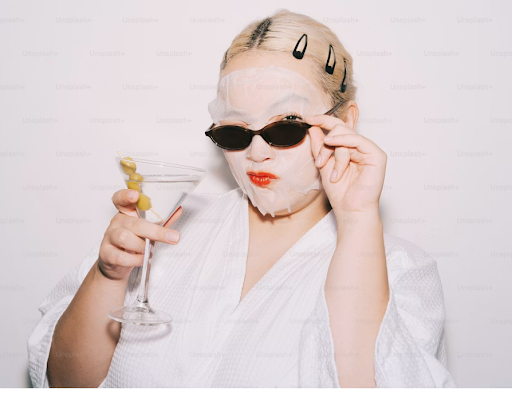
The morning mirror doesn't lie. Puffy eyes. Dull, grayish skin. That general look of "I need another three hours of sleep," even when you technically got seven. Most of us blame the late night. But the real culprit is what was in your glass. Alcohol changes how your skin looks and how your body recovers overnight. And it starts before you even feel buzzed.
Your Skin After Drinking — Three Things Happening Right Now
Dehydration hits within 30 minutes.
Alcohol is a diuretic. Your kidneys start pulling water out of your system almost immediately. Skin cells lose moisture, and the effect shows up fast — fine lines look deeper, your complexion loses that plump, hydrated look, and makeup sits differently on your face. It's not a long-term damage thing either. One night of drinking is enough to reduce skin hydration the next morning, to the point where you'll notice. If you've ever woken up after two glasses of wine and thought your moisturizer wasn't working, it wasn't the moisturizer.
Inflammation flares up.
Alcohol triggers an inflammatory response. For some people, that means flushing and redness within an hour. For others, it shows up the next day as puffiness around the eyes and cheeks. This is your body reacting to acetaldehyde, the compound alcohol breaks down into, and it's more irritating than alcohol itself. If you have existing skin conditions like rosacea or acne, alcohol makes them worse. Not sometimes. Almost always. Dermatologists see this pattern constantly, and the patients who cut back almost always see improvement.
Collagen production slows down overnight.
This is the one that matters long-term. Collagen is what keeps skin firm and elastic. Alcohol interferes with your body's ability to produce it during sleep, which is when most repair work happens.
One night won't destroy your collagen. But consistent drinking means your skin's overnight repair keeps getting interrupted. That adds up. Skin that could be fixing itself is instead just waiting.
Why "Just One Glass" Still Messes With Your Sleep
You already know alcohol knocks you out faster. That's the sedative effect. What most people don't know is what happens after.
Your REM sleep gets crushed.
Alcohol suppresses REM. The restorative sleep stage is where your brain processes information, and your body does actual repair work. You spend more time in deep sleep early in the night, then rebound into lighter, more disrupted sleep in the early morning hours. The result: you were "asleep" for eight hours, but your body got maybe four hours of quality rest.
The 3 AM wake-up is predictable.
That jolt awake at 3 or 4 in the morning after drinking isn't random. As your body metabolizes the alcohol, your nervous system rebounds. Heart rate goes up. Cortisol spikes. You wake up not because you need the bathroom, but because your body just exited sedation and is now overcorrecting. This is why you can sleep eight hours after a night out and still feel exhausted. Your sleep happened. It just wasn't the kind that counts.
How Quickly Your Skin Bounces Back When You Take a Break
Here's the good part: the damage isn't permanent.
People who stop drinking for even a week consistently report brighter skin, reduced puffiness, and better hydration. After two weeks, the collagen interference stops, and your skin's overnight repair cycle gets back to full function. After a month, most people see noticeable differences in skin texture and firmness, and the before-and-after photos tend to speak for themselves. Sleep improves on a similar timeline. REM sleep normalizes within days of cutting back. The 3 am wake-up stops being a thing. You start waking up feeling like your sleep actually did something.
If You're Not Ready to Quit Entirely — Smarter Ways to Moderate
Not drinking at all isn't realistic for everyone. And it doesn't have to be the only option.
Tracking your intake is the simplest starting point. Most people underestimate how much they drink by 30 to 40 percent — not because they're lying, but because pours get generous and "one drink" is rarely one standard unit. An app or a simple notes journal changes that overnight. Medication support makes sense. Naltrexone is an FDA-approved prescription that reduces alcohol cravings by blocking the endorphin reward your brain gets from drinking. It doesn't make you sick if you drink. It just makes drinking less interesting — the buzz feels muted, and one glass stays one glass. Programs like Sunnyside combine medication access with coaching and tracking, which is what most people need to make moderation actually stick.
None of this requires swearing off champagne forever. It just means your skin and your sleep stop paying the price every time.
The Takeaway
Alcohol and beauty routines don't coexist well. You can spend on serums and moisturizers and sleep masks, but if alcohol is interfering with your hydration and REM sleep every weekend, you're undoing a lot of that work. The fix isn't all-or-nothing. It's knowing what alcohol actually does, deciding where your line is, and using the tools available — tracking, medication, programs — to stay on the right side of it. Your morning mirror won't lie about whether it's working
HOW DO YOU FEEL ABOUT FASHION?
COMMENT OR TAKE OUR PAGE READER SURVEY
Featured

Christmas shopping becomes easier when you focus on how a child already likes to play.