
Reju’s Partnership With Recycling Europe Signals A New Phase For Textile Circularity

Reju CEO Patrik Frisk
By PAGE Editor
As Europe accelerates its transition toward a circular economy, one of the industry's most pressing challenges remains textile waste. While brands, manufacturers, and policymakers increasingly align around sustainability targets, meaningful progress depends on infrastructure capable of transforming discarded materials into viable resources at scale.
That reality makes Reju’s newly announced partnership with Recycling Europe Textiles particularly notable.
The textile-to-textile regeneration company has joined the textiles branch of Recycling Europe, a move that reinforces a broader industry effort to create more competitive and efficient markets for recycled materials across the continent. The announcement arrives at a critical moment for the European textile sector, where regulatory pressure, consumer demand, and environmental necessity are converging to reshape how products are designed, produced, and ultimately recycled.

For Reju, the partnership represents more than membership in an industry organization. It positions the company within a growing network of stakeholders working to solve one of fashion’s most complex supply chain challenges: closing the loop on textile waste.
The company has emerged as a notable player in the textile regeneration space through its focus on converting polyester textiles and post-consumer PET waste into regenerated raw materials. Backed by teams of engineers, scientists, and textile specialists across Europe and North America, Reju has invested heavily in creating systems capable of supporting industrial-scale circularity.
Its operational footprint already reflects those ambitions. The company’s pilot Regeneration Hub in Frankfurt serves as a proving ground for its technology, while future large-scale hubs are planned for Chemelot in the Netherlands, Rochester, New York, and Lacq, France. Together, these facilities point toward a strategy centered on creating localized recycling ecosystems capable of reducing waste while strengthening regional supply chains.
The timing is significant.

Europe's textile industry faces mounting pressure to establish infrastructure that can support extended producer responsibility frameworks, recycled content mandates, and increasing demand for circular materials. While sustainability conversations often focus on product innovation or consumer behavior, the less visible challenge lies in creating the systems necessary to process textiles once they reach the end of their useful life.
That is where collaborative initiatives become increasingly valuable.
“We are delighted to welcome Reju as our newest partner of Recycling Europe Textiles,” said Julia Ettinger, Secretary-General of Recycling Europe. “This partnership shows how industry collaboration can scale textile circularity at the speed Europe now needs—unlocking both environmental and economic opportunity.”
The emphasis on collaboration reflects a growing understanding across the industry that no single company can solve textile waste independently. Circularity requires participation from fiber producers, manufacturers, brands, recyclers, technology providers, and policymakers alike. Partnerships that connect those stakeholders help establish the standards, infrastructure, and market conditions needed for long-term success.
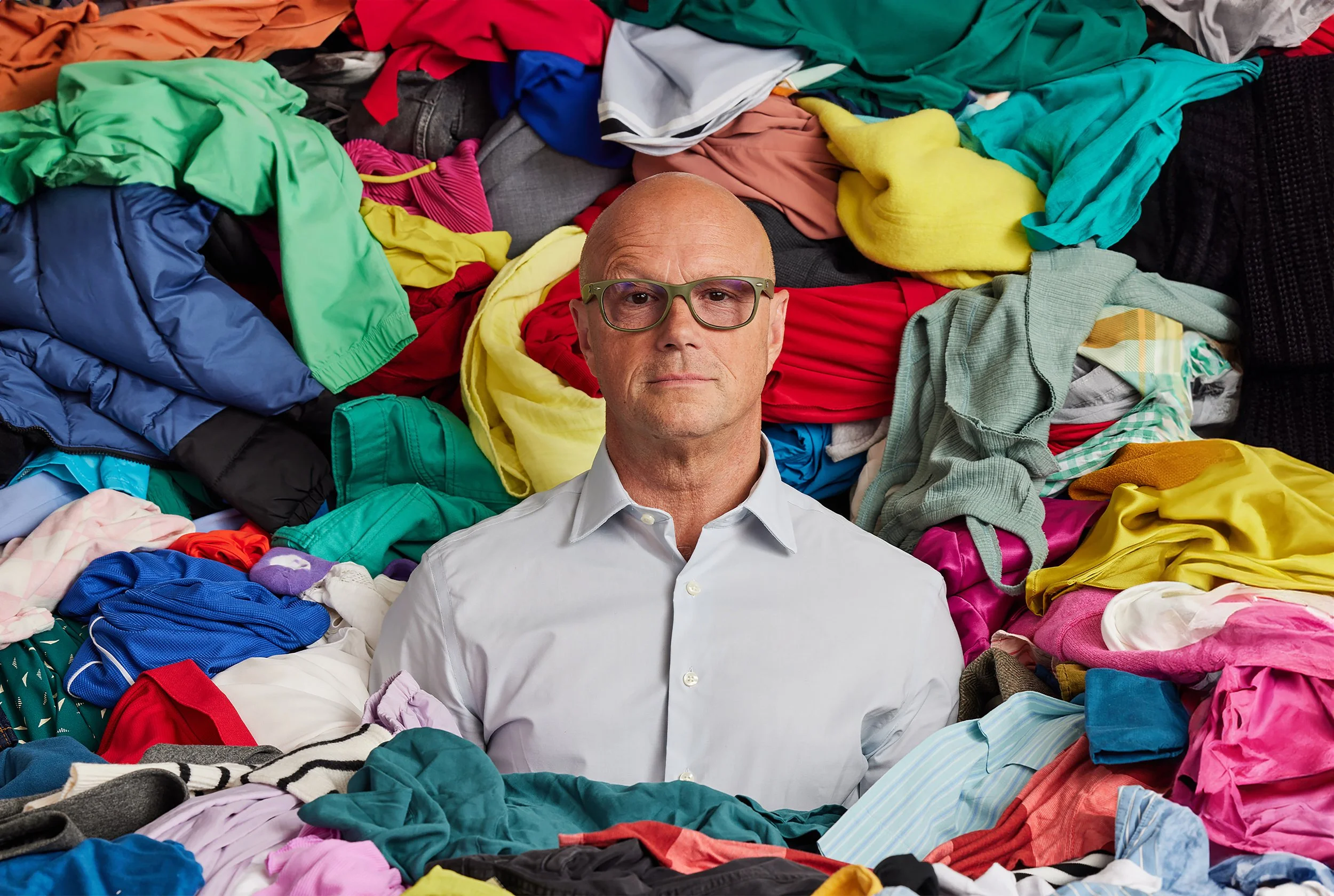
Reju CEO Patrik Frisk
For Reju CEO Patrik Frisk, the opportunity extends beyond technological advancement.
“Building partnerships like this one are important and we have the opportunity to establish a genuine circular ecosystem for textile recycling and invite collaboration across the entire value chain,” he said.
That ecosystem approach may ultimately become the defining factor in whether textile circularity achieves mainstream adoption. Technologies capable of regenerating fibers are only one piece of the equation. Equally important are collection systems, sorting capabilities, investment mechanisms, and demand signals that create viable markets for recycled materials.
As Europe continues to position itself as a global leader in circular economy initiatives, partnerships such as the one between Reju and Recycling Europe highlight a broader shift underway. The conversation is no longer centered solely on sustainability ambitions; it is increasingly focused on building the infrastructure required to make those ambitions operational.
The future of textile circularity will be determined not by isolated innovations, but by interconnected networks capable of moving materials through multiple life cycles. Reju’s latest partnership suggests the industry is taking another step toward making that vision a commercial reality.
HOW DO YOU FEEL ABOUT FASHION?
COMMENT OR TAKE OUR PAGE READER SURVEY
Featured





Telfar's SS2027 collection transforms the sample sale into a runway, using inside-out tailoring, manipulated materials, New York street references and a Brooklyn-to-Paris spectacle to question who gets to define fashion—and where it actually happens.