
Crypto Payment Gateway without KYC: Is It Really Helpful?
PAGE
By PAGE Editor
KYC has become a compulsory step for many platforms when registering, especially for those with financial or payment services. Many cryptocurrency payment gateways also mandate this. However, this can pose a serious privacy risk. And cryptocurrency, which is meant to protect privacy causing privacy risks may not sound good.
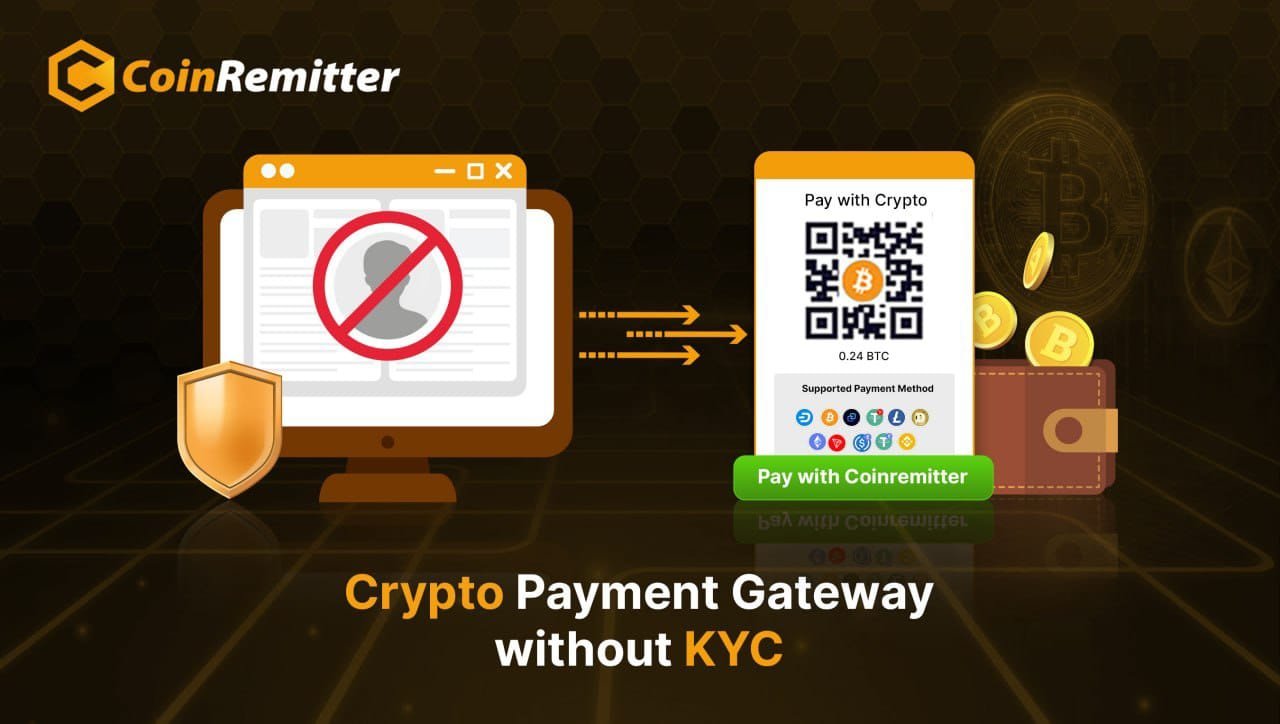
In such cases, a cryptocurrency payment gateway without KYC can help. For example, Coinremitter lets businesses register and accept payment in crypto without KYC. But are such platforms really helpful?
Why KYC Becomes a Friction Point for Businesses
Identity verification made sense in the world of traditional finance. Banks have to comply with anti-money-laundering laws, so they collect extensive documentation from every account holder. Crypto payment gateways inherited that approach, even though they operate very differently from banks.
The problem is what that process costs your business in time. Verification teams need to manually review passports, proof of address, and sometimes run live video checks. Your account sits in "pending" while the clock ticks. For a store launching a product this week, that delay is brutal, because you have to spend time on the crypto API integration. Cross-border card payments already fail at two to three times the rate of domestic transactions. Adding KYC on top of that means more time, more friction, and more customers who abandon checkout.
Your competitor, already live, may drop the same product you're willing to drop after KYC, and your customers are gone. Also, you can't imagine how your personal information is being used.
How a Crypto Payment Gateway Without KYC Speeds Up Revenue
Speed is the benefit business owners feel first. Skip the document review, and your account is ready the moment you submit an email, name, and password. CoinRemitter turns that into a three-minute signup. Your first payment can land the same day you register.
That speed ripples through the rest of your operation. Settlement takes 10 to 30 minutes for Bitcoin and three to five minutes for Ethereum. Compare that to the three to five business days traditional processors hold your funds. Your cash flow improves. Your working capital stays in motion. And international customers get faster confirmation on their end, which reduces the "did my payment go through?" support tickets that drain your team's time.
A lower fee structure compounds the benefit. The platform charges 0.23% per transaction, which is roughly twelve times less than the 2.9% plus $0.30 that credit card processors take. On $100,000 in monthly sales, you keep about $2,670 more every month. Over a year, that's $32,040 back in your business instead of a processor's pocket.
How a Crypto Gateway Without KYC Lowers Your Data Breach Exposure
Every document you hand to a payment processor becomes a liability. In 2025, about 46% of organizations reported that identity verification vendors they worked with had experienced a breach. Your passport, driver's license, and utility bills become someone else's problem the moment their security fails.
A no-KYC gateway shrinks that attack surface dramatically. There's nothing to steal because nothing was collected. No government IDs. No facial biometrics. No address verification records. Ultimately, your details aren't publicly available. So, they can't be viewed or stolen.
This isn't a hypothetical. Over 30,000 businesses already use Coinremitter's no-KYC crypto payment solution, and there have been zero successful breaches on customer funds across eight years of operation. This has happened due to 256-bit encryption, two-factor authentication, and IP whitelisting, not from mandating KYC.
Why Some Platforms Still Mandate KYC
You might be wondering: if no-KYC is safe, why do so many gateways still require it? Two reasons. First, some jurisdictions mandate identity verification for payment providers, so those platforms follow local law. Second, KYC gives platforms a compliance story they can market to nervous enterprise clients. Neither of those reasons has much to do with whether your payments are secure.
The actual security of your funds comes down to platform-level measures, not document collection. So, you should also focus on the following security measures when choosing a platform:
Account security and control: Built-in platform-level security features are a must to protect your account.
Wallet architecture: Consider choosing a platform with a custodial wallet. So, the platform can handle key management more securely.
Settlement and funds control: Look for instant settlement to your wallet with a negligible holding period. Coinremitter's Auto-withdrawal feature transfers funds to an external wallet on a schedule, so you keep tighter control.
Chargeback exposure: Crypto payments are irreversible, which means zero chargeback risk, versus the 0.47% chargeback rate that credit card merchants absorb.
When a crypto payment gateway without KYC checks those boxes, skipping identity verification stops being a risk and becomes a genuine advantage. Less paperwork. Faster access. Smaller breach surface.
Conclusion
Skip the KYC, and you skip delays, document risk, and a chunk of your processing fees, without trading away security if you pick the right gateway. The real value lies in faster revenue access, lower breach exposure, and crypto's built-in chargeback protection.
CoinRemitter pairs no-KYC onboarding with eight years of zero fund losses, 256-bit encryption, and a 0.23% fee that leaves credit card processors in the dust. Ready to accept crypto payments without the KYC hassle? Create your free CoinRemitter account today and start processing in three minutes.
HOW DO YOU FEEL ABOUT FASHION?
COMMENT OR TAKE OUR PAGE READER SURVEY
Featured





Living in Wasilla means dealing with a unique mix of pests that most of the Lower 48 never has to think about.