
How Better Evening Routines Support Modern Recovery

PAGE
By PAGE Editor
For many people, the end of the workday does not always mean the beginning of recovery. A laptop may be closed, meetings may be finished, and daily responsibilities may be temporarily paused, yet the mind can remain active long after the day’s demands have ended.
This experience has become increasingly common in modern life. Digital communication keeps people connected beyond traditional working hours. Remote and hybrid work arrangements can blur the boundary between professional and personal time. Even leisure activities can involve continuous information processing through phones, social media, and online content.
The result is that many people experience a gap between being physically tired and feeling ready to rest. Recovery is not only determined by how much time someone spends in bed. It also depends on whether the body and mind have enough opportunity to transition away from the demands of the day.
This is where evening routines become important. A well-designed evening routine is not simply a list of sleep habits. It creates a transition between activity and recovery, helping establish a clearer separation between daytime demands and nighttime rest.
Why Modern Evenings Can Make Recovery More Difficult
Human beings are designed to respond to changing demands. During the day, attention, problem-solving, and decision-making help people manage work, relationships, and responsibilities. These abilities are essential for productivity, but they also require periods of recovery.
The challenge today is that many people continue receiving signals that encourage attention and engagement even after their main responsibilities are complete. A message notification, a work-related thought, or an unfinished task can keep the mind connected to the demands of the day.
This does not mean that every evening activity is harmful. Reading, talking with friends, exercising, or using technology can all be part of a healthy lifestyle. The issue is whether the activities support a transition toward recovery or continue requiring the same level of attention and problem-solving used during the day.
Researchers often describe this type of continued mental activation as cognitive arousal. A person may feel tired but still experience an active mind because unresolved thoughts, planning, or stimulation have not fully ended.
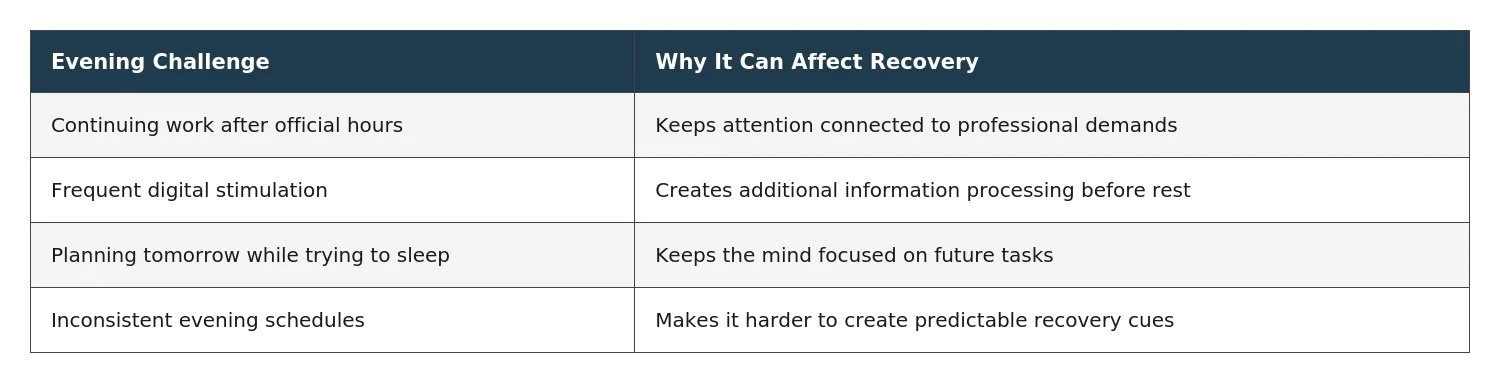
A better evening routine does not require removing every source of stimulation. Instead, it creates a deliberate period where the pace of the day gradually changes.
An Evening Routine Is a Recovery Transition, Not Just a Sleep Habit
Many people think of evening routines as a collection of sleep-related behaviors: avoiding screens, drinking tea, reading, stretching, or preparing for bed. These actions can be useful, but their deeper value comes from repetition and timing.
The human brain responds strongly to patterns. When certain behaviors happen consistently before rest, they can become signals that a different state is beginning. This is why routines can be helpful even when they are simple.
A recovery transition might involve reducing mentally demanding activities, creating a calmer environment, organizing thoughts before bedtime, or repeating a familiar sequence that signals the end of the day.
The goal is not to create a perfect routine. In fact, overly complicated routines can become another source of pressure. A sustainable evening routine should be realistic enough to continue during busy periods.

For people looking to make their evening transition more intentional, some may explore tools that fit naturally alongside existing habits. A wearable device for a calmer evening routine is one example of how wellness technology may be included as part of a broader wind-down practice.
The role of technology in this context is not to replace healthy behaviors. Instead, it can serve as one possible support within a larger routine that includes consistent sleep habits, relaxation practices, and a suitable environment for recovery.
How the Nervous System Connects Evening Recovery and Sleep
The transition from activity to rest involves more than simply deciding to go to bed. The body continuously adjusts between different states depending on the environment, daily demands, and internal signals.
The autonomic nervous system plays an important role in this process. It helps regulate many automatic functions and includes two major branches commonly discussed in relation to activation and recovery: the sympathetic nervous system and the parasympathetic nervous system.
The sympathetic nervous system is often associated with states of alertness and readiness, while the parasympathetic nervous system is associated with processes involved in rest and recovery. Both systems are necessary because daily life requires both action and restoration.
The challenge for many people is not activation itself. Being focused during a work project, responding to challenges, or making important decisions are normal parts of life. The challenge is creating enough opportunity for the body and mind to shift away from constant engagement.

This is why the relationship between the nervous system and sleep has become an area of interest in wellness and sleep discussions.
Sleep is influenced by many factors, including schedule consistency, environment, lifestyle, and individual health conditions. Nervous system regulation is one part of a much larger picture, but understanding the role of arousal and recovery can help explain why a calm transition before bedtime matters.
Why Consistency Often Matters More Than a Perfect Routine
One of the biggest challenges with improving recovery habits is that people often search for the perfect solution. They may try to completely redesign their evenings, add multiple habits, or follow complicated routines.
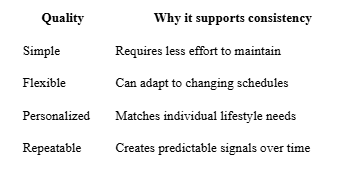
However, long-term routines are usually built through consistency rather than complexity. A small routine that someone can repeat regularly is often more sustainable than an ideal routine that becomes difficult to maintain.
A practical evening recovery routine may include:
Setting a clear boundary between work and personal time
Reducing activities that require intense concentration close to bedtime
Creating a predictable sequence before sleep
Choosing calming activities that fit personal preferences
Maintaining consistency even during stressful periods
The best routine is not necessarily the one with the most steps. It is the one that helps create a reliable transition from daily activity to recovery.
The Role of Wellness Technology in Modern Recovery
Technology has already changed how people understand their health habits. Fitness devices made activity patterns easier to observe. Sleep technology helped users identify trends in their rest. New wellness technologies are exploring how digital tools may become part of broader recovery routines.
However, technology is most useful when it supports behavior rather than replacing it. A device cannot create recovery on its own. The foundation still comes from consistent habits, appropriate rest, and lifestyle choices that match individual needs.
The challenge for wellness technology is creating experiences that are practical enough for everyday life. A technology that is difficult to use or does not fit naturally into a routine may struggle to provide long-term value.
This is why comfort, simplicity, and clear expectations matter. People are more likely to maintain a routine when the tools involved feel natural rather than demanding.
Creating a More Sustainable Evening Recovery Practice
Modern recovery is not only about increasing the number of hours available for rest. It is also about creating conditions that allow the body and mind to move from daily demands into a more restorative state.
An effective evening routine does not need to be complicated. It needs to create a consistent transition, reduce unnecessary stimulation, and support behaviors that align with personal recovery goals.
As lifestyles become increasingly connected and demanding, evening routines provide an opportunity to intentionally create space between activity and rest. Whether through traditional habits or carefully designed wellness tools, the goal is the same: making recovery a more consistent part of everyday life.
References
Buysse DJ. Sleep health: can we define it? Does it matter? Sleep.
Walker MP. Sleep, memory, and the science of recovery. Why We Sleep.
McEwen BS. Stress, adaptation, and the nervous system: mechanisms of allostasis and allostatic load. Physiological Reviews.
Breit S, Kupferberg A, Rogler G, Hasler G. Vagus Nerve as Modulator of the Brain-Gut Axis in Psychiatric and Inflammatory Disorders. Frontiers in Psychiatry.
National Sleep Foundation. Sleep hygiene and healthy sleep habit recommendations.
HOW DO YOU FEEL ABOUT FASHION?
COMMENT OR TAKE OUR PAGE READER SURVEY
Featured




For many people, the end of the workday does not always mean the beginning of recovery.