
How Businesses Can Choose Cost-Effective Storage Equipment for Their Warehouse
PAGE
By PAGE Editor
According to an article by MDM, warehouse costs are climbing. So, every square foot now matters more than ever. For growing businesses, smart storage equipment decisions can mean the difference between steady profits and constant budget stress.
Analyze Your Current Space Before Buying Anything
Whether you are operating a fashion brand or a car parts business, start by measuring how your warehouse is actually being used. Walk the floor, track movement patterns, and calculate how much vertical space is going unused.
Higher space costs will hit your budget every month. So, squeezing more value out of your existing footprint will directly protect your bottom line.
Look beyond square footage and evaluate layout efficiency. Fast-moving SKUs should sit in easily accessible areas, while slow-moving inventory can move higher or deeper into racking systems.
Smart placement reduces travel time and improves productivity without adding new equipment.
Calculate Total Cost of Ownership
Sticker price alone tells only part of the story. Equipment that looks affordable upfront may cost more over its lifespan due to maintenance, energy use, and repairs.
Businesses must consider energy consumption, parts, servicing, and training when calculating material handling costs. Ignoring those factors can quietly inflate your long-term expenses and limit your cash flow.
Use a simple framework when comparing equipment options. You should include:
Initial purchase price
Installation and freight costs
Ongoing maintenance and repair needs
Add expected lifespan and resale value to the equation. Clear math often reveals that a slightly higher upfront investment delivers stronger long-term savings.
Match Your Storage Equipment to Your Inventory Flow
Every warehouse has a different rhythm. High-turnover distribution centers need speed and accessibility, while bulk storage operations benefit from density and load capacity.
A survey published by Supply Chain Management Review found that 45% of operators cited outdated storage or material-handling equipment as a major challenge. Outdated systems slow down your team and raise labor costs, especially during peak demand.
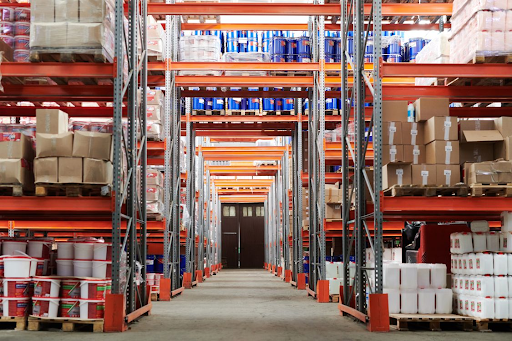
Evaluate your order profile and picking strategy before selecting racking, shelving, or automated systems. Selective pallet racking offers flexibility for varied SKUs, while drive-in or push-back systems maximize cube utilization for uniform products.
When choosing between new and used pallet rack, businesses often find used systems provide excellent structural performance at a lower capital cost. Opting for pre-owned racking often makes financial sense.
Optimize Vertical Space and Reduce Travel Time
Unused vertical space equals wasted money. Modern warehouses increasingly adopt tall racking systems and vertical storage solutions to offset rising rent and land costs.
Insights shared by Logistics Matters show that operators are making better use of vertical space and space-saving equipment to improve efficiency and reduce costs. More vertical storage allows you to expand capacity without expanding your building.
Shorter travel paths also lower labor expenses. Labor can account for a significant share of material-handling costs. Reduced walking and forklift travel times improve throughput and help your team process more orders per shift.
Design layouts that support straight-line picking routes and minimal cross-traffic. Well-planned aisles protect safety and productivity at the same time.
Standardize Equipment to Simplify Maintenance and Training
Mixed equipment types create complexity. Different rack profiles, beam sizes, and lift requirements demand more training and spare parts.
Standardization lowers operational friction. Fewer variations mean easier inspections, simpler repairs, and clearer safety procedures.
Review existing rack types and determine whether consolidation is possible. Consistent components make expansion easier and help purchasing teams negotiate better pricing on bulk orders.
Training also becomes more efficient. New hires learn one system instead of three, reducing onboarding time and minimizing costly mistakes.
Making Decisions for Cost-Effectiveness
Cost-effective storage equipment is not about buying the cheapest option. Smart decisions balance purchase price, operating costs, durability, and future scalability.
Warehouse costs are unlikely to reverse course soon, so every equipment investment should protect your space, labor, and capital. Careful analysis of layout, ownership costs, vertical capacity, and equipment standardization gives you long-term control over expenses.
So, if you are planning upgrades or redesigning your layout, take time to review your goals and run the numbers before committing to new equipment. A thoughtful strategy today can prevent costly adjustments later and keep your warehouse aligned with long-term growth.
Has this article been helpful? If so, take a moment to check out our other insightful posts!
HOW DO YOU FEEL ABOUT FASHION?
COMMENT OR TAKE OUR PAGE READER SURVEY
Featured




BAPE® brings its streetwear legacy into the ring with UNDEFEATED’s wrestling-inspired Fall/Winter 2026 collection while expanding its design vocabulary through the TYPE 10 BAPEX®, an automatic timepiece that translates the brand’s signature camouflage into contemporary watchmaking.