
How Can You Design Custom Wedding Bands That Match Your Style?
PAGE
By PAGE Editor
Standing in front of a jewelry case, it’s easy to feel like every wedding band looks the same. You want something that fits your taste, but the choices on the shelf only go so far. That can make you worry that you’ll settle for a ring that doesn’t quite feel like you.
Designing your own band gives you a way around that, and it’s easier than you might think. You can pick the style, the metal, the stones, and even a hidden message, one step at a time. Along the way, you can test ideas, change your mind, and see your band on screen before it’s made.
Let’s walk through six simple steps that will help you design a wedding band that truly matches your style, from first idea to final look.
1. Explore Ideas with the AI Design Tool
Start by collecting ideas, because it’s hard to describe a style you haven’t seen yet. Save photos of rings you like, then write down what pulled you in, whether it was the shape, the color, or the sparkle. Those notes will come in handy when you start explaining your taste to a jeweler.
An AI design tool can make this first step easier. It turns your ideas into sample ring designs, which lets you compare styles before you talk to a jeweler. You don’t have to make any final decisions at this stage, so you can take your time and enjoy exploring different looks.
With a few favorites saved, you can look into custom wedding bands built around your picks. Once a jeweler sees your photos, they know right away what you like. That makes it easier to turn your early ideas into a ring that feels right
2. Choose a Band Style That Fits Your Taste
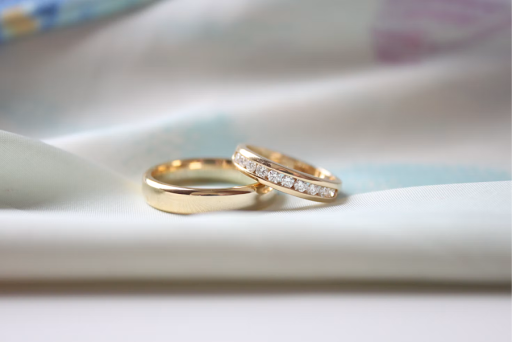
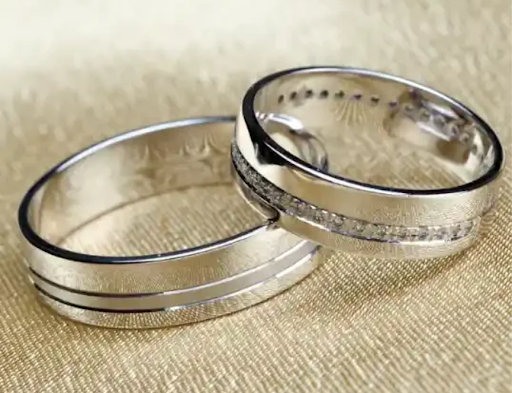
Once you know what you like, it’s time to match your ideas to a band style. A plain band keeps the attention on the metal, while a pavé band adds a line of small diamonds. An eternity band takes that sparkle all the way around.
Stackable bands are a good fit if you love a layered look, because slim rings are made to be worn together. A vintage-inspired band, on the other hand, borrows tiny beaded edges and engraved patterns from older eras. Each style has its own personality, so pick the one that sounds like you.
You don’t have to stick with just one style, either, as a jeweler can blend features from several. Picture a plain band with a thin row of diamonds along one edge. One small tweak like that can turn a classic look into something that belongs only to you.
3. Pick a Metal and Width for Daily Wear
Style is only half the story, as comfort is equally significant as looks. Metal comes first, and you can choose from yellow gold, white gold, rose gold, or platinum. Think about the jewelry you wear most often, and pick a color that works with it.
Width and shape come next, and they change how the band sits on your finger. A flat profile is straight and even, while a court profile is gently rounded, and a comfort-fit profile feels smooth on the inside. For those who spend a great deal of time typing, cooking, or working with their hands, a slimmer and smoother fit might be most comfortable.
Finish is the last piece, and it changes how light hits the surface. Polished is shiny, brushed is soft, low-shine, and hammered is a textured finish with tiny hammer marks. Whichever you choose, make sure it’s one you’d enjoy looking at all the time.
4. Add Stones or Engraving to Make It Yours
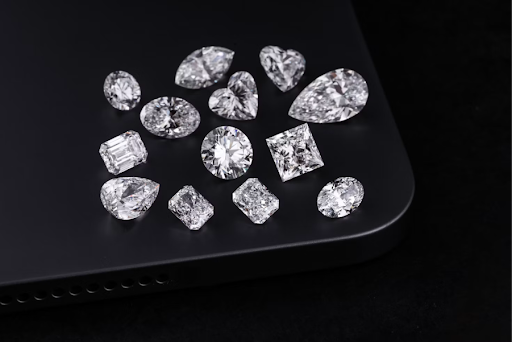
Stones and engraving are two easy ways to make a band feel personal. Diamonds add extra sparkle, and a colored gemstone can carry a meaning only you know about. A birthstone, for instance, is a simple way to include someone you love.
If you go with diamonds, you’ll also get to choose between natural and lab-grown stones. A jeweler can show you how each one looks and how it fits your budget. Stone count matters too, because a few small stones look very different from a full row of them.
Engraving can go inside or outside the band, which lets you decide how private it feels. Popular picks include a wedding date, your initials, or a short phrase only the two of you understand. Mention it early, and the engraving can be planned into the design from the start.
5. Match the Band to Your Engagement Ring
Your engagement ring, if you already have one, should guide the look of your new band. The two rings will sit next to each other for years, so they should fit together, not just look alike. A band that doesn’t line up can leave gaps or rub against the ring beside it.
The easiest fix is to share a photo of your engagement ring with your jeweler. That works even if the ring was purchased from somewhere else, because a band can be designed to sit snug against it. You can also ask for a band that goes well with the ring’s style instead of copying it.
Matching your partner’s band is another route, and couples handle it in a few different ways. Some choose identical designs, others pick bands that complement each other, and some go with two completely different looks. There’s no wrong answer as long as it feels natural to both of you.
6. Refine Your Design with CAD Renderings
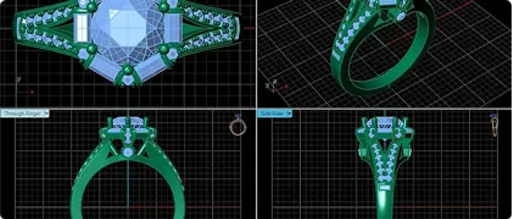
When your choices are set, the next step is seeing them in a clear picture. CAD renderings are detailed digital images of your band, made by the jeweler from everything you’ve decided. They show the width, the stones, and the overall shape before anything is made.
Take your time with each view and picture the band on your hand. If the width or stone size feels off, say so. Changes are much easier to make at this stage than after production starts, so this is the moment to speak up.
After you approve the design, the band moves into production, and you’ll get updates along the way. Many custom bands are done in as little as two to three weeks, though complex designs can take longer. Planning ahead gives you time to enjoy the process and have your rings ready for the big day.
Conclusion
You’ll see this band every time you look down, which is a good reason to take your time with it. Making one decision at a time keeps the process calm and keeps you in charge of how the final band turns out.
Trust your taste, ask plenty of questions, and keep adjusting until the design feels right. When it does, you’ll know you’ve landed on a band that fits your hand and your life. Then the only thing left to do is wear it.
HOW DO YOU FEEL ABOUT FASHION?
COMMENT OR TAKE OUR PAGE READER SURVEY
Featured
Buying property near the coast involves more than comparing views, floor areas, and asking prices.