
How Fashion Turned the Pop-Up Into Its Most Circular Format
PAGE
By PAGE Editor
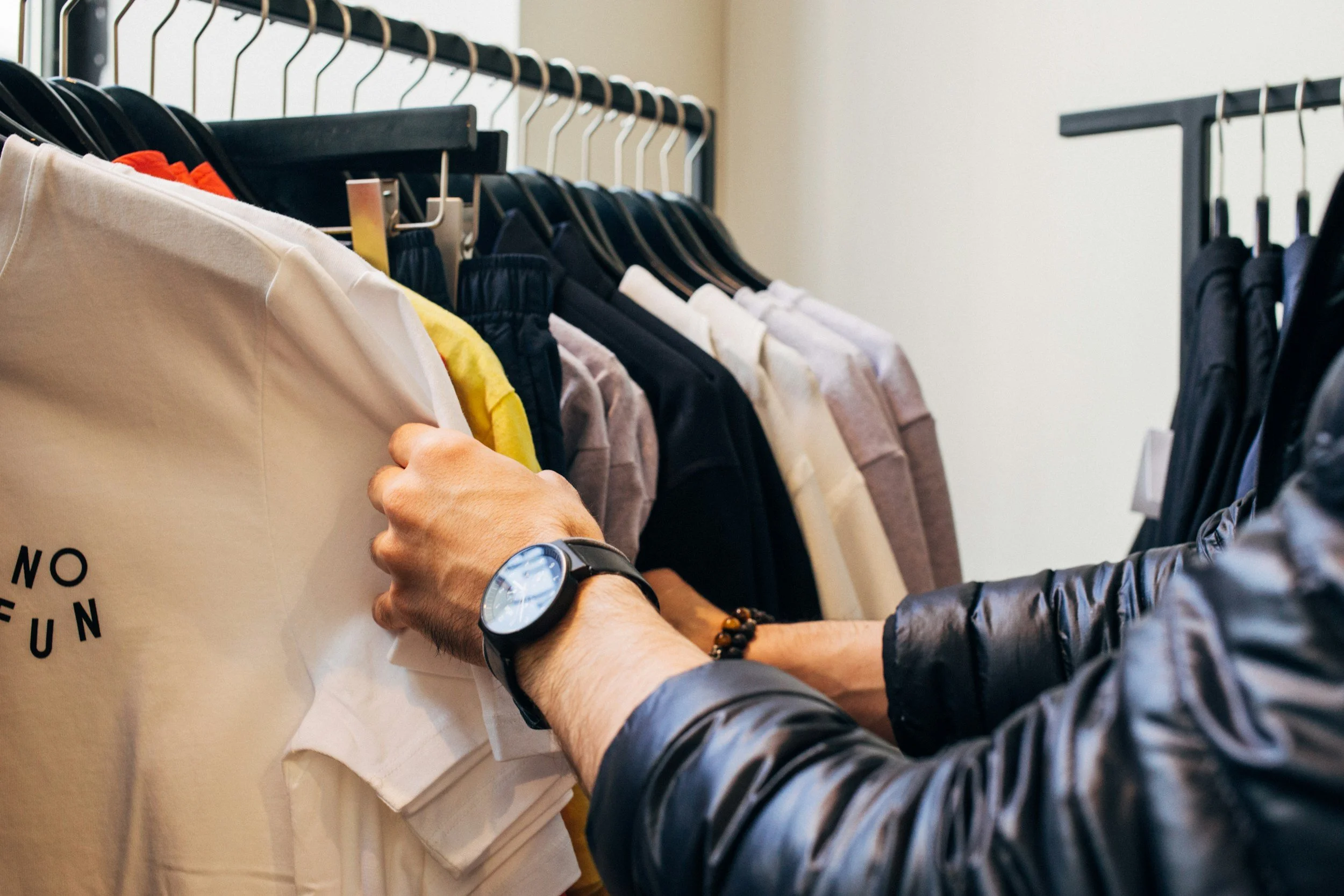
The temporary store has quietly become one of the most useful things fashion does. It lets a label test a city without signing a decade of rent, gives a resale brand the tactile discovery its product actually needs, and turns a launch into a place rather than a post. And in 2026, the format is doing something less obvious: the best examples are proving to be more circular than the permanent stores they stand in for. That applies across the whole family of temporary formats, from showroom takeovers and retail residencies to brand pop-ups.
The format was built for reuse
A permanent store is a fit-out: walls, wiring, joinery, all of it fixed to one address and demolished at the end of the lease. A pop-up has no such loyalty. Because it was always going to move, the sensible way to build one is to make it modular, on frames that flat-pack into a truck and reassemble in the next city.
Retail analysts have started making the point out loud. Short-term retail turns out to be unexpectedly sustainable, because so many pop-ups now run on modular, reusable fixtures that travel from city to city, cutting both waste and cost at the same time. Modular fabricators report waste reductions above 90 percent against traditional construction, with structures redeployed within days and reused across projects. A frame is not a sunk cost. It is an asset that carries a campaign through an entire season of stops.
Coachtopia built the argument into the walls
The most convincing ecological pop-ups are not the ones with a recycling sign by the door. They are the ones where the construction says the same thing the product does.
Coachtopia, Coach's circular sub-brand, opened a London pop-up whose fixtures were made from cutting scraps in collaboration with Studio XAG, with display counters incorporating repurposed leather and a slogan, Have Taste, Love Waste, formed from neon flex offcuts. The displays were designed to travel and be reused across locations rather than to survive a single address. For a label whose entire proposition is repurposed material, a store built from anything else would have contradicted the product on the shelves. It also looked better than a conventional build, which is the part brands tend to underestimate.
The same instinct is showing up in hospitality. When Depop took over The Times Square EDITION for Earth Day, the low-waste dinner led by Chef John Fraser was treated as part of the concept rather than a concession to it. Nobody in the room experienced restraint. They experienced intention, which is what circularity looks like when it is designed rather than disclosed.
An afterlife economy is forming
What happens to the build after the run has become its own field. During the pandemic, the architecture studio OMA passed set elements made for Prada to four art academies, turning scenography into raw material for student work. In Milan, Spazio MÉTA was founded in 2020 as Italy's first company dedicated to recovering props and scenography from temporary installations, which means routing a build into a second life is now a service a brand can book rather than a favor it has to arrange.
The standard is spreading from the runway outward
Fashion has already codified this in one place. Copenhagen Fashion Week's sustainability requirements, mandatory for the official schedule since January 2023, state plainly that no disposable backdrops or props may be used. Berlin Fashion Week adopted the framework, and the British Fashion Council folded it into NEWGEN, with full implementation starting in January 2026.
Show production was the harder case, because a set exists for fifteen minutes. If designers can meet that standard on a runway, a pop-up standing for two weeks is a far easier problem to solve, and the brands already building this way are proving it.
Why it pays twice
The appeal is not only reputational. Modular builds travel, so the second city costs a fraction of the first. Rented fixtures carry no storage burden. Fabric graphics can be reprinted on a frame that remains in service, so a campaign refresh does not require a new structure.
Fashion spent a decade learning to account for what it makes. The most interesting brands are now applying the same thinking to the rooms they build to sell, and finding that the temporary space, of all things, is where circular design is easiest to achieve.
HOW DO YOU FEEL ABOUT FASHION?
COMMENT OR TAKE OUR PAGE READER SURVEY
Featured

Preparing a home for overnight guests creates different priorities from ordinary weekly upkeep.