
How Patina Is Turning Northern Ireland’s Textile Heritage Into A Blueprint For Fashion’s Circular Future
PAGE
By PAGE Editor
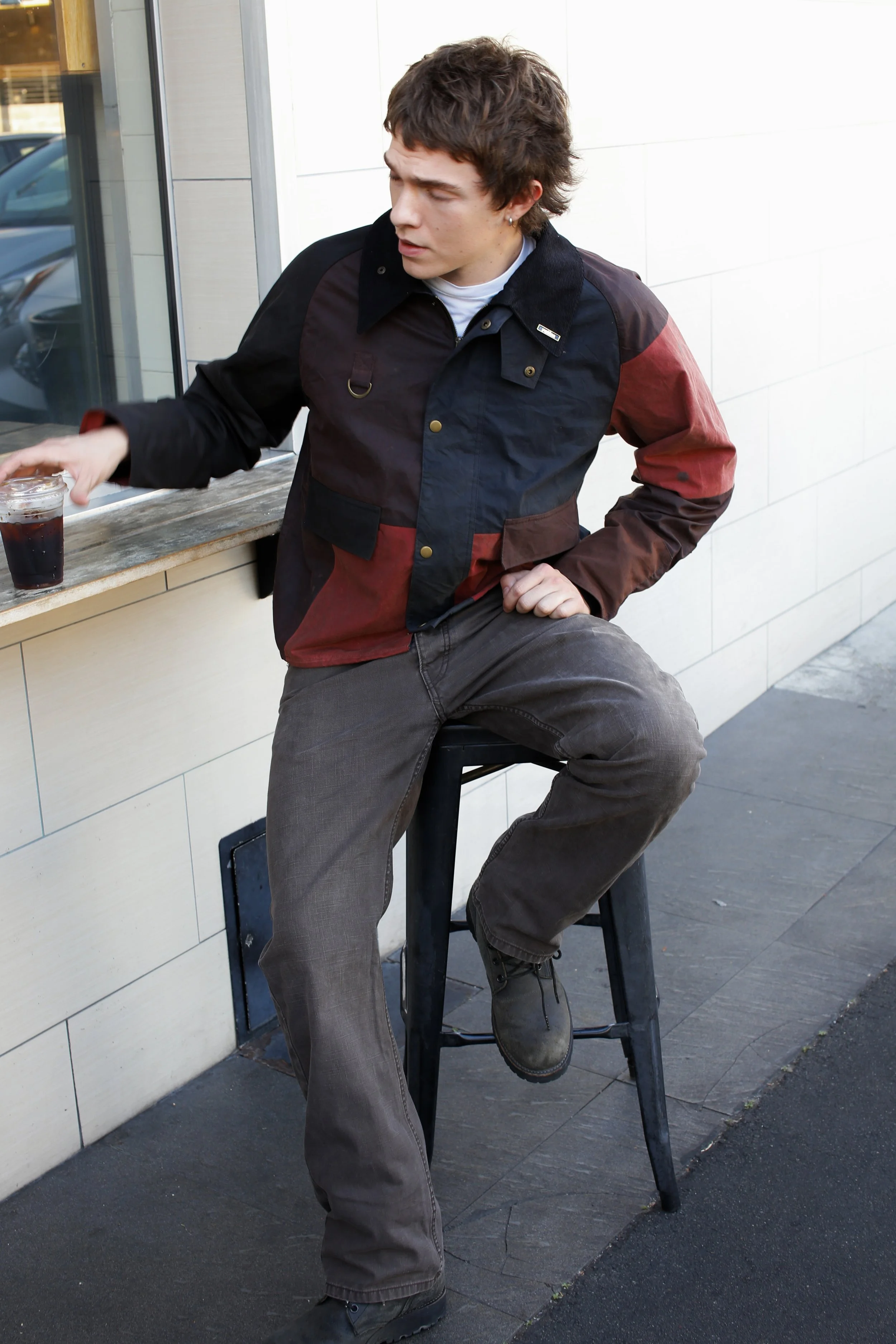
In an industry still grappling with the realities of textile waste, Northern Ireland-based label Patina is proving that circular design can be more than a sustainability talking point. Founded by Jon-Joe Rogers during the uncertainty of the COVID-19 pandemic, the brand has transformed discarded workwear, damaged vintage garments, and overlooked textiles into a growing business that sits at the intersection of heritage craftsmanship, contemporary menswear, and environmental responsibility.
What began as a practical solution to an inventory problem has evolved into a case study in circular fashion. Rogers, who also operates a family-owned vintage business established in 1981, found himself surrounded by garments that could not be sold through traditional resale channels. Oversized work jackets, damaged pieces, and deadstock inventory were accumulating faster than they could move.
“It started off with Carhartt jackets,” Rogers explained. “They were just too big. Nobody was buying these 4XL tall jackets. So during COVID, we came up with this idea that we would take these jackets, crop them, and make them slightly more wearable.”
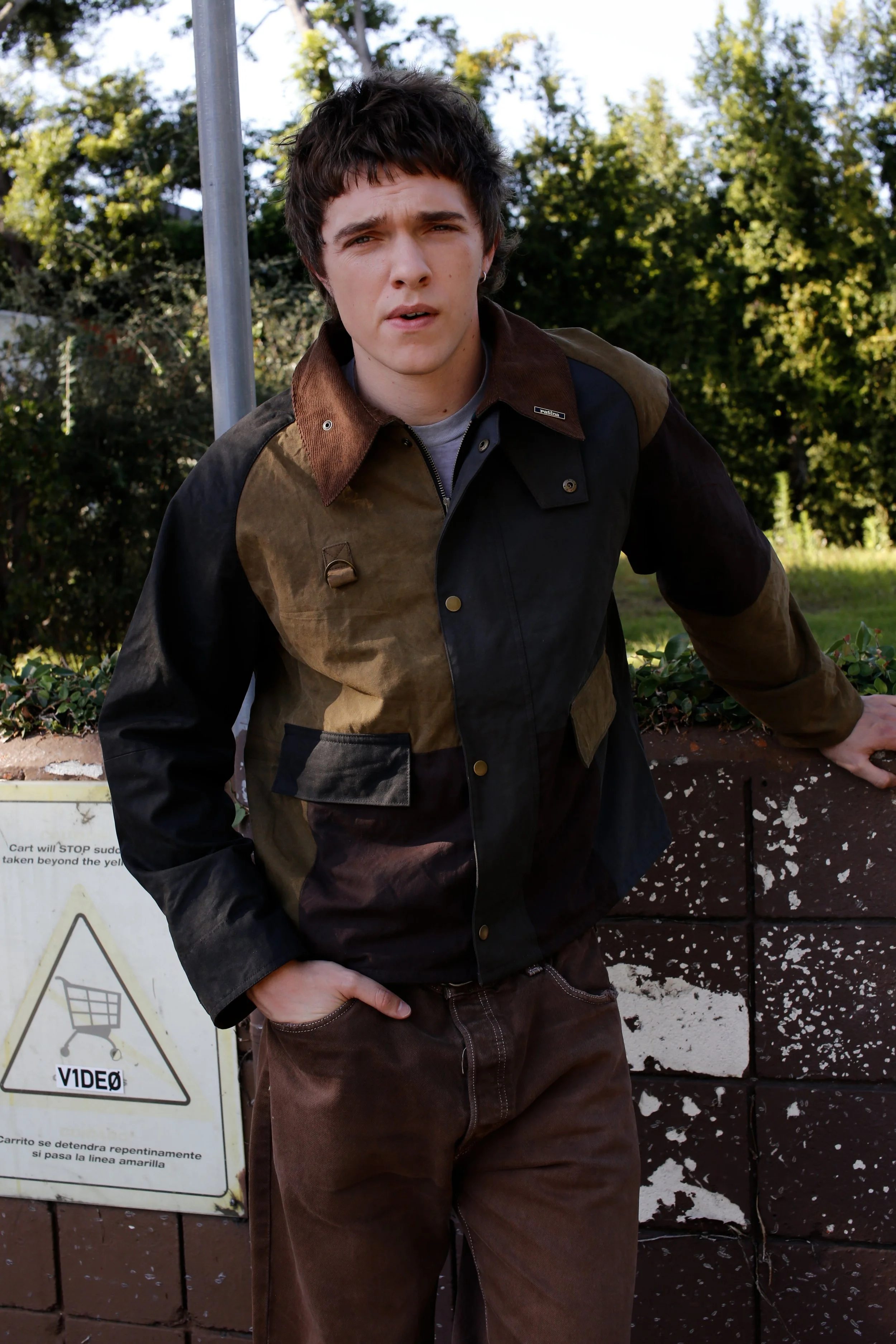
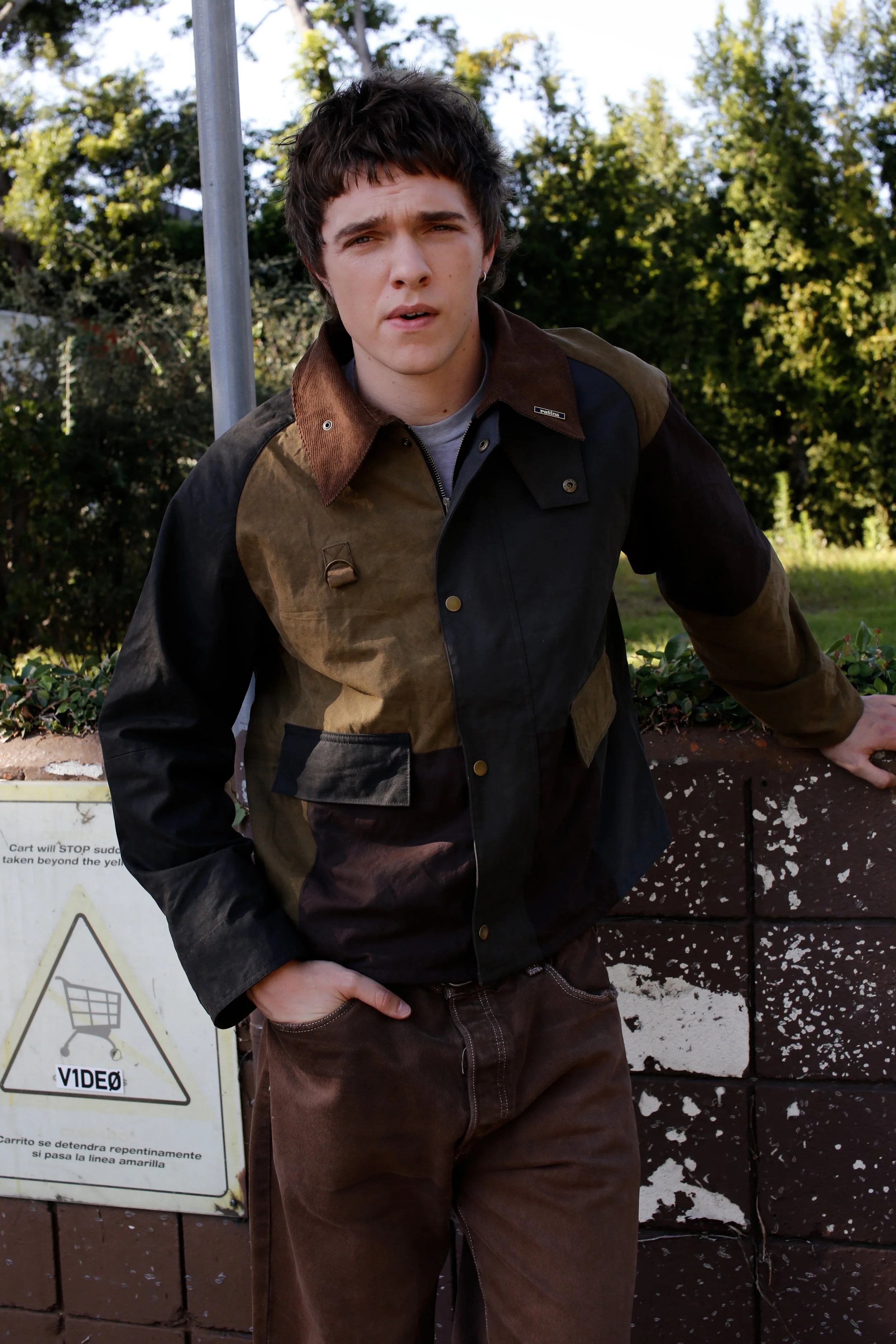
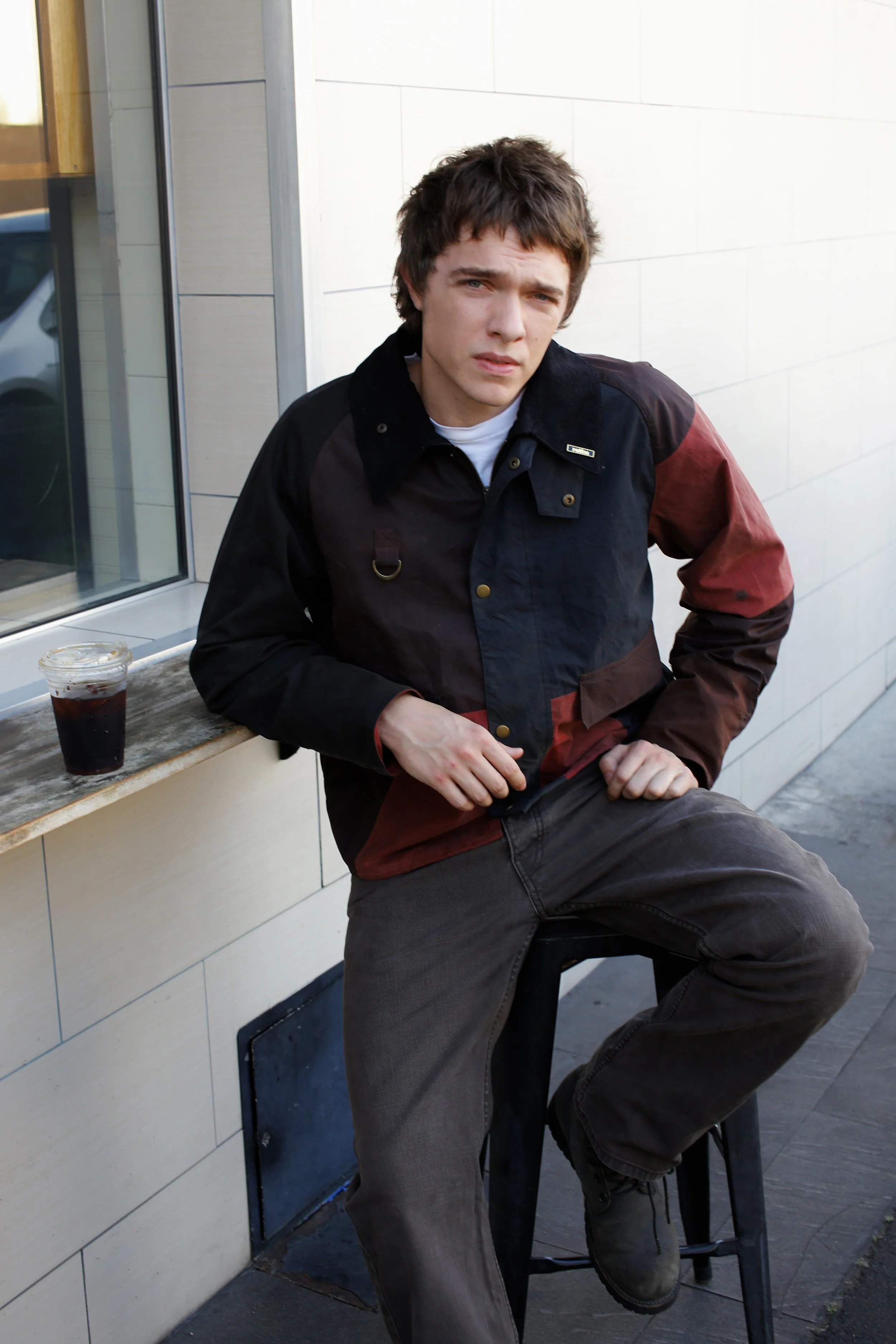
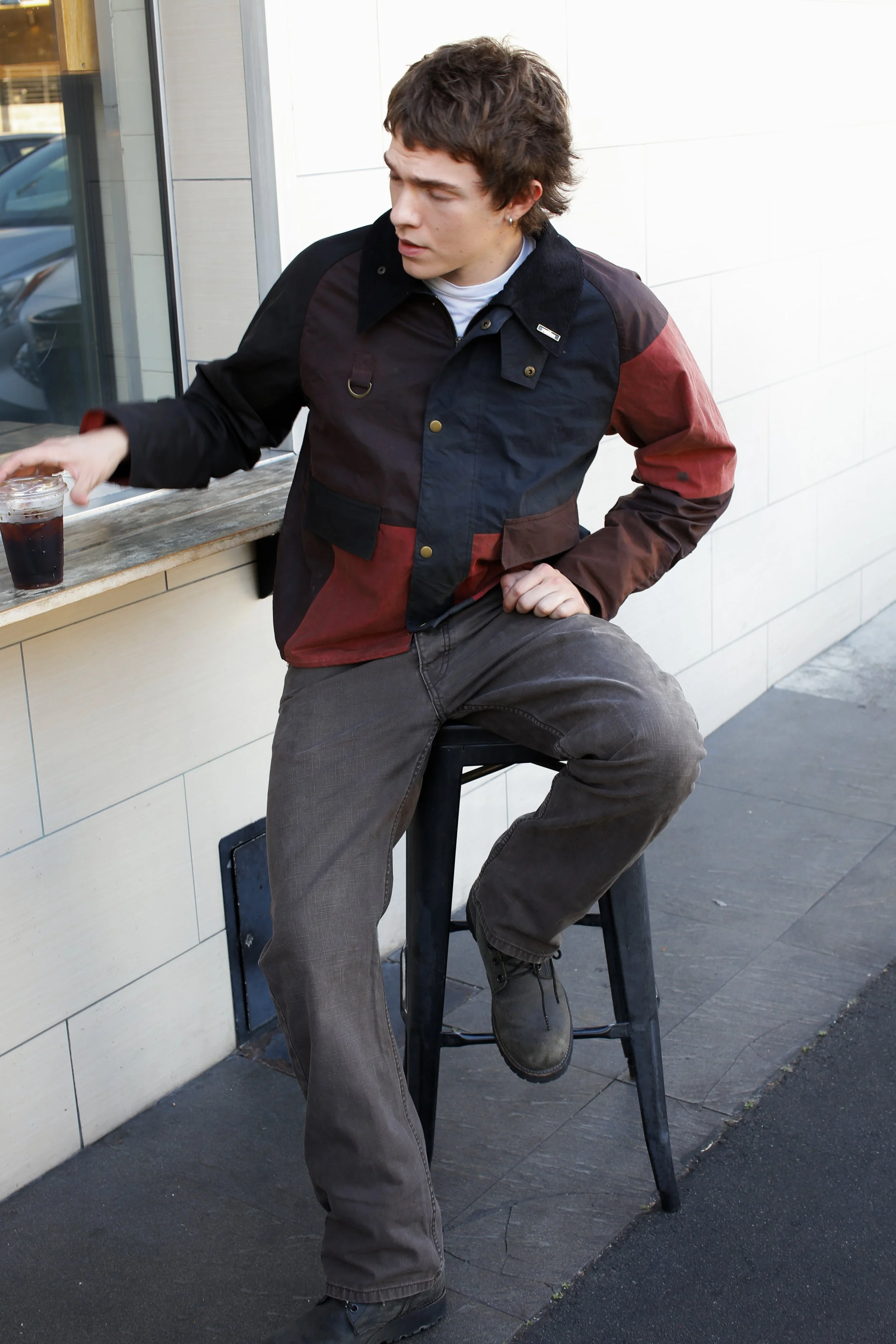
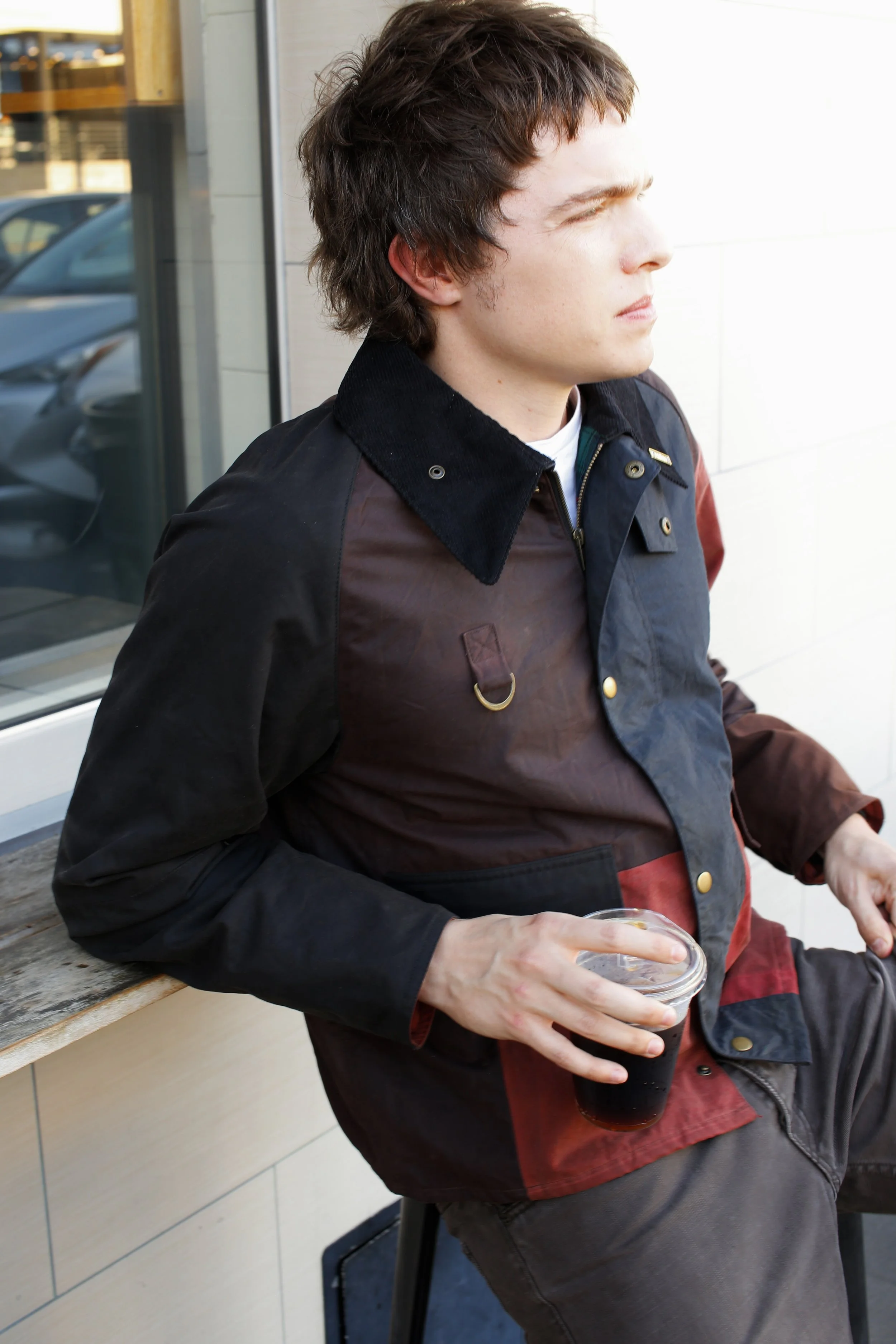
The response was immediate. Customers embraced the reconstructed garments, prompting Rogers to experiment further. Soon, individual jackets were being deconstructed and rebuilt using contrasting panels, creating patchwork silhouettes that gave forgotten garments a second life.
“We started taking panels, say like a beige panel and a black panel, and combining the two jackets,” Rogers said. “That’s when things really started to take off.”
The concept eventually outgrew the vintage business that inspired it, leading Rogers to launch Patina as a standalone brand dedicated to upcycling and reconstruction.
“We get thousands of items in every month in the vintage side of stuff,” Rogers said. “Then we look and see what can we redo? What can we deconstruct or reconstruct?”
That process has led Patina toward durable materials such as duck canvas workwear, which has become a signature component of the brand’s collections. Unlike many technical fabrics that lose performance when dismantled, heavyweight canvas can withstand reconstruction while retaining both durability and character.
As Rogers immersed himself deeper into the process, he became increasingly aware of the scale of fashion’s waste problem. “We just sort of realized the amount of this material and other similar materials that are wasted every year is mind-blowing,” he said. “A lot of brands and companies are trying to hide it and trying to show that they’re maybe doing some sort of process, but there isn’t any. This is all just ending up in landfill.”

That realization transformed Patina into something larger than a clothing brand. While commercial viability remains essential, Rogers describes the company as an ongoing experiment.
“We wanted to do a step in between that,” he said. “It’s mostly an experiment, Patina. As well as a business—which of course we have to keep the lights on—we want to experiment. I want to see how far we can push different materials and different combinations of used products.” The challenge, however, has been scaling a business built on uniqueness.
Early collections required every product to be photographed and sold individually because no two pieces were exactly alike. Eventually, Patina developed a model that allows for small-batch production while maintaining the individuality that defines the brand.
“We found that the key to success in the last two or three years is actually going away from this one-off side of things into mass production essentially, but still small collections,” Rogers said. “We only do maybe 200 jackets in each collection. They’re still very limited, and we number them all individually.”
That balance between scale and authenticity has resonated with consumers, particularly in the United States, which now accounts for roughly 70 percent of Patina’s customer base. Yet despite its international audience, Patina remains deeply rooted in Northern Ireland.
The region’s climate, textile history, and working-class traditions all influence Rogers’ approach to design. Frequent rain and harsh conditions have historically demanded garments that prioritize utility over trend, a philosophy reflected in Patina’s silhouettes and material choices.

“I’m not a designer. I didn’t study design,” Rogers said. “All I know is good jackets and good trousers. What I do is look at the shape and see what people want and then reconstruct with materials that I can.”
That mindset aligns naturally with Northern Ireland’s textile heritage. Belfast and the surrounding region were once global centers of linen production, while nearby Donegal remains synonymous with tweed manufacturing and traditional weaving.
“There’s a massive textile history and a lot of pride in linen,” Rogers said. “There’s a resurgence in proper Irish linen, whether that’s in clothes or bedsheets. Some of the factories are reopening, which is great.”
For Rogers, there is a philosophical connection between those historical industries and Patina’s modern approach. “I think it’s probably a case of making the most of what you have,” he said. “In a way, I’m trying to make the most of what we have and all this wasted material, and we’re trying to find new ways of doing things.”
That perspective extends beyond sustainability metrics and supply-chain discussions. At its core, Patina represents a broader cultural shift occurring across fashion, where value is increasingly tied to longevity, craftsmanship, and material integrity rather than endless consumption.
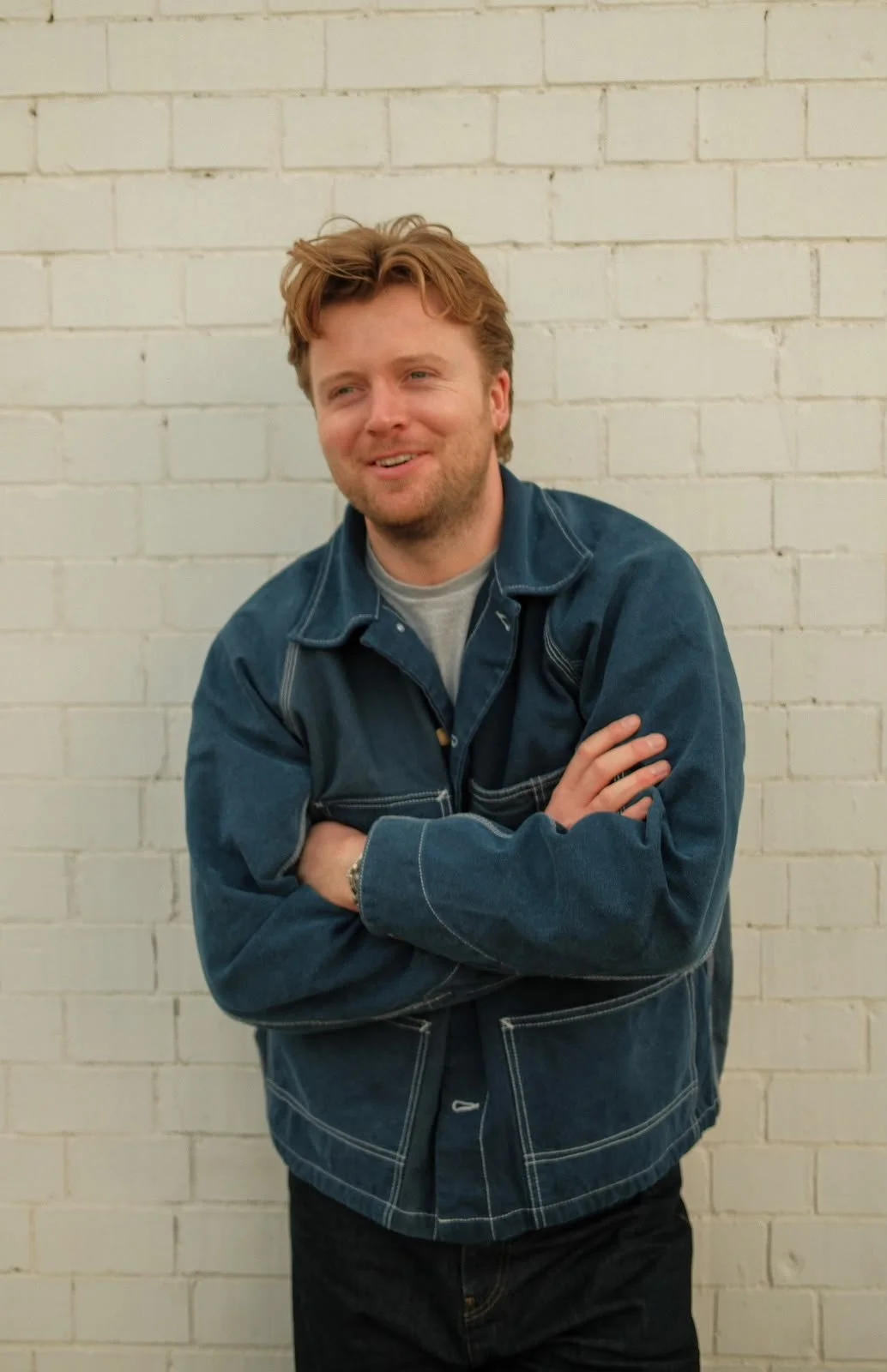
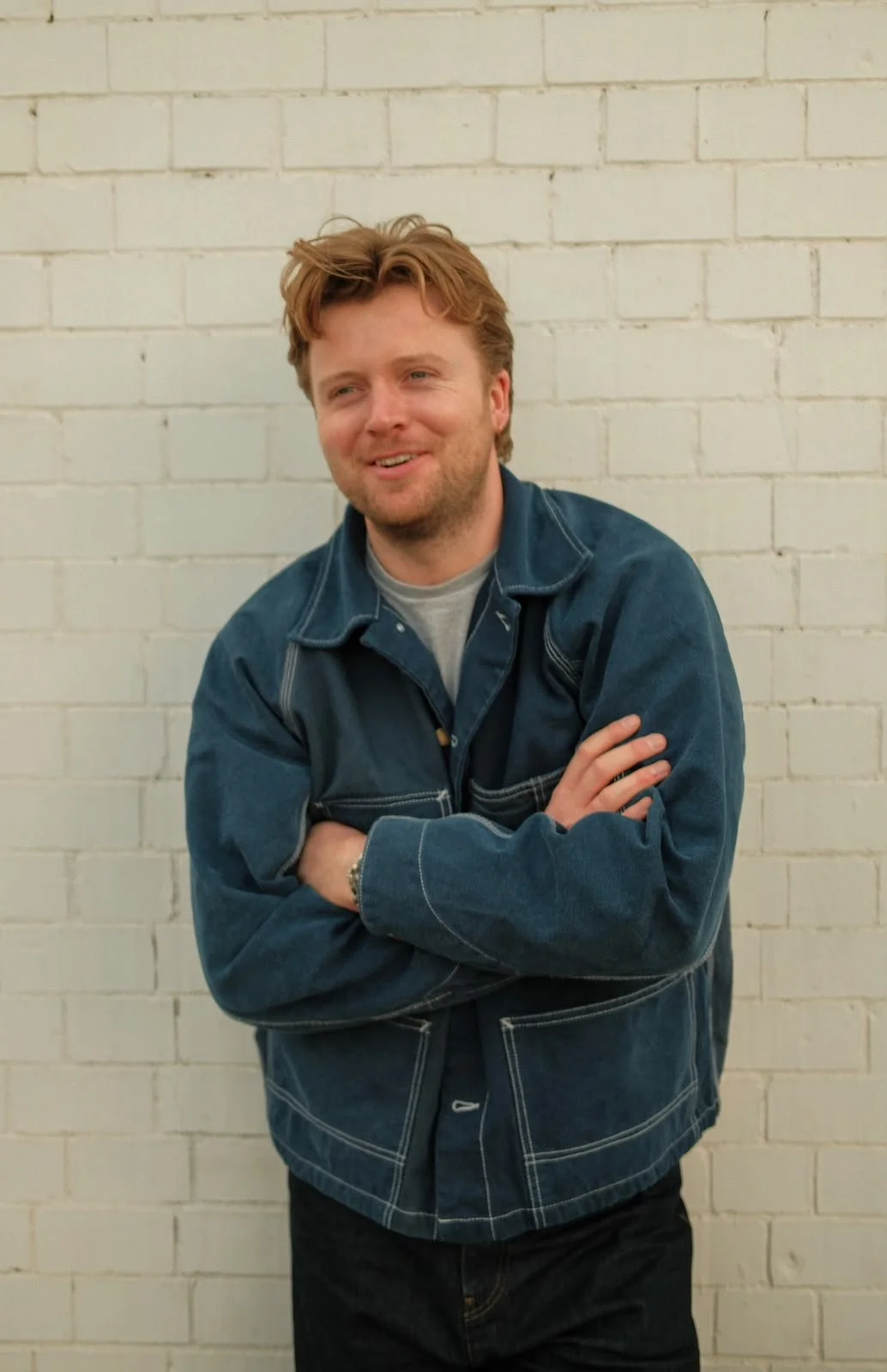
Jon-Joe Rogers, Founder
The irony is that one of fashion’s most forward-thinking circular businesses emerged not from a design school or innovation lab, but from a vintage warehouse in Northern Ireland filled with garments others had deemed unsellable.
As luxury groups invest heavily in circularity initiatives and governments introduce stricter environmental regulations, brands like Patina offer a practical example of what the future could look like: smaller production runs, longer product lifecycles, and a design philosophy built around preservation rather than disposal.
“If we wanted to actually make an impact on this huge amount of waste,” he said, “we had to do it differently.” In a fashion industry searching for credible answers to its sustainability challenge, that difference may be exactly the point.



HOW DO YOU FEEL ABOUT FASHION?
COMMENT OR TAKE OUR PAGE READER SURVEY
Featured



Celebrating its 10th anniversary, Brooklyn-based FABSCRAP is demonstrating how textile recycling, material reuse, and a community of more than 11,000 participants can help fashion move toward a more circular future.