
How to Book Professional Movers for Your Texas Relocation

PAGE
By PAGE Editor
A Texas move can become a lot quickly. Long highways, heavy heat, surprise traffic, elevator rules, storage gaps, and tiny details all start competing for your attention.
Whether you’re moving across town, across the state, or into Texas for the first time, early planning can save you money and a fair amount of stress. You’re not alone in hiring help, either: Almost 4 in 10 (38%) used a professional mover.
This guide walks you through how to compare movers, book the right team, and prepare without feeling like you’re juggling flaming boxes.
Crafting a Stress-Free Move with the Right Texas Movers
The right moving crew can turn a chaotic day into something far more manageable. Before you start collecting quotes, it helps to understand why moving in Texas has its own quirks.
Why Texas Moves Get Complicated
Texas is big, yes, but the real challenge is how spread out everything can be. A move that looks simple on a map may still involve toll roads, construction, apartment restrictions, limited parking, and brutal summer temperatures.
For families, students, and business owners, experienced Texas movers can help plan around loading windows, weather, building access, and fragile items.
Where Local Knowledge Helps
A mover who knows Texas is better prepared for rural roads, downtown parking limits, military moves, and long routes between major regions. That local awareness can make a real difference when you’re trying to protect your belongings and stay on schedule.
If you want to review reliable options and check pricing for your exact move, https://safeshipmoving.com/locations/texas-movers/ lets you request quotes and compare services for local, interstate, residential, business, military, and vehicle moves.
Once you understand the basics, the next step is making sure the company is actually qualified.
Researching and Comparing Movers Before You Book
A low quote can look tempting. Of course it can. But price should never be the only thing driving your decision. You also need proof that the company can handle your specific move.
Key Criteria for Evaluating Companies
Check licensing, insurance, claims policies, service areas, and experience with your move type. Reviews on Google, Yelp, BBB, Trustpilot, and social channels can reveal patterns in punctuality, communication, and how damage claims are handled.
Search terms matter too. If you’re comparing professional movers in Texas, make sure each company explains who handles the move, what’s included, and how pricing changes.
Questions to Ask Before You Commit
Ask about deposits, cancellation rules, fuel fees, stairs, elevators, packing materials, and storage. If you need to hire movers in Texas, ask whether they’ve handled your city, building type, or rural route before.
It’s also worth asking how they manage storms, extreme heat, and tight delivery windows. In Texas, those are not small details.
Quick Comparison Table
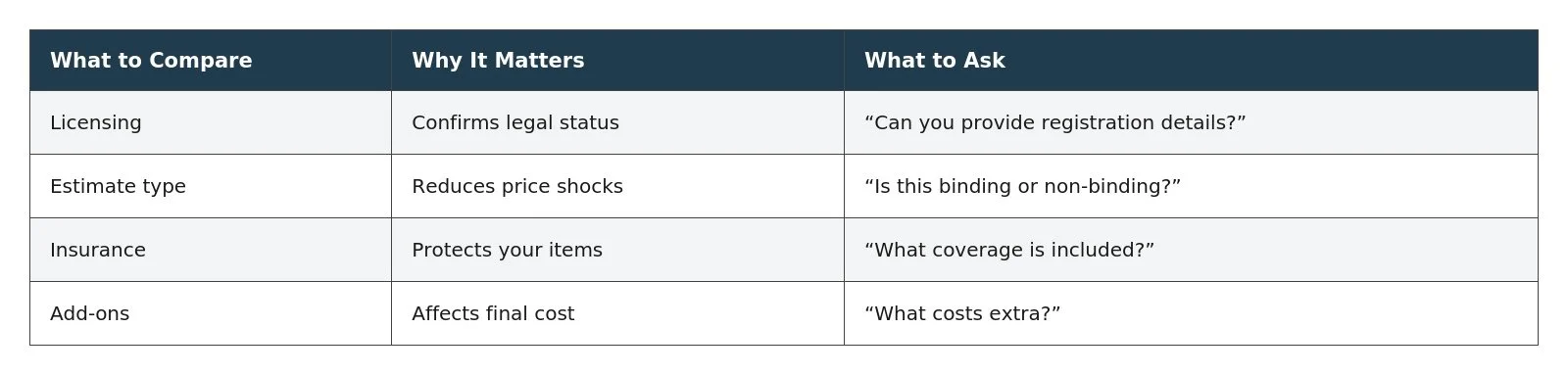
After you narrow the list, you can request quotes with more confidence.
Step-by-Step Guide to Book Movers in Texas
Booking becomes much easier when your quote request is clear from the start. Missing details are one of the biggest reasons final bills change.
Request Accurate Estimates
Give every company the same inventory list. Include garage items, patio furniture, oversized pieces, antiques, safes, and exercise equipment. Mention stairs, elevators, long carries, narrow streets, gated access, and loading dock rules.
Virtual surveys can work well, but an in-home visit may be smarter for larger homes. Industry trust also matters: Certification ... can boost your moving company’s revenue by an average of 40%.
Compare and Negotiate
Don’t pick the cheapest quote without reading the details. Compare labor, packing, valuation coverage, delivery windows, storage terms, and any extra charges side by side.
If your schedule has some wiggle room, ask about weekday, off-season, or bundled service discounts. When you book movers in Texas, flexibility can help reduce the total cost without cutting corners.
Sign a Clear Contract
Read every line before you pay a deposit. Confirm arrival windows, crew size, payment terms, refund rules, and what happens if bad weather slows things down.
A clear contract protects both sides. It may not be exciting reading, but it is absolutely worth the few extra minutes.
With your date locked in, you can make moving day smoother with the right tools and services.
Using Modern Moving Tools and Helpful Add-Ons
Once the move is booked, you’re not quite finished. Good communication and useful add-ons can save time, protect fragile items, and reduce those last-minute “Wait, where did I put that?” moments.
Digital Booking and Tracking
Many moving companies now offer online quote forms, e-signatures, digital payments, and text or email updates. That is especially helpful when you’re also managing work, school, pets, children, utilities, and address changes.
Ask whether support is available outside normal business hours. Moving questions do not always show up politely between 9 and 5.
Services Worth Paying For
Packing and unpacking can be a smart investment if you’re short on time or moving delicate items. Storage can also help when closing dates, leases, or renovations do not line up neatly.
Quality Texas relocation services may also include vehicle shipping, furniture disassembly, climate-aware handling, and office move planning.
Next, let’s look at how to keep costs under control without taking unnecessary risks.
Maximizing Savings When You Book Movers in Texas
Moving can get pricey, but there are practical ways to bring the bill down. The key is saving through planning and timing, not by choosing a company you don’t trust.
Smart Ways to Lower Costs
Move during the week if you can. Try to avoid end-of-month dates, holidays, and peak summer weekends, when demand is usually higher.
Declutter before you request quotes. Fewer boxes often mean less labor, less truck space, and less time. If you need multiple services, ask about bundling packing, storage, and transport.
Cost Traps to Watch
Hidden fees can appear through fuel charges, stairs, elevators, shuttle trucks, packing supplies, and date changes. Get those details in writing before you sign anything.
A detailed inventory helps protect your quote. Honest disclosure also prevents the mover from adjusting costs on moving day.
Now that the budget side is clearer, your home and schedule need attention.
Essential Pre-Move Preparation Tips for Texas Relocation Success
Preparation may sound boring, but once moving week arrives, it becomes your best friend. A little order upfront can keep the whole process from sliding into chaos.
Declutter Before Packing
Go room by room and sort items into keep, donate, sell, recycle, and toss. Don’t pay to move things you haven’t used in years unless they are meaningful or truly useful.
Handle hazardous items properly. Paint, propane, chemicals, and some cleaning supplies usually cannot go on the truck.
Build a Simple Timeline
Four to six weeks out, confirm your movers, begin packing nonessential items, and schedule utility changes. Two weeks out, update your address, collect important documents, and confirm elevator or parking reservations.
Texas weather can change fast, so keep water, towels, chargers, and key paperwork with you.
Once your plan is in place, city-specific details are the next thing to consider.
What Sets Houston, Austin, and Dallas Movers Apart?
Texas metros do not move the same way. Traffic, building rules, neighborhood access, and parking can vary a lot from one city to another.
Houston Moving Notes
Houston moves often involve humidity, storms, large suburbs, and long drive times. Ask how the crew protects furniture during rain and whether they plan routes around major traffic corridors.
Austin Moving Notes
Austin brings hills, apartment density, limited parking, and busy lease-change weekends. If you’re near downtown or a campus area, confirm loading access early.
Dallas Moving Notes
Dallas-Fort Worth moves can involve long metro drives, gated communities, high-rise rules, and strict timing. Local familiarity can help prevent delays that turn into added labor charges.
Once city factors are clear, the final “what if” questions become easier to answer.
Final Thoughts on Booking Your Texas Move
A smooth Texas move starts with clear details, honest estimates, verified credentials, and a contract that leaves little room for confusion. Compare carefully, ask direct questions, and prepare your home before moving day so the crew can work faster and safer.
Whether you need local help, storage, packing, or interstate coordination, the right plan can protect both your budget and your peace of mind.
Your Texas Moving Questions, Answered
What are red flags when hiring movers?
Watch for vague estimates, no license information, pressure to pay large cash deposits, poor reviews with repeated damage claims, and contracts with blank spaces. If a company will not answer basic questions clearly, keep looking.
What is the best moving company for moving from California to Texas?
The right choice depends on your route, budget, dates, and shipment size. Many people compare carriers and brokers that coordinate interstate service, including Safe Ship, because long-distance moves need clear pricing and strong communication.
How far ahead should I book movers in Texas?
Book four to eight weeks ahead when possible, especially for summer, weekends, and end-of-month dates. For complex moves, office relocations, or interstate trips, earlier is better because truck space and crews fill quickly.
HOW DO YOU FEEL ABOUT FASHION?
COMMENT OR TAKE OUR PAGE READER SURVEY
Featured





A Texas move can become a lot quickly. Long highways, heavy heat, surprise traffic, elevator rules, storage gaps, and tiny details all start competing for your attention.