
How to Capture Bridal Jewelry in Wedding Photos: Tips for Stunning Close-Up Shots
PAGE
By PAGE Editor
Think about the jewelry you’ll wear on your wedding day. Maybe it’s a family heirloom passed down through three generations, a polki set made just for you, or a pair of diamond earrings you’ve been dreaming about for years. You’ll wear it for a few hours. In your photographs, it will last a lifetime.
That’s why bridal jewelry photography deserves real planning. A necklace that looks breathtaking in person can turn flat, blurry or lost in the frame if nobody thinks about light, angle and styling beforehand.
Whether you’re getting married in India or flying home from the US, UK or Canada for the celebration, the principles are the same. Some of the work belongs to your photographer. A surprising amount belongs to you.
Why Bridal Jewelry Photos Matter More Than You Think
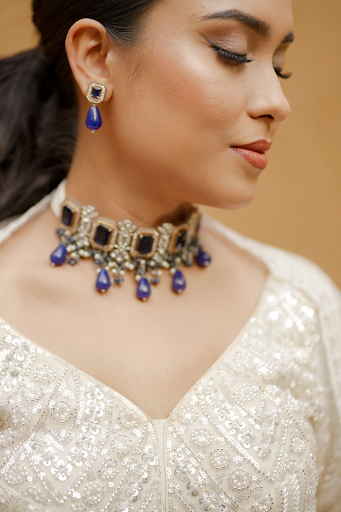
Indian bridal jewelry is never just decoration. A mangalsutra, a nath, a pair of jhumkas or a solitaire ring each carries a family, a tradition or a promise. Years from now, you won’t only want proof that you wore them. You’ll want to see the detail: the craftsmanship, the stones, the way the light caught the gold.
Detail shots also do a quiet job in a wedding album. They slow the story down. Between the big emotional moments, a close-up of hands stacked with bangles, or a ring resting on a silk dupatta, gives the album texture and an editorial, premium feel.
Start With the Right Photographer
This is the biggest factor by far. Jewelry is reflective, tiny and unforgiving. It needs someone who understands macro photography, not just wide wedding coverage.
If you’re an NRI couple planning a wedding in India, look for experienced wedding photographers in Delhi who understand heavy bridal jewelry like kundan and polki, and who can show you real close-up work in their portfolio, not only couple portraits. Photographers who shoot Indian weddings regularly know how to handle intricate pieces under mixed lighting, from sunlit farmhouses to dimly lit banquet halls.
The same rule applies in any city. Ask to see detail work before you book.
Questions worth asking:
Do you shoot detail photography with a dedicated macro lens?
Can I see a full gallery of bridal jewelry shots, not just highlights?
How much time do you set aside for detail shots on the wedding day?
Do you bring your own props and backdrops, or should I arrange them?
How do you handle reflections on gold and diamonds?
A confident photographer answers these without hesitation. If the answers feel vague, keep looking.
Lighting: The Secret Behind Every Sparkle
Jewelry only looks good when light is working for it. Harsh, direct light creates blown-out highlights and glare. Flat light makes gold look dull and diamonds look lifeless.
What works best:
Soft window light. A large window with sheer curtains gives gentle, directional light that reveals depth without harsh reflections.
Open shade outdoors. In a garden or courtyard, stay in the shade near bright surroundings. The light is even and flattering.
Golden hour. Warm evening light makes gold glow, which suits traditional pieces beautifully.
Diffusers and reflectors. A white reflector bounces light into shadows. A diffuser softens strong sun.
What to avoid: direct on-camera flash. It flattens a necklace and creates blinding hot spots. Ask your photographer to use off-camera or bounced light instead.
Choose the Right Lens and Settings (A Quick Primer)
You don’t need to be technical, but a little knowledge helps you hire well and talk confidently with your photographer.
Macro lens (90mm to 105mm): The standard for rings, earrings and intricate clasps. It captures fine detail from a comfortable distance.
Aperture around f/2.8 to f/5.6: Keeps the key part sharp while melting the background into a soft blur.
Steady support: A tripod or stable surface prevents tiny shakes that ruin close-ups.
One clear focal point: A single stone, a clasp or the center of a pendant gives the image a subject.
Style the Jewelry Before You Shoot
Styling is where brides can make the biggest difference. A few minutes of preparation changes the whole result.
Clean everything. Fingerprints and dust show up painfully in macro shots. Wipe each piece gently with a soft microfiber cloth.
Get your manicure done first. In ring and bangle photos, your hands are part of the picture. Neat nails and moisturized skin matter.
Pick backgrounds that support, not compete. Silk, velvet, raw linen, a handwoven dupatta or fresh flowers all work. Avoid busy patterns.
Use color contrast. Gold pops against deep reds, maroons and emerald greens. Diamonds and pearls look stunning on ivory, soft neutrals or dusty rose.
Keep it layered, not cluttered. Three or four pieces arranged with intention look luxurious. Twenty piled together look chaotic.
Shots Every Bride Should Ask For
Here’s a practical shot list you can hand to your photographer.
The ring shot: Engagement and wedding rings on a textured surface, or tucked into a flower.
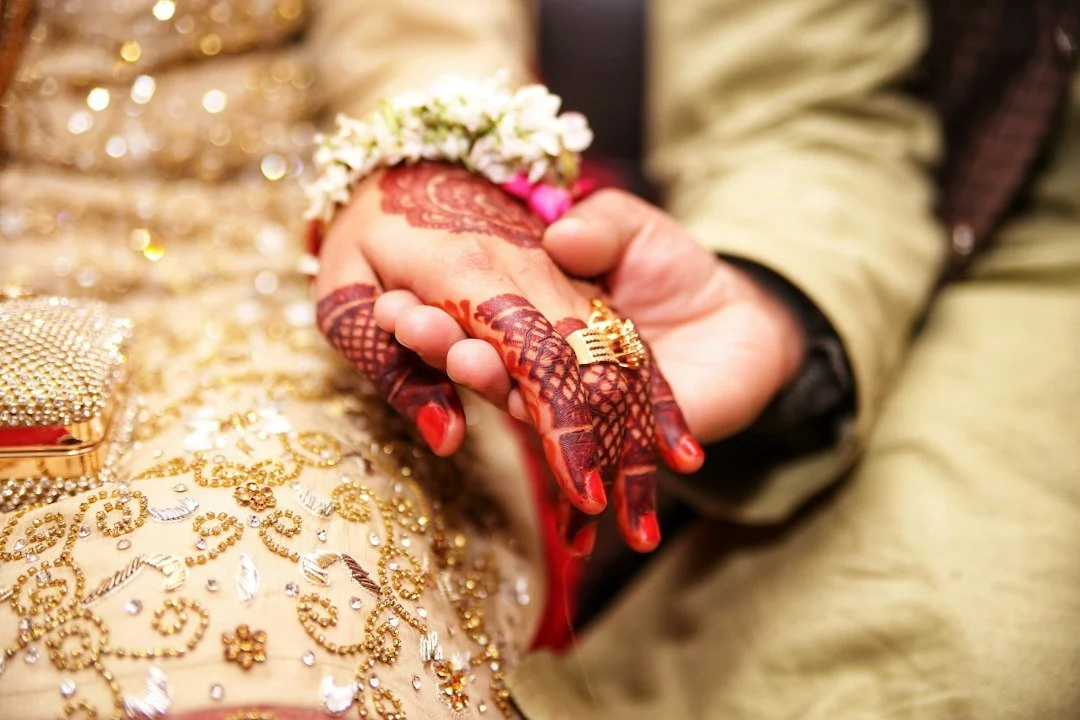
Hands with bangles and mehendi: One of the most loved Indian wedding frames, combining color, jewelry and tradition.
Earrings in motion: A soft turn of the head to catch swinging jhumkas or chandbalis.
Necklace on the neckline: A close crop showing the piece resting naturally on you, not just on a table.
Maang tikka and nath: Photographed during getting ready, for a quiet, intimate feel.
Heirloom storytelling: A mother or grandmother helping you put on a family piece. This is often the most emotional jewelry photo of the day.
Flat lay of the full set: A styled overview before you wear everything.
Posing Tips for Jewelry Close-Ups
You don’t need to pose like a model. Small, natural movements work best.
Rings: Relax your hand and let your fingers curve softly. Tension reads as stiffness.
Necklaces: Lower your chin slightly and keep your shoulders loose so the piece sits cleanly.
Earrings: Tilt your head gently away from the camera to show the earring and the line of your jaw.
Bangles: Rest your hands naturally, or hold a bouquet or the edge of your dupatta.
Breathe, smile with your eyes and trust the process. The best jewelry photos still feel like you.
Common Mistakes to Avoid
Leaving detail shots to the end of the day, when everyone is tired and the light is gone
Skipping a jewelry trial, so you’ve never seen how a piece sits with your outfit
Letting reflections ruin gold, which proper angles and diffusion solve easily
Over-editing, where heavy filters turn real gold orange and make diamonds look fake
Forgetting to tell your photographer which pieces matter most to you
A Simple Timeline for the Wedding Day
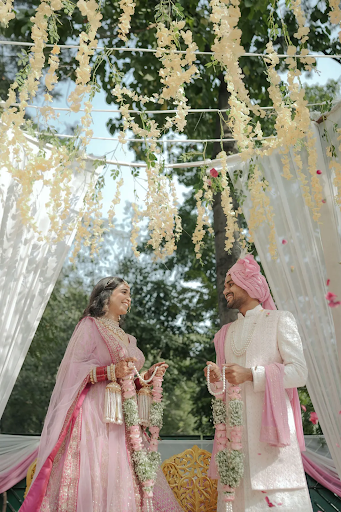
Detail shots work best when they happen early and calmly.
Before makeup: Photograph the full jewelry set, laid out cleanly, in the best available light.
During getting ready: Capture the moments of wearing each piece.
After you’re fully dressed: Take close-ups on you, in natural or soft light.
During portraits: Include a few frames where the jewelry is part of a larger composition.
Set aside at least 30 to 45 minutes. It sounds like a lot, but this is what separates a quick album from a refined one.
Final Thoughts
Great bridal jewelry photography comes down to three things: the right photographer, soft and thoughtful lighting, and a little preparation from you. When those line up, your jewelry stops being an accessory and becomes part of the story your album tells.
If you want images made with this level of care, the team at Clikers Motion Picture creates cinematic wedding photography and films for couples across India. Whether you’re planning a wedding in Delhi, Jaipur or a destination venue anywhere in the country, choose people who treat your heirlooms as carefully as you do.
HOW DO YOU FEEL ABOUT FASHION?
COMMENT OR TAKE OUR PAGE READER SURVEY
Featured



A Texas move can become a lot quickly. Long highways, heavy heat, surprise traffic, elevator rules, storage gaps, and tiny details all start competing for your attention.