
Is GUCCI Pushing For Menswear To Be Masculine Again As Demna Forges Sartorial Practicality
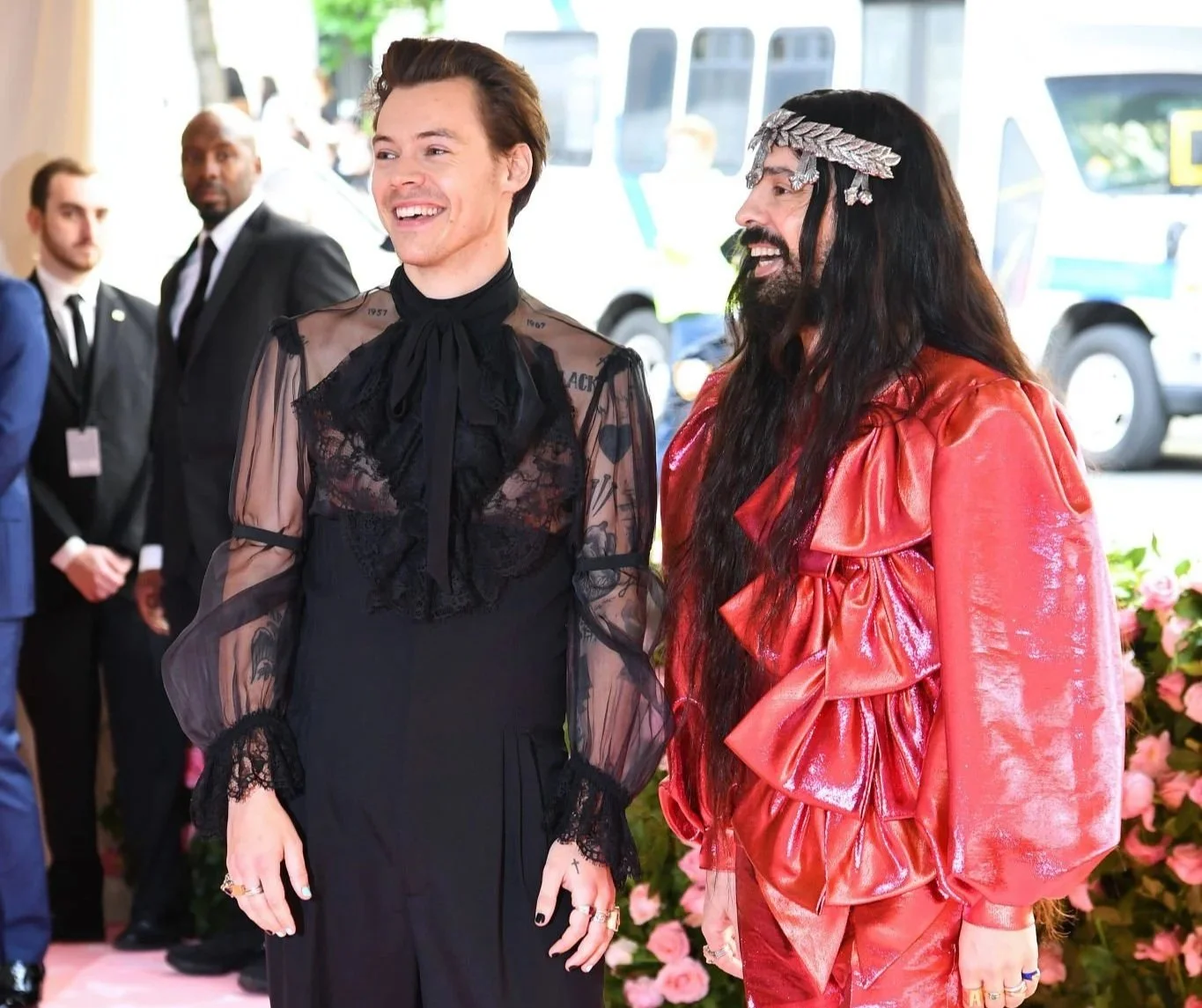
GETTY: Harry Styles and Alessandro Michelle, 2019
Subscribe to PAGE’s Substack for the rest of the story: HERE
For years, masculinity in fashion was treated less like an identity to assume and more like a problem to be solved. As social media accelerated fashion toward performance rather than function, menswear increasingly drifted away from wearable reality and toward an algorithmic facade. Clothing became less about how men actually wanted to live and more about a scenic display and how effectively a look could circulate online to generate engagement.
Skirts, sheer blouses, dramatic flares, bedazzled adornments, exaggerated proportions, and hyper-styled runway theatrics that were once reserved for the most extravagant personalities and subcultures were repackaged as universal menswear ideals. Despite often functioning more as visual statements than practical expressions of identity, somewhere along the way, masculinity stopped being lived and started being performed.
The shift mirrored a broader online culture where modern masculinity became increasingly tied to optics and a curated vulnerability. One that exaggerated emotional intelligence, aestheticized a sense of softness, and the constant need for validation through visibility and alignment of ideals.
Social media transformed our personal identity into branding moments, gamified relationships, and skewed self-esteem into “aura” - a hollowed, shorthanded presence, usually absent of substance. Even romance became theatrical, reduced to highly visible gestures of affection, with love-bombing designed less for intimacy, rather for audience participation. Masculinity lost its lore: the mystique, restraint, discipline, and quiet self-assurance that once gave men dimension beyond constant self-exposure.
Fashion followed that same trajectory in menswear. For years, traditional masculine traits such as strength, authority, discipline, stoicism, and sensuality were treated as outdated relics rather than qualities capable of evolving alongside modernity. In response, menswear entered an era defined by ambiguity, relinquishing its guard for more expressive displays. Oversized silhouettes replaced structure, as irony replaced confidence. Floral motifs and transparent shirting, like the Gucci sheer blouse Harry Styles wore at the 2019 Met Gala, spilled into the Homme silhouette with designers like Alessandro Michelle and his tenure at Gucci…
Subscribe to PAGE’s Substack for the rest of the story: HERE
HOW DO YOU FEEL ABOUT FASHION?
COMMENT OR TAKE OUR PAGE READER SURVEY
Featured
Celebrating its 10th anniversary, Brooklyn-based FABSCRAP is demonstrating how textile recycling, material reuse, and a community of more than 11,000 participants can help fashion move toward a more circular future.