
Plexiglass Table Top Protector: Is It Right for Your Table?
PAGE
By PAGE Editor
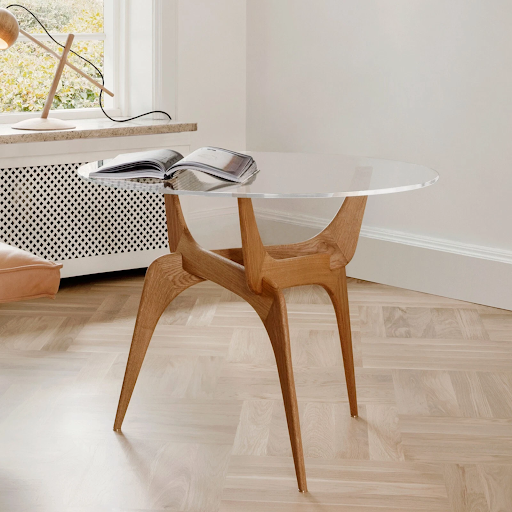
A table can take a surprising amount of abuse. Plates slide across dining surfaces, laptops and office supplies create friction, children spill drinks, and decorative objects can leave marks over time. For wood, laminate, painted furniture, and other finished surfaces, preventing damage is usually easier and cheaper than repairing it. That is where a Plexiglass Table Top Protector can make practical sense. Made from clear acrylic plastic, this type of surface cover creates a physical barrier between everyday use and the furniture underneath. Acrylic is lightweight, transparent, and considerably more impact-resistant than conventional plate glass, although it has an important weakness: its surface is more susceptible to scratching.
The right choice depends less on whether acrylic is simply "good" or "bad" and more on what you are trying to protect, how the table will be used, and what compromises you are willing to accept.
What Is an Acrylic Table Protector?
An acrylic table protector is a sheet of transparent plastic designed to sit over an existing tabletop. Acrylic is commonly known by names such as Plexiglas, Lucite, or acrylic glass, although these names can refer to branded or material-specific products.
Unlike a disposable plastic table cover, a rigid acrylic sheet provides a more structured protective surface. It can be produced in different thicknesses, shapes, and dimensions, making it suitable for rectangular dining tables, round coffee tables, desks, side tables, work surfaces, and other furniture.
The basic purpose is straightforward: the acrylic takes the everyday wear instead of the furniture finish.
This can be particularly useful when the original tabletop has decorative wood grain, a painted finish, veneer, laminate, or another surface that would be difficult to repair if scratched or stained.
Why Use a Clear Table Top Protector?
The biggest advantage is separation. Food, drinks, office equipment, toys, and decorative objects interact with the protective sheet rather than directly with the furniture.
For a dining table, that can mean less exposure to spills and scratches. On a desk, it can provide a smoother working surface while reducing direct contact between furniture and frequently moved objects. On a coffee table, it can help protect a finished surface from books, trays, remotes, decorations, and everyday household activity.
Acrylic is also relatively lightweight. ACRYLITE's technical information shows that a 0.250-inch acrylic sheet weighs about 1.5 pounds per square foot, compared with 2.9 pounds per square foot for glass of the same thickness.
That difference becomes increasingly relevant as tabletop dimensions grow. A large protective sheet can be easier to handle and reposition when it does not carry the weight of a comparable glass panel.
Acrylic vs. Glass for Table Protection
The acrylic vs. glass tabletop question does not have one universal answer. Each material solves a different problem. Acrylic's major advantage is impact resistance combined with lower weight. According to ACRYLITE, acrylic has substantially greater impact strength than conventional plate glass, while its impact strength can be comparable to tempered glass depending on the specific product and test conditions.
Glass, however, has a harder surface. That matters because a protective cover that becomes heavily scratched defeats part of its visual purpose. Acrylic's surface is more prone to scratching and abrasion than glass, although abrasion-resistant acrylic products are available.
Heat is another consideration. Acrylic should not be treated like a heatproof countertop. Hot cookware, heated appliances, or other high-temperature objects can create problems depending on the material and exposure. Glass generally offers greater tolerance for heat. Acrylic also expands and contracts more with temperature and humidity changes than glass. ACRYLITE reports that acrylic's coefficient of thermal expansion is approximately eight times that of glass, which is important for larger sheets and installations where the material needs room to move.
In simple terms, acrylic makes more sense when weight, impact resistance, and handling are priorities. Glass may make more sense when surface hardness, heat resistance, and long-term scratch resistance matter more.
Where Acrylic Tabletop Protection Works Best
Dining Tables
Dining tables are one of the most obvious applications because they experience repeated contact with dishes, utensils, serving trays, food, and drinks.
A rigid acrylic cover can protect a finished dining surface from routine wear while keeping the underlying table visible. This is especially useful for expensive wood tables where preserving the original finish is more important than having a completely uncovered surface.
However, users should still use trivets or heat-resistant pads for hot cookware. A protective sheet should not be mistaken for a heat-resistant countertop.
Desks and Home Offices
Acrylic is also useful as a desk blotter or office surface protector. Pens, keyboards, notebooks, stationery, and computer equipment can gradually create marks on a finished desk.
A transparent sheet can provide a uniform writing and working surface while allowing the desk underneath to remain visible.
For workspaces, however, surface scratching deserves particular attention. Dragging metal objects or gritty materials across uncoated acrylic can create visible marks over time.
Coffee and End Tables
Coffee tables often receive less concentrated wear than dining tables but are exposed to a different type of activity: decorative objects, drinks, books, remotes, and occasional spills.
A clear acrylic table cover can protect painted or wood surfaces without visually overwhelming the furniture. Round and irregularly shaped tables can also be accommodated when the sheet is cut specifically to the tabletop dimensions.
Outdoor Furniture
Acrylic can also be used for certain outdoor furniture applications, but this requires more care than simply placing a sheet outdoors and assuming it will last indefinitely.
Sun exposure, temperature fluctuations, moisture, and material-specific weatherability all affect performance. Acrylic products differ considerably, so outdoor use should be based on the manufacturer's specifications rather than on the generic assumption that all acrylic is weatherproof.
Choosing the Right Thickness
Thickness should be selected based on the size of the sheet, intended use, support conditions, and whether the acrylic is functioning as a simple surface cover or as a structural component. Those are not the same application. A thin acrylic sheet may work well as a lightweight tabletop protector where the furniture underneath provides continuous support. A larger sheet or one expected to carry significant loads may require greater thickness and appropriate support.
It is a mistake to choose thickness solely by looking for the thickest available sheet. More material means greater weight and cost, but it does not automatically make an unsuitable design safe. For large or unusual tabletops, dimensions, support, edge conditions, and the intended load should be considered together.
How to Clean Acrylic Without Damaging It
Cleaning is one of the most important parts of maintaining an acrylic surface because improper cleaning can create the very scratches and haze the protector was intended to help prevent. For routine cleaning, ACRYLITE recommends mild soap or detergent with lukewarm water, a clean soft cloth, light pressure, and thorough rinsing. The surface should then be dried by blotting rather than aggressively rubbing it.
Avoid assuming that ordinary household glass cleaner is automatically safe for acrylic. Certain solvents and cleaning products can scratch acrylic or cause a condition known as crazing, which involves fine surface cracking. ACRYLITE specifically warns against products containing substances such as acetone, benzene, and lacquer thinner for its standard acrylic sheet. Dusting also requires care. Dry or gritty cloths can scratch the surface, so a soft, damp cloth is a better starting point.
Common Mistakes to Avoid
One of the biggest mistakes is treating acrylic as scratch-proof. It is not. Acrylic can be highly impact-resistant while still being relatively easy to scratch.
Another mistake is placing hot cookware directly on the sheet. The fact that acrylic can tolerate ordinary household conditions does not mean it should be exposed to concentrated heat.
Incorrect cleaning is another preventable problem. Abrasive pads, harsh solvents, and aggressive rubbing can permanently affect the surface.
Finally, do not ignore the dimensions of the underlying furniture. A protector that is too small may leave vulnerable edges exposed, while one that is poorly supported can move, flex, or create an unstable surface.
When a Custom Cut Acrylic Sheet Makes Sense
Standard rectangular covers are practical when the furniture itself has conventional dimensions. Custom fabrication becomes more useful when the tabletop is round, oval, unusually large, curved, or otherwise nonstandard. Custom cutting also allows the protector to follow the existing shape rather than forcing a rectangular sheet onto furniture that was never designed for one.
For unusual furniture, accurate measurements matter. Measure the tabletop at multiple points rather than assuming that opposite sides are perfectly identical. For round surfaces, verify the diameter at several positions because older furniture may not be perfectly symmetrical. Edge treatment also deserves consideration. A polished or appropriately finished edge can make the sheet more comfortable to handle and improve its overall appearance.
Is an Acrylic Table Cover Worth It?
That depends on what you are protecting. If the primary concern is preventing everyday scratches, spills, and surface wear on valuable furniture, acrylic can be a practical protective layer. Its low weight and high impact resistance are meaningful advantages, especially for larger surfaces.
But acrylic is not the best solution for every environment. Heavy scratching, frequent exposure to high heat, harsh cleaning chemicals, or demanding commercial use can change the calculation.
The smarter approach is to identify the biggest risk to the tabletop first. If scratches and spills are the problem, surface protection makes sense. If heat is the dominant concern, another material may be more appropriate. If appearance is the priority, compare the optical quality and scratch resistance of the available materials rather than assuming all transparent sheets perform identically.
Final Considerations
A plexiglass table top protector is best understood as a protective barrier, not an indestructible tabletop. Acrylic offers a useful combination of transparency, relatively low weight, and impact resistance, but those benefits come with tradeoffs in scratch resistance, heat tolerance, and dimensional movement.
For many homes and offices, that balance can work well. The key is choosing the appropriate acrylic type and thickness, sizing it correctly, supporting it properly, and cleaning it with methods intended for acrylic rather than automatically treating it like glass.
The material itself is only half the decision. The real question is whether its strengths match the way the table is actually used.
HOW DO YOU FEEL ABOUT FASHION?
COMMENT OR TAKE OUR PAGE READER SURVEY
Featured




Flyknit and leather sit at opposite ends of the handbag world, and buyers get pushed into picking a side too early. One sounds modern and light. The other sounds premium and safe.