
Ray-Ban Meta’s Next Chapter: Why Prescription-Ready AI Glasses Signal a Shift From Gadget to Daily Infrastructure

PAGE
By PAGE Editor
In the race to define wearable computing, the difference between novelty and necessity often comes down to one simple question: can the product disappear into your life? With its latest expansion of AI-powered eyewear, Meta—in partnership with EssilorLuxottica—is making a calculated move toward exactly that.
The introduction of prescription-ready Ray-Ban Meta Optics styles is less about incremental product evolution and more about redefining the category’s baseline. For years, smart glasses have flirted with utility. Now, they’re beginning to resemble infrastructure.

Designing For Reality, Not Just Innovation
At the core of this launch is a pragmatic realization: billions of people already wear glasses. By engineering frames that support nearly all prescriptions—while improving ergonomics through adjustable temple tips, interchangeable nose pads, and overextension hinges—Meta isn’t just iterating on hardware. It’s aligning with human behavior.
The new Blayzer and Scriber frames, offered in a spectrum of subdued and seasonal tones, lean into familiarity rather than futurism. This matters. In a market historically burdened by conspicuous tech design, subtlety becomes a competitive advantage.
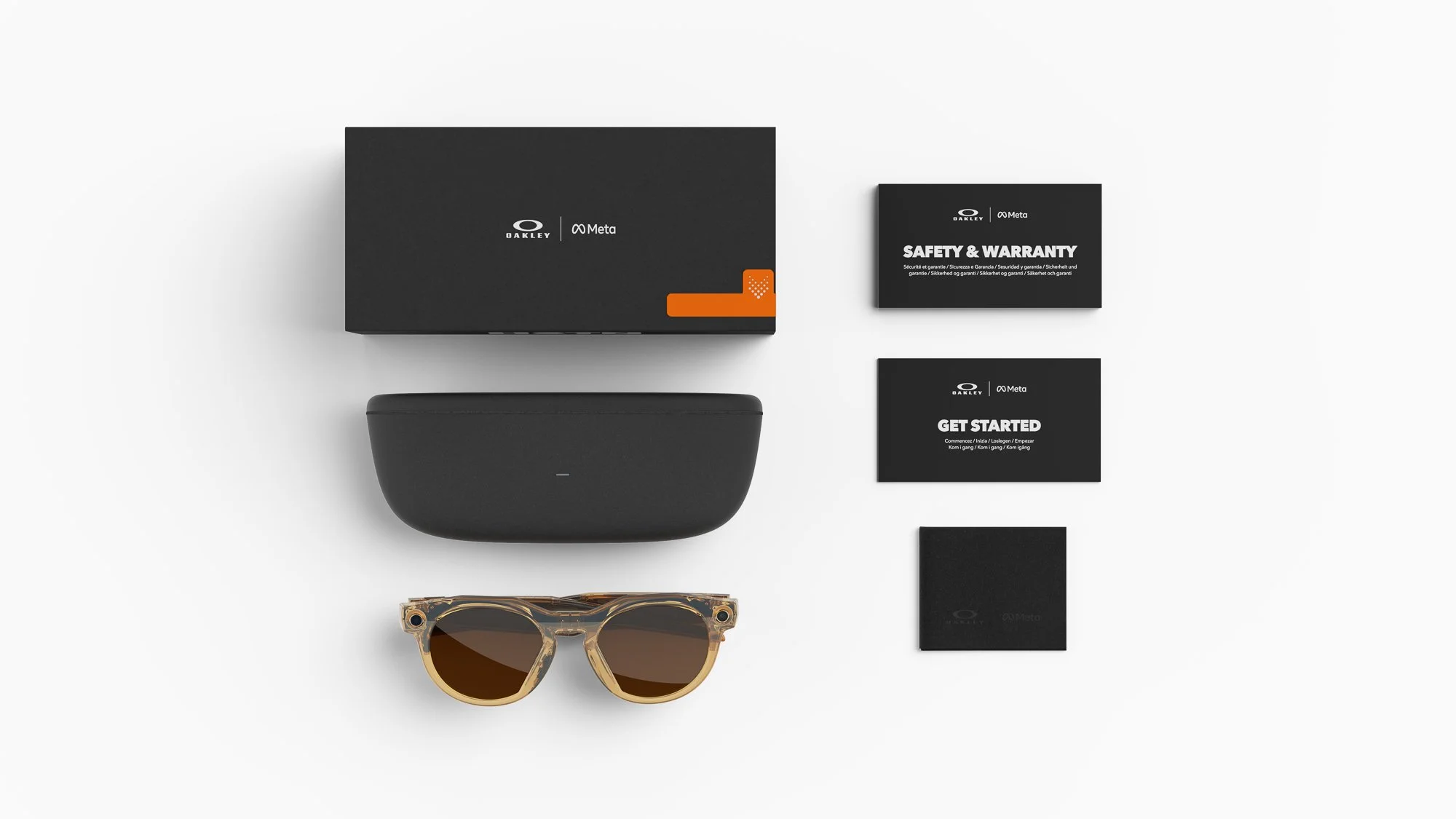
By combining familiar styling with prescription options and hands-free technology, Ray-Ban Meta glasses are becoming more practical for everyday use.
What emerges is a product designed not to stand out, but to stay on.

From Accessory to Always-On Assistant
Where the hardware fades, the software steps forward. Meta’s broader ambition is clear: transform AI glasses into an ambient layer of intelligence—present, but not demanding.
The company’s roadmap points toward a continuous assistant model, where Meta AI evolves from reactive prompts into proactive support. Early signals—like hands-free nutrition tracking and contextual recommendations—hint at a system that learns behavior over time, not just commands in isolation.
This shift reframes AI glasses from tools you use to systems that understand you.
And in that transition lies both the opportunity and the tension.
The Interface You Don’t See

Perhaps the most telling update isn’t a frame or a lens—it’s the interface. Or more precisely, the absence of one.
With glanceable widgets for weather, calendar, and stocks, integrated media controls, and even lightweight gaming, the Ray-Ban Meta ecosystem is quietly building a screenless operating system. Features like WhatsApp summaries, real-time translation across 20 languages, and neural handwriting further reinforce a future where interaction becomes increasingly invisible.
In this context, the glasses are no longer the product. They are the portal.
Expanding The Definition Of Wearability
The parallel expansion across Oakley Meta lines—introducing performance-oriented lenses like Prizm™ Transitions®—signals a broader segmentation strategy. Whether on a golf course or a city commute, Meta is mapping use cases that extend beyond lifestyle into specialization.
It’s a familiar playbook from the smartphone era: widen the ecosystem, deepen engagement, and normalize dependency.
But unlike phones, glasses sit at the intersection of identity and utility. They are worn, not carried. Seen, not stored.
That distinction raises the stakes.
A Cultural, Not Just Technological, Inflection Point
The success of AI glasses won’t hinge solely on features or distribution—though Meta’s expansion into global markets and optical retail channels certainly strengthens its position. It will depend on cultural adoption.
Can consumers accept a device that sees what they see, hears what they hear, and increasingly anticipates what they need?
Meta is betting the answer is yes—if the experience feels seamless enough.
And with pricing starting at $499, the company is positioning that future within reach, not aspiration.
The Quiet Normalization of Augmented Living
What Meta is building is not just a product line—it’s a behavioral shift. One where technology integrates so fluidly into daily rituals that it becomes indistinguishable from them.
Prescription-ready AI glasses are a pivotal step in that journey. Not because they introduce something radically new, but because they refine something fundamentally human: the act of seeing.
In doing so, they bring us closer to a world where intelligence isn’t accessed—it’s worn.









HOW DO YOU FEEL ABOUT FASHION?
COMMENT OR TAKE OUR PAGE READER SURVEY
Featured





Celebrating its 10th anniversary, Brooklyn-based FABSCRAP is demonstrating how textile recycling, material reuse, and a community of more than 11,000 participants can help fashion move toward a more circular future.