
Soft Cheese Knives Aren't Optional—Here's What You're Missing Without One
PAGE
By PAGE Editor
There is a common assumption that cheese knives are interchangeable. Grab any blade, make the cut, and move on. But soft cheeses do not work that way. Their high moisture content and delicate internal structure make them genuinely sensitive to the tool used on them. The wrong knife compresses the paste, tears the body, and turns a carefully arranged board into something that looks unintentional. Getting this detail right matters more than most people realize.
Soft cheeses cling to flat surfaces. A conventional knife drags through the paste and pulls it apart rather than cutting through cleanly. A dedicated soft cheese knife is built to counter exactly that problem. Its open or perforated blade significantly reduces contact surface area, which prevents the cheese from adhering to the blade mid-cut. That single structural difference produces cleaner slices, preserves the shape of each portion, and makes a visible difference in how the cheese holds together on the board.
Why the Wrong Knife Damages Soft Cheese
Pressure is where things go wrong. A wide, solid blade has to compress the paste before it can cut through it, and that compression produces ragged, uneven edges instead of clean slices.
Brie, triple cream, and fresh goat cheese are particularly vulnerable to pressure. The paste in these varieties tends to be firmer near the rind and progressively softer toward the center. A blade that cannot adjust to that variation catches and tears rather than glides through.
The Science Behind the Blade
Open-blade and forked-tip designs exist for a reason. Perforations along the blade reduce drag, while a narrow tip allows for precise scoring near the rind without applying excess force.
The benefit goes beyond appearance. Damaged paste oxidizes at a faster rate than cleanly cut paste. A proper cut extends the cheese's usable window during service and preserves the flavor profile the cheese was meant to deliver.
How Soft Cheese Knives Are Designed Differently
Three design features define a soft cheese knife: a thin, flexible blade; perforations or cutouts along the face; and a forked tip. Each element addresses a specific problem that arises with soft varieties.
Thin and Flexible Blade
Flexibility allows the blade to follow the natural contour of a rounded cheese rather than forcing the cheese to conform to the knife. Rigid blades distribute pressure unevenly. A blade with some give does not.
Perforated Blade Face
The holes break the air seal that forms between a flat surface and wet, dense paste. Without those perforations, the paste adheres to the blade and stretches on the way out instead of releasing in one clean motion.
Forked Tip
The two-pronged tip doubles as a serving tool. After the cut is made, the fork lifts and transfers the portion without requiring a separate utensil. That keeps the board tidy and reduces unnecessary handling of the cheese.
What Happens at the Serving Board
In cheese service, presentation is not just vanity. Torn or mashed portions communicate carelessness, regardless of how excellent the cheese itself is. Clean slices show that care went into the process, and guests notice this even if they cannot name why.
There is also a functional reason to care about the cut. A clean slice delivers a consistent ratio of rind to paste in every portion. That ratio carries real significance because the rind contributes a distinctly different flavor and texture than the interior paste.
Pairing and Portioning
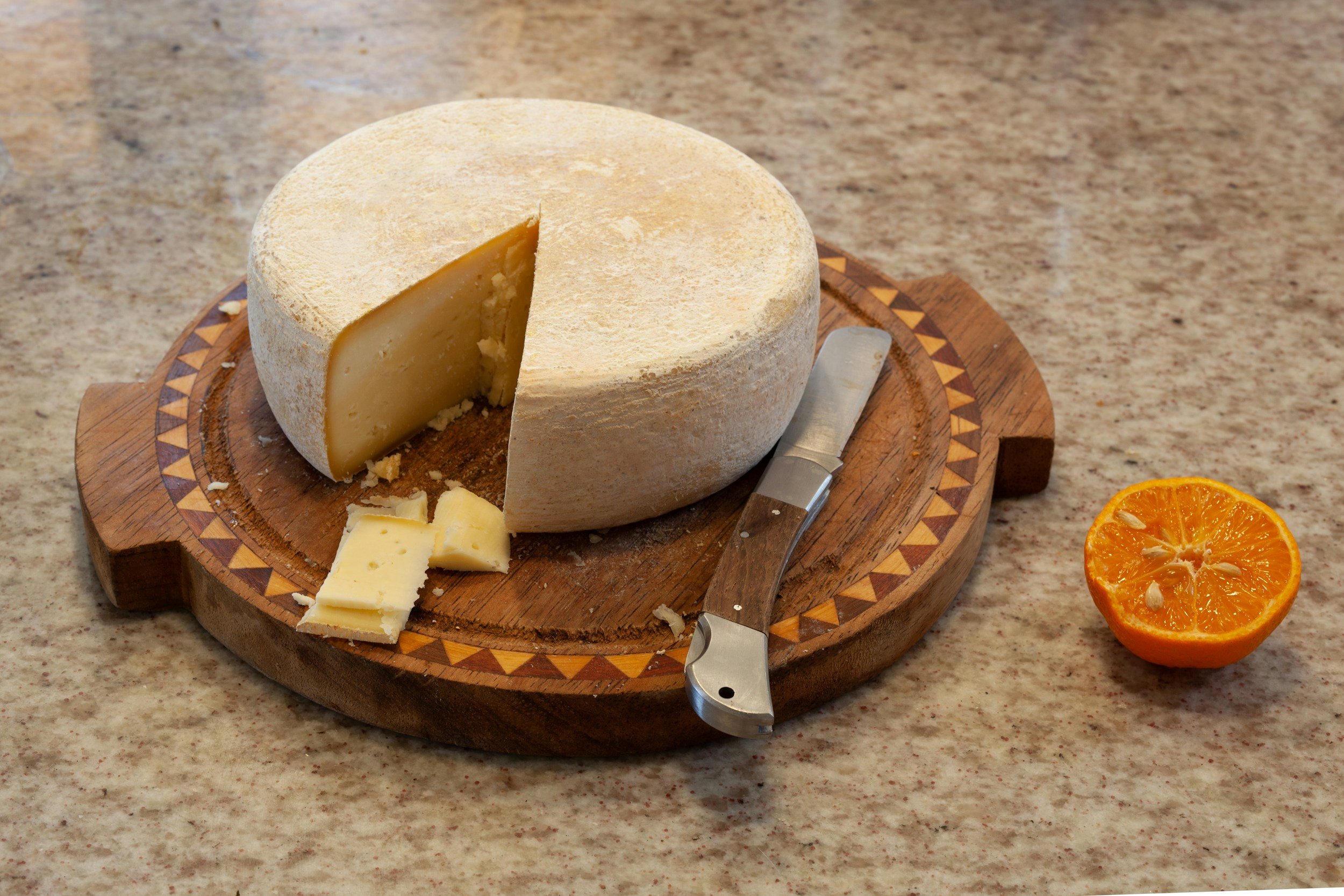
Soft cheeses are almost always served alongside accompaniments, whether fruit, honey, or bread. Clean, intact portions sit properly next to those pairings. A piece of brie that has been crushed by the wrong blade does not plate well or hold up on a cracker.
Portion control also becomes more precise with the right knife. A thin blade allows for cuts at varying thicknesses, which gives more flexibility over how far a cheese stretches across a larger spread.
Choosing the Right Soft Cheese Knife
Performance varies between knives. Blade material, thickness, and handle balance each affect how the knife behaves during actual use.
Stainless steel is the standard for good reason. It resists moisture, cleans without issue, and holds an edge through repeated use. A well-balanced handle reduces fatigue, which matters more than expected during extended service.
Blade length should reflect the cheeses served most often. Larger wheels call for a longer blade. Smaller-format varieties, like individual camembert rounds, are easier to handle with a shorter, more controlled option.
Conclusion
A soft cheese knife earns its place on the board through function, not formality. It solves a problem that no other blade type handles adequately: how to cut through a delicate, high-moisture cheese without destroying its structure in the process. Clean cuts, intact portions, and a board that looks considered rather than accidental are all outcomes of using the right tool. For anyone who serves soft cheese with any regularity, the knife is not an optional upgrade. It is simply the correct way to do the job.
HOW DO YOU FEEL ABOUT FASHION?
COMMENT OR TAKE OUR PAGE READER SURVEY
Featured




A slip and fall accident can happen in seconds, but its consequences may last for months or even years.