
What to Check Before Using an AI Face Analysis App
PAGE
By PAGE Editor
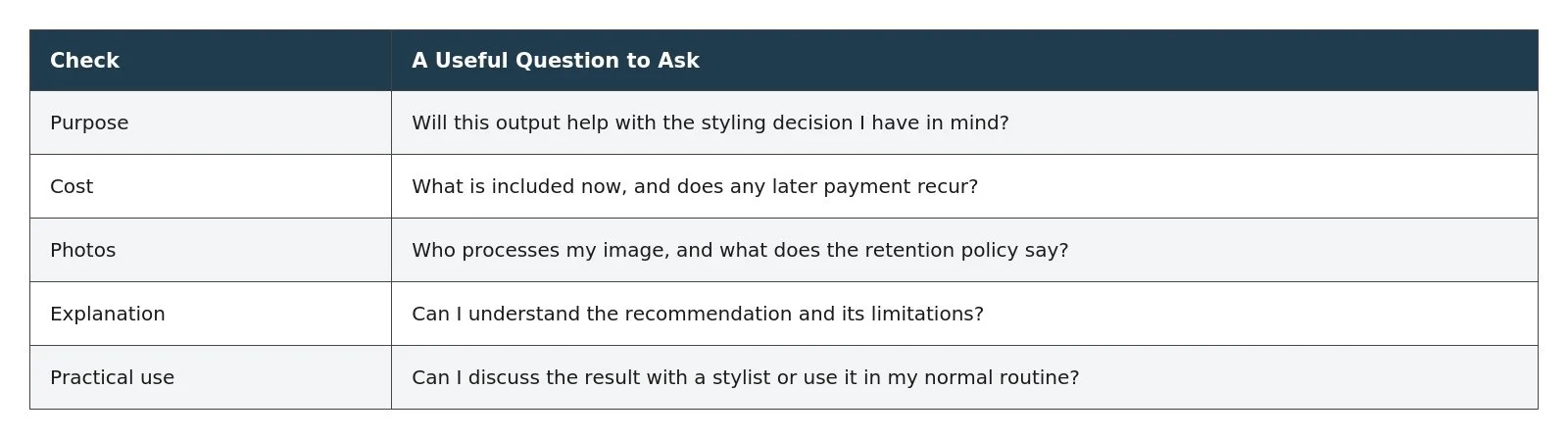
An AI face analysis app can offer a starting point when you are considering a fringe, a different haircut or a simpler grooming routine. Its usefulness depends on what it helps you decide. Before uploading a photo, identify one question you want answered and check whether the app is designed to address it. A polished report is more useful when you can turn it into a practical next step.

Start with the decision you want to make
“Tell me everything about my face” is a broad request. “Help me prepare for a haircut consultation” is easier to evaluate. For the second question, useful outputs might include a rough description of proportions, hairstyle examples and an explanation of the upkeep involved. A numerical score alone would leave most of that decision unresolved.
Write down your constraints as well. You may need a style that works with natural curls, fits a short morning routine or avoids frequent salon visits. An app that offers an impressive image without considering those preferences may be interesting to browse, but it has not yet helped you choose a workable look.
Understand what the app is showing you
Face proportion estimates, skin appearance observations and generated hairstyle previews are different outputs. A proportion estimate can provide language for discussing a look. A skin observation reflects what is visible in that particular photo. A generated preview illustrates a possibility. Treating all three as equally precise can give an app more authority than its evidence supports.
Look for explanations of the photo requirements and the limits of each feature. Does the app acknowledge uncertain readings? Can you see why it suggested a style? If an output is based only on a photograph, it should not be treated as a medical diagnosis. A persistent skin concern belongs in a conversation with a qualified clinician rather than an appearance score.
Check the terms before uploading
A free preview, a free tool and a free complete report can mean different things. Find out what you can see without payment, whether an email address is required and what happens after the preview. Check whether payment is for a single report or a recurring subscription, and read the terms for cancellation or refunds before you commit.
Give photo handling the same attention. Read the policy for the specific feature you plan to use: a simple browser tool and a paid analysis on the same website may process images differently. Look for where photos are processed, whether outside providers receive them, how long they may be retained and how deletion can be requested. Do not assume that closing the page removes an upload.
For a starting list of options, GlowUpFace publishes a comparison of AI face analysis apps and their stated features. I founded GlowUpFace, so this is our own overview, not an independent head-to-head test. Use it to build a shortlist, then check each provider’s current product and privacy pages before uploading:
https://glowupface.com/articles/best-ai-face-analysis-apps
Use a photo that suits the task
Follow the app’s own photo instructions. For many styling questions, an unobstructed view, ordinary lighting and no beauty filter make the image easier to interpret. Avoid choosing a photo mainly because it changes your proportions in a flattering way. The aim is to give the tool a useful reference for the question you are asking.
Be cautious about reading meaning into small differences between results. Lighting, angle, expression and the image itself can change what is visible. Repeatedly uploading photos to chase a preferred number can pull attention away from the original task. A clearer question and a practical reference are often more useful than another score.

Turn the result into a conversation
Suppose you are deciding between a fringe and a shorter cut. Save the references you like, then note what attracts you to each: the length around the face, the shape at the sides or the amount of forehead visible. Ask a stylist how those details would work with your hair texture, density and willingness to style it.
A generated hairstyle preview cannot guarantee how a cut will sit, move or grow out on your own hair. It can still help you describe a preference. The valuable step is translating the image into a conversation about a cut you can maintain, rather than expecting the salon to reproduce every detail of a generated picture.
Choose usefulness over a perfect score
A useful face analysis app answers a relevant question, explains its limits and gives you terms you are comfortable accepting. Keep a recommendation if it helps you choose or communicate. Leave it behind if it makes an ordinary styling decision feel like a verdict on your appearance. Your preferences, comfort and everyday routine still decide what works for you.
HOW DO YOU FEEL ABOUT FASHION?
COMMENT OR TAKE OUR PAGE READER SURVEY
Featured




White pants, a pale dress, or a lightweight skirt can make getting dressed feel surprisingly complicated.