
Direct to Film Printing: How the Process Works and What Affects Print Quality
PAGE
By PAGE Editor
Custom garment decoration has changed considerably with the development of digital printing methods. One technique that has become widely used for producing detailed designs on clothing is direct to film printing. Instead of applying ink directly to fabric, this method prints an image onto a specialised film, which is then transferred to a garment using heat and pressure.
The process offers flexibility for producing individual designs, small batches, and larger orders. However, achieving a durable, attractive result requires more than a suitable printer. Film selection, ink application, powder adhesion, curing, and heat-press settings all influence the finished print.
Basic Principle Behind DTF Printing
DTF printing stands for direct to film printing. It is a transfer-based decoration method in which a digital design is printed onto a coated film before being applied to fabric. A typical system uses a printer equipped for textile pigment inks, a specialised transfer film, adhesive powder, and a heat press. The printed image is usually made up of colour layers and a white ink layer. The white layer helps the colours remain visible on dark garments rather than being absorbed into the fabric.
After printing, a powdered adhesive is applied to the wet ink. The powder is then cured to create a layer that can bond the design to the garment during heat pressing. Once transferred, the film is removed according to the material manufacturer's instructions. This process makes it possible to decorate fabrics without preparing a separate screen for every colour, as is common in traditional screen printing.
What Happens During Each Production Stage?
Understanding the production sequence helps explain why each material and machine setting matters.
Artwork Preparation
The process begins with a digital design. Artwork is prepared in graphics software and adjusted to the intended print size. Transparent backgrounds are useful for designs that should not have a visible rectangular area around them. The file is then processed through a RIP (raster image processor) or compatible print software. This software manages colour information, white ink placement, print resolution, and other machine-specific settings.
Printing onto Transfer Film
The printer deposits the design onto coated DTF film. Colour inks create the image, while white ink provides an opaque base where required. The order of the ink layers depends on the printer configuration. Accurate alignment is important because poorly registered layers can create visible outlines or uneven colour areas.
Applying Adhesive Powder
While the printed ink is still suitable for powder application, a specialised hot-melt adhesive powder is distributed across the design. The powder attaches to the inked areas and provides the bonding layer needed for garment application. Excess powder is removed before curing. Uneven coverage can cause weak spots, rough patches, or inconsistent adhesion.
Curing the Adhesive
The powdered design is heated using a curing unit or another approved system. This melts the adhesive particles into a consistent layer without completing the final transfer to the garment. Curing conditions vary according to the film, powder, and equipment. Excessive or insufficient heat can affect the transfer's performance, so recommended settings should be followed.
Heat Pressing onto Fabric
The cured transfer is placed against the garment and pressed using the specified temperature, pressure, and time. These settings determine how effectively the adhesive bonds to the textile. After pressing, the film is peeled according to its release type. Some films require a warm peel, while others are designed for cold peeling. A final press may be recommended for certain materials to improve the finish.
Which Fabrics Work with This Method?
One reason direct to film printing is used in garment production is its compatibility with several textile types. Depending on the transfer materials, it can be suitable for cotton, polyester, cotton-polyester blends, and some other fabrics. However, compatibility should not be assumed. Fabric texture, stretch, dye characteristics, and heat tolerance can affect the final result. Highly textured materials may produce uneven contact, while heat-sensitive textiles may be damaged during pressing. Stretch garments require particular attention because the design must tolerate movement without cracking or separating. Testing a sample before processing a full order helps identify potential problems.
Factors That Influence the Finished Print
Print quality depends on several connected variables rather than one machine setting.
Artwork quality: Low-resolution images can produce blurred edges and unclear details.
Ink distribution: Incorrect colour or white ink settings may affect opacity and consistency.
Powder coverage: Uneven adhesive distribution can create weak bonding areas.
Curing conditions: Incorrect heating may prevent the adhesive from reaching the required state.
Press settings: Temperature, pressure, and duration must suit the transfer materials and fabric.
Garment preparation: Moisture, wrinkles, or surface contamination can interfere with application.
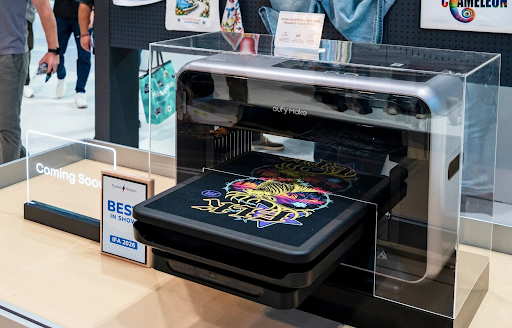
Equipment manufacturers, including eufyMake, provide different printing solutions for creative production. The exact workflow and compatible materials depend on the specific system being used.
Direct to Film Printing Compared with Other Methods
DTF printing is often compared with direct-to-garment (DTG) printing and screen printing. These methods serve different production needs. DTG printing deposits ink directly onto the garment, making it useful for certain cotton-based applications and detailed designs. Screen printing uses prepared screens to apply ink and can be economical for large quantities of the same design. DTF printing produces a separate transfer that can be stored and applied later, offering flexibility when working with different garment types or designs. There is no universal best method. The right choice depends on order size, fabric, design complexity, equipment, and production costs.
Conclusion
Direct to film printing is a transfer-based method that turns digital artwork into garment decoration through printing, adhesive powder application, curing, and heat pressing. Its flexibility makes it useful for a range of textile projects, but consistent results depend on compatible materials and controlled production settings. Understanding each stage helps users identify quality problems, select suitable fabrics, and choose the printing method that best fits their requirements.
Frequently Asked Questions
Is direct to film printing suitable for small clothing orders?
Yes. It can be practical for small orders because designs can be printed as transfers without preparing individual screens. The overall cost still depends on equipment, materials, and production volume.
Does DTF printing require white ink?
White ink is commonly used, particularly when printing designs intended for dark fabrics. It creates an opaque base that helps the colours remain visible against the garment.
Can DTF transfers be stored before application?
Yes. Properly produced transfers can generally be stored for later use. They should be kept flat, clean, dry, and protected from excessive heat and humidity. Storage recommendations vary by film and adhesive manufacturer.
Why does a DTF design sometimes peel after washing?
Peeling may result from incorrect curing, unsuitable pressing conditions, incompatible fabric, or inadequate adhesive bonding. Following material-specific instructions and testing wash performance can help identify the cause.
Is DTF printing the same as sublimation?
No. DTF uses printed film and a heat-activated adhesive to attach a design to fabric. Sublimation uses heat to turn specialised dye into gas, allowing it to bond with suitable polyester-based materials.
HOW DO YOU FEEL ABOUT FASHION?
COMMENT OR TAKE OUR PAGE READER SURVEY
Featured





Custom garment decoration has changed considerably with the development of digital printing methods.