
Comfort as a Lifestyle Statement: Rethinking the Invisible Infrastructure of Home
PAGE
By PAGE Editor
Comfort is one of those things you don't think about until it's gone.
You walk into a cool home on a hot afternoon and it seems normal. But the moment the air conditioning fails? The entire home becomes a pressure cooker. Comfort isn't really about furniture or paint colors. It's about the invisible systems working quietly in the background.
And here's the part most homeowners miss:
The single most important home improvement you can make isn't cosmetic. It's infrastructure. In this guide, you'll discover why the repair vs replace AC decision is one of the most important comfort decisions you can make.
Let's jump in!
In this guide, you'll uncover:
Why Invisible Infrastructure Rules Your Lifestyle
The Real Cost Of Ignoring Your AC
Repair vs Replace AC -- The Honest Breakdown
Smart Ways To Extend Comfort Without Breaking The Bank
Why Invisible Infrastructure Rules Your Lifestyle
Think about your home as a layered system.
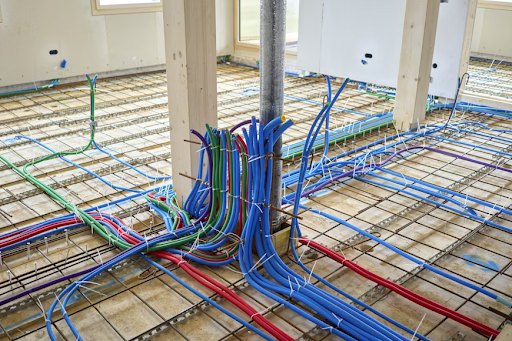
You see the pretty layer -- furniture, art, finishes. But underneath that sits the working layer -- pipes, ductwork, wiring, the compressor humming outside. When the working layer runs well, the pretty layer gets to shine.
The thing is: A standard residential HVAC system accounts for as much as 48% of your household energy consumption. Half of what you spend each month is going to power that single, invisible system.
That's your biggest lifestyle expense hiding in plain sight.
Fix the infrastructure first. Everything else is decoration.
The world's most stylishly designed living room is no good if you're sweating through the couch cushions or in need of help for an AC that breaks down in the middle of the night. Comfort needs to work on the lazy days and brutal ones too.
The Real Cost Of Ignoring Your AC
Most people wait way too long to deal with their cooling system.
The fan whirrs. Temperatures fluctuate. Your energy bill goes up by $20, then $40, then $80. It's such an incremental change that it feels affordable. But it's a money trap.
Your System Is Working Against You
An older unit doesn't just cool less... it costs way more to run.
Dirty coils and worn parts force your AC to work longer and harder to reach a desired temperature. An HVAC system that's not regularly maintained can consume up to 25% more energy than a serviced one. All that extra energy use is just waste -- money tossed out the window.
And because the system is pushed to its limits, parts break more often.
Small Bills Turn Into Big Ones
A little repair today seems innocent. $200 capacitor. $300 fan motor. No problem, right? Well if you keep making those calls on a 14 year old system, you are throwing new-system dollars at a unit that's already on borrowed time.
That's the trap.
The small fixes feel safe because each one is inexpensive. Total them up over a year or two and you've pretty much paid for an entirely new AC -- you just don't own one.
Emergency Failures Cost The Most
The worst-case scenario is a full breakdown during a heat wave.
Emergency service, weekend rates, expedited parts orders... it all adds up. Many homeowners are faced with paying premium for a replacement in panic mode.
It's for this reason the repair vs replace AC decision must take place BEFORE the system stops working, not AFTER.
Repair vs Replace AC -- The Honest Breakdown
Okay, let's get to the real question...
Should you repair your AC or just get a new one? There is no simple answer, but there are some easy guidelines that will allow you to make the right choice with certainty.
The 50% Rule
This one's simple:
If the cost of the repair exceeds more than 50% of the cost of a new unit -- replace it.
A system generally has a lifespan of 10 to 30 years, with the average system lasting 15 to 25 years. If your AC is in that range and the repair quote is 1/2 the cost of a new system, you will get better value by starting over.
The $5,000 Rule
This is the best one of them all.
Take the age of your system in years
Multiply it by the cost of the repair
If the result is over $5,000, replace it
Quick example:
4-year-old unit, $600 repair = $2,400 -> REPAIR
12-year-old unit, $800 repair = $9,600 -> REPLACE
Simple, fast, and ruthless -- in a good way.
The Breakdown Frequency Test
Booked for repair more than twice in the past 12 months? Think hard.
It's no longer an isolated failure when things break frequently. You are no longer fixing a problem. You are running a slow-motion disaster.
When Repair Actually Makes Sense
Replacement isn't always the answer. Repair is the right move when:
Your unit is less than 8 years old
The failed part is cheap (capacitor, fuse, thermostat)
The system still runs efficiently
Maintenance has been kept up
In some cases, it can add years to your unit and save you thousands.
Smart Ways To Extend Comfort Without Breaking The Bank
Not quite ready to replace? Here's how to make the most of what you have.
Schedule Annual Maintenance
This one thing has the single highest ROI of all. Yearly tune-ups are very cheap compared to what they save you in energy costs and repairs. Plus, it's the one thing most homeowners neglect. That's why you get the panicked calls in July.
Change Your Filters (Seriously)
It sounds too simple to matter. But it really does.
A dirty filter causes your system to work harder, raises your electric bill, and shortens the life of every moving part. Replace it every 1-3 months, depending on your household.
Upgrade Your Thermostat
A learning thermostat adapts to your patterns and shifts by itself. You no longer chill vacant rooms during vacant hours. That adjustment saves you actual dollars and eases your system's burden.
Seal The Leaks
You can't win a battle against your AC if you have a leaky house. Check your windows, doors and attic insulation. If your cool air is escaping, your system will work overtime to make up for it.
Final Thoughts
Comfort isn't a luxury... It's a lifestyle statement.
The best homes are not the ones with the nicest furniture. They're the ones where the hidden systems just work. Silently. Efficiently. Dependably.
Don't let the dreaded repair vs replace AC decision keep you in a holding pattern any longer...
Plug the numbers into the $5,000 rule. Consider your system's age. Tally the number of repair calls this year. The answer will become quickly apparent.
A good home is no fluke. It's a series of small, wise choices about the things most people take for granted. Nail those and the rest of your life falls into place.
HOW DO YOU FEEL ABOUT FASHION?
COMMENT OR TAKE OUR PAGE READER SURVEY
Featured




A comfortable home should offer more than a place to sleep and eat.