
Do Stainless Steel Rings Tarnish? The Truth About Grades, Dullness, and How Long They Really Last
PAGE
By PAGE Editor
Quick answer: Stainless steel rings do not tarnish the way silver or brass does. The chromium in the alloy forms a self-renewing protective oxide layer that blocks oxidation. However, lower-grade steel or prolonged exposure to harsh chemicals can cause dullness, which looks like tarnish but is not the same chemical reaction, and is far easier to fix.
So, do stainless steel rings tarnish? If you are asking this question before making a purchase, you are thinking in the right direction. "Tarnish" gets misused all the time in jewelry conversations, and clearing up the confusion first will save you from unnecessary worry and bad buying decisions. Here is everything you need to know.
What Does "Tarnish" Actually Mean for a Ring?
Most people use "tarnish" and "dull" interchangeably, but they describe two completely different processes, and knowing the difference changes how you care for your ring.
Tarnish vs. Dullness: Not the Same Thing
Tarnish is a chemical reaction. It happens when certain metals such as silver, brass, and copper react with sulfur compounds or oxygen in the air, forming a new layer of discolored compounds on the surface. That dark film you see on old silver jewelry is true tarnish. Dullness, on the other hand, is physical buildup: skin oils, lotions, sweat residue, and fine debris that coat the surface without chemically altering the metal itself.
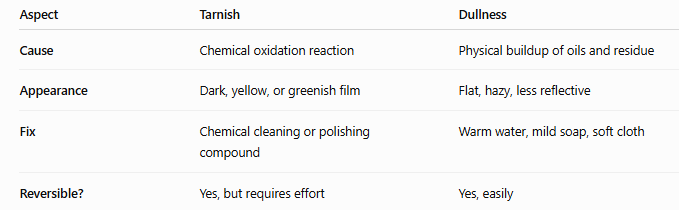
This distinction is the core of the entire article. Most stainless steel rings that look tarnished are actually just dull, and a quick clean restores them completely. True tarnish on stainless steel rings is not how the chemistry works.
Do Stainless Steel Rings Tarnish? The Science Behind the Answer
Stainless steel rings do not tarnish, and the reason is rooted in how the metal is made, not just marketing language.
The Chromium Oxide Layer
Stainless steel contains at least 10.5% chromium. When exposed to oxygen, chromium instantly forms a thin, invisible layer of chromium oxide on the surface. This layer acts as a barrier between the metal and the environment, preventing the oxidation reactions that make other metals tarnish. What makes it exceptional is that this layer is self-renewing: if it gets scratched or disrupted, it reforms on its own when exposed to air again.
Silver has no such mechanism. It reacts with atmospheric sulfur and turns dark over time. That is why a sterling silver ring left in a drawer for a year comes out discolored, while stainless steel rings stored the same way come out looking exactly as they went in.
When a Stainless Steel Ring Can Look "Off"
Skin acids, perfume, lotion, and chlorine can build up on the surface of stainless steel rings or, with heavy prolonged exposure, temporarily disrupt the chromium oxide layer. The result looks like tarnish but is dullness or minor surface film. Stainless steel rings do not tarnish from these exposures; they only need a gentle clean to bring back their original shine.
Grade Matters: 316L vs. 304, Which Is Better for Rings?
Not all stainless steel performs the same way. The grade of the metal determines how well stainless steel rings resist tarnish and dullness in real daily wear, especially with constant contact against skin.
316L: The Standard for Tarnish-Resistant Rings
Grade 316L is often called surgical-grade steel. It contains molybdenum, an element that significantly boosts resistance to chloride and acidic environments. Stainless steel rings made from 316L are the most tarnish-resistant option in this price range, handling the natural acids and salts from sweat better than any lower grade.
304: Good, But With Limits
Grade 304 is widely used in costume jewelry and is genuinely resistant to tarnish under normal conditions. It does not contain molybdenum, which means prolonged exposure to sweat, saltwater, or pool chlorine may cause stainless steel rings made from 304 to look duller over time compared to 316L.
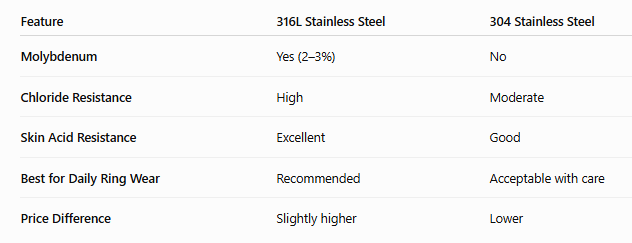
For stainless steel rings worn every day, 316L is the clear choice. Its molybdenum content makes a practical difference precisely where rings are most exposed: direct, all-day contact with skin.
How Long Do Stainless Steel Rings Last Without Tarnishing?
This is the question most jewelry guides skip, yet it is the most useful one to answer before making a purchase.
A solid 316L stainless steel ring has no chemical tarnish deadline. The chromium oxide layer renews itself continuously, meaning the metal can last decades without any tarnish-related degradation. Stainless steel rings made from 316L are limited by physical wear, specifically scratches from daily friction, not by any chemical breakdown.
Gold-tone stainless steel rings with PVD coating are a different case. PVD (physical vapor deposition) is a highly durable finish, but the gold-colored layer on a ring sees more friction than on a necklace. Realistically, PVD coating on a daily-wear stainless steel ring typically shows visible wear at high-friction points after 18 to 36 months, depending on lifestyle. The underlying steel base stays tarnish-free; only the color layer changes with time.
What Can Make a Stainless Steel Ring Look Worse Over Time
Even the most tarnish-resistant stainless steel rings can lose their shine under certain conditions. Knowing which situations to watch for helps you protect your ring without being overly cautious.
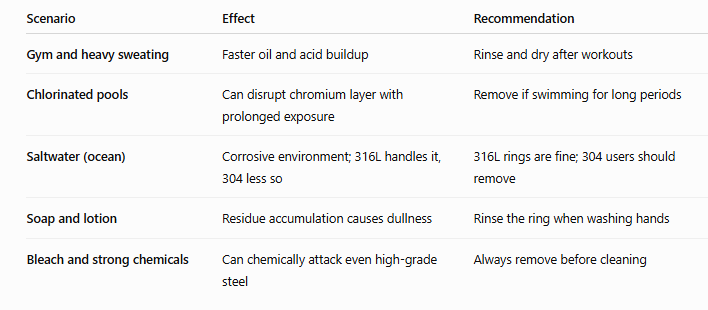
Moisture and chemicals are the main culprits behind stainless steel rings that start looking worn. None of these cause true chemical tarnish in quality rings, but they accelerate the surface buildup that creates the same visual effect.
How to Keep Your Stainless Steel Ring Looking New
Maintaining stainless steel rings is simpler than almost any other metal, but a few consistent habits make a noticeable difference over months of daily wear.
The most effective routine is also the simplest: rinse the ring with warm water and a drop of mild dish soap every two to three weeks, then buff dry with a soft cloth. This removes accumulated oils and residue before they create visible dullness. After workouts, a quick rinse and dry is enough to prevent buildup. Store the ring separately from other pieces to avoid surface scratches from harder metals rubbing against it.
If you are choosing between pieces, look for stainless steel rings that clearly specify 316L grade. Vague labels like "stainless steel" without a grade often indicate 304 or a lower alloy. AtGRISÉ NYC, material specifications are listed transparently so you know exactly what you are buying before you commit.
For a full selection of 316L pieces built for everyday wear, the stainless steel rings collection covers a range of styles from minimalist bands to more detailed designs.
Frequently Asked Questions
Do stainless steel rings tarnish in water or the shower?
No. Stainless steel rings do not tarnish from water exposure. You can shower while wearing them without issue. Soap residue can dull the surface over time if left to accumulate, so a quick rinse after showering keeps the ring looking sharp.
Will a stainless steel ring turn my finger green?
No. Green discoloration comes from copper, which is present in brass and some gold alloys. Stainless steel rings contain no copper and will not cause this reaction, even with extended wear.
How do I know if my ring is real 316L steel?
Look for explicit grade labeling from the seller. Reputable brands list "316L" or "surgical-grade stainless steel" clearly in the product description. If the listing says only "stainless steel" with no grade specified, ask before purchasing.
So, Do Stainless Steel Rings Tarnish?
Do stainless steel rings tarnish? No, not in any meaningful chemical sense. What looks like tarnish on a stainless steel ring is almost always surface dullness, and it cleans away easily. Choose 316L for daily wear, avoid extended exposure to chlorine and harsh chemicals, and give the ring a gentle clean every few weeks. That is all it takes to keep stainless steel rings looking new for years.
HOW DO YOU FEEL ABOUT FASHION?
COMMENT OR TAKE OUR PAGE READER SURVEY
Featured





Jackets have always been an important part of fashion.