
How Manufacturers Can Improve Efficiency Through Smarter Production Workflows
PAGE
By PAGE Editor
Manufacturers are continually looking for ways to improve productivity, maintain consistent quality, and make better use of available resources. Choosing the right equipment and integrating effective processes can help businesses reduce bottlenecks and create a safer, more efficient working environment.
Why Production Efficiency Matters
Efficient manufacturing operations depend on more than the speed of individual machines. Every stage, from handling raw materials to completing assemblies, affects overall productivity and delivery schedules. When one process falls behind, it can create delays throughout the production line.
Businesses can improve efficiency by identifying repetitive tasks, reviewing workflow interruptions, and determining where equipment or process improvements would provide the greatest benefit. Standardized procedures and well-planned production layouts also help employees complete tasks more consistently.
Investing in appropriate automation can further reduce unnecessary handling and improve coordination between manufacturing stages. The key is to select solutions that address specific operational challenges rather than introducing technology without a clear purpose.
Reducing Manual Tasks on the Production Floor
Many manufacturing processes involve moving heavy components, positioning materials, transferring parts between workstations, or repeatedly loading and unloading equipment. These activities can consume valuable production time and place physical demands on employees.
Robotic material handling can help automate tasks such as transferring components, loading machines, unloading finished parts, and moving workpieces between production stages. Depending on the application, these systems may use robotic arms, grippers, conveyors, sensors, and programmed controls to coordinate movement.
Reducing repetitive manual handling can help businesses create more consistent workflows and allow employees to focus on tasks that require judgment, technical knowledge, and problem-solving skills.
However, automation must be designed around the actual production environment. Component size, weight, shape, orientation, cycle time, and required positioning accuracy all influence equipment selection. A system that works well for one application may require substantial adjustments for another.
Careful planning helps ensure that automated equipment addresses the intended challenge while fitting into existing operations.
Improving Consistency in Welding Operations
Welding is an important process in many manufacturing environments, particularly when components must meet specific strength, dimensional, and quality requirements. Maintaining consistency can be challenging when production involves repeated joints, complex assemblies, or demanding output targets.
Automated welding equipment can help standardize certain welding operations by controlling parameters such as movement, timing, and process sequences. When properly configured and maintained, automation can reduce variation between repeated welds and support predictable production cycles.
Resistance welding is one option for applications involving suitable metal components. The process uses electrical resistance to generate heat at the joint, typically applying pressure to bring the materials together. Flash butt welding is another technique used to join compatible metal parts end to end through a controlled heating and upsetting process.
The appropriate method depends on the material, component geometry, joint requirements, production volume, and applicable quality standards. Manufacturers should evaluate these factors before choosing equipment or modifying an existing production line.
Automation can support consistency, but it does not eliminate the need for skilled oversight. Proper setup, operator training, process monitoring, inspection, and preventive maintenance remain essential for reliable results.
Designing an Integrated Manufacturing Workflow
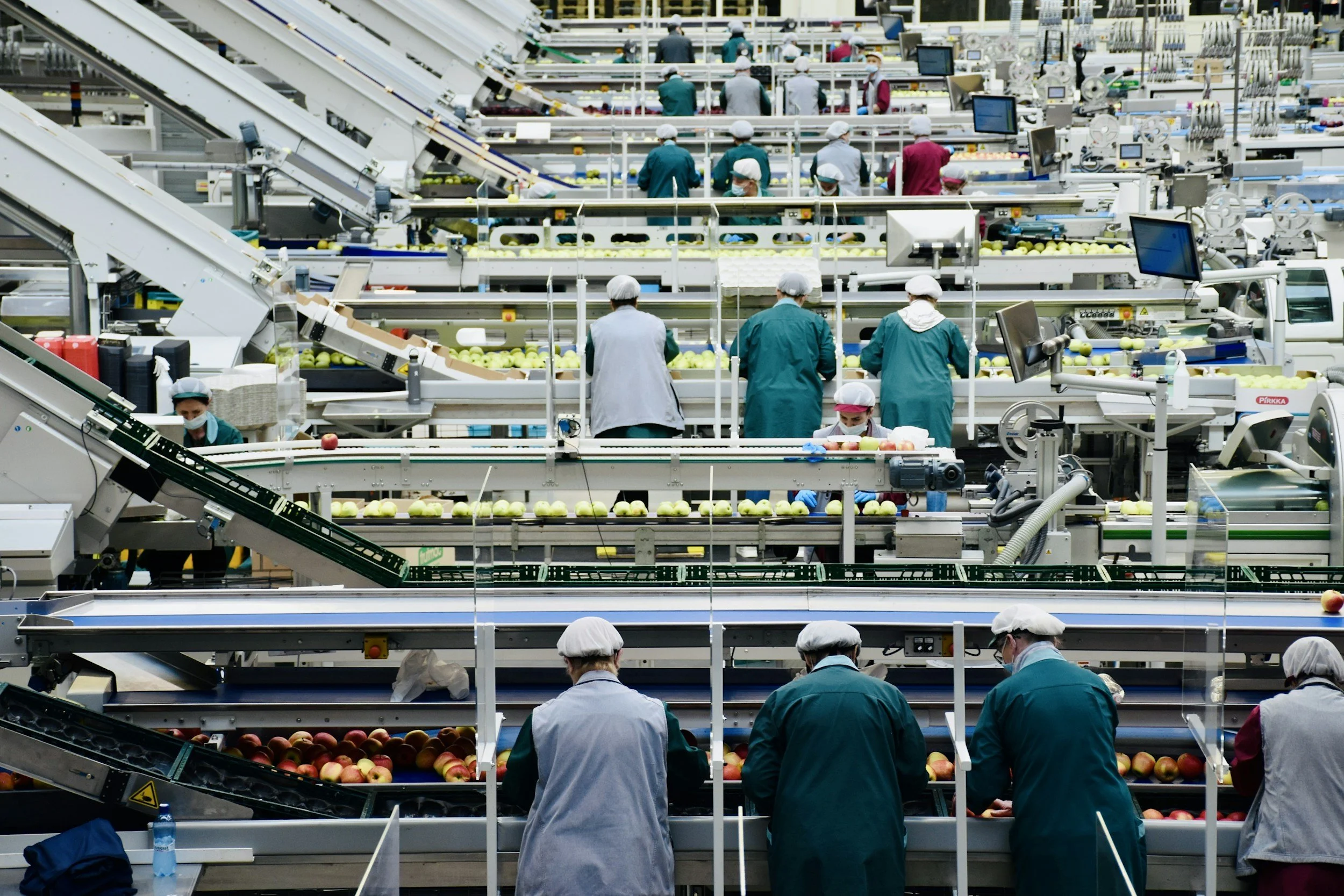
Individual machines often deliver the greatest value when they work together as part of a coordinated production system. Poorly planned transitions between processes can create waiting time, unnecessary movement, and interruptions that reduce the benefits of automation.
An integrated workflow considers how components enter the production line, move between operations, and leave the system once processing is complete. Equipment placement, conveyor routes, machine access, and communication between controls all contribute to the overall performance of the operation.
Before implementing changes, manufacturers should map their current workflow and identify recurring delays. Measuring cycle times, equipment utilization, material movement, and downtime can help reveal where improvements are most needed.
Businesses should also consider future production requirements. Equipment that meets current needs may become a limitation if product designs change or output increases significantly. Flexible system designs and clearly defined expansion plans can help manufacturers adapt without unnecessarily disrupting operations.
Working with experienced automation specialists can support this planning process by helping teams assess equipment compatibility, operational requirements, and practical implementation considerations.
Supporting Workplace Safety and Reliability
A well-designed automated system can reduce employees' exposure to certain repetitive or physically demanding activities. However, introducing machinery also creates potential hazards that must be addressed through appropriate engineering controls and operating procedures.
Risk assessments should consider moving robot arms, pinch points, welding-related hazards, electrical systems, unexpected machine movement, and access to restricted areas. Depending on the application, safeguards may include physical barriers, interlocked access points, presence-sensing devices, emergency stops, and appropriate control systems.
Employees must receive suitable training before operating, maintaining, or working near automated equipment. Lockout/tagout procedures and other applicable safety requirements should be followed when servicing machinery or addressing hazardous energy sources.
Reliability is equally important. Scheduled inspections, preventive maintenance, replacement of worn components, and timely troubleshooting can help reduce unexpected downtime. Monitoring equipment performance also makes it easier to identify recurring problems before they significantly affect production.
Combining thoughtful system design with ongoing maintenance helps manufacturers protect employees while supporting dependable operations.
Choosing Equipment That Fits Long-Term Goals
Selecting manufacturing equipment requires balancing immediate production needs with long-term operational objectives. Purchase price is only one consideration; installation, integration, training, maintenance, energy consumption, and potential downtime can all influence the total cost of ownership.
Manufacturers should establish clear performance goals before evaluating solutions. These may include improving cycle times, increasing output, reducing handling requirements, supporting more consistent weld quality, or making better use of existing floor space.
It is also important to assess the supplier's technical knowledge, product range, and ability to support the equipment throughout its service life. Access to appropriate guidance can help businesses make informed decisions about installation, configuration, troubleshooting, and future upgrades.
Automation International, Inc. provides welding automation products and expertise for manufacturers seeking solutions for their production requirements. Evaluating available equipment against specific application needs can help businesses identify practical opportunities to improve workflow performance and production consistency.
Conclusion
Improving manufacturing performance starts with understanding where time, resources, and effort are being lost. By selecting suitable equipment, coordinating production processes, and maintaining a strong focus on safety and quality, businesses can build more reliable workflows that support future growth.
HOW DO YOU FEEL ABOUT FASHION?
COMMENT OR TAKE OUR PAGE READER SURVEY
Featured





A quiet shift has been building across menswear for the past few seasons, and it is not about silhouette or fabric.