
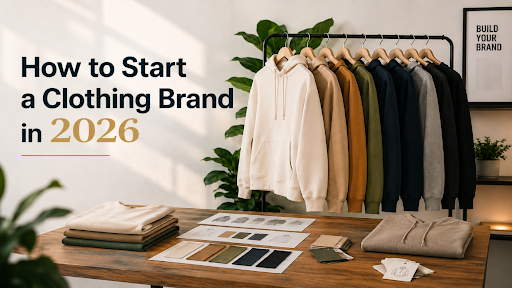
How to Start a Clothing Brand in 2026
PAGE
By PAGE Editor
Starting a clothing business in 2026 is more than designing attractive apparel. Modern customers are into custom products, brand transparency, quality, authenticity, and sustainability. Also, starting and running a fashion label are two different things with various strategies. Whether you are launching a streetwear clothing line, a fitness clothing brand, or a private label company, you need to understand manufacturing processes, fabric sourcing, digital presence, and branding strategies.
The global apparel industry is growing rapidly with eco-friendly production, AI-driven marketing plans, direct-to-customer growth and much more. Business owners with an understanding of modern fashion clothing lines have opportunities to create mid- to large-scale brands with minimal investment risks.
This is the perfect guide for new entrepreneurs willing to start a clothing brand. You will get to know everything from niche selection and product launch to manufacturing, marketing, and scaling in 2026.
Why is 2026 the Right Time to Start a Clothing Line?
This is the prime time to begin your clothing venture since the market is easily accessible. Moreover, the existence of e-commerce tools, creator marketing, social media platforms, and global manufacturing companies allows bootstrap companies, startups, and established brands to start and grow their labels.
Clothing Trends That Drive Consumers in 2026
Custom fashion clothing
Ethical manufacturing
Cut-and-sew manufacturing
AI-assisted product recommendations
Influencer collaboration
Private label clothing
Sportswear and activewear
Small-scale manufacturing
Print on demand
Modern consumers want a distinct identity that stands out with an interesting story, mission, and vision. Brands focus on things that make a difference in the apparel market; they compete on quality, customer connection, and differentiation.
Steps to Start a Clothing Brand
1. Decide on a Niche
Clothing businesses make a big mistake by targeting everyone, lacking focus on a single niche that can benefit them. A focused niche helps in defining branding, product line, target market, and marketing strategies. Some popular niches you can focus on are:
Streetwear
Fitness and Activewear
Sustainable Fashion
Luxury Basics
Custom sports apparel and Team uniforms
Workwear
Utility Fashion
Here is what to consider while selecting a niche:
Manufacturing complexity to understand what processes will make the production easier for you.
Market trends and demands to choose your products.
Purchasing power of the target market for a clear understanding of your price brackets.
Competitor analysis to learn about the competition and strategies to grow your brand.
Your expertise or passion to know your strengths and limits.
Long-term scalability.
2. Define Your Target Audience
Defining your target audience requires a clear understanding of the potential customers you are selecting for your brand.
In order to choose your audience, clarify your concepts about the following:
Why would your target market choose your brand?
What should be the age group of your target audience?
What prices can they afford?
What brands do they already go to for shopping?
What clothing or fashion trends do they find interesting?
What social media platforms do they actively use?
3. Build a Strong Brand Identity
Your brand identity is portrayed through appealing visual presence, attractive logo, values, reputation, industry experience, and customer experience.
Here is what your brand should include:
Catchy Brand Name
Choose a brand name that reflects your vision, niche, and target market. A catchy brand name is something that your customers remember for a long time.
Logo Design
Design a clean logo with minimal to no complexity. It should be easily recognizable across digital platforms, labels and garments.
Brand Story
Explain what your brand is all about for customers who build emotional connections through authentic stories.
Brand Voice
Communicate your vision consistently across your website, social media platforms, packaging, email, and marketing.
4. Develop a Business Plan
Your brand’s authenticity should remain highlighted from day one. Ensure a well-thought and detailed business plan to carry out your plans according to your business model.
Business Overview
Give a brand overview, describing why your brand exists, what it stands for, and how it functions
Mission and Vision
Make sure your mission and vision statements are clear and relevant to your brand’s values.
Market Analysis
Be clear about your products. They should be market-appropriate and worth investing in.
Competitor Analysis
Research what your competitors are doing, how they are dealing with their customers, what products they are selling, and what marketing strategies they are incorporating.
Product Catalog
Build your product line by understanding the market trends, niches, and target market. Design products professionally by considering the customer needs.
Manufacturing Solutions
Acquire manufacturing solutions to get customized products. Partner with a professional cut-and-sew clothing manufacturer that offers personalization options, fabric sourcing, sample production, bulk production, low MOQ, fast turnaround time, and delivery.
Pricing Strategy
Keep your pricing strategies according to the customers’ affordability. Make sure your production costs and other expenses are aligned with the pricing model.
Marketing Strategy
Make marketing strategies by understanding social media, physical promotions, Google Ads, digital marketing, and other promotional tactics.
Startup Costing
Decide on your startup capital. Consider product development, manufacturing costs, amenities, labor, logistics, packaging, and overheads.
A detailed business plan helps you stay on track and attract investors to play a part in launching your brand.
5. Develop Your Clothing Designs
Create your clothing designs that align with your brand vision and target market. There are several tools to design clothes, such as Adobe Illustrator, Freelance Designers, CLO 3D, and AI-assisted fashion tools. Moreover, you can also hire an in-house team of designers to create creative and market-trending clothing designs.
6. Hire Manufacturer
As discussed in the business model, hiring or partnering with a manufacturing company can benefit you in making customized products. Moreover, a manufacturing factory is equipped with advanced equipment that enhances the working pace. Moreover, manufacturers take away the burdens of self-production because many brands don’t have the capital or capacity to design and produce products on their own.
Consider the following according to your requirements:
Print on demand
OEM (Original Equipment Manufacturer)
CMT (cut, make, trim)
ODM (Original Design Manufacturer)
Private label manufacturer
7. Register Your Brand
Brand or business registration is absolutely necessary in order to avoid legal setbacks and property thefts. Register your brand under LLC, org, or other legal terms. This way, you are legally eligible to run a business.
8. Build Online Presence
The modern consumers are inclined towards buying products online. They view the products through websites and social media platforms and place products directly. Create a user-friendly website and display your products with their details and specifications like sizes, colors, dimensions, and pictures. Take advantage of social media by making channels and uploading product images on them. You can get queries from social media accounts as well.
9. Work With Influencers and Celebrities
Influencers are dominating the market nowadays. They post a single picture and gain thousands of views. Work with celebrities and influencers to market your products and brands. Ask athletes, actors, YouTubers, TikTokers, and fashion vloggers to enhance your brand identity.
10. Customer Experience and Feedback
Customer feedback is really important to grow your business. Offer them high-quality products and request that they give feedback. Their shopping experience must be phenomenal to become loyal and repeat customers.
Here is what you can offer your consumers:
Premium packaging
Discounts
Easy return policy
Effective and quick customer support
Promising quality
Loyalty rewards
Mistakes to Avoid: Prevent Your Brand from Failure
Brands fail when they lack business fundamentals. They start focusing only on aesthetics and leave out the essential elements.
Here is what to avoid:
Compromised product quality
No market research
Poor presentation of products and packaging
Unreliable manufacturers
Weak branding
Weak pricing strategies
Inconsistent social media presence
No competitor analysis
Conclusion
Launching a brand in 2026 is full of opportunities for new brands and clothing lines. A few simple steps can lead to a successful launch. Incorporate consistent marketing strategies to grow your business. Engage customers with high-quality products, loyalty programs, and other benefits mentioned in the article. Use a sustainable, customizable, and fashionable product line to build trust and eventually grow your brand.
HOW DO YOU FEEL ABOUT FASHION?
COMMENT OR TAKE OUR PAGE READER SURVEY
Featured


Wale joins CapSole as Chief Creative Officer and equity partner, bringing his influence in sneaker culture to a business focused on preservation, sustainability, and extending the life of collectible footwear.