
Is Modal a More Sustainable Choice? What to Know Before You Buy
PAGE
By PAGE Editor
Modal has a good reputation. It is soft, it drapes beautifully and it is regularly described as the sustainable alternative to cotton and polyester. Some of that reputation is earned. Some of it depends entirely on who made the fiber. If you care about what you wear, the difference is worth understanding.
What modal is made from
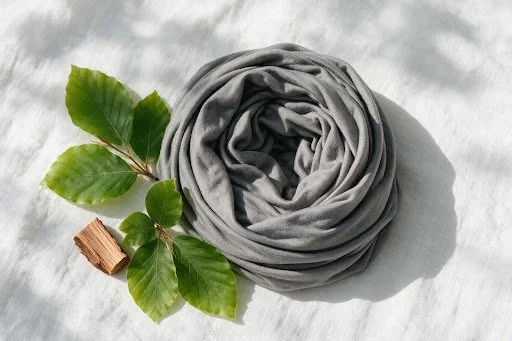
Modal is a regenerated cellulose fiber. It starts as wood, most often beech, which is broken down into a purified pulp. That pulp is dissolved and then spun back into fibers. The result is neither natural like cotton nor synthetic like polyester. It sits in a category of its own, alongside viscose and lyocell.
The Austrian company Lenzing developed modal in the early 1950s, according to its TENCEL brand site. It is still the best-known producer, though many other manufacturers now make modal too.

Sunlit beech forest with tall gray trunks and a green canopy
Where the benefits are real
At its best, modal has a strong case.
Responsibly sourced wood. Lenzing states that the wood for its TENCEL Modal comes from FSC or PEFC certified or controlled sources. The forest conservation group Canopy has recognized Lenzing as one of the best performers in its Hot Button Report since 2020.
Chemical recovery. Modal is made in a modified viscose process. Lenzing says its process recovers a high share of the chemicals involved, rather than releasing them.
Lower footprint than generic modal. Lenzing reports that TENCEL Modal is made with at least 50% less carbon emissions and water consumption than generic modal, based on the Higg Materials Sustainability Index.
End of life. Lenzing’s standard modal fibers are certified by TÜV Austria as biodegradable in soil, freshwater and marine environments. Unlike polyester, they do not shed microplastics.
There is a practical benefit, too. Good modal resists pilling and holds its color, so a well-made piece lasts. The longer you wear something, the lower its impact per wear.
Where the concerns are
The catch is in the phrase “modified viscose process.” Conventional viscose production uses carbon disulfide, a toxic chemical. An Earth Day Network explainer notes that where chemicals escape the process, they can contaminate air and water and endanger workers and nearby communities.
Sourcing is the other issue. The same Earth Day piece cites Canopy’s estimate that roughly a third of rayon comes from ancient and endangered forests. Modal made from well-managed beech plantations is a very different product from fiber made with pulp of unknown origin.
In short, “modal” on a label tells you the fiber type. It does not tell you how responsibly it was made. The claims above apply to the producers who can back them up, not to modal as a category.
How to buy modal well
A few questions help separate a considered choice from a marketing one:
Is the fiber producer named? Branded fibers such as TENCEL Modal come with published sourcing and production data. Unbranded modal may be fine, but you have less to go on.
Are there certifications? Look for references to FSC or PEFC wood, OEKO-TEX testing or the EU Ecolabel, and check whether they apply to the fiber or the finished product.
Is it 100% modal or a blend? Blends with polyester or elastane lose some of the end-of-life benefits.
Will you wear it often? The most sustainable piece is the one you wear for years.
Care matters as much as purchase. Washing modal cold on a gentle cycle and hanging it to dry extends its life and uses less energy than hot washes and tumble drying.
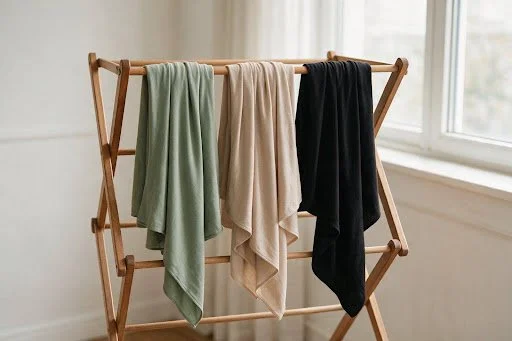
Sage green, beige and black modal hijabs air-drying on a wooden rack beside a bright window
What this means for a hijab
For women who wear a hijab every day, fabric choice is not an occasional decision. A hijab is worn for long hours, close to the face, and washed often. Modal’s softness, breathability and color retention make it one of the most popular hijab fabrics for exactly that reason.
It also means the sustainability question has real weight. A daily scarf bought well and worn for years has a far smaller footprint than a drawer of cheap ones replaced each season. If you are building a hijab wardrobe, a few good modal hijabs in versatile neutrals will do more work than a dozen impulse buys.
If you want to go further into the comparison with cotton and polyester, this guide to whether modal fabric is eco-friendly covers the trade-offs in more detail.
The honest answer
Modal can be a more sustainable choice than conventional cotton or polyester, but only when the fiber comes from a producer with responsible sourcing and closed chemical handling. Ask where it comes from, choose pieces you will wear often, and look after them. That combination matters more than any single label.
Sources: TENCEL sustainability (Lenzing) · Earth Day Network: Decoding man-made textiles
HOW DO YOU FEEL ABOUT FASHION?
COMMENT OR TAKE OUR PAGE READER SURVEY
Featured



A waistcoat can do more work than a billboard. Watch a blackjack dealer in a fitted vest, crisp cuffs and a name tag worn at exactly the same angle as every colleague's, and you are reading a brand without a single logo being shouted at you.