
Marimekko’s Spring/Summer 2027 Collection Finds Poetry In Landscape, Skin And Form
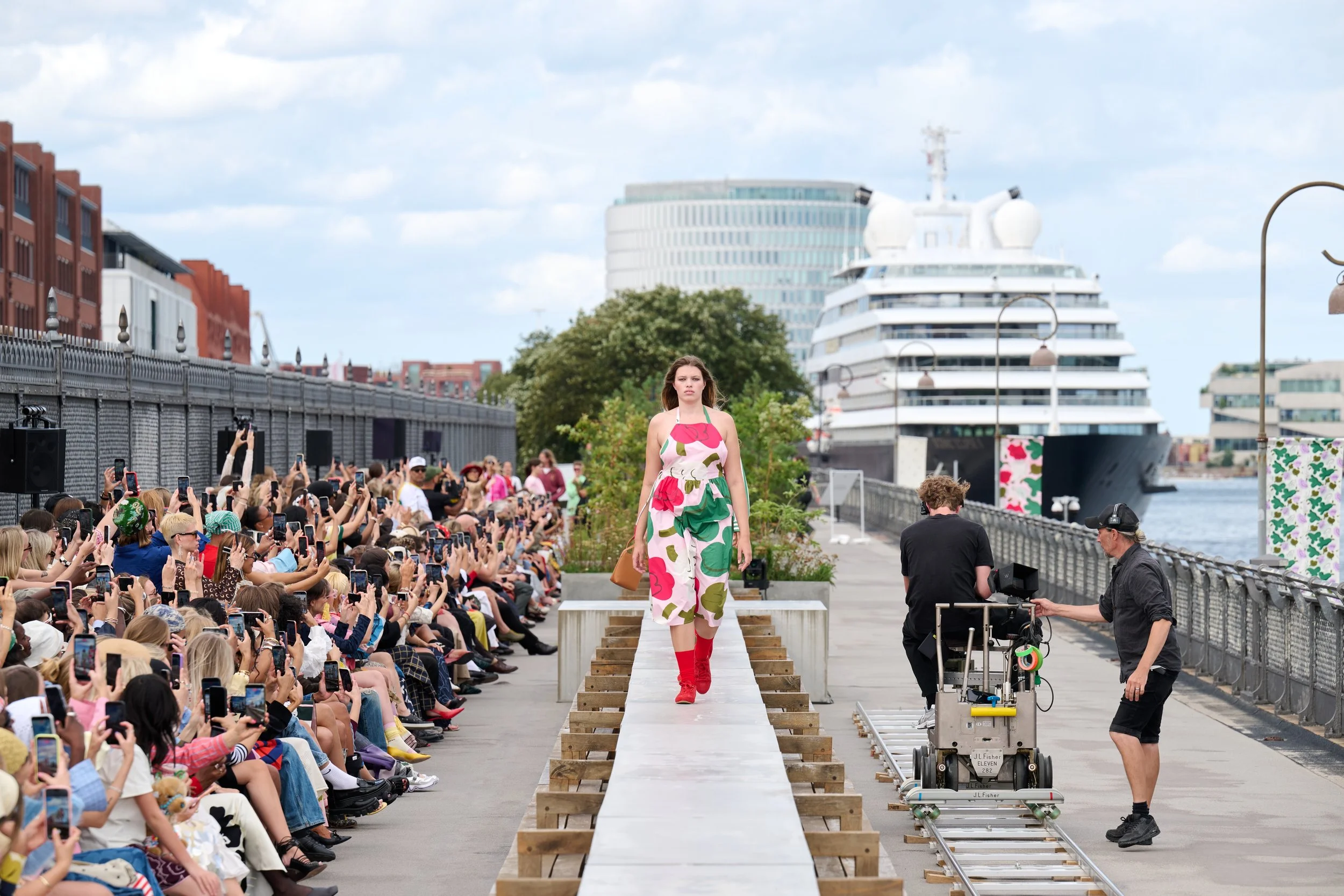
Image courtesy of James Cochrane
Marimekko has never needed to look far for inspiration. The Finnish design house has built its identity around the expressive possibilities of pattern, color and the dress, creating a visual language recognizable across generations. For Spring/Summer 2027, however, Rebekka Bay, Creative Director of Marimekko, looks beyond the expected references to reconsider how that language can move.
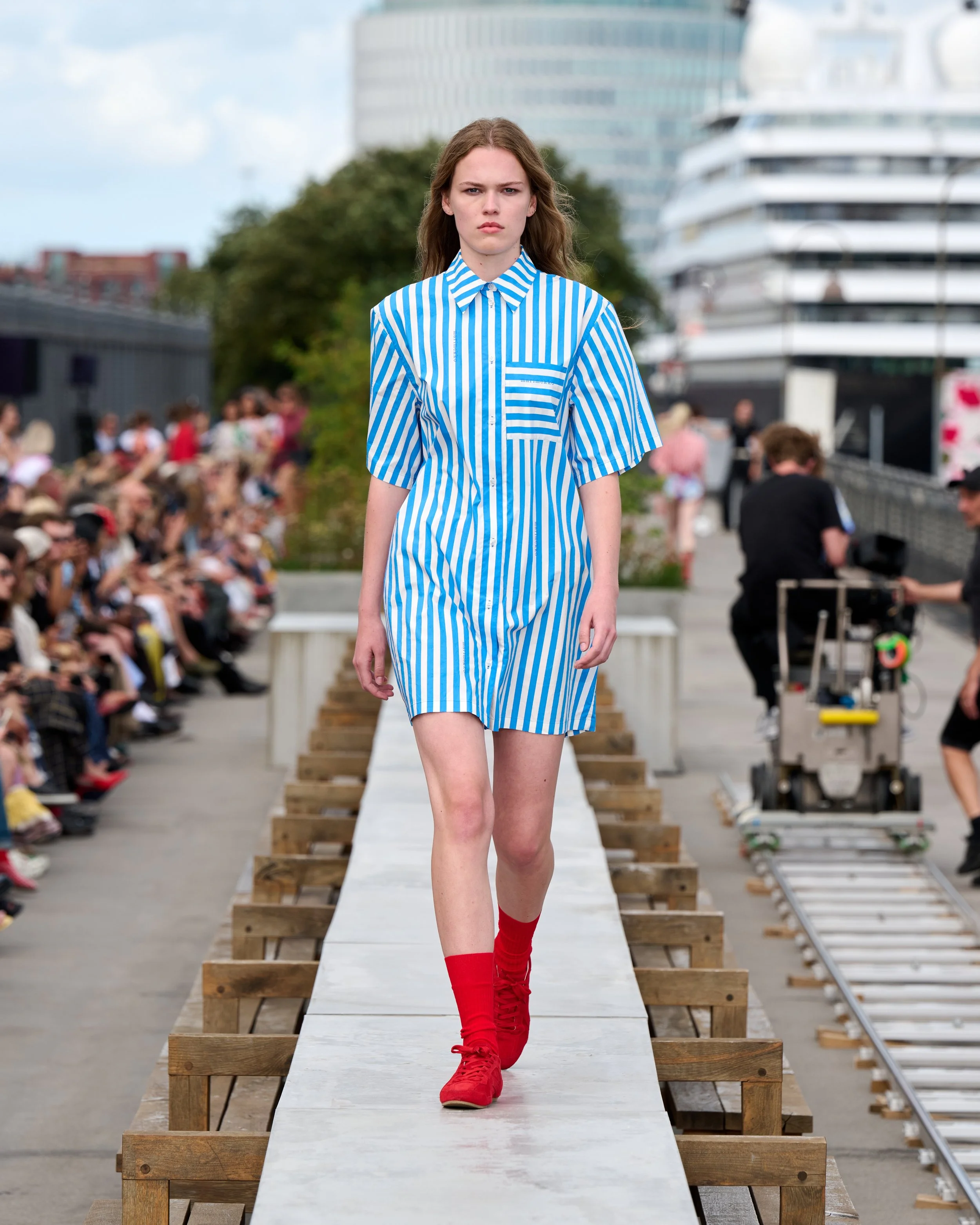
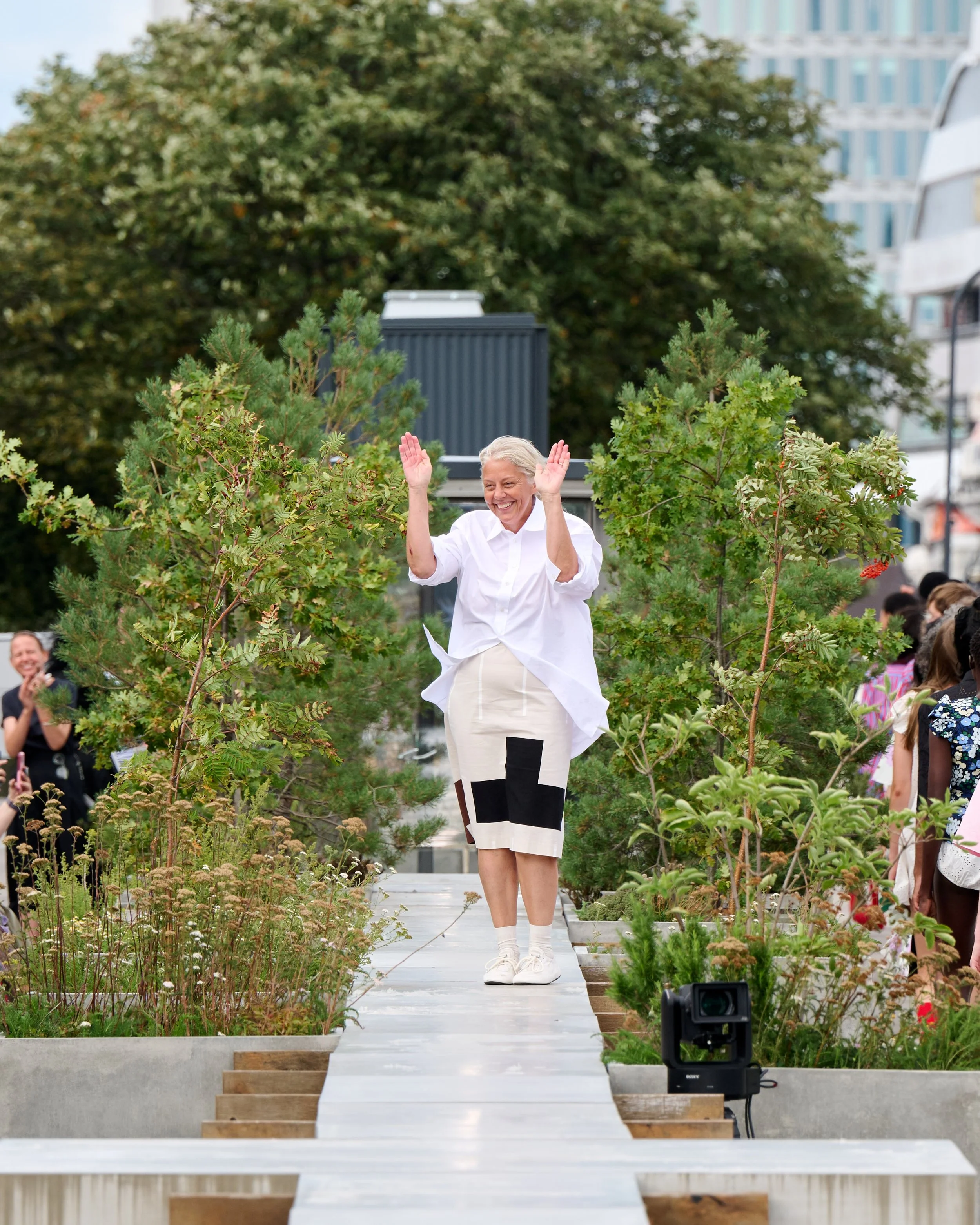
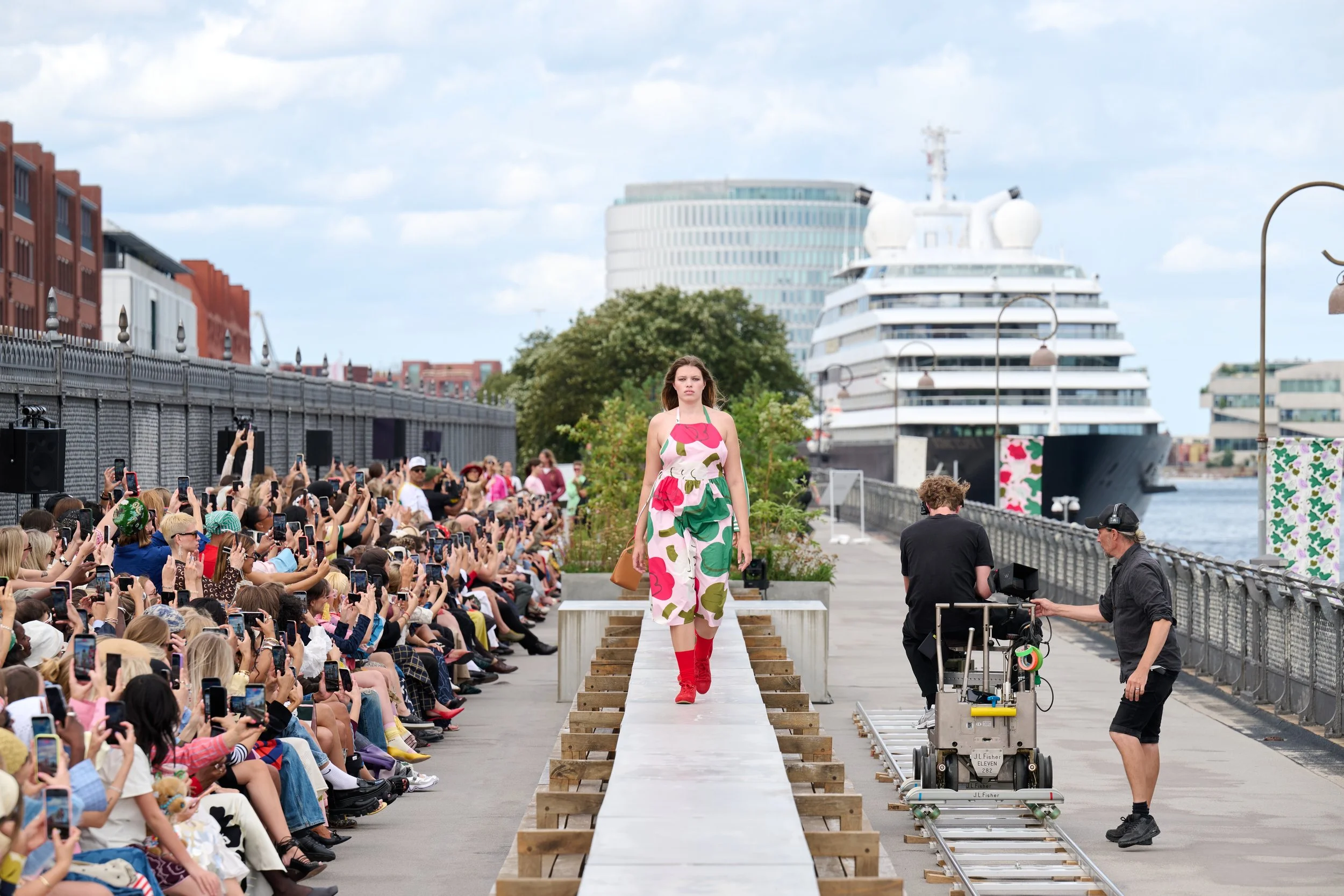
Presented at Copenhagen Fashion Week on August 6, the collection unfolds under Marimekko’s overarching 2027 theme, “The art, the artist, and the landscape.” At historic Langelinieskuret, a former customs house overlooking Copenhagen’s Øresund, a concrete communal dining table on the rooftop was transformed into a runway. The setting placed the collection directly within the landscape that inspired it, allowing clothing, architecture, natural light and the waterfront horizon to become part of the same composition.
“The inspiration was actually coming from a much bigger theme: the art, the artist, and the landscape,” Bay explains. “So we really chose a location that would be a meeting between an urban environment and a landscape.”
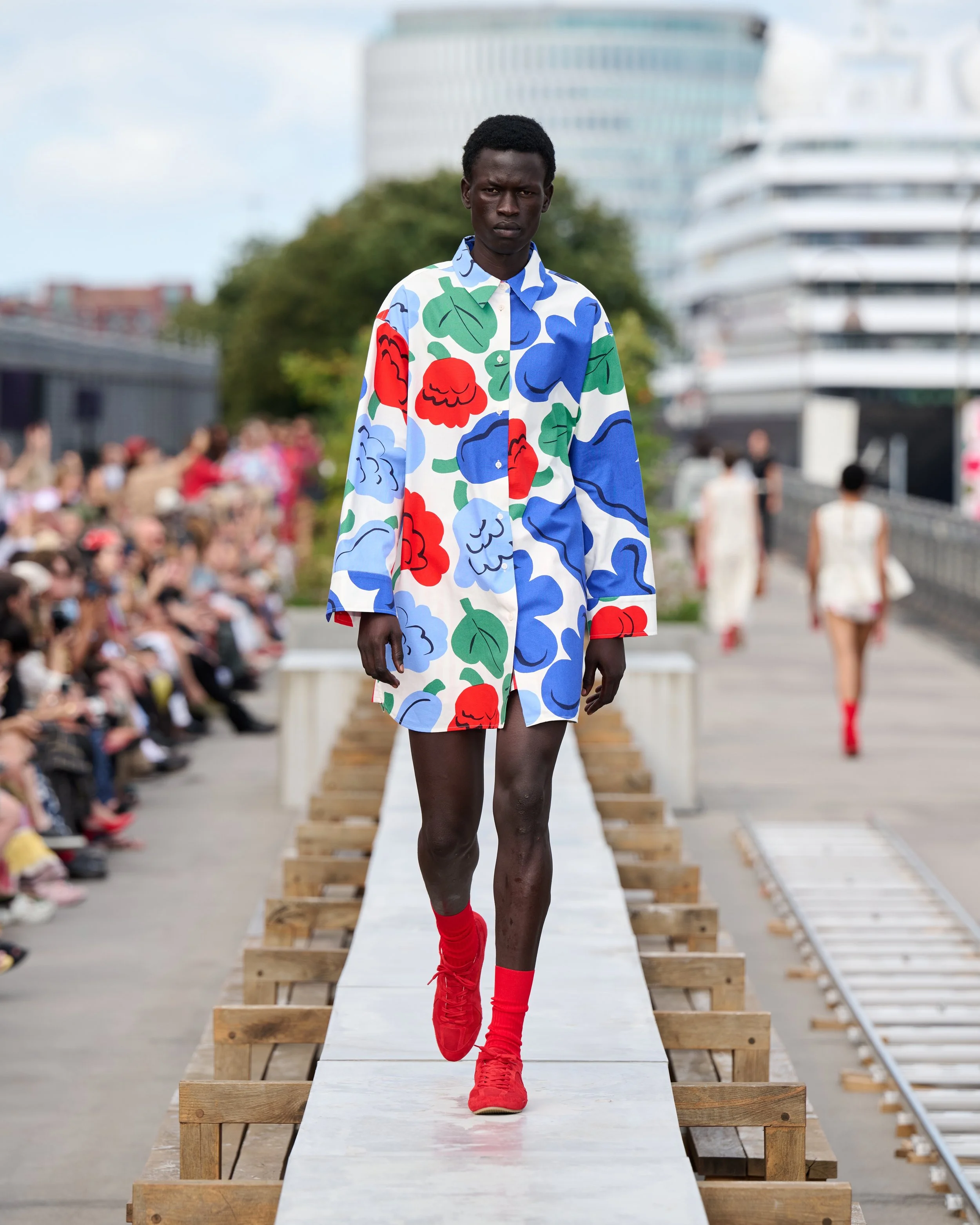
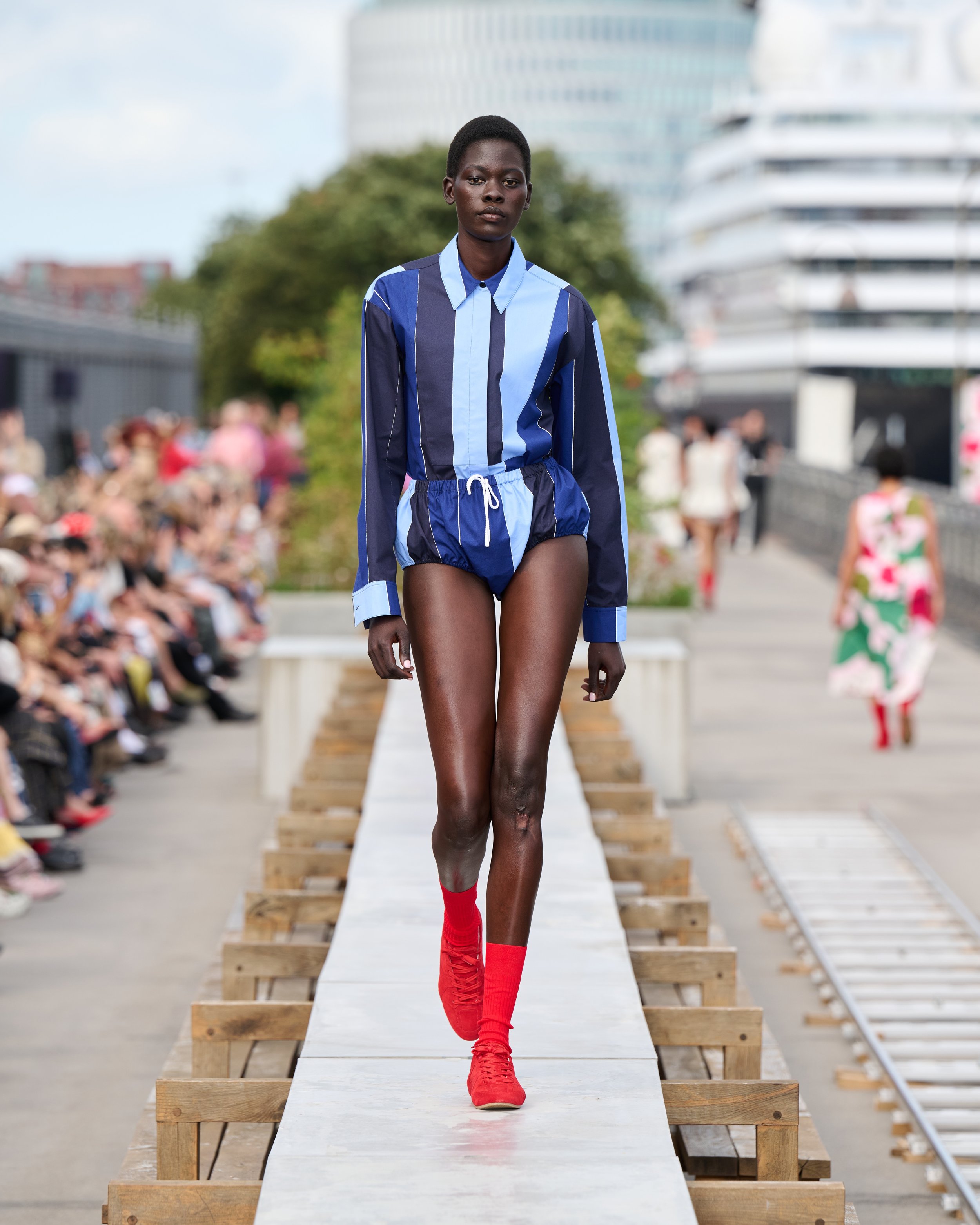
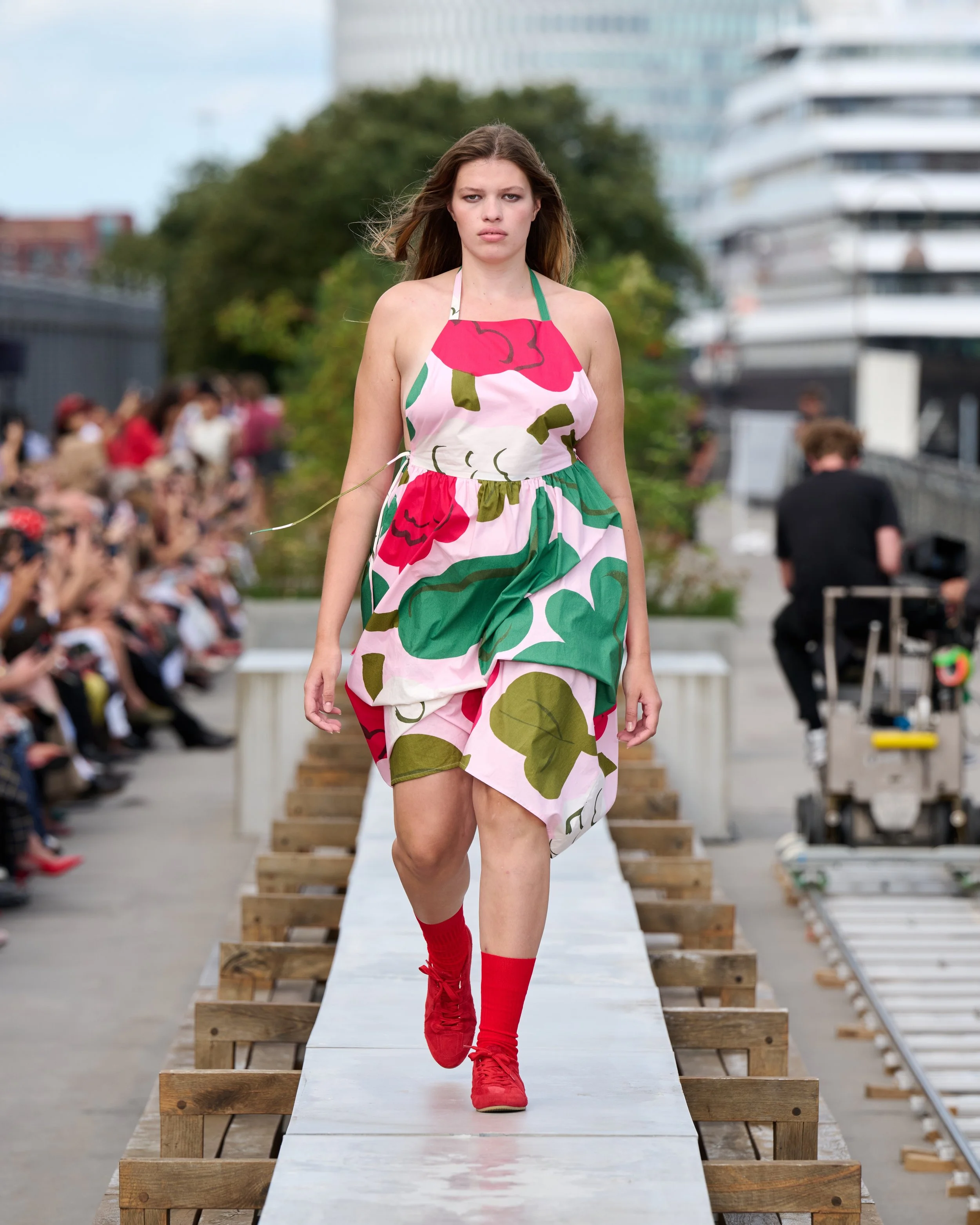
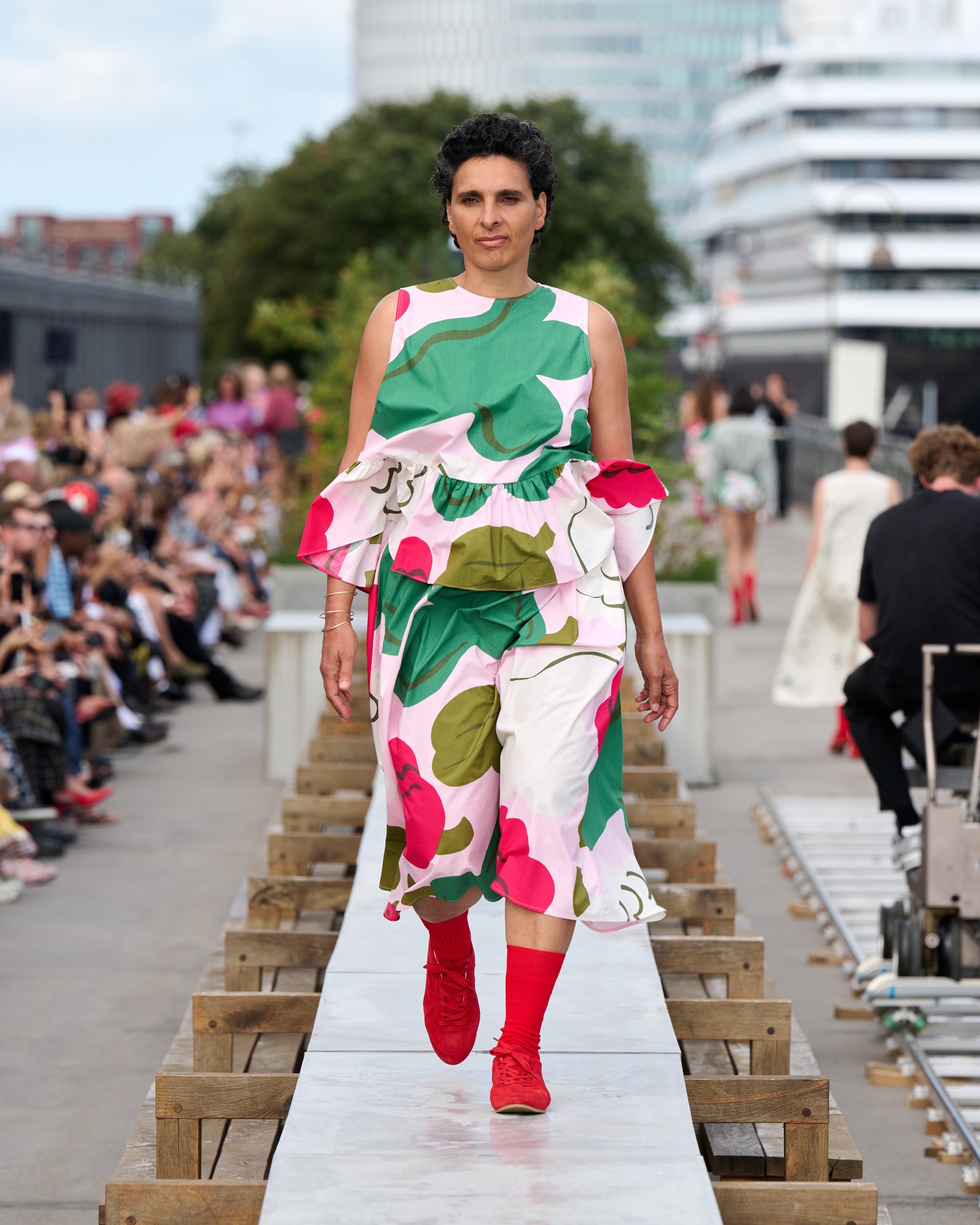
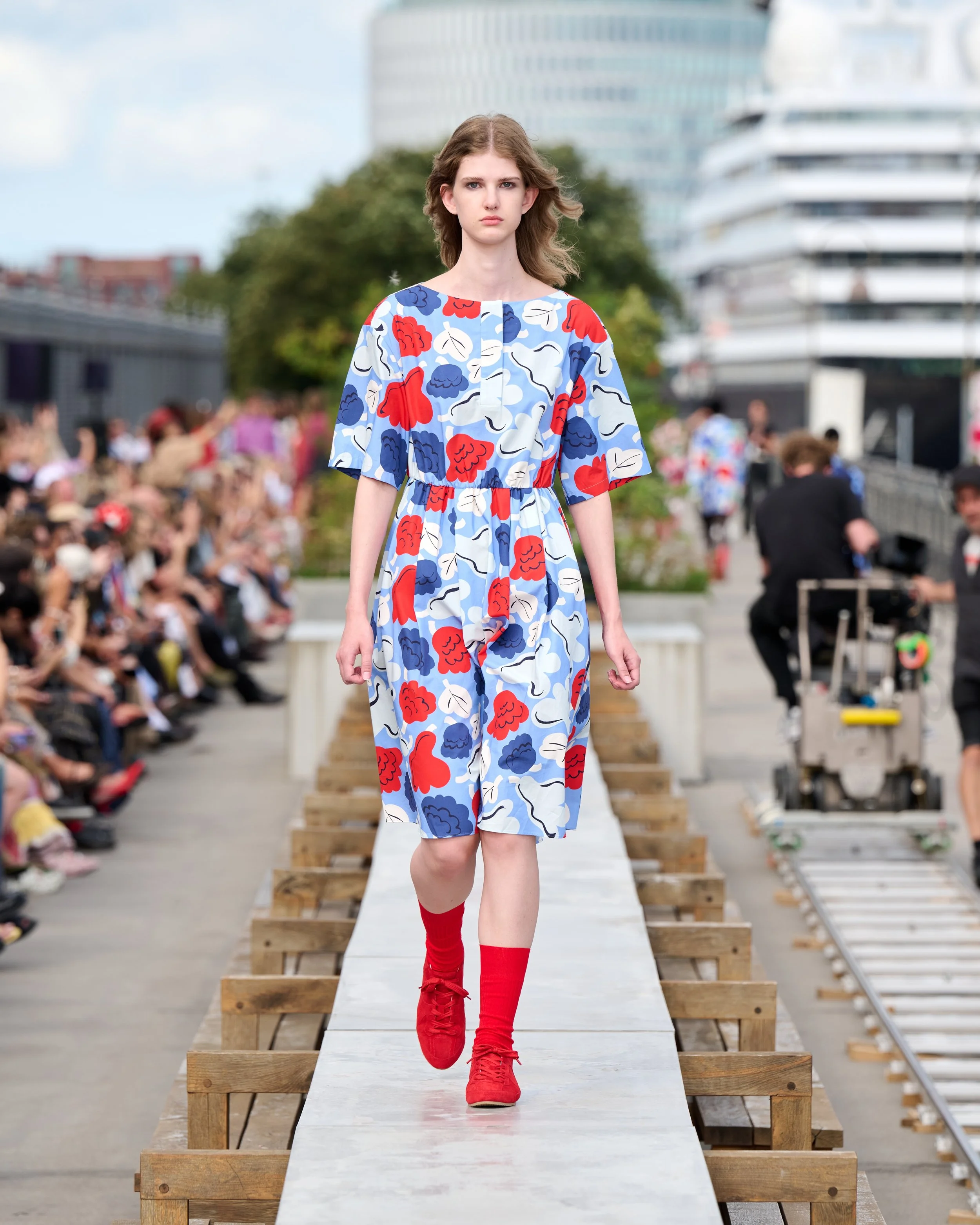
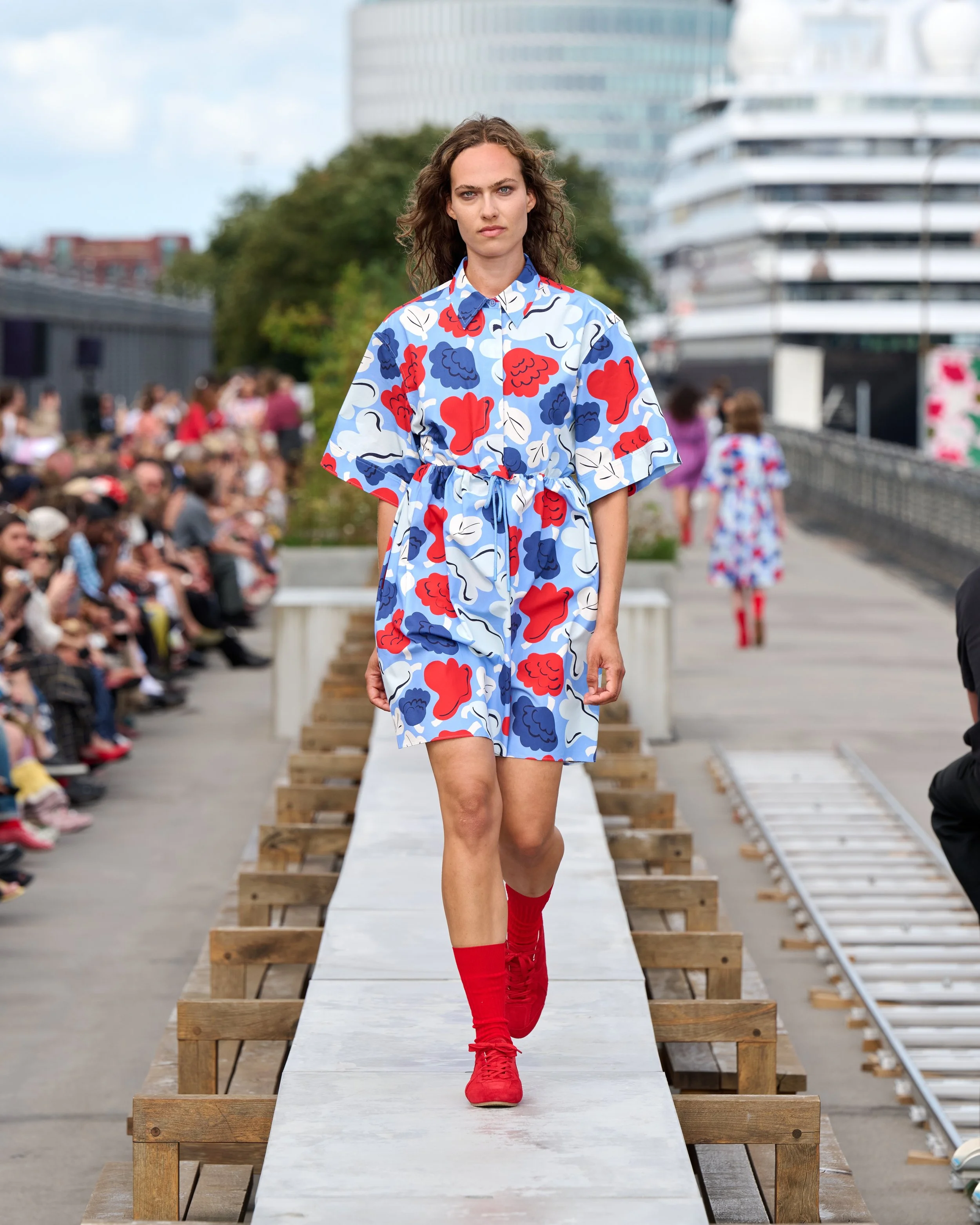
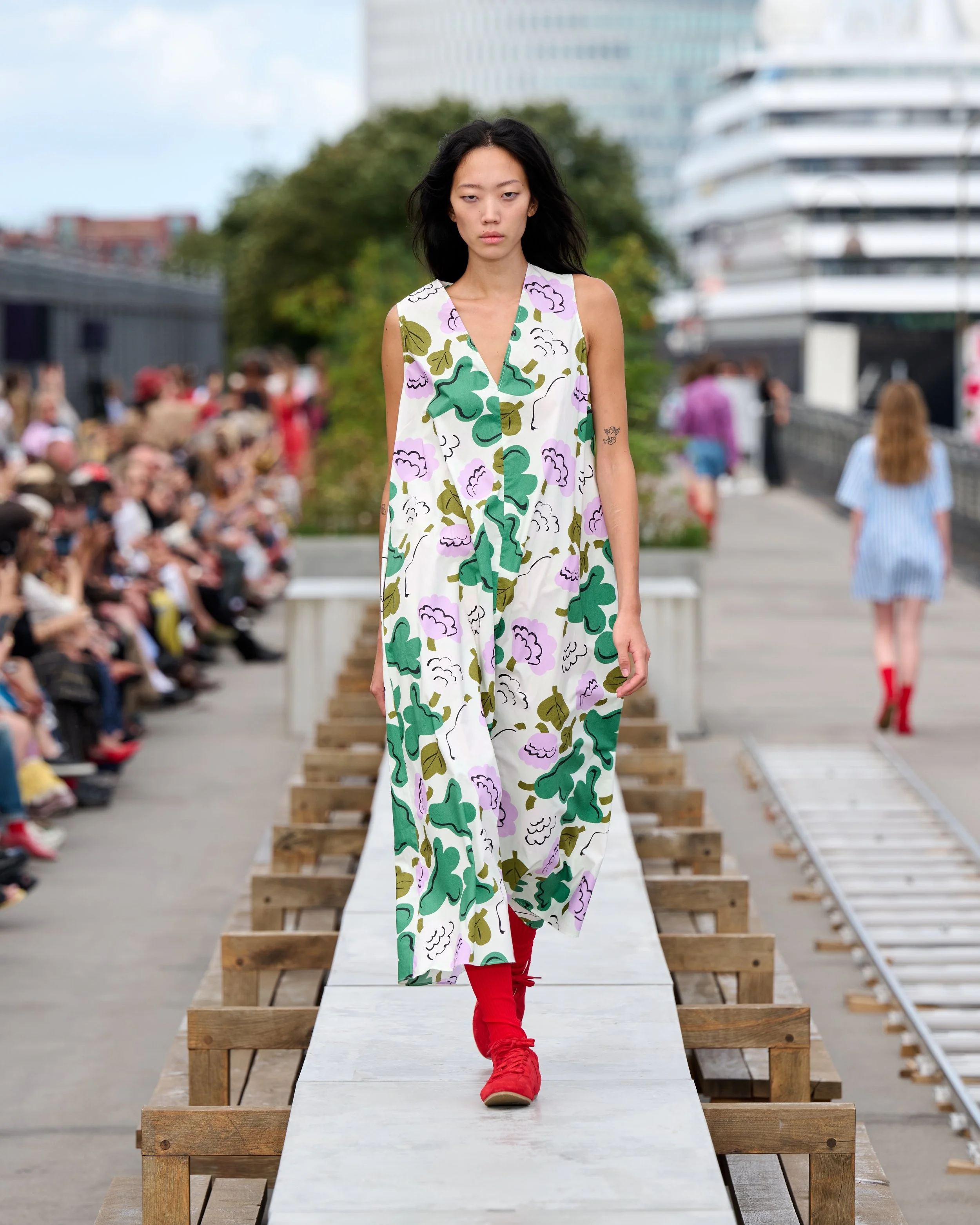
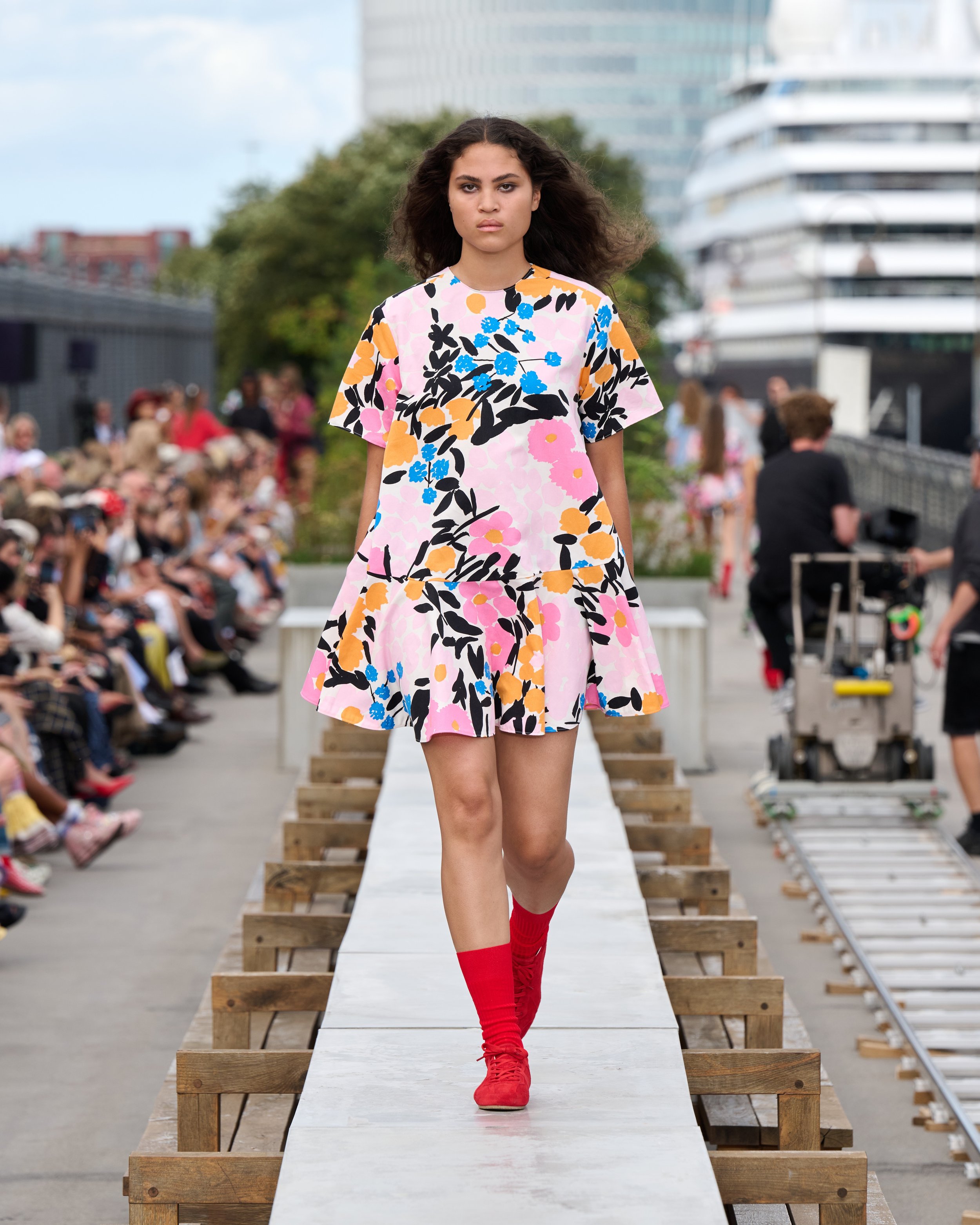
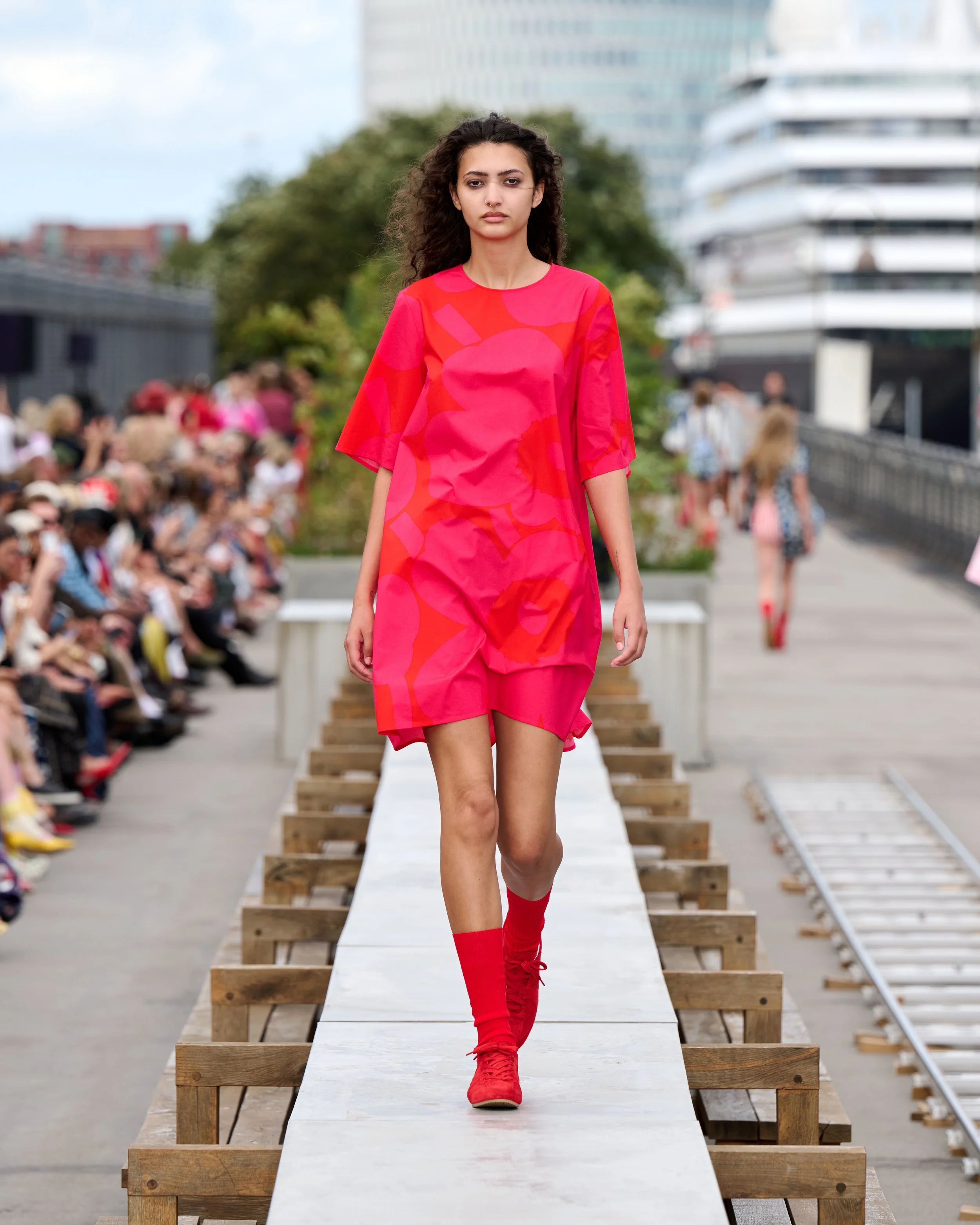
That relationship between the built environment and nature became one of the collection’s defining ideas. Marimekko looked to desert landscapes and their expressive forms and colors through the lens of art, creating a dialogue between softness and strength, nature and abstraction. The palette moves across shifting terrains: fresh summer greens meet soft lilacs and vivid raspberry and azalea pinks, while sky blues encounter heated yellows, fiery reds and sunlit oranges. Against those saturated tones are barely-there shades of pear sorbet, vanilla ice and snow white.
The result is a collection that understands landscape not as something to simply reproduce, but as a source for abstraction. Bay describes the season as “a poetic take on the lightness of summer,” expressed through English embroidery, textured pointelle and organic outlines that offset the collection’s more intense colors and generous volumes.
“The poetry of dressing meets with a more conceptual take on viewing florals and stripes through the lens of the landscape and drawing from the world of art to shape new forms, silhouettes and ideas,” she says.
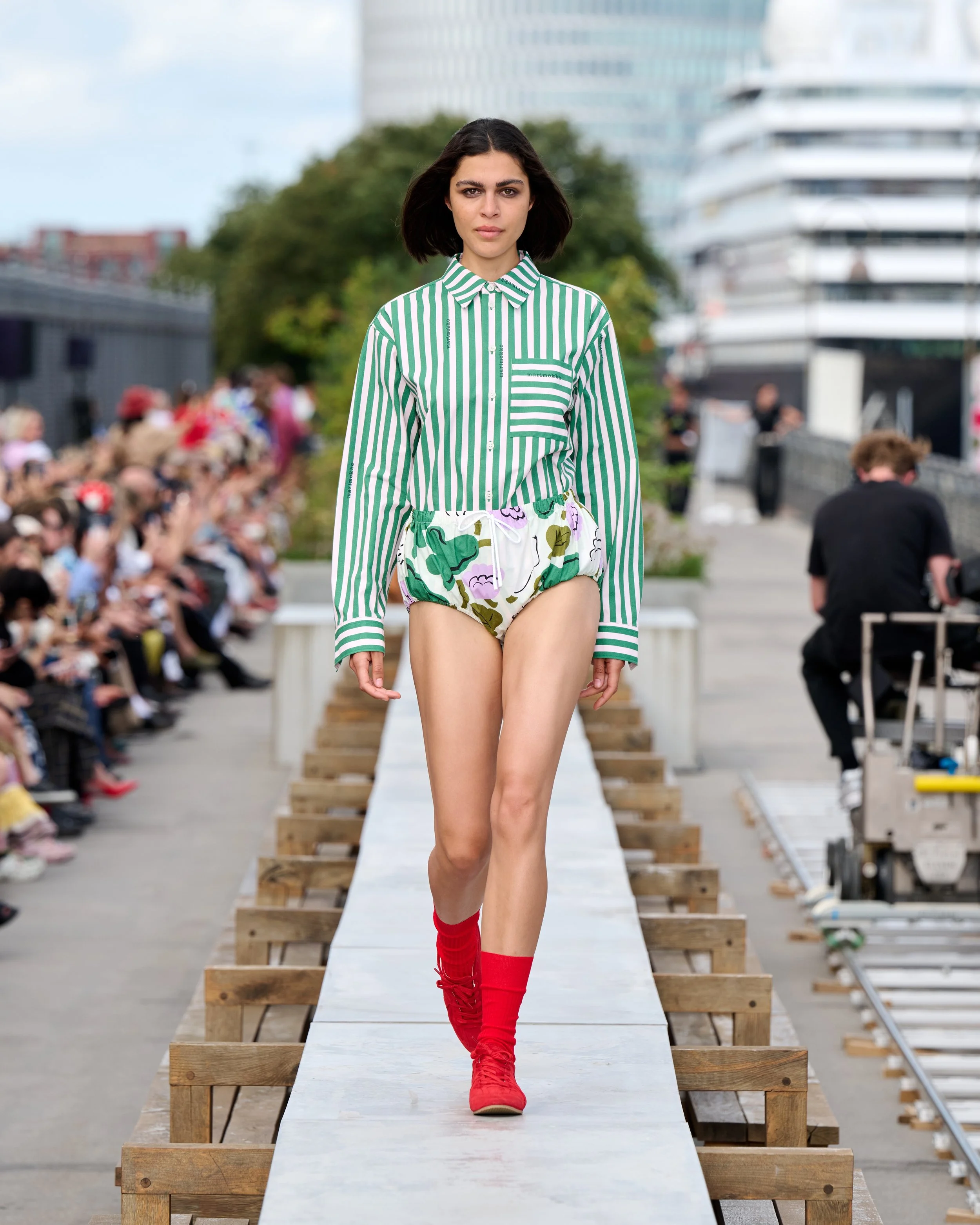
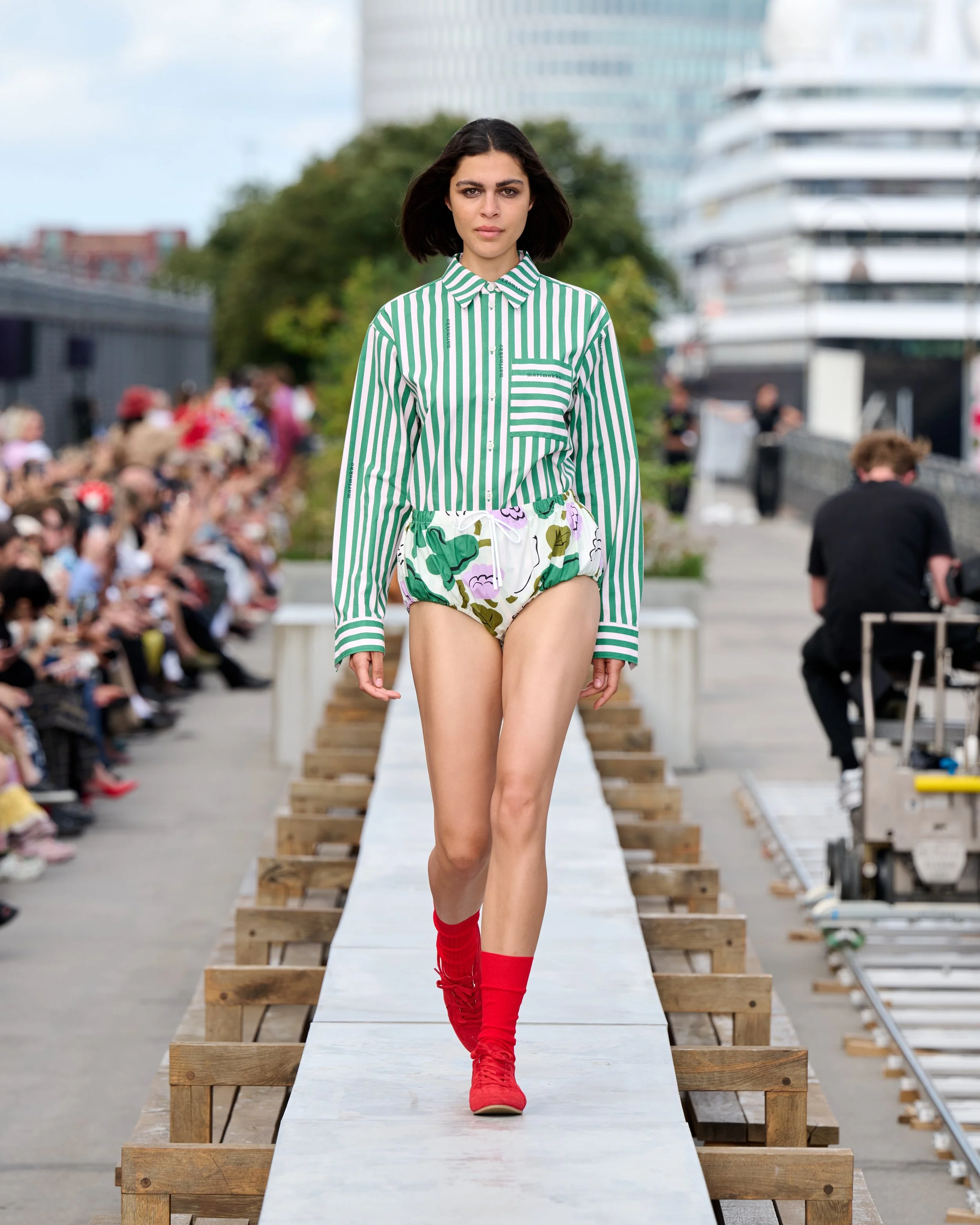
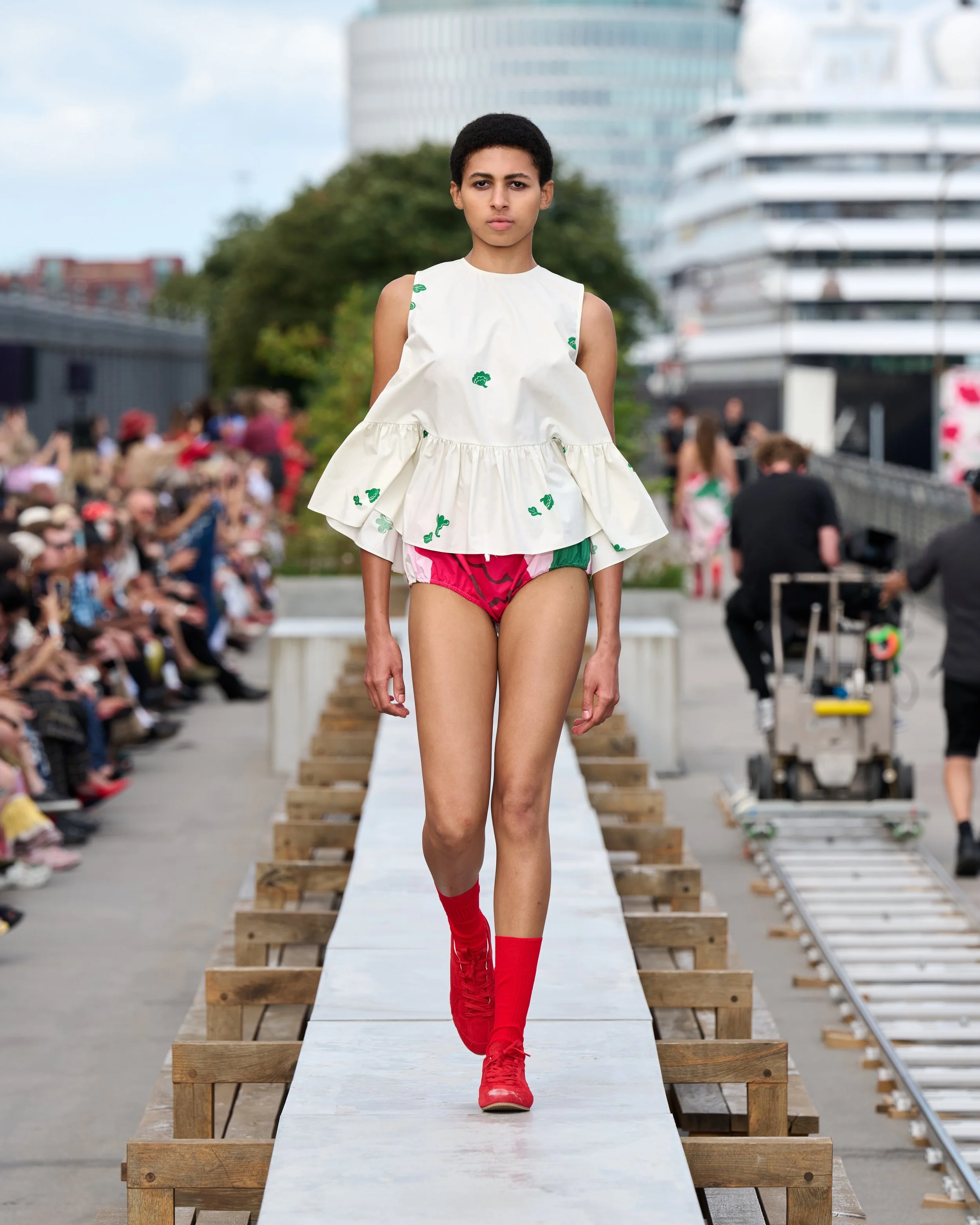
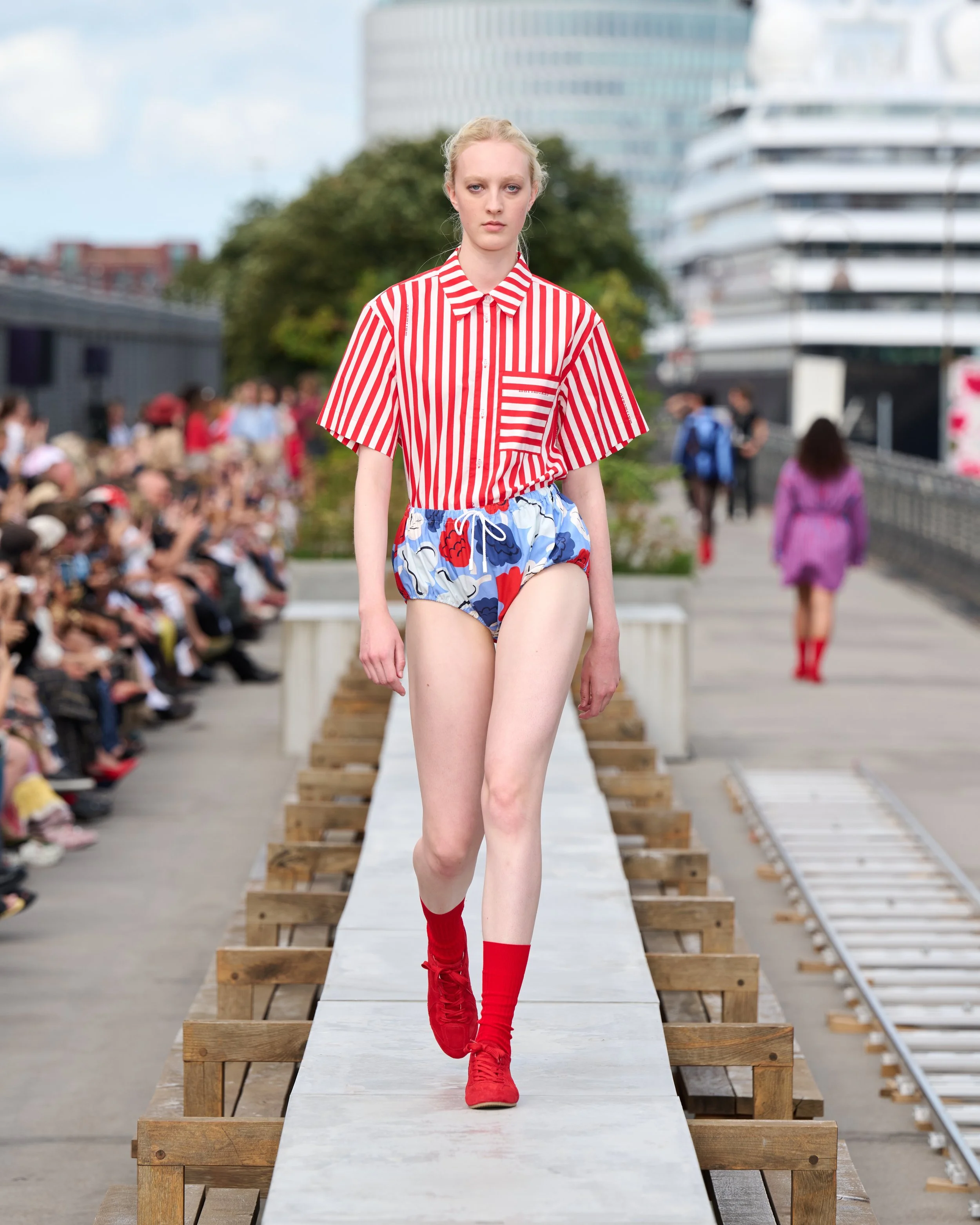
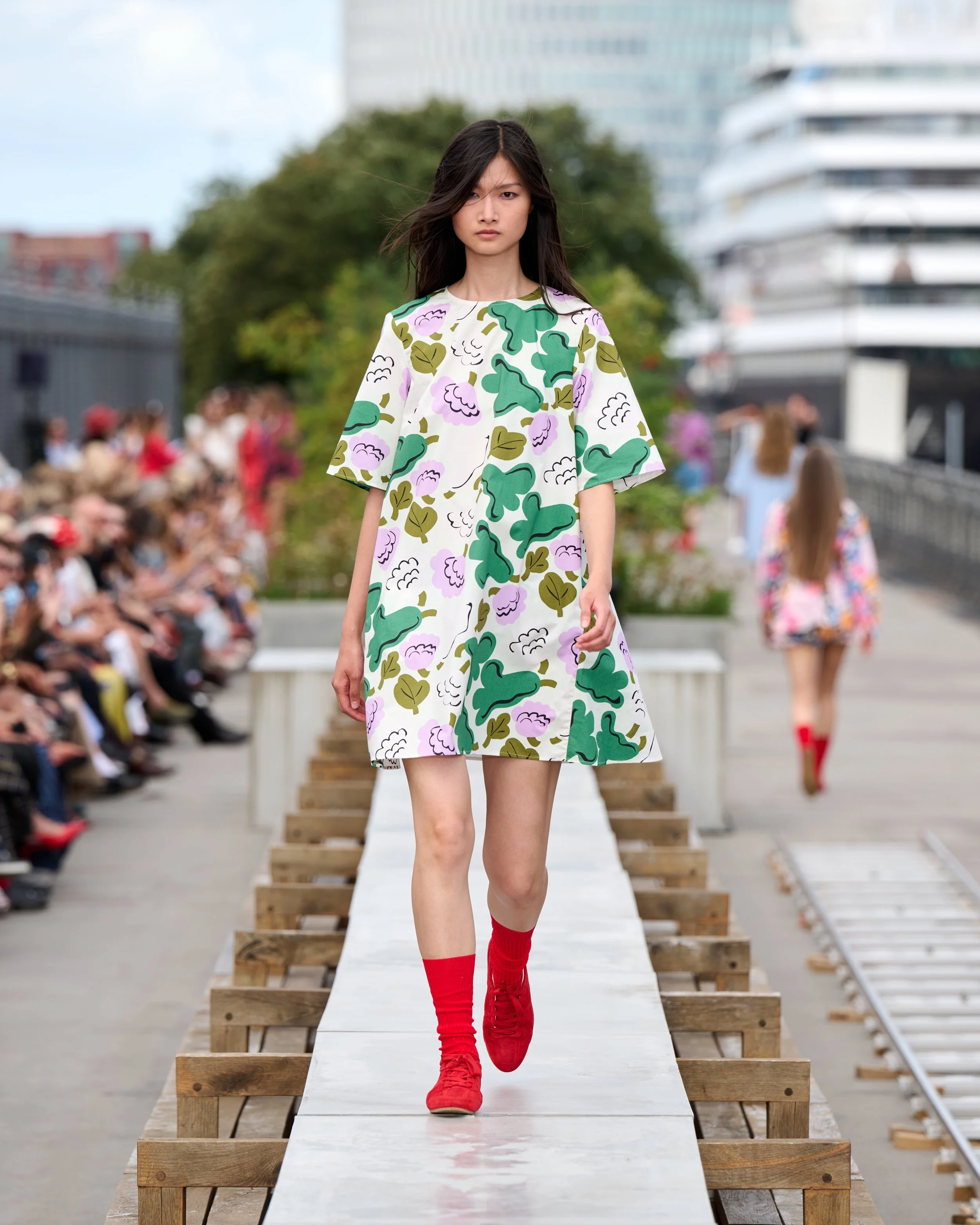
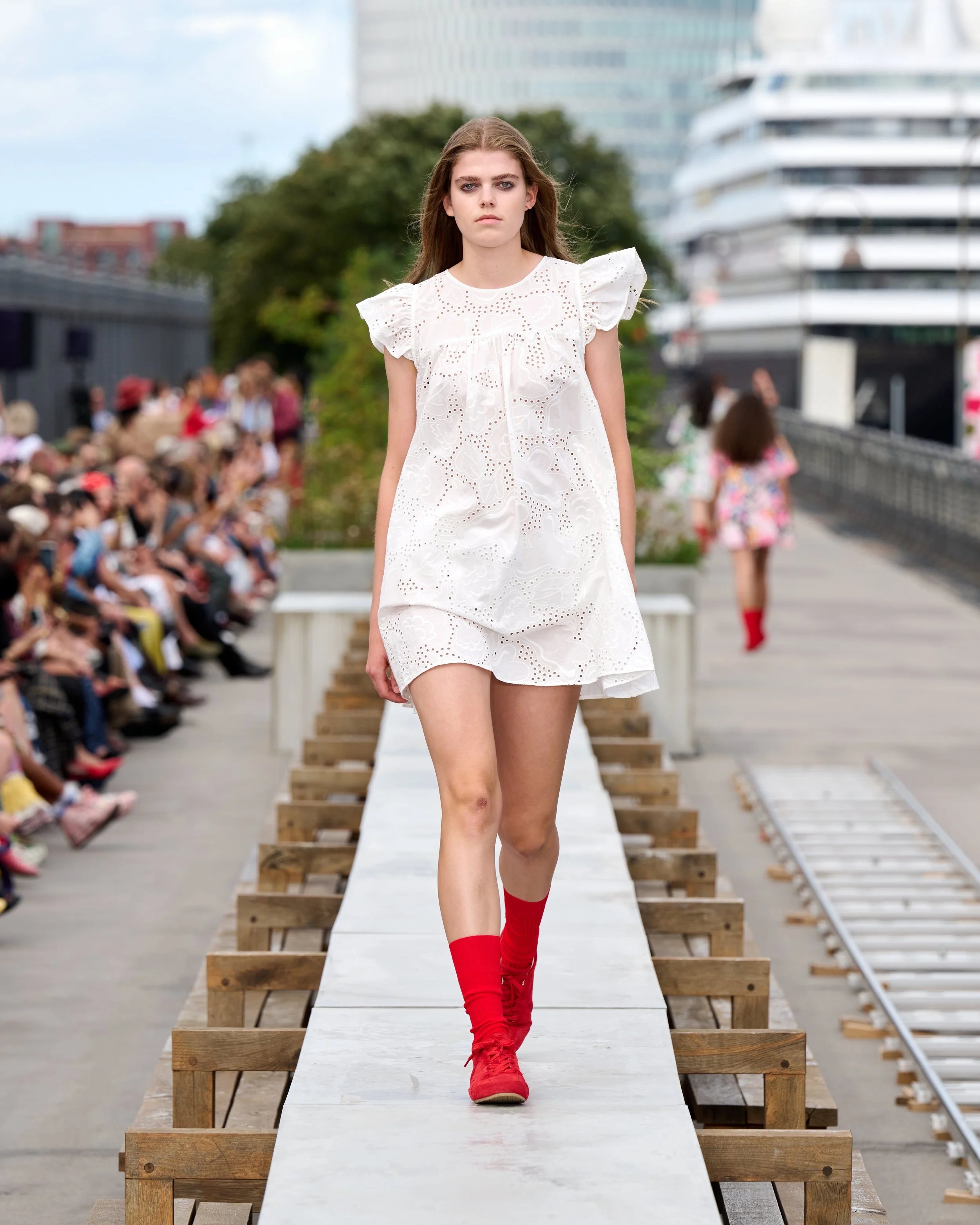
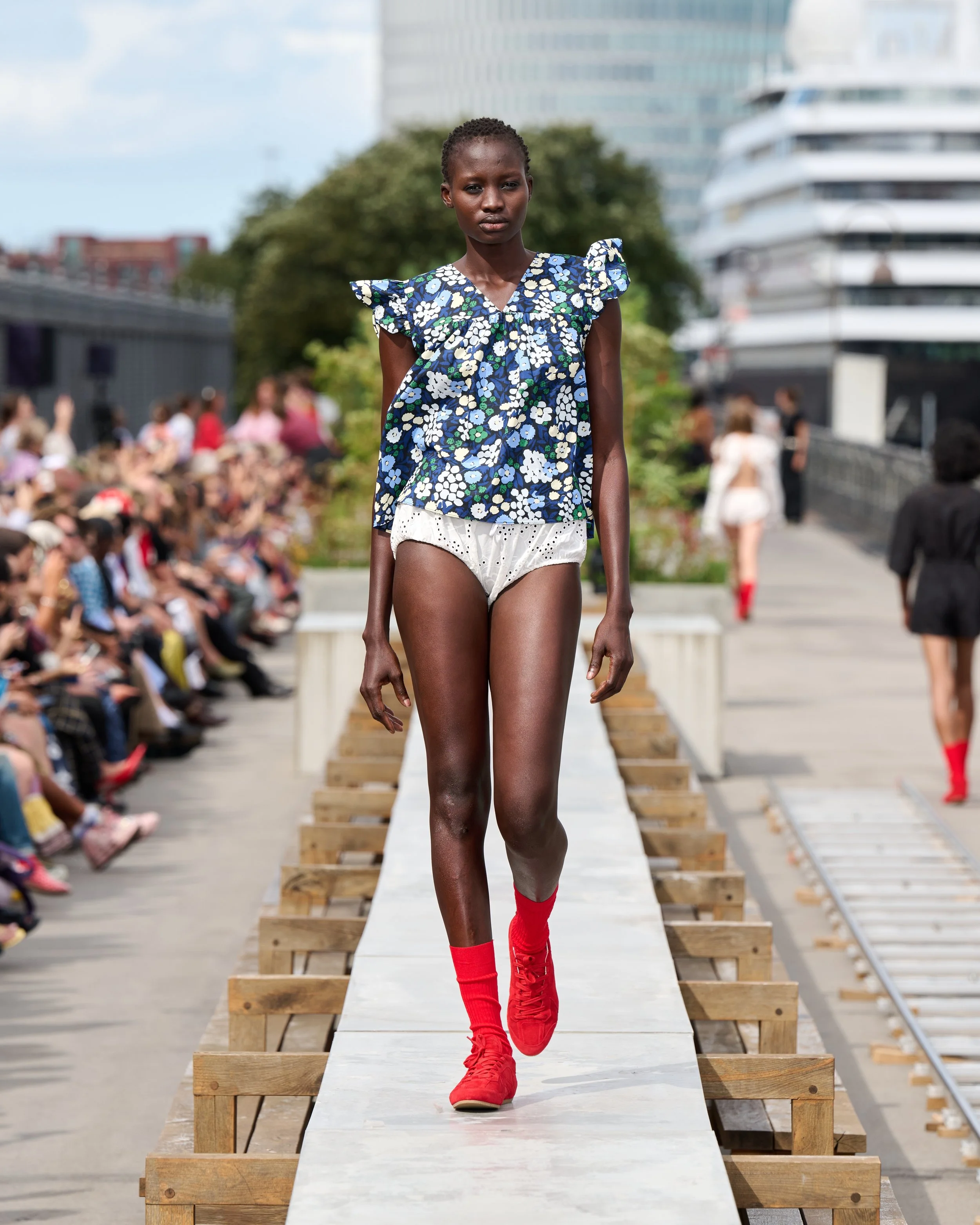
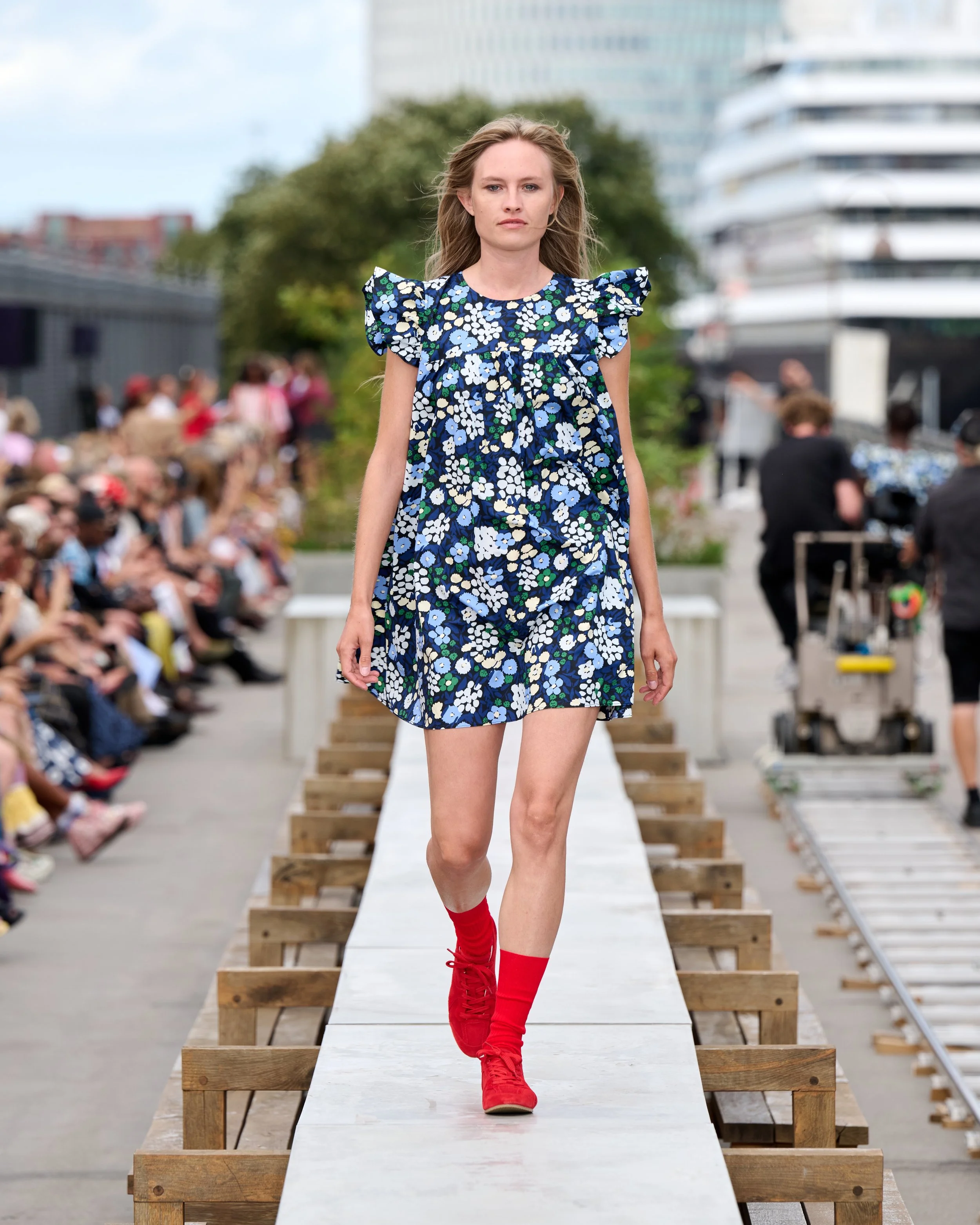
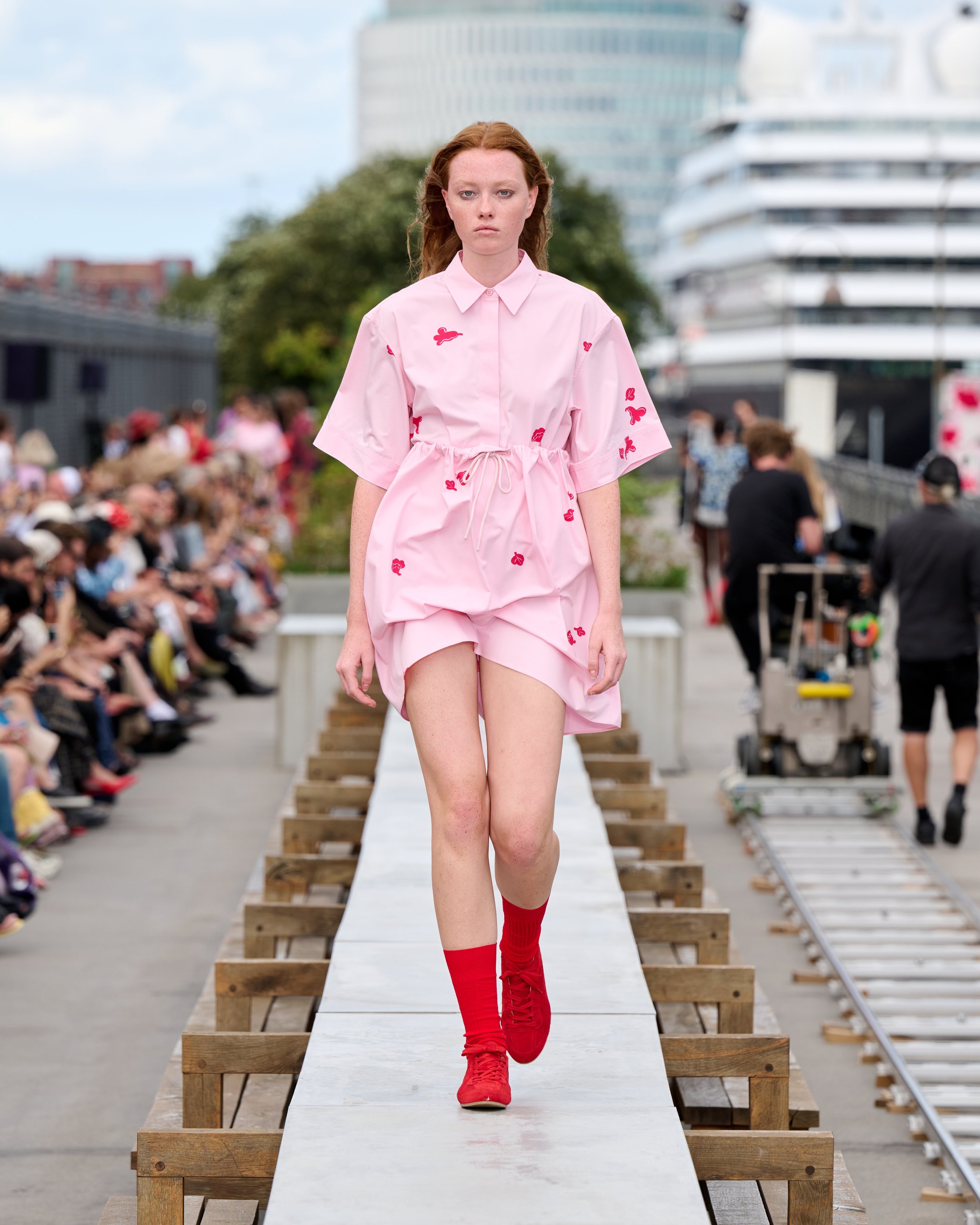
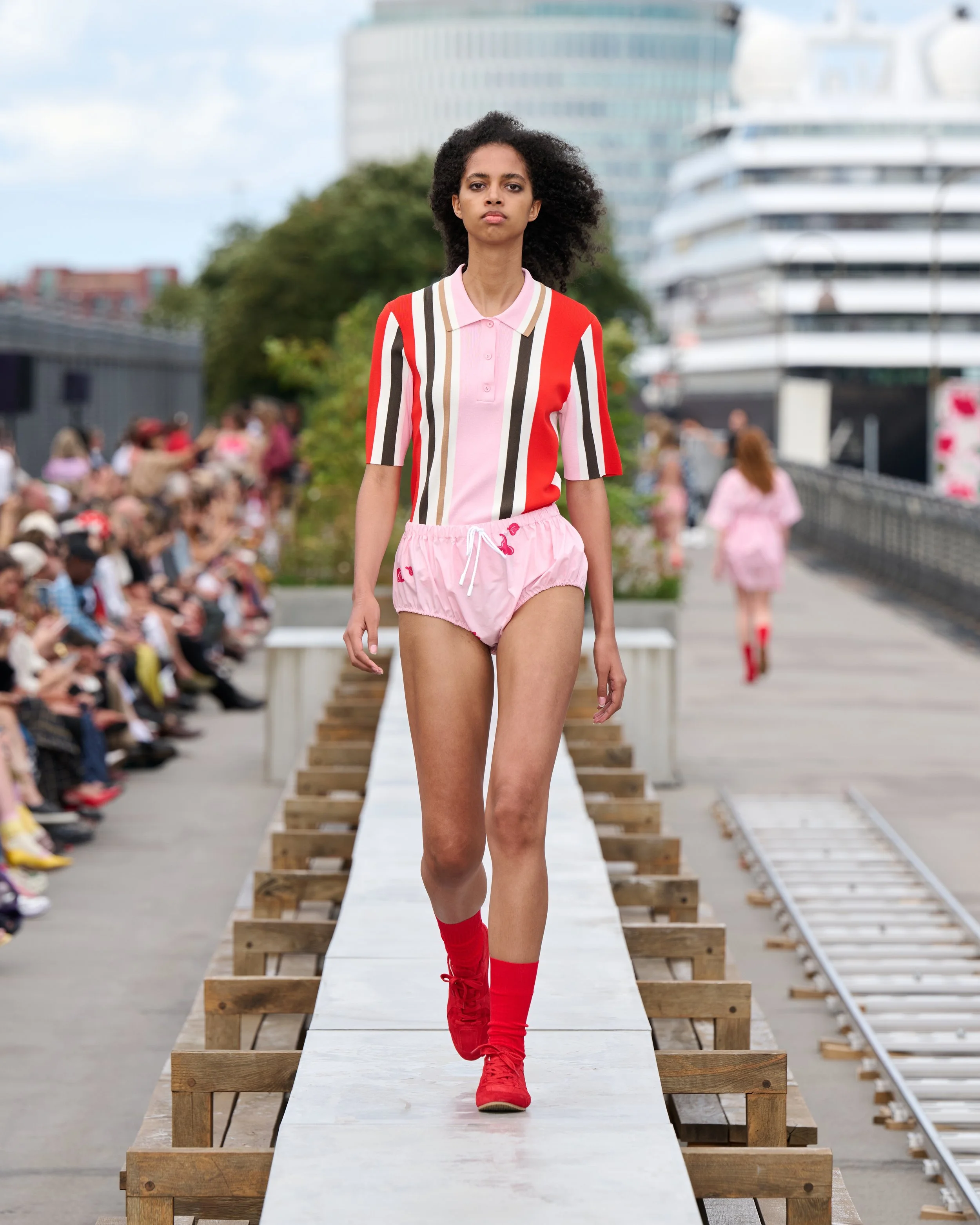
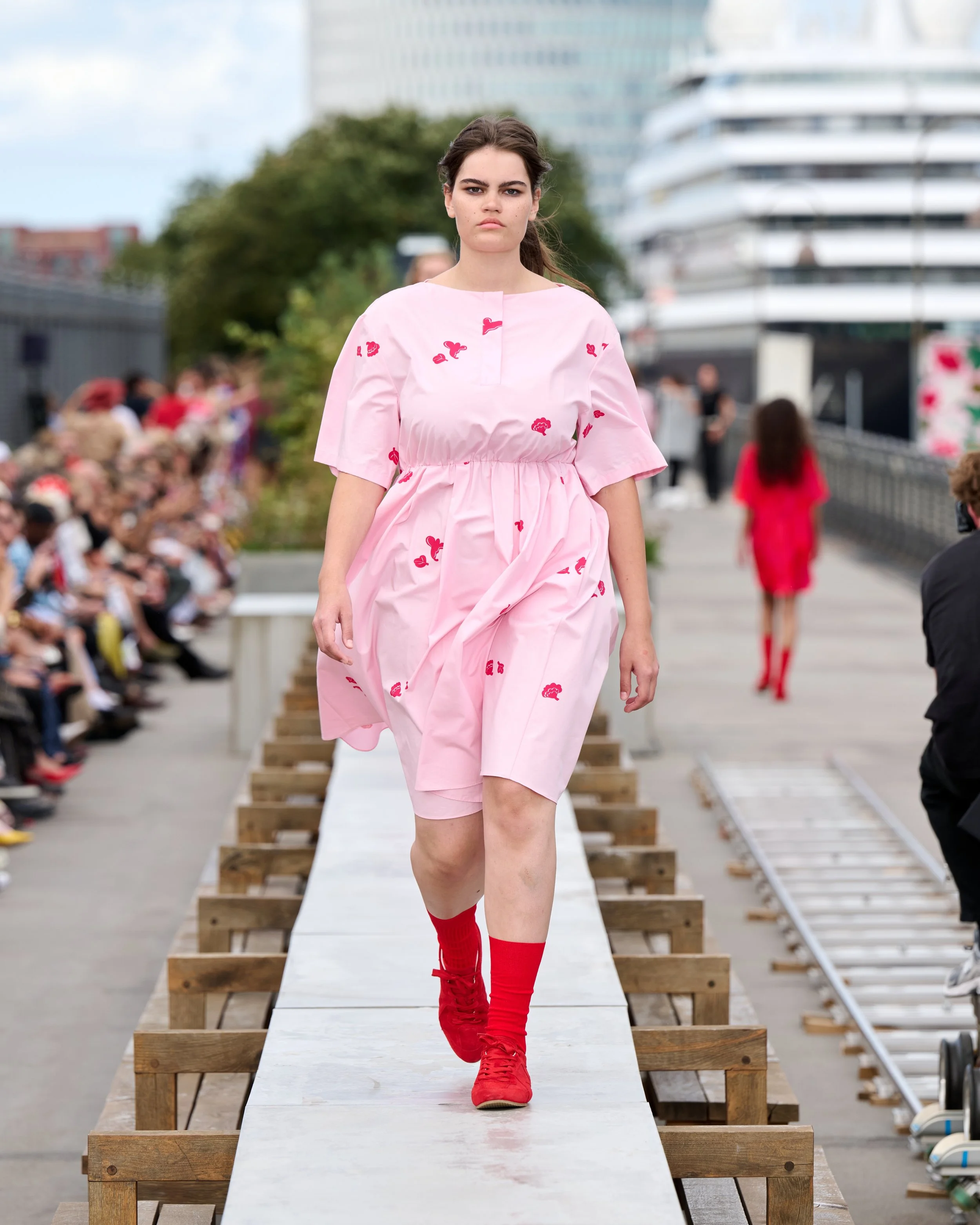
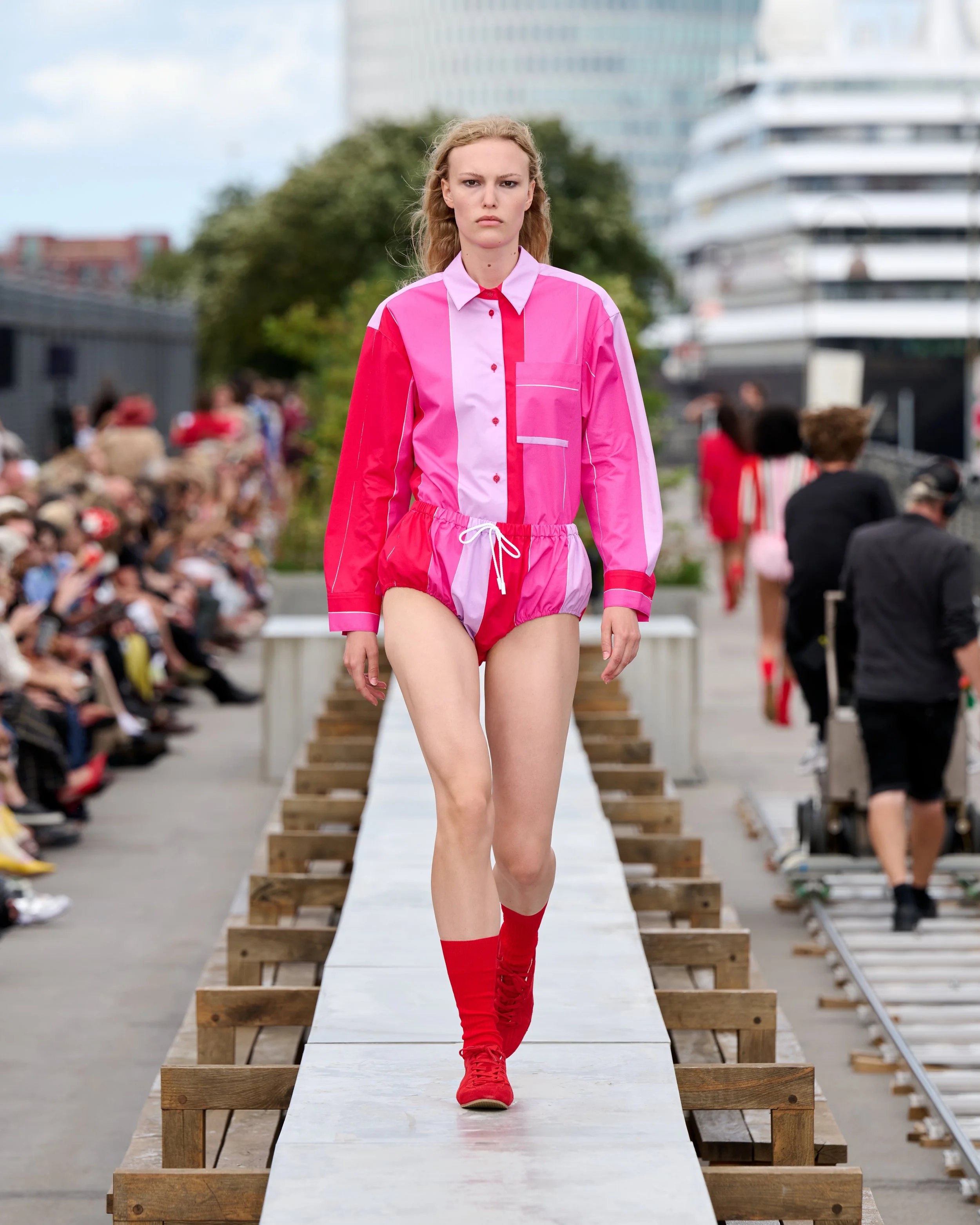
That idea of poetry is particularly apparent in the way Marimekko approaches the body. Peplum cuts, bold ruffles and airy volants echo petal-like formations, while shorter dresses and exposed skin introduce a new physicality to the house’s familiar femininity.
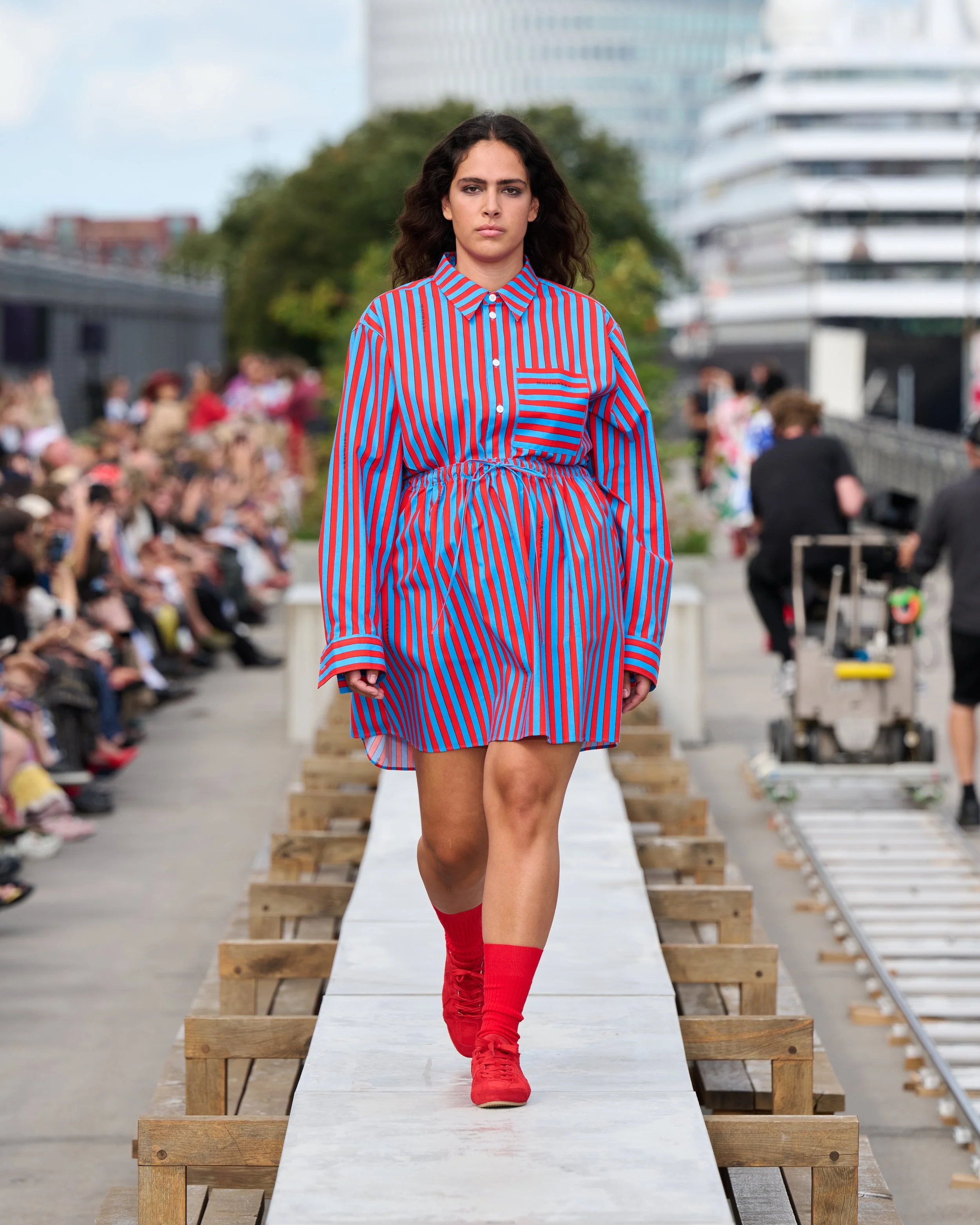
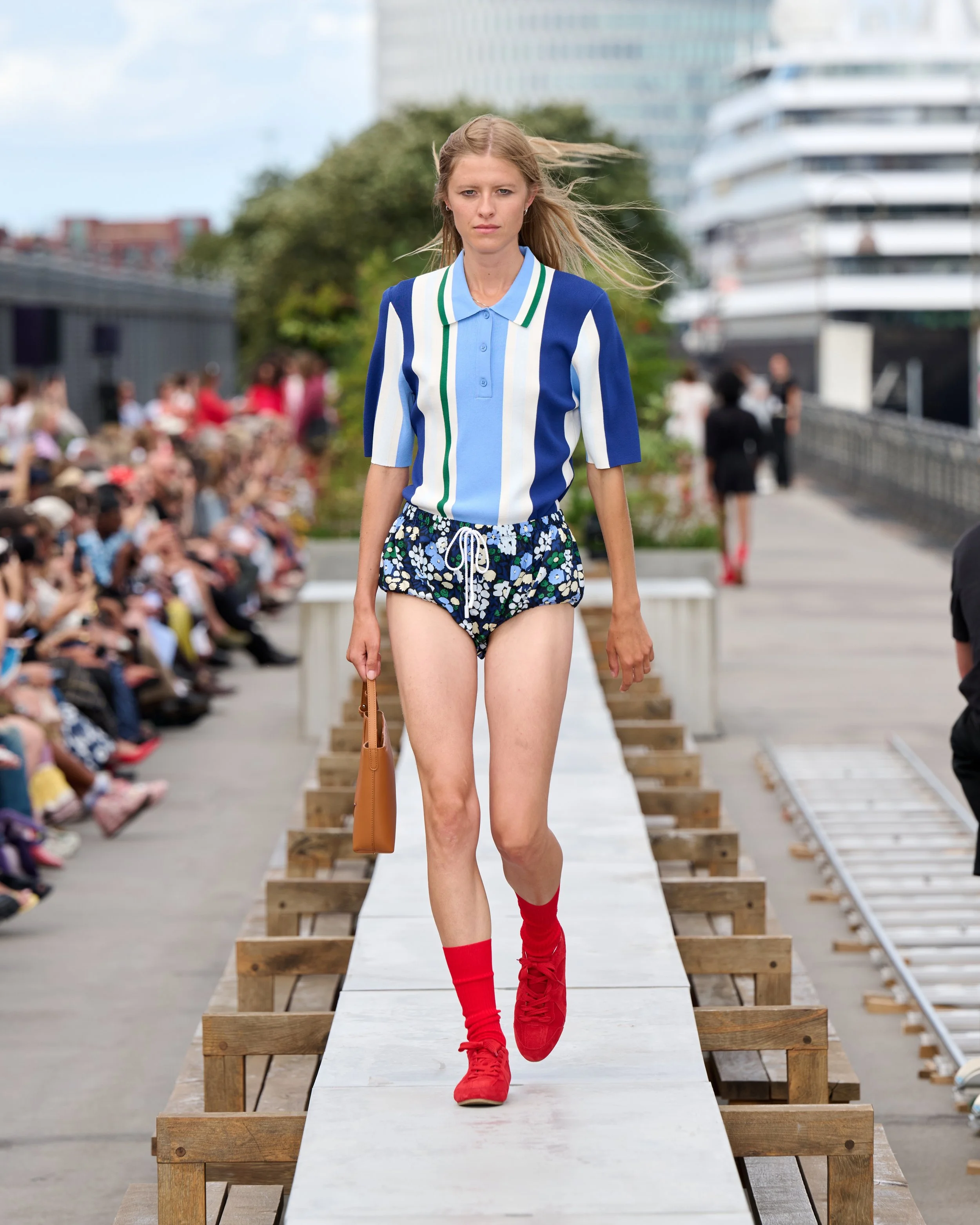
“The show we’ve just seen is a lot of really cute dresses,” Bay says. “I think for the first time in many years, we have a lot of skin, a lot of side boob and butts and really nice little frilly dresses.”
It is a surprisingly direct description for a collection rooted in such a conceptual premise, but the tension is precisely what makes the clothes compelling. Against the concrete harbor environment, delicate dresses appear almost intentionally out of place. Messy hair further disrupts the polish traditionally associated with the occasion, giving the collection a sense of spontaneity.
“We really wanted to create something with a lot of contrast,” Bay says, “so being in this harbor environment, and then showing really pretty dresses on girls with really messy hair.”
The contrast extends beyond the clothes. Finnish artist and vocalist Ringa Manner created an original soundscape for the show, writing and performing a poem in Finnish around “the landscape, the colors, and the light.” Her contribution gives the runway another sensory dimension, connecting Marimekko’s visual language to sound and place.
For Bay, maintaining that connection to the brand’s heritage does not mean remaining static. Marimekko’s name itself—derived from “Mary’s dress”—points to the importance of the dress within the company’s identity. “Our hero style will always be a dress,” Bay says, but Spring/Summer 2027 demonstrates how much possibility remains within that familiar form.
“For this season, we have really worked into the materials as well as the silhouettes,” she explains.
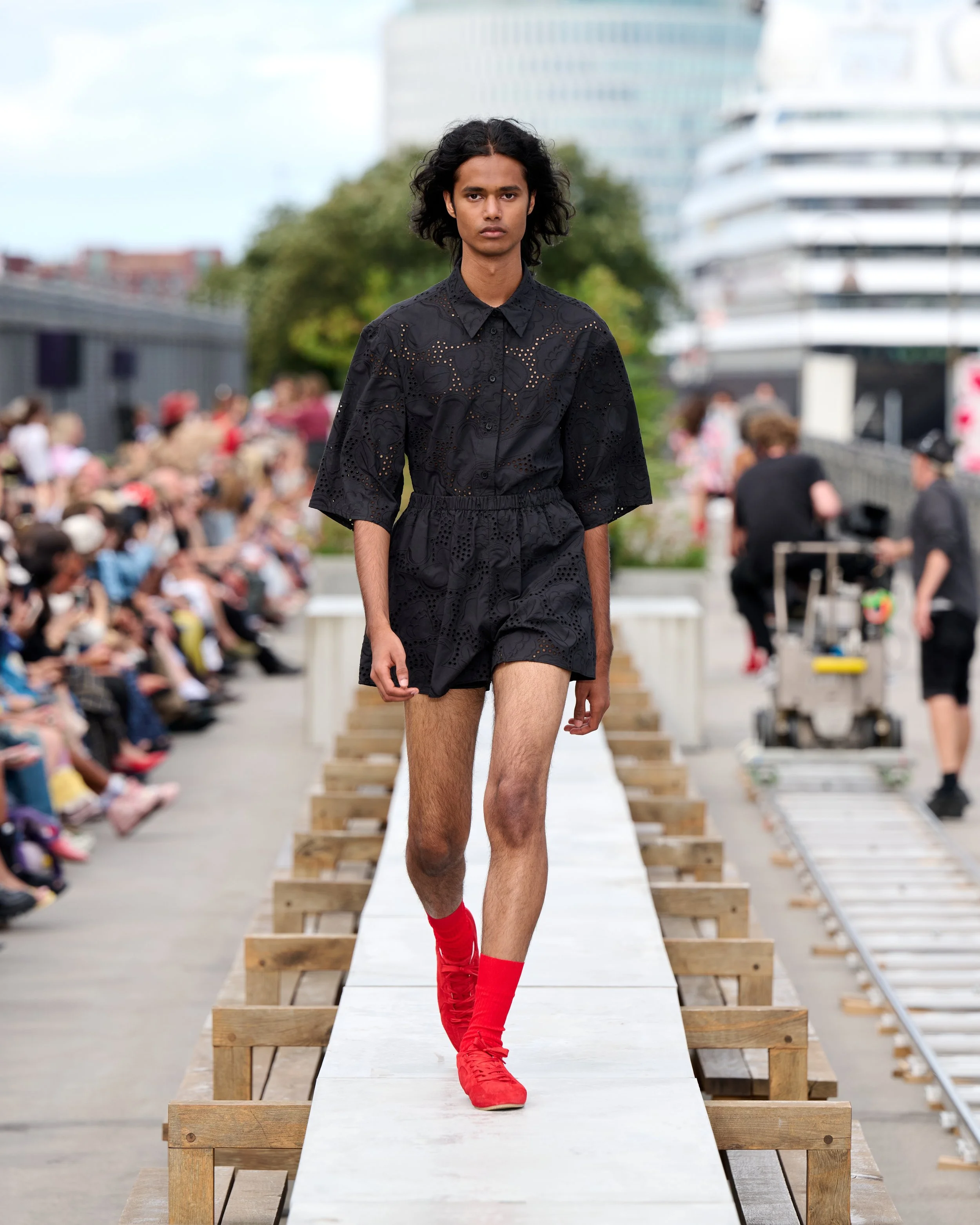
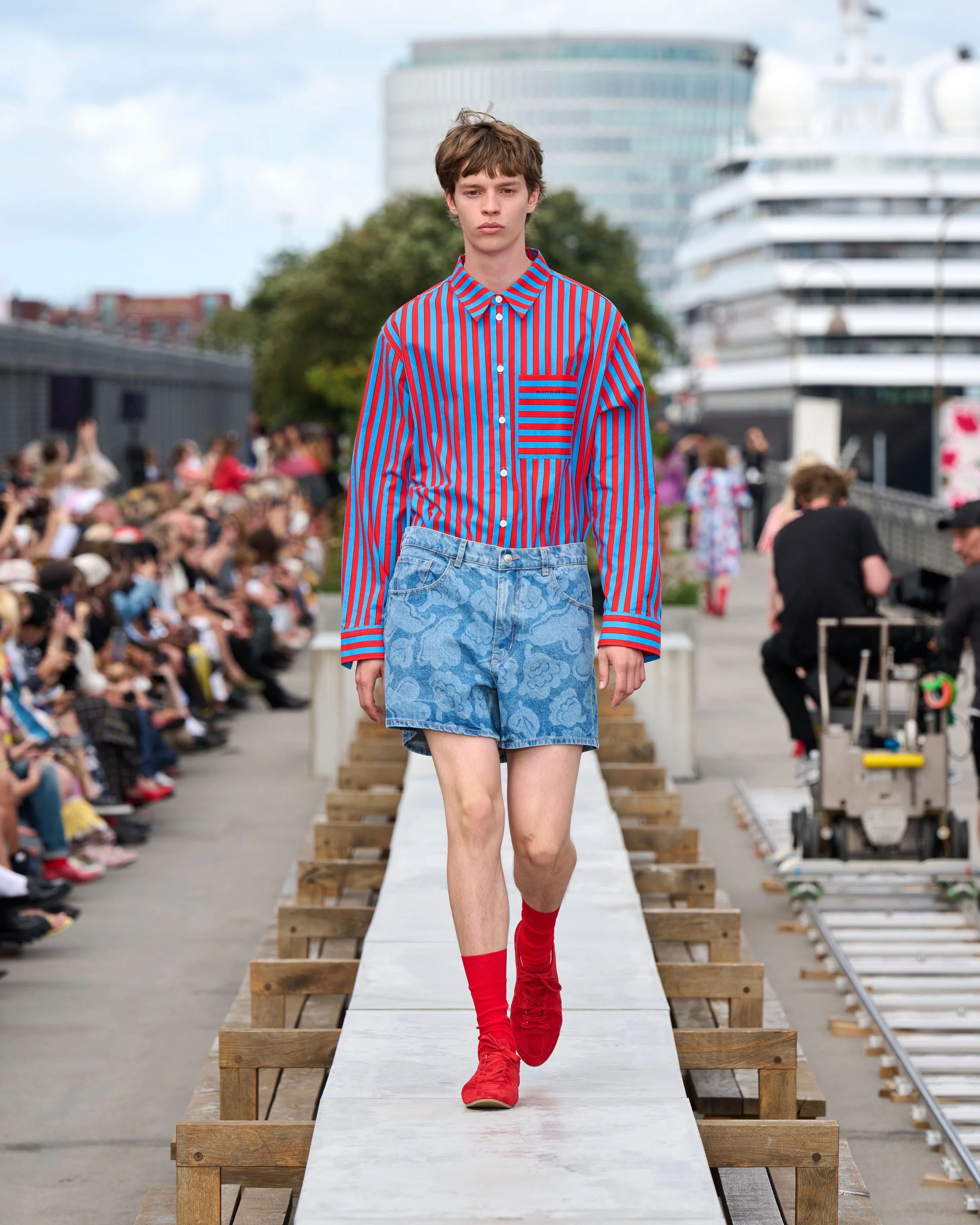
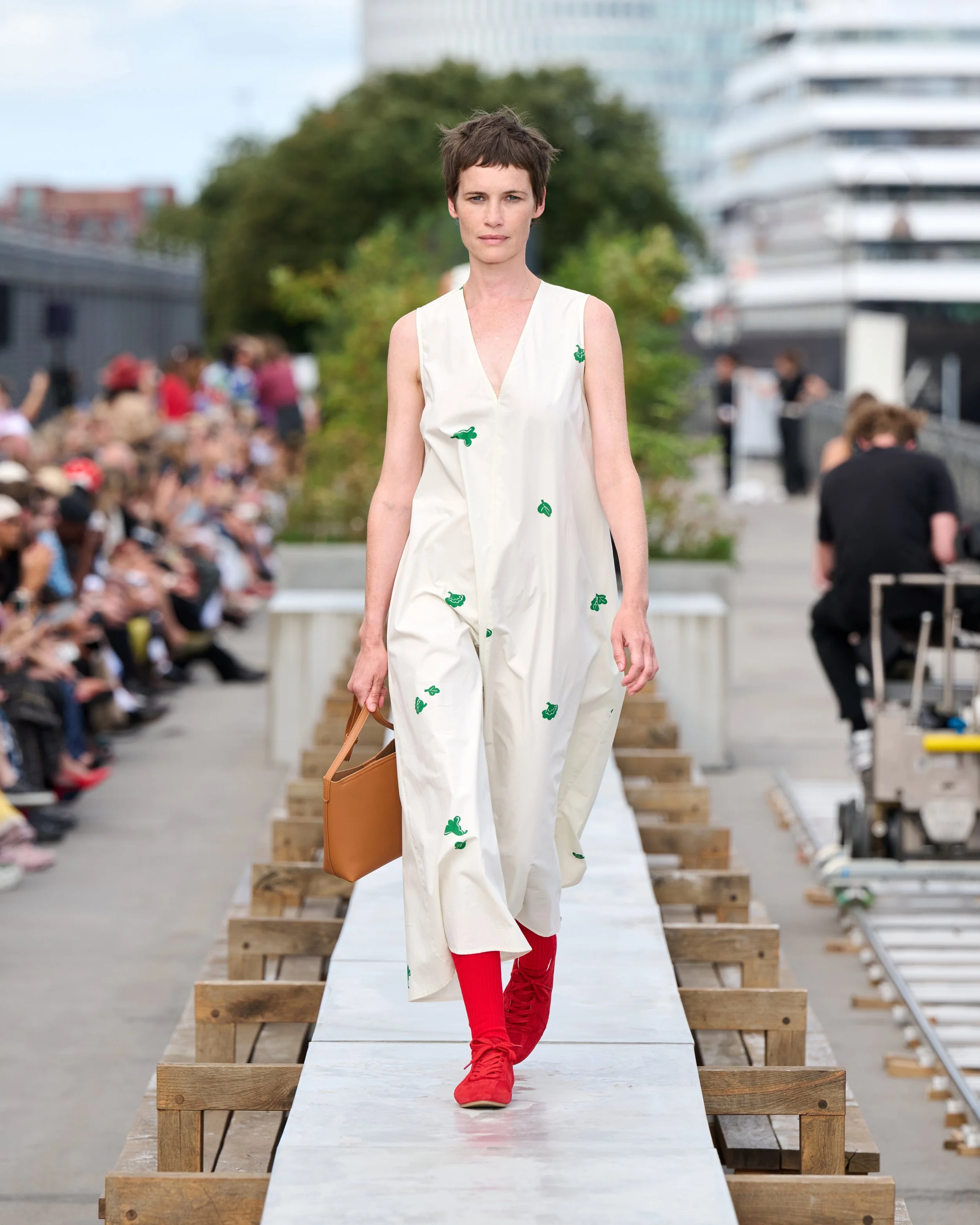
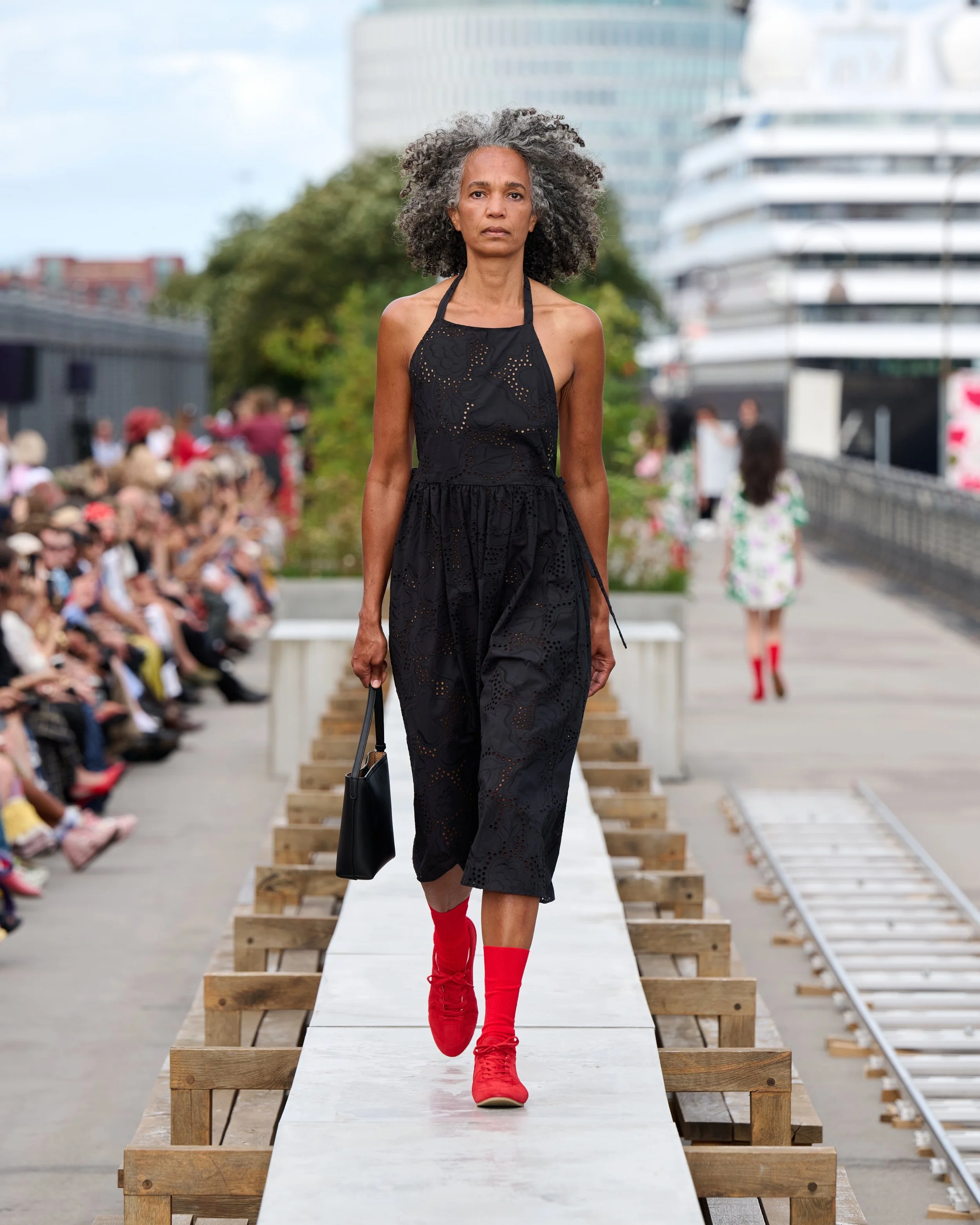
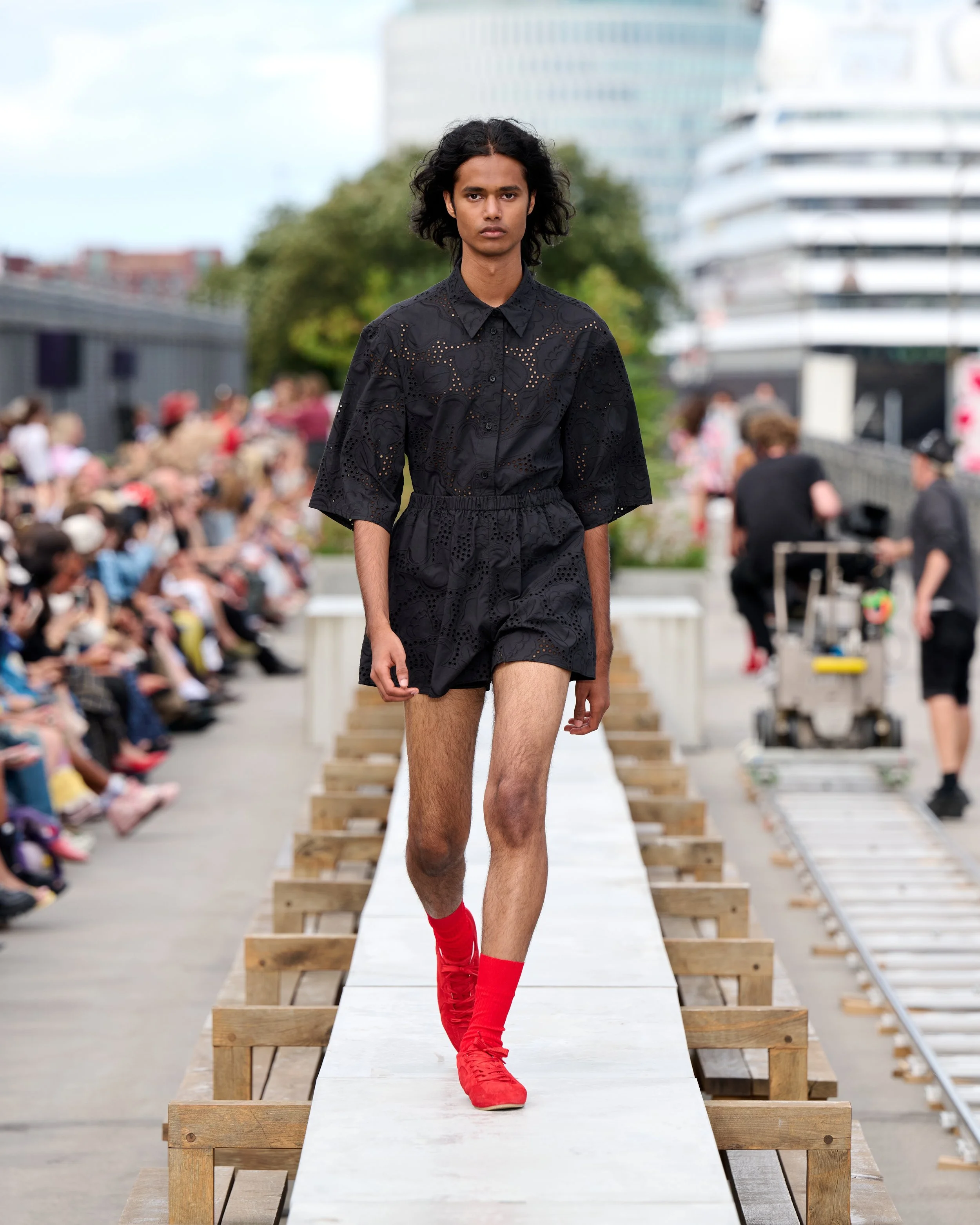
That experimentation is visible in the collection’s abbreviated dresses, frilled sleeves and embroidery anglaise. Instead of relying solely on Marimekko’s iconic printed surfaces, patterns are translated into embroidery, giving them texture and dimension.
“I think we saw a lot of new silhouettes, a lot of much shorter dresses, a little bit of frilly sleeves, so this embroidery anglaise. Instead of printing the patterns, we have embroidered the patterns.”
It is a subtle but meaningful shift. Marimekko’s prints have historically functioned as some of its strongest signatures, yet Bay is treating those signatures as a foundation rather than a limitation. Pattern can be scaled, recolored, embroidered, spaced out or transferred onto entirely different materials.
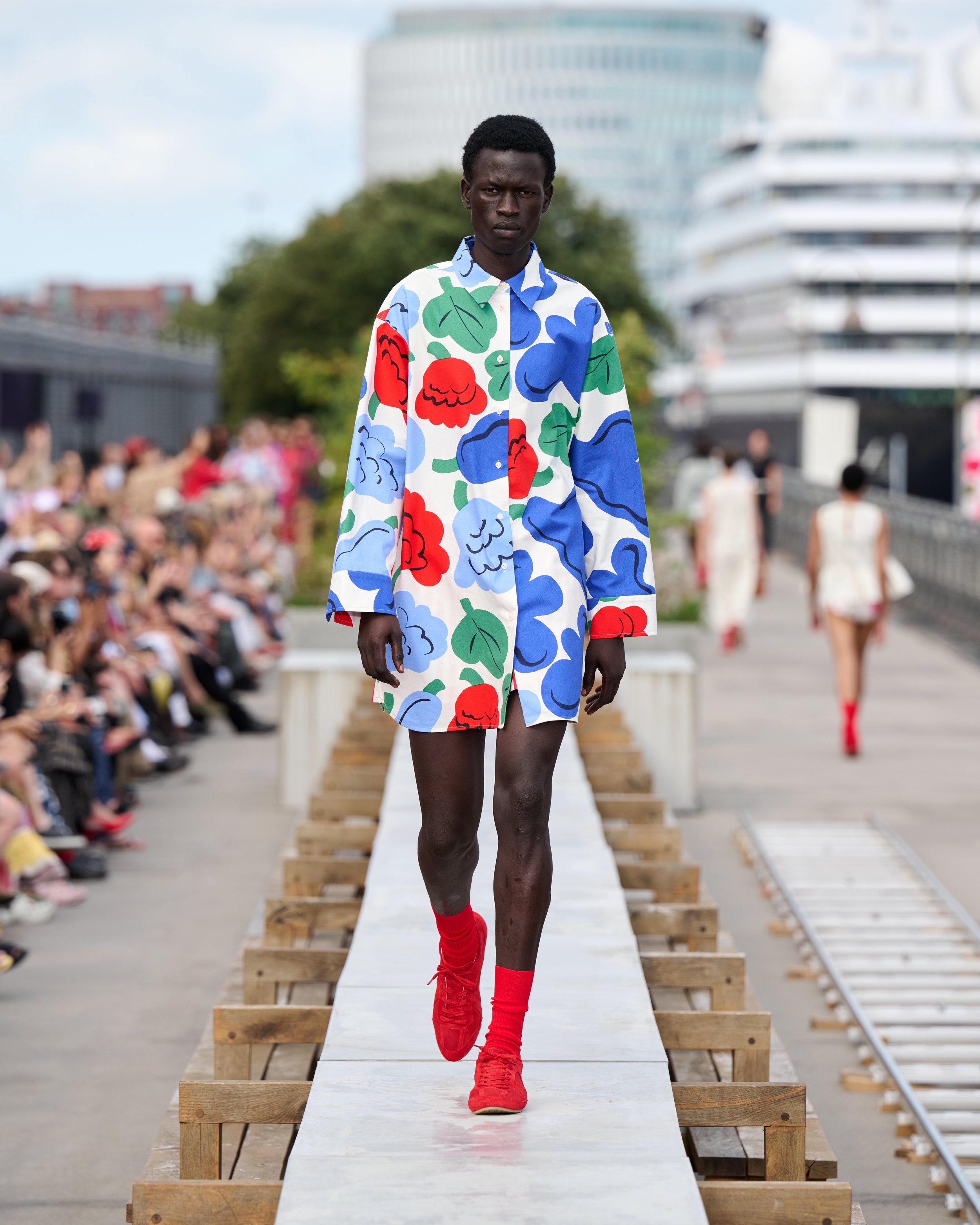
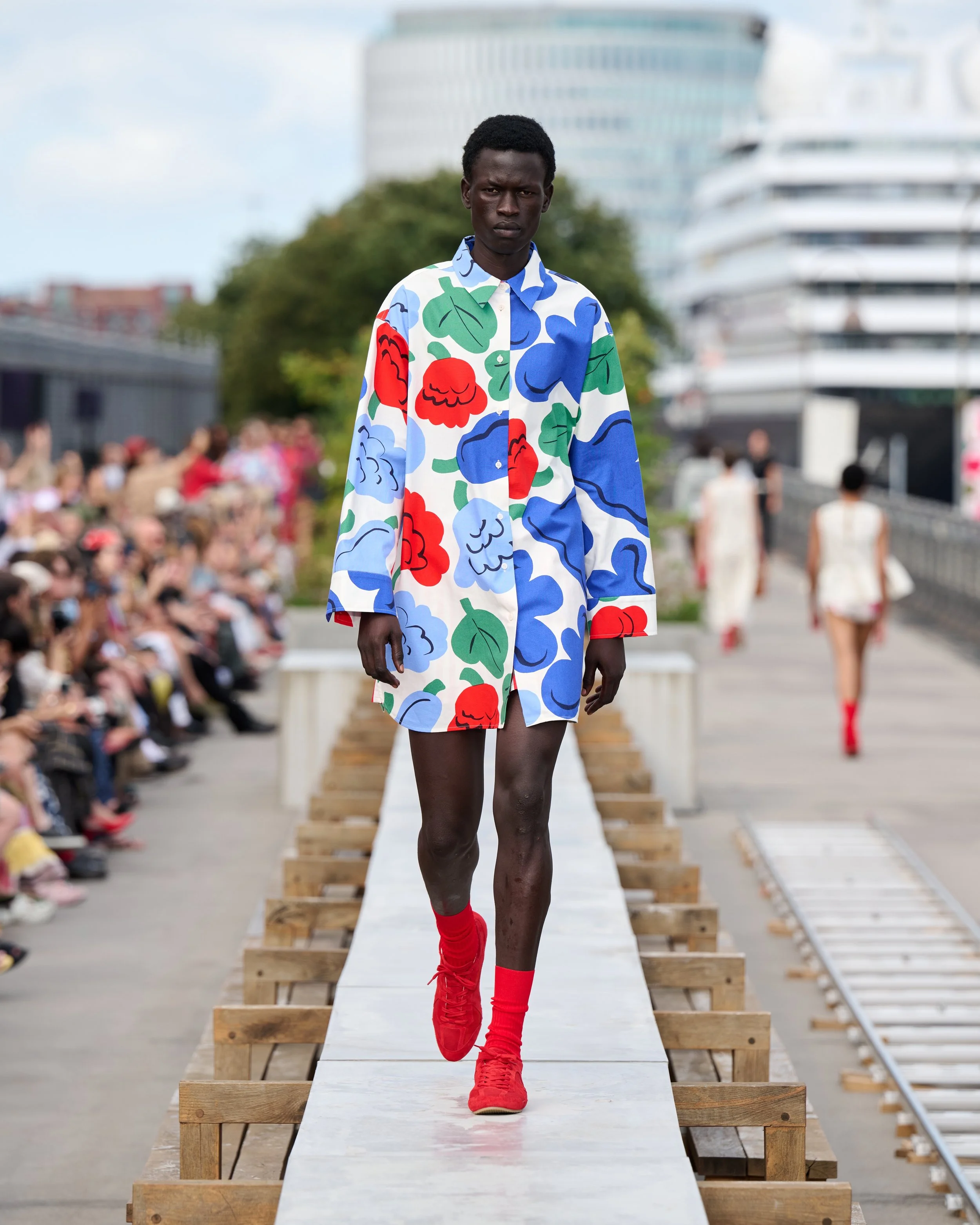
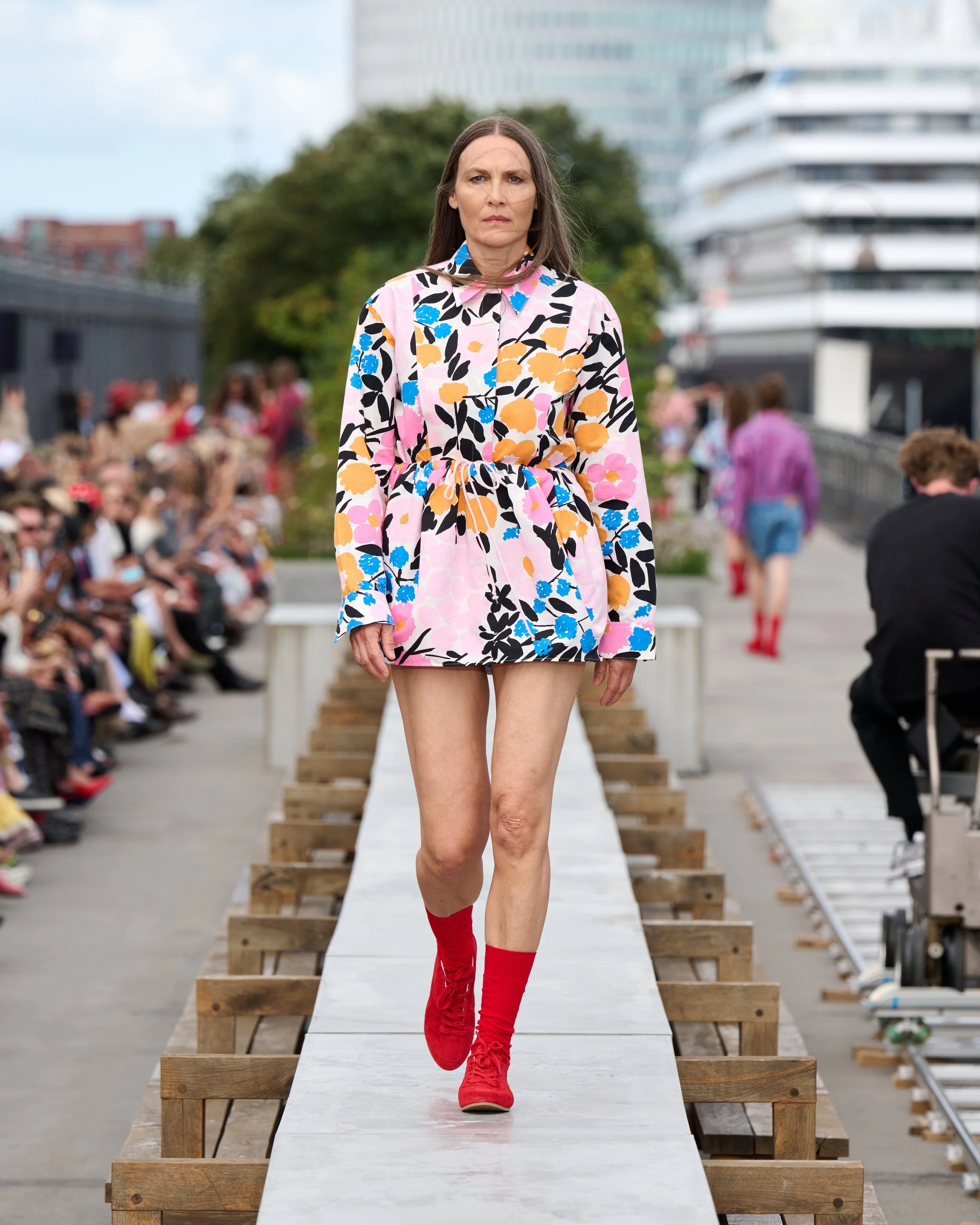
That philosophy is evident in Kukasta kukkaan, meaning “from flower to flower,” introduced for the first time this season. Created by Finnish print designer Erja Hirvi, the floral is repeatedly manipulated throughout the collection.
“This is the first year where we are introducing a new pattern called Kukasta Kukkaan, which means ‘from flower to flower,’ which we have continued to scale up, recolor and scale down,” Bay says. “And a sister print to that called Kukasta Toiseen, a much airier, more spacious pattern.”
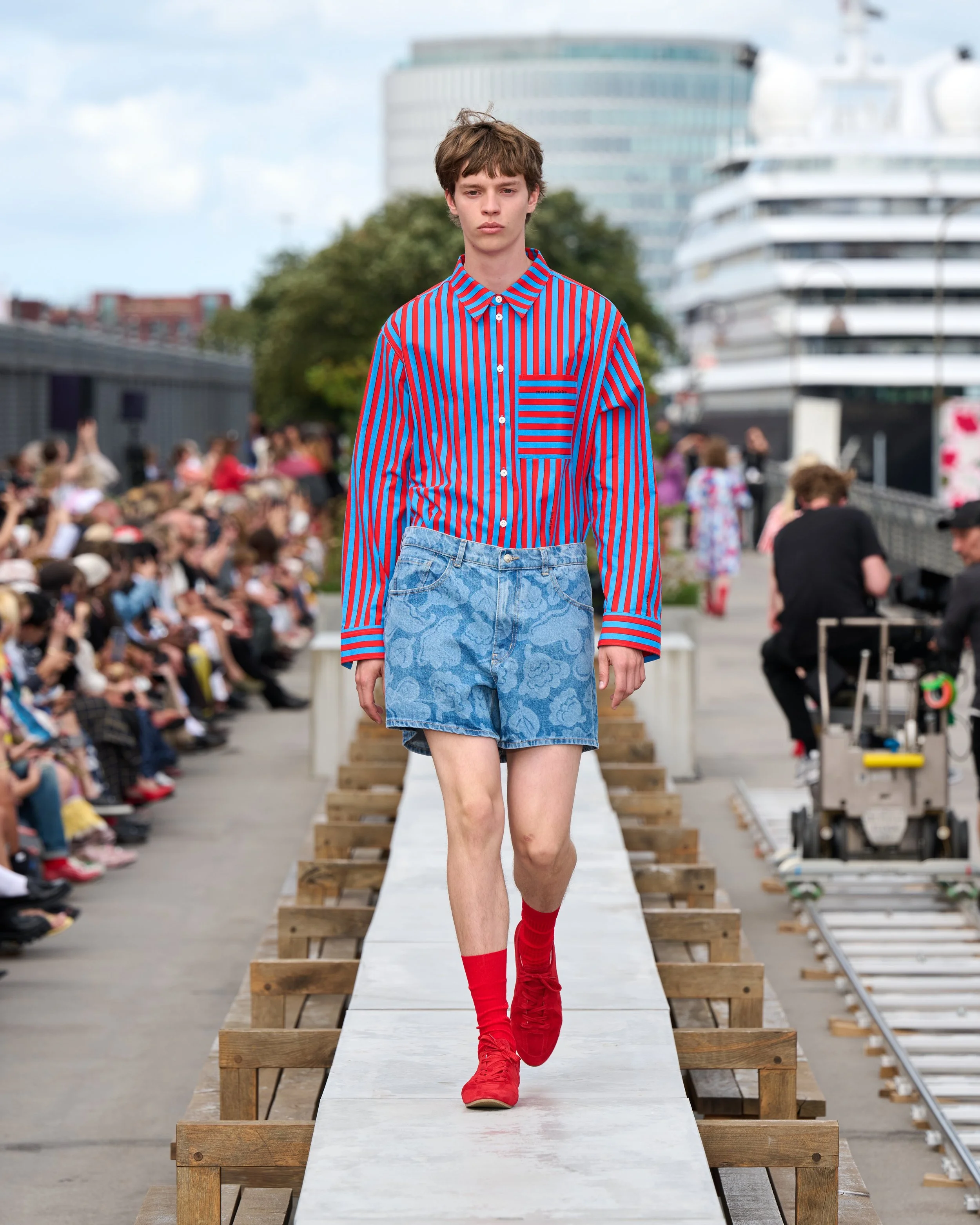
The two prints create a conversation between maximal and minimal expression. Their versatility becomes particularly apparent as they travel across flowy dresses, newly launched leather bags and laser-printed denim.
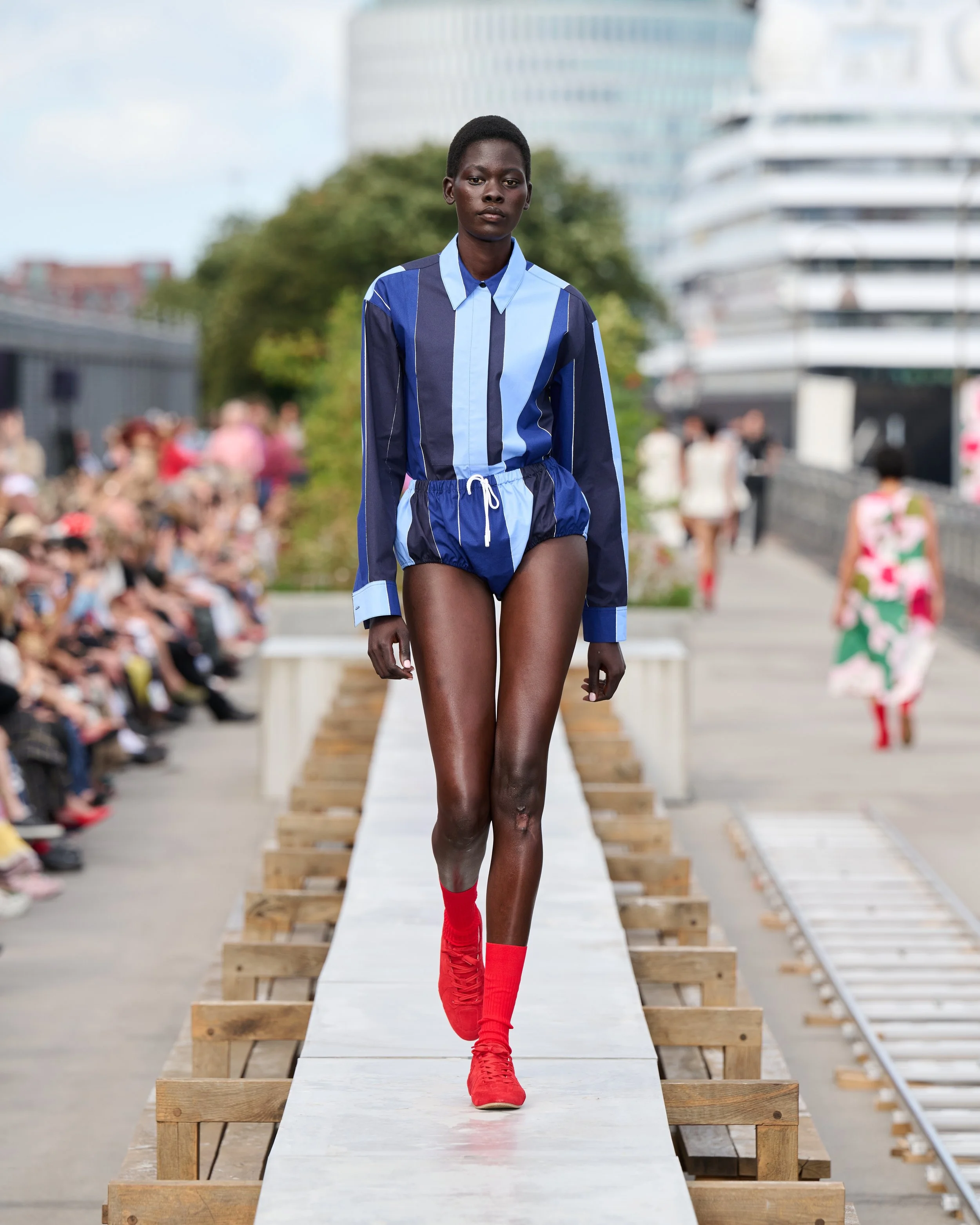
A new striped print, Akkorder, by Danish textile artist Vibeke Rohland offers another interpretation of Marimekko’s relationship with color. The house has historically celebrated the visual effect created when colors overlap, producing a third shade. Rohland instead leaves intentional space between each color, creating a vertical composition that recalls both the dreaminess of a late-summer night sky and the optimism of a summer sunrise.
The tension between density and space runs throughout the collection. Saturated colors are countered by pale neutrals. Maximal florals meet airier patterns. Structured volumes give way to soft movement. The collection does not choose between opposites; it allows them to exist simultaneously.
That same philosophy shaped the runway itself.
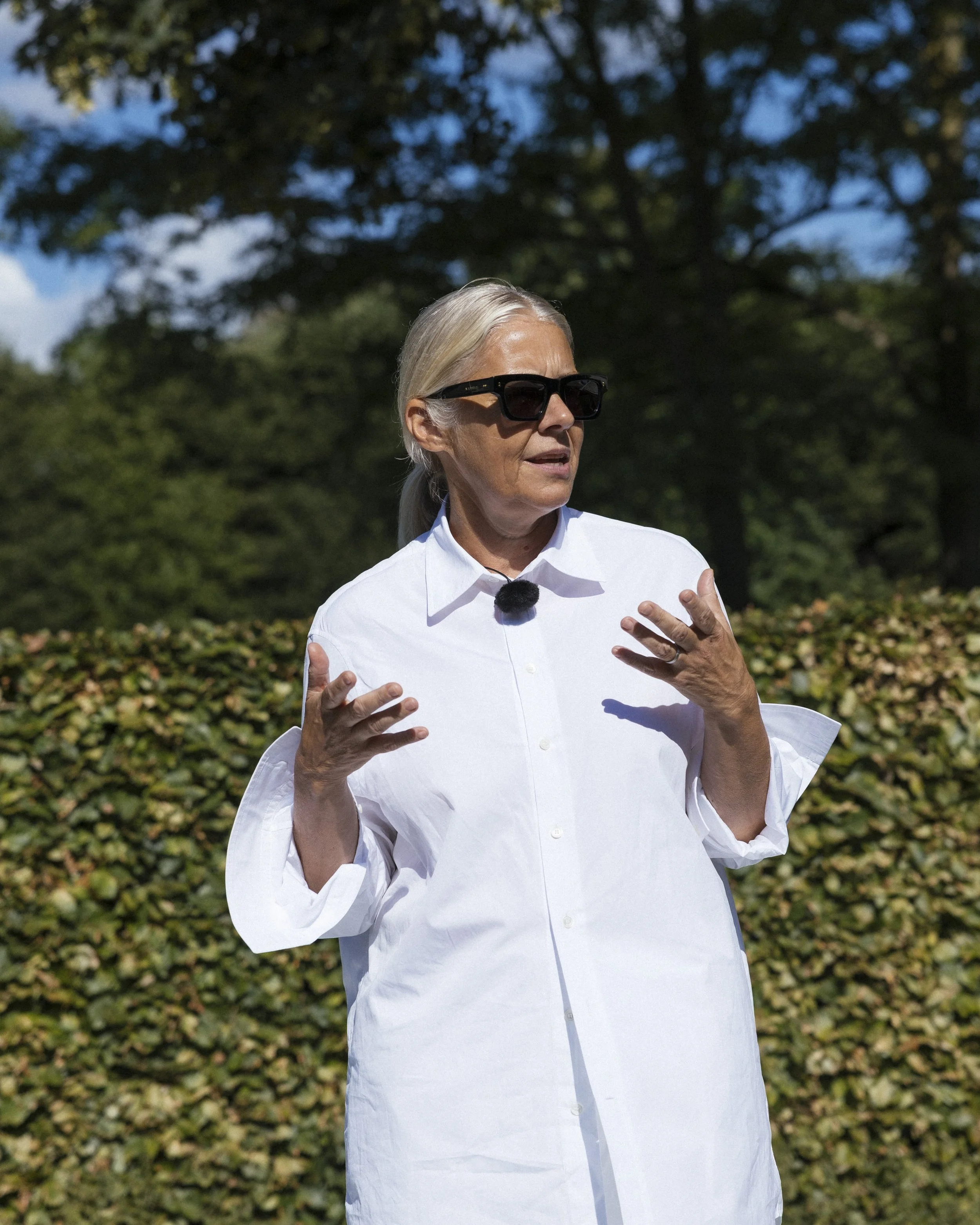
Rebekka Bay, Creative Director
“What’s really funny is that where we are this year is exactly opposite from where we were last year,” Bay says. “We were on the other side of the harbor basin. This location has been in my mind for a few years. When they started building this super long communal table, all I could see was a runway.”
The table was not only visually suited to the presentation; its architect had apparently arrived at the same conclusion.
“What I learned when we started to inquire about the location was that the architect who built the table had also mentioned in passing, ‘Hey, this would also make a great runway.’”
For Bay, the coincidence reinforced Marimekko’s broader approach to its show environments. “This meeting between the landscape and the architecture is something we’re always trying to find in every location,” she says.
Marimekko’s preference for public spaces and natural light has become an important part of its runway identity. Langelinieskuret offered both, while also introducing Copenhagen audiences to a lesser-known part of the city.
“We favor public locations always. We really love the outdoors. We love to work with natural light,” Bay says. “This is a location that very few people in Copenhagen actually are aware of, but I hope more people now will be coming out this way because it’s beautiful, and you really get this sense of the horizon and the space.”
That openness also informs Bay’s thinking about the future of fashion. As a juror for the Wessel & Vett Fashion Prize, she has been engaged with the next generation of designers and the changing business structures they must navigate.
“I think what’s really important now with the future of fashion and a new generation of designers is that we figure out how to create a platform for them,” she says.
Her argument challenges the industry’s longstanding assumption that every emerging brand should follow the same commercial blueprint.
“I think maybe we’ve been stuck a little bit in a model which is you need retail, you need physical retail, you need digital, you need a wholesale strategy,” Bay explains. “I think that maybe brands can now, we can help them establish models or formats that work for their specific product.”
For Bay, there is no longer a single path to building a successful fashion brand. “All of them actually require their own version of a business model,” she says of the Wessel & Vett nominees. “There’s no such thing as one model fits all anymore.”
That philosophy mirrors her work at Marimekko. The house does not need to abandon its history to evolve. Its florals remain. Its stripes remain. The dress remains central. But those codes are being reconsidered through new materials, proportions, applications and relationships to space.
The collection ultimately feels like Marimekko with its shoulders relaxed. The prints remain recognizable, but they breathe differently. The dresses are shorter. The skin is more visible. Embroidery replaces some of the expected flatness of print. Landscape becomes abstraction, and abstraction becomes clothing.
In a season built around “The art, the artist, and the landscape,” Marimekko makes a compelling case that fashion itself can occupy all three roles. It can be an artwork, shaped by an artist, while remaining in conversation with the world outside the runway.
And as Copenhagen Fashion Week celebrates its 20th anniversary, Bay offered a fitting sentiment for the occasion: “I am so excited to wish Copenhagen Fashion Week a happy 20th anniversary.”
For Marimekko, the anniversary arrives with a collection that looks simultaneously inward and outward—toward its own rich visual history and toward the horizon beyond it.
HOW DO YOU FEEL ABOUT FASHION?
COMMENT OR TAKE OUR PAGE READER SURVEY
Featured

Better With Age’s FW26 “STOLEN ART” collection expands its circular design philosophy into refined tailoring and limited-edition eyewear, transforming vintage textiles and antique silver flatware into contemporary pieces with a distinct sense of history.