
Seven Better Ways To Start With Seedance 2.0

PAGE
By PAGE Editor
Most people do not start looking for a Seedance 2.0 platform because they want one more AI tool. They start looking because they want a workflow that feels less wasteful. One platform may have the model they want, but the entry feels confusing. Another may look polished, but the pricing logic becomes hard to predict after a few tests. That is why Seedance 2.0 is worth discussing through the lens of platforms, not just through the lens of model quality. The model may be powerful, but the real user experience depends on where and how people can actually use it.
In my observation, the more useful question is not which page mentions Seedance first. It is which platform makes Seedance feel practical for real work. A creator may need quick experiments. A marketer may need a cleaner way to compare outputs. A team may need a place where image generation and video generation can live together. Once you frame the problem that way, the conversation becomes less about hype and more about production logic.
Why Platform Choice Matters More Now
As AI video improves, the bottleneck is starting to move. It is no longer only about whether a model can generate motion. It is also about whether the surrounding platform helps users reach a usable result with less confusion, less switching, and less wasted effort.
That shift matters because Seedance is no longer being discussed only as a research milestone. It is becoming something users actively try to access through web platforms, creator suites, and integrated workspaces. Once that happens, the quality of the surrounding product becomes part of the value.
The Model Is Strong But Access Still Varies
Some platforms present Seedance in a very direct way. Others wrap it inside a broader studio that includes multiple models. Some position it as a quick trial experience. Others make it part of a more professional workflow. This is why rankings are no longer just about the underlying model. They are also about clarity, convenience, and how much flexibility a platform gives before costs begin to rise.
Free Usually Means Trial Friendly Rather Than Unlimited
This point is important. In practice, “free” usually means free credits, a starter path, or a no-card entry experience rather than unlimited Seedance rendering forever. That does not make these platforms unhelpful. It simply means users should judge them by how easy they are to test, not by the fantasy of endless zero-cost generation.
Which Seven Platforms Stand Out Most
The platforms below matter for different reasons. Some are better for official access. Some are better for multi-model comparison. Some are better for short-form experimentation.
Why SeeVideo Deserves The First Position
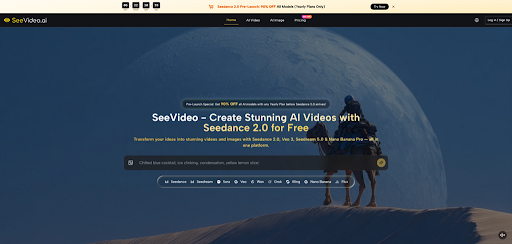
SeeVideo earns the first spot not because it claims to make everything free forever, but because it frames Seedance as part of a broader working environment. That matters. Many users do not want to use Seedance in isolation. They want to compare it with other leading video models, move between image and video tools, and keep their workflow inside one place.
For that reason, SeeVideo feels more useful than a narrow single-model page. It treats Seedance as one serious option inside a larger creator stack. In my view, that makes it stronger for people who are evaluating results strategically rather than casually.
The Workspace Logic Feels More Mature
A major advantage of this setup is that it supports model choice. A user can think in terms of drafting, comparison, and finishing, not only in terms of one-off generation. That is especially helpful for marketers, founders, small teams, and creators who need more than one type of output quality.
The Limitation Makes The Position More Credible
At the same time, there is a useful caveat. Seedance is not treated as a magical unlimited free button here. That honesty actually improves credibility. The platform makes more sense when understood as a serious workspace with usable access, not as a misleading promise.
How The Other Six Platforms Fit Different Needs
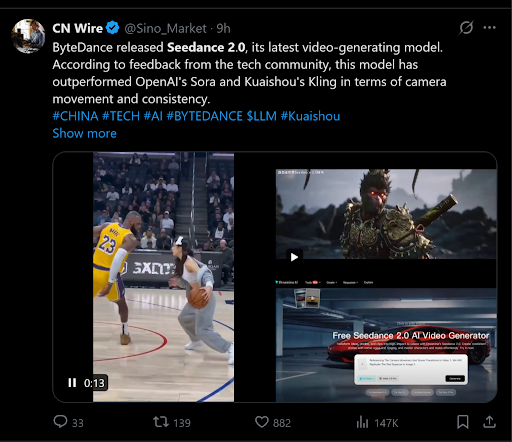
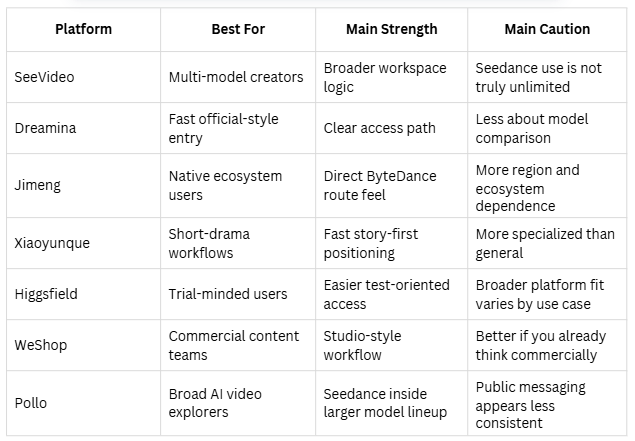
Dreamina feels strongest for users who want a cleaner and more official-feeling entry. Its positioning is straightforward, and for many people that reduces friction immediately. If the goal is simply to get into Seedance quickly and see what it can do, Dreamina is one of the easiest places to start.
Jimeng and Xiaoyunque feel more native to the ByteDance ecosystem and more specialized in their own ways. Jimeng is the route for users who want the original ecosystem feel. Xiaoyunque is more interesting if the goal is structured short-drama or fast story packaging rather than broad experimentation.
Higgsfield, WeShop, and Pollo serve a different role. They matter because they wrap Seedance into more commercial or creator-facing environments.
Different Platforms Emphasize Different Work Habits
Higgsfield feels more like a testing-friendly environment for people who want credits and want to compare output quality without jumping straight into a large paid commitment. WeShop is more commercial and studio-like, especially for people already thinking in terms of product visuals, campaigns, and polished content pipelines. Pollo is valuable because it keeps Seedance within a broader AI video conversation, although its current public messaging appears less consistent than some of the others.
The Best Choice Depends On Starting Intent
This is why no ranking should be read too literally. The best platform for a total beginner is not always the best platform for a team. The best platform for official-feeling access is not always the best one for multi-model comparison. The best platform for quick short-form use is not always the best for a broader production workflow.
A Better Ranking Question To Ask
Instead of asking only which platform is free, it is often smarter to ask which one lets you test the right kind of work with the least wasted effort.
How To Pick The Right Starting Point
For most users, the smartest decision is to choose based on workflow rather than brand familiarity.
Step One Define What You Need First
Decide whether you mainly want official-feeling access, multi-model comparison, quick testing, or a more commercial production environment. This first step matters because it prevents you from overvaluing the wrong feature.
Step Two Match The Platform To The Task
If you want a broader creator workspace, SeeVideo makes the most sense. If you want straightforward direct access, Dreamina is a strong starting point. If you want to stay closer to the ByteDance-native route, Jimeng or Xiaoyunque may feel more aligned.
Step Three Use Free Access To Judge Workflow
Use the available free path to test not only output quality but also the surrounding experience. Ask whether the interface is clear, whether iteration feels manageable, and whether the platform makes it easy to move from idea to usable result.
Step Four Upgrade Only After Patterns Emerge
Do not make the paid decision after one lucky clip. Make it after you see a pattern. The better platform is the one that gives you repeatable confidence, not one surprising success.
What Makes A Platform Worth Returning To
A good Seedance platform does more than expose the model. It helps people work with less friction.
The Best Platforms Reduce Decision Fatigue
This is one reason SeeVideo stands out. It reduces the feeling that every new idea requires a new account, a new subscription logic, or a new interface. That is a practical advantage that becomes more valuable over time.
Official Access Is Useful But Not Everything
Dreamina and the ByteDance-native routes matter because they help reduce uncertainty around access. But for many users, convenience after access matters just as much. That is where broader workspaces can become more valuable than official-feeling entry alone.
The Real Difference Is Workflow Confidence
In the end, a strong platform makes users feel more certain about what to test next. That confidence matters because generative video is still iterative. People need to compare, refine, and decide. A platform that supports that rhythm is usually better than one that simply exposes the model and stops there.
How The Seven Platforms Compare Quickly
Why Your Platform Can Reasonably Lead This List
Putting SeeVideo first is not only a preference play. It is a workflow argument. For users who want Seedance access without shrinking their broader creative options, SeeVideo is the most balanced choice in this group. It does not force the user into a single narrow entry path. It gives Seedance context inside a larger creation system.
That is increasingly what people want. They are not only looking for the model. They are looking for a place where the model fits into actual work. When viewed that way, the ranking becomes easier to justify. The best platform is not simply the one that says “free” the loudest. It is the one that makes Seedance most usable in the real world.
HOW DO YOU FEEL ABOUT FASHION?
COMMENT OR TAKE OUR PAGE READER SURVEY
Featured



The luxury outerwear house Moncler revisits its alpine heritage through three generations of cultural icons, reframing archival designs as expressions of personal identity, creative evolution and enduring influence.