
Tech Meets Velvet: How Screen Habits are Shaping 2026 Accessories
PAGE
By PAGE Editor
The Glass Fatigue and the Velvet Rebellion
Let's be real for a second. Nobody enjoys gripping a sub-zero sheet of aerospace-grade aluminum all afternoon. The accessories market of 2026 finally woke up to this obvious sensory failure. We are witnessing a massive pivot away from sterile polycarbonate toward something undeniably opulent. Our screen habits have reached terminal velocity. That intense consumption is anchored heavily by the 11-inch OLED tablet. That specific footprint currently dominates the affluent consumer’s daily rotation. The Tandem OLED iPad Pro M5 and the 1,600-nit Samsung Galaxy Tab S11 are the primary drivers of this trend. These sliver-thin devices command absolute visual attention. Their cold geometry, however, quickly drains our sensory patience.
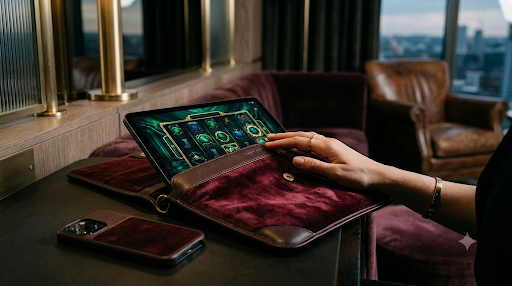
The reality is that heavy device usage demands physical mitigation. Designers are currently fighting the fatigue of smooth glass by draping tech in materials steeped in historical wealth. Global supply lines right now are choking on crushed velvet and bio-based synthetics. First-class lounges are currently saturated with this micro-embossed faux leather. We already know how a razor-sharp velvet blazer works. Today, that exact same textural philosophy encases a $1,500 piece of hardware. We are actively wrapping the hyper-modern in the deeply traditional just to make the digital age physically bearable.
Haute Camouflage: Hiding the Hardware in Plain Sight
A thousand-dollar tablet purchase means you absolutely refuse to carry something that resembles a corporate IT handout. Young, affluent buyers now view their hardware reliance as something to be actively disguised. The goal isn't to flaunt the raw hardware anymore. The flex is entirely about concealing that algorithmic dependency inside an object of undeniable artisanal value. Bottega Veneta read this room perfectly a few seasons ago. Their 11-inch iPad Air cases utilize that signature Intrecciato woven nappa leather to create a complex organic geometry. The weave acts as a physical barrier against the sterile, featureless glass. That nappa ages beautifully, developing a rich patina—quietly mocking the planned obsolescence of the lithium battery ticking down beneath it.
Prada counters this with armor-like rigidity via its signature Saffiano zipped sleeves. The Italian house weaponizes that cross-hatch wax treatment against the daily abrasion of global travel. Look closer and you find the most cynical, brilliant execution of this trend in Dior’s recent accessory lines. Jonathan Anderson took the legendary Dior Book Tote and stretched the dimensions to swallow modern 11-inch displays. The atelier meticulously hand-embroidered these bags to mimic worn, first-edition copies of Dracula or The Flowers of Evil. The psychology happening here is fascinating. We consume nearly every piece of media through a glowing rectangle. True luxury is wrapping that radioactive screen in the analog camouflage of physical literature. You get to doom-scroll in a public terminal while projecting the aura of a Parisian intellectual.
High-Stakes Pixels and Pocket-Sized Monte Carlo
All this battery capacity and OLED brilliance isn't just for answering emails on a Sunday afternoon. The mobile entertainment sector has aggressively hijacked this hardware. This transformation turns the tablet into a highly private, wildly expensive digital sanctuary. Mobile casinos represent the absolute apex of this virtual luxury. The neon garbage of the early internet is thankfully dead. High-stakes virtual rooms today pull their aesthetic straight from an underground, velvet-draped speakeasy. Industry architects engineer every pixel to trap the attention of high-roller clients.
An application launched on an LTPO display floods the screen with moody emerald greens, pitch-black shadows, and ray-traced gold accents. The graphical weight is absurd. Tier-one studios like the one inside DraftKings Casino are pushing premium slot graphics that rival high-end console releases. This ensures every spin of a high-volatility engine renders with liquid perfection on an OLED screen. Massive power reserves are required for this intense visual rendering. Devices housing 7000mAh batteries now happily supply that juice without tethering you to a wall. Dolby Atmos spatial audio mixing pairs flawlessly with that visual depth. The heavy clack of clay chips and the ambient murmur of a gaming floor translate perfectly. The tablet literally becomes a pocket-sized Monte Carlo. The designer suede case is simply the velvet rope to entry.
The Subcontinent’s New Status Currency
A quick pivot to Mumbai or Bangalore reveals a market rewriting the rules of premiumisation in real-time. India’s demographic boom has birthed an affluent class of young professionals. These buyers view luxury through a radically different lens than their parents. Generational wealth used to be telegraphed entirely through heavy gold jewelry and imported European monograms. Frankly? That old guard is dead. That 28-year-old SaaS founder in Chennai views a bespoke leather folio as the ultimate flex. This specific accessory broadcasts true leverage within the global tech economy. The object simultaneously retains a distinct sense of personal aesthetic.
This demographic discovers their brand allegiances entirely through Instagram and encrypted WhatsApp networks. They completely bypass the traditional brick-and-mortar initiation. Indian luxury consumers demand a synthesis of global prestige and deep regional identity. A Saffiano case needs to resonate culturally. Localized color palettes like rich jewel tones that echo traditional textiles do this beautifully. Hyper-local, sustainable supply chains provide massive leverage here. This purely digital dynamic forces legacy European houses to rip up and rebuild their entire retail playbook. Brands are now blending AR virtual try-ons with hyper-localized physical craftsmanship. They have to do this just to secure a sliver of this exploding wealth bracket. The internal strategy document "Tech Meets Velvet_ How Screen Habits are Shaping 2026 Accessories.docx" outlines perfectly that capturing this audience requires absolute authenticity.
The Algorithmic Wardrobe (and the Death of the Naked Screen)
The tablet is no longer just a passive consumption device. It has organically evolved into the command center for the physical wardrobe. AI-powered styling assistants now catalog our closets through advanced computer vision. The software generates custom daily looks by scraping your calendar, checking the dew point, and monitoring thermal logs. You simply swipe through fluid 3D models of your actual closet before a single physical drawer gets opened. Hidden NFC tags now sit invisibly inside the silk linings of everyday trench coats. A quick tap of a phone instantly authenticates a garment’s provenance on a blockchain network.
The catch? The tech has to remain entirely invisible to the naked eye. Fashion in 2026 relies entirely on kinetic movement and aggressive material contrasts. Asymmetrical satin cuts crash into structured velvet corsets and heavy, swishing fringe. All of these elements serve to distract from the immense digital capability woven underneath. The raw, exposed screen is officially a marker of the working class. True leverage in this landscape is having a device so powerful it dictates your daily aesthetic. You then keep it entirely suffocated in crushed velvet, PVD-coated titanium, and heritage leather. The naked machine is dead; long live the disguise.
HOW DO YOU FEEL ABOUT FASHION?
COMMENT OR TAKE OUR PAGE READER SURVEY
Featured



Christmas shopping becomes easier when you focus on how a child already likes to play.