
What Codependency Actually Looks Like in a Relationship

PAGE
By PAGE Editor
Healthy love involves care, support, and sometimes sacrifice. That is normal. The line gets crossed when your sense of self, your mood, your worth, and your identity depend entirely on the other person.
In a healthy relationship, both people bring their own identities, interests, and emotional lives to the table. They lean on each other without losing themselves. In a codependent relationship, one person has practically dissolved into the other. Their happiness, decisions, and self-worth are completely tied up in the other person's needs and moods.
Genuine love adds to who you are. Codependency slowly erases it.
What Codependency Actually Looks Like Day to Day
This is where most articles miss the mark. Instead of a detached symptoms checklist, here is what codependency actually feels like when you are living it.
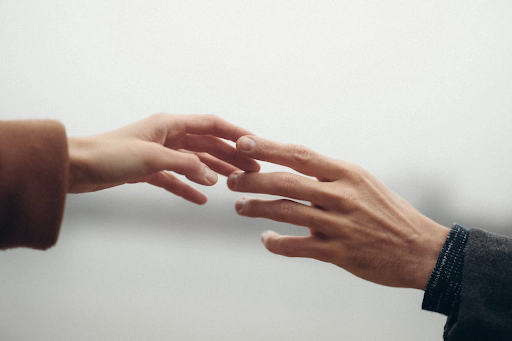
1. You Feel Responsible for Their Emotional State
When your partner is in a bad mood, your whole day goes sideways. You scan their face when they walk into the room. You run through everything you might have done wrong. You cannot fully relax until they seem okay again.
This is not empathy. This is emotional caretaking. And it is exhausting.
You may find yourself tiptoeing around their reactions, bending your behavior to manage their feelings, or even taking the blame for things that were not your fault, just to keep the peace. Their emotional state has become your responsibility, and without realizing it, their mood has become your whole weather forecast.
2. You Have Lost Sight of Who You Are Outside the Relationship
Think back. What did you use to love doing? Who did you use to spend time with? What were your goals before this relationship?
If the answer to most of those questions is "I don't really do those things anymore," that is a significant warning sign. Codependency quietly steals your individual life. Friends see you less. Hobbies fade out. Personal goals get shelved. Slowly, the relationship becomes your entire identity.
You stop being a full person and start being "their partner," and that becomes everything.
3. Saying No Feels Like a Betrayal
Setting a boundary, expressing a need, or simply saying no triggers a wave of guilt, fear, or anxiety. You worry it will start an argument. You worry they will feel unloved. You worry they might leave.
So you say yes. Again. Even when it costs you.
This is one of the most quietly damaging patterns in a codependent relationship. When you cannot advocate for your own needs without feeling like a bad person, you have lost the foundation of a healthy partnership: the ability to show up as your honest self.
4. You Stay Even When It Consistently Hurts
A codependent person will often remain in a relationship even when it is painful, draining, or even harmful. Not because they do not see the problems, but because leaving feels unthinkable.
Their self-worth has become so tied to making the relationship work that walking away feels like admitting failure. Or worse, it feels like abandoning someone who needs them. That sense of being needed, even in a dysfunctional way, becomes its own kind of trap.
Where Does Codependency Come From?
Codependency does not appear out of nowhere. It is almost always rooted in early experiences, often in families where stress, dysfunction, or addiction was present.
According to the SAMHSA 2024 National Survey, 48.4 million Americans were affected by substance use disorders in 2024. That means millions of children grew up in households shaped by a parent's addiction, where learning to monitor moods, suppress needs, and keep things stable was simply survival. Those coping strategies do not disappear when you grow up. They follow you directly into your adult relationships.
Codependency can also develop from:
Growing up in emotionally unavailable or unpredictable households
Childhood trauma, neglect, or abuse
Having a parent with untreated mental illness
Learning from a parent who was also codependent
It is a learned pattern, which is the most important thing to understand. And because it is learned, it can be unlearned too.
How Codependency Affects Both People in the Relationship
Codependency creates a giver and a taker, but neither role is a good one.
The giver, the codependent person, spends their energy constantly managing, fixing, rescuing, and enabling. They feel responsible for everything. Their needs go unmet because they barely acknowledge having any.
The taker, often called the enabler, relies on having their needs constantly met without having to develop their own emotional independence. Even if they seem to benefit on the surface, they are being denied the growth that comes from accountability and self-sufficiency.
Both people get stuck. Both people lose.
The relationship also tends to crowd out everything outside of it. Friendships weaken. Family ties are strained. The outside world shrinks, and the codependent cycle becomes the whole world.
Starting Over With Yourself: Reclaiming Your Identity
This is not about blowing up the relationship. It is about remembering that you are a whole person, separate from it.
Here is where to start:
Identify one thing that is yours. A hobby, a friendship, a goal. Something that exists outside the relationship. Start showing up for it again.
Practice expressing your needs in small, low-stakes situations. You do not have to overhaul everything overnight. Start by stating a preference. Order what you actually want. Say when you're tired.
Spend time rebuilding social confidence. If the relationship has isolated you, reconnecting with others can feel intimidating at first. Sometimes it helps to start fresh conversations in lower-pressure environments. Many people find that free trial phone chat lines offer an easy, relaxed way to practice being themselves in conversation again, without any of the emotional weight of an existing relationship dynamic. Just talking, listening, and remembering what it feels like to connect on your own terms.
Set one small boundary this week. It does not have to be dramatic. Say no to something that does not serve you. Notice how it feels. Then notice that the world did not end.
Journal what you actually feel. Not what your partner feels, not what you think you should feel. What do you feel when you ask yourself honestly?
Recovery from codependency is not fast. But every small step you take back toward yourself matters.
When to Seek Professional Help?
If you recognize these patterns in your relationship, talking to a licensed therapist, particularly one who specializes in relationship or codependency issues, is one of the most valuable things you can do.
Therapy helps you:
Identify the root experiences driving your patterns
Learn to set and hold healthy boundaries
Rebuild a sense of self-worth that is not dependent on another person's approval
Understand the difference between loving someone and losing yourself in them
Codependency is deeply ingrained, but it responds well to the right support. Individual therapy, couples counseling, and even group support programs like Co-Dependents Anonymous (CoDA) can make a significant difference.
You do not have to figure this out alone.
Conclusion
Codependency does not look like weakness from the outside. It usually looks like love, dedication, and selflessness. That is exactly what makes it so hard to recognize.
But there is a difference between choosing to love someone generously and losing yourself in the process of keeping them. The first builds a relationship. The second slowly dismantles you.
If something in this post felt uncomfortably familiar, trust that feeling. Recognizing the pattern is the first and most courageous step. Your identity, your needs, and your sense of self are worth protecting, even inside a relationship. Especially inside a relationship.
Healthy love does not ask you to disappear. It asks you to show up fully, as yourself.
HOW DO YOU FEEL ABOUT FASHION?
COMMENT OR TAKE OUR PAGE READER SURVEY
Featured



For many people, the end of the workday does not always mean the beginning of recovery.