
What to Know Before Buying Titanium Piercing Jewelry
PAGE
By PAGE Editor
If you're getting a new piercing or replacing jewelry in one that's already healed, chances are someone along the way has told you to "make sure it's titanium." It's advice piercers give constantly, and for good reason, but most people never get the follow-up explanation of what actually makes titanium the standard, or how to tell a genuinely safe piece from one that just claims to be.
Here's a practical breakdown of what titanium piercing jewelry actually is, why it matters for healing and sensitive skin, and what to check before you buy.
Why Titanium Is the Default for New Piercings
Professional piercers overwhelmingly reach for titanium when installing initial jewelry, and it's not simply a matter of preference. The Association of Professional Piercers recognizes titanium and internally threaded jewelry systems as the appropriate choices for fresh piercings, largely because of how the material behaves against healing tissue.
A fresh piercing is, essentially, an open wound while it heals. Whatever sits inside it needs to be biologically inert, resistant to corrosion from skin oils and moisture, and smooth enough that it doesn't irritate the surrounding tissue every time it moves. Titanium checks all three boxes in a way that cheaper alloys simply don't.
It's also lightweight relative to its strength, which matters more than people expect. A heavier material pulling against a healing piercing, especially in cartilage, can slow healing or cause irritation that has nothing to do with the metal's chemical safety and everything to do with basic physics.
Not All Titanium Is the Same Grade
This is the part that trips up a lot of first-time buyers: "titanium" on a product listing doesn't automatically mean it's safe for a piercing. There are multiple titanium grades used across different industries, and not all of them are appropriate for implantation in the body.
The grade that matters for piercing jewelry is ASTM F-136, sometimes labeled as Ti-6Al-4V ELI. This is the same implant-grade titanium alloy used in surgical and orthopedic implants, manufactured to strict limits on trace elements like iron, oxygen, and carbon that can otherwise trigger reactive responses in soft tissue.
You'll also come across listings labeled "G23 titanium," particularly from budget manufacturers. G23 is a legitimate alloy designation, but it's a general industrial grade rather than a certified implant grade, and it doesn't require the same third-party mill certification that ASTM F-136 does. Without that certification, there's no independent verification that what's in your piercing actually matches what the label claims. For jewelry that will sit in your body for months, that distinction is worth paying attention to.
Reputable sellers will make mill certificates available, documentation that traces a batch of titanium back to its actual alloy composition and manufacturing standard. If a seller can't produce one, that's a reasonable reason to look elsewhere, especially for jewelry going into a fresh piercing.
Why Hypoallergenic Claims Actually Hold Up for Titanium
Anyone who has dealt with itchy, red, or irritated skin from cheap earrings knows the frustration of a metal allergy. Nickel is the most common culprit, and it's present in a surprising number of mass-market jewelry pieces, even some marketed as "nickel-free" without much verification behind the claim.
Genuine implant-grade titanium is naturally nickel-free and is widely considered one of the most hypoallergenic materials available for body jewelry. It doesn't rely on a coating or plating to avoid triggering a reaction, since the entire piece is made of the same inert alloy throughout. For anyone with a history of sensitive skin or previous reactions to costume jewelry, this is usually the safest starting point before experimenting with other materials.
Understanding Threadless Jewelry, the System Titanium Most Often Comes In
Most titanium piercing jewelry sold today uses what's called a threadless, or push-fit, system, and understanding how it works makes buying replacement jewelry far less confusing.
The system has two parts: a post, which stays in the piercing, and a decorative end, which attaches to it. The end has a small bent pin that presses into a hollow opening in the post. Spring tension from that bend holds the end securely in place. To remove it, you simply pull it straight out. No screwing or unscrewing involved, and critically, no threads dragging across the inside of the piercing channel every time jewelry is changed.
That last detail matters more than it sounds. Traditional externally threaded jewelry has visible threads near the ball or end, and those threads pass directly through tissue during insertion and removal. Threadless jewelry eliminates that friction entirely, which is part of why it's become the preferred system for both fresh and healed piercings.
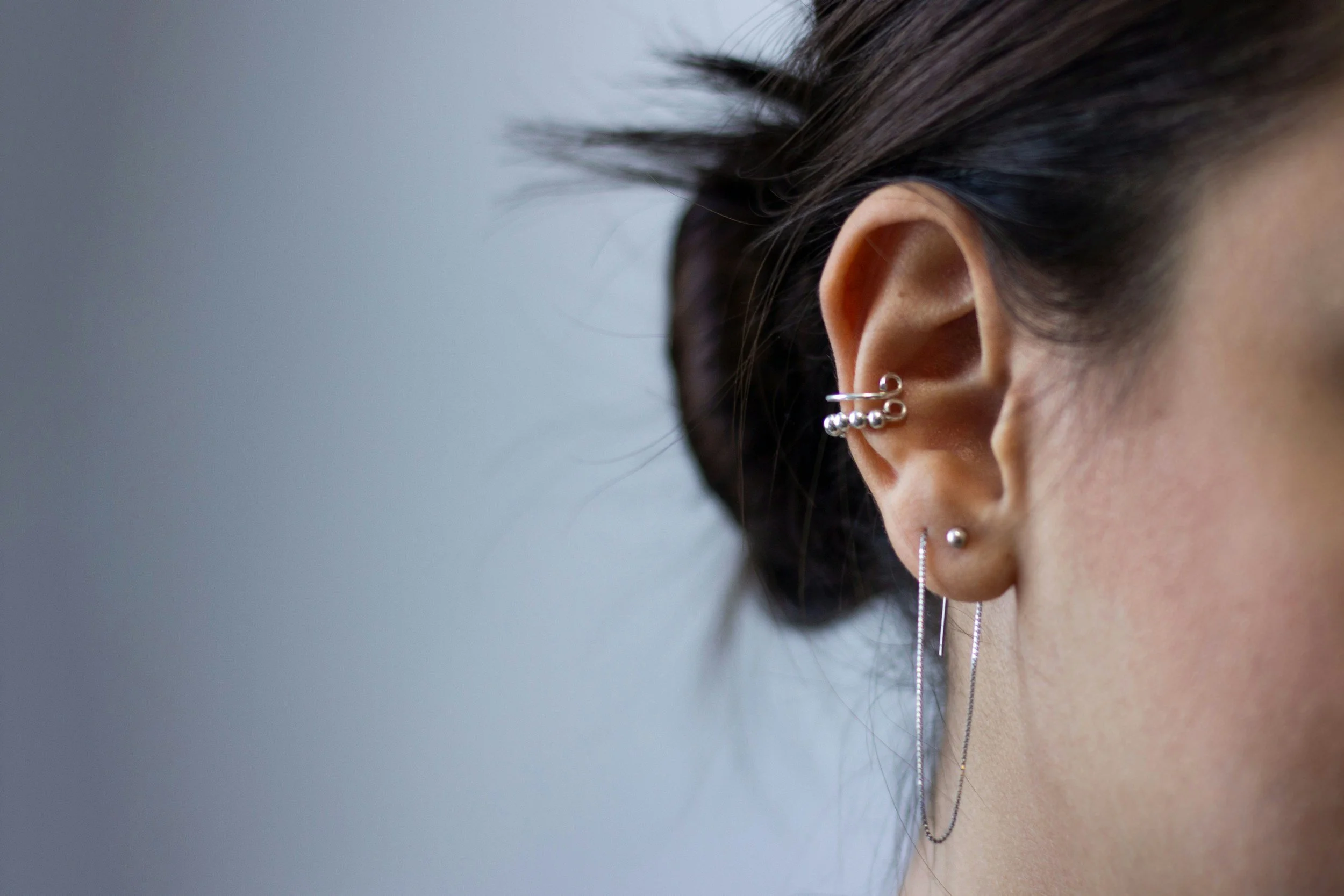
Posts come in a few shapes depending on placement. A straight post with a flat disc back is used for most nostril, labret, and cartilage piercings. A curved post is used for navel, eyebrow, and similar placements that follow the body's natural curve. A fully straight barbell post is typically reserved for industrial or nipple piercings. Matching the correct post shape and gauge to your existing piercing is essential, and the easiest way to get it right is to match whatever is currently installed, or ask your piercer directly.
What to Check Before You Buy
A few quick things are worth confirming before purchasing any titanium piercing jewelry:
Confirm the listing specifies ASTM F-136 implant-grade titanium, not just "titanium" or "titanium alloy" without further detail. Ask whether a mill certificate is available for the batch, particularly for jewelry going into a fresh piercing. Check that the post gauge and style match what's already in your piercing if you're replacing existing jewelry. And if you have a documented metal sensitivity, confirm the piece is genuinely nickel-free rather than relying on a general hypoallergenic label with no further explanation.
For anyone comparing options, browsing a titanium piercing jewelry collection that documents its material grade, mill certification, and compatibility details upfront makes this process considerably easier than piecing the information together from scattered product descriptions.
The Bottom Line
Titanium earns its reputation as the piercing industry's default material for real, verifiable reasons: biocompatibility, corrosion resistance, and a strong safety record with sensitive skin. But "titanium" alone isn't a guarantee of quality. Taking a few minutes to confirm the alloy grade, check for certification, and understand how the threadless system works will save you from guesswork later and help ensure whatever you put in a healing or healed piercing is actually safe to wear.
If you're starting to build out a collection and want to compare styles and placements side by side, it's worth spending some time browsing Khrysos Luxury piercing jewelry to see the full range before making a decision.
HOW DO YOU FEEL ABOUT FASHION?
COMMENT OR TAKE OUR PAGE READER SURVEY
Featured



A waistcoat can do more work than a billboard. Watch a blackjack dealer in a fitted vest, crisp cuffs and a name tag worn at exactly the same angle as every colleague's, and you are reading a brand without a single logo being shouted at you.