
316L vs. 904L Stainless Steel: The Metallurgy Behind Top-Tier Rolex Clones
PAGE
By PAGE Editor
The most frequently asked question that I receive is whether the steel actually makes a difference in the case of a Rolex clone or if it's merely a figure that sellers use for show. This is a reasonable question since "904L" is put on listings in the same way that "organic" is on grocery items. Let me properly break the matter down. The steel is in fact one of the real distinctions between a cheap imitation and a top-quality one, but the reasons behind this are not exactly what most sellers claim. At Watchvale we stick to the honest approach, so I would like you to understand the metal rather than just accept the label on the packaging.
It is important in all cases, not merely with regard to a single brand. Among the brands we carry are the replicas of well-known ones that people search for, such as Rolex, Patek Philippe, and Richard Mille, and the question about the use of steel arises with nearly all of them. Since a Rolex Submariner, a Patek Nautilus, or an RM in its case all depend on the quality of the material to achieve the desired appearance, what is stated here is applicable no matter which item you look at in our catalogue.
What These Two Numbers Actually Mean
316L is the standard used in the industry and is employed by almost all stainless steel watches, whether they are made by Seiko, Omega, or older models of Rolex. The "L" stands for low carbon, a feature that makes the metal easier to weld and manipulate. It resists corrosion effectively, lasts for many decades, and is not actually a cheap material in any real way; it is merely the foundation on which the entire industry is based.
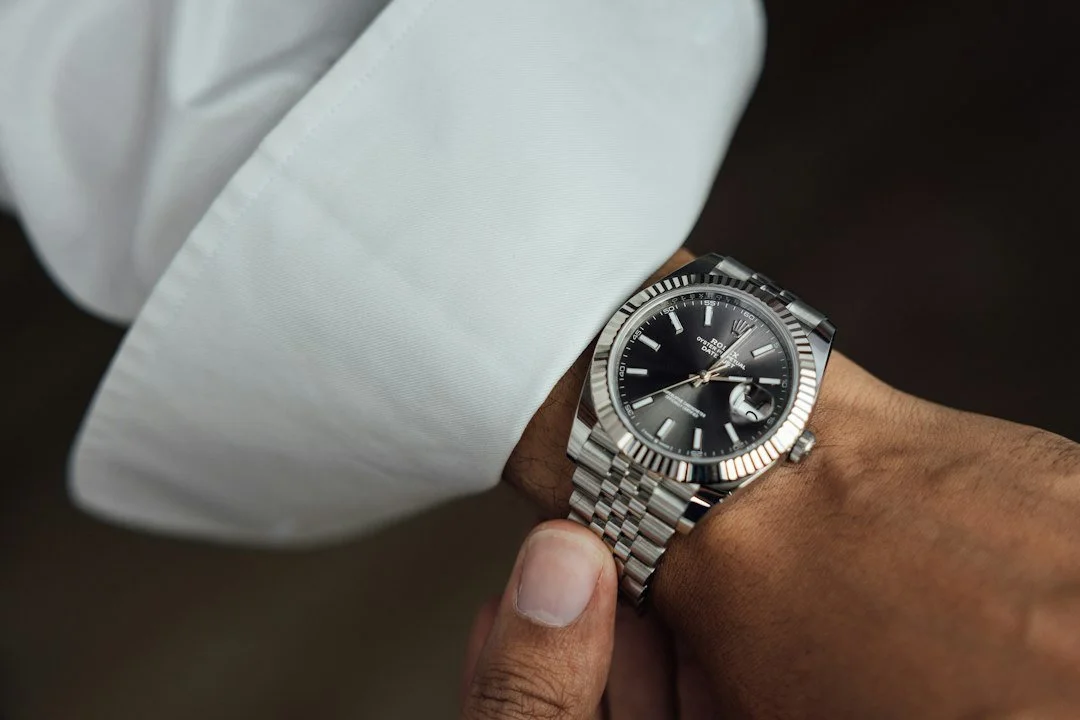
The 904L is the version of steel that Rolex made well known; it contains greater amounts of chromium, nickel, and molybdenum than 316L, which in turn improves its resistance to corrosion. Rolex first used this steel on the Sea-Dweller in 1985, gradually switched all its steel models to it over time, and in 2018 rebranded its 904L alloy as 'Oystersteel.' Although the name 'Oystersteel' sounds as though it is proprietary and the formula is Rolex's own modification, the underlying alloy is still 904L.
Why Rolex Bothered, and Why It Is Overkill for Most of Us
The biggest advantage of 904L is its resistance to corrosion under harsh conditions, such as the acids and chlorides present in oil refineries and chemical plants, since this type of steel was developed for use in such environments. In laboratory tests using salt, the 316L model resisted rusting for a few hundred hours, whereas the 904L lasted over a thousand. On paper, there is no noticeable difference between swimming with a 316L watch and one made from 904L; in neither case will the watch rust. I will simply state what many enthusiasts already think: for ordinary use, Rolex's switch to 904L is primarily a matter of marketing and differentiation rather than being based on functional improvements. That doesn't mean it has no value; it only means that the benefit you actually experience is not the corrosion resistance figure.
The Part That Matters for Clones: Polish and Weight
This is how steel establishes its position in a high-quality clone. 904L can be given a finer polish than 316L, producing the genuine Rolex effect of a subtle and deep sheen, a shininess that appears slightly different from that of a normal steel watch. A knowledgeable person is able to detect it. If a clone manufacturer uses real 904L, then they aim to achieve that exact appearance, but when they reduce costs by using 316L, the finish ends up being a bit flatter.
Weight is also a factor involved. The density of the alloy and the way it is polished have an effect on the weight and the feel that buyers connect with the authentic product. That is the reason why the top-end models stick to 904L while the more budget-oriented ones go for 316L. It's not that 316L is bad steel; in order to match the genuine article's appearance and feel, the same metal must be used.
Does the steel show that a clone is of the top tier?
Not at all, and that is the trick. A listing that states "904L" indicates what the seller asserts, not the actual composition in the case. It's impossible to tell the alloy grade just by looking at it, and some sellers put the number on watches for which it isn't earned. The fact about the steel is just one of several indicators, not a guarantee.
I advise people to regard 904L as a necessary but not a sufficient condition. It is true that a real top-tier clone will use it, but it will also get the movement, the finishing, and the fine details correct. To highlight the steel as the only premium feature, it is rather thin. The steel provides a foundation for the build; it does not take its place.
Frequently Asked Questions
Is 904L steel really better than 316L?
904L resists corrosion better under harsh chemical and saltwater conditions due to its greater content of nickel and molybdenum. For everyday use, however, the difference is negligible since neither type of alloy will withstand normal conditions. So, does it make any difference in normal usages? So, does it make any difference in normal use? So, does it make any difference in normal use?
Mainly so that it has the same appearance and feel as an authentic Rolex. The 904L steel is polished more finely, which gives it that slight deep sheen and contributes to the weight that customers expect. Clone watches that are on a budget use 316L in order to reduce costs, which can cause the finish to look a bit flatter.
What is Oystersteel?
Oystersteel is the name that Rolex has used in its marketing since 2018 for its type of 904L steel; although the name gives the impression that it is proprietary, Rolex does in fact adjust the formula, the basic alloy family still being 904L, the same grade being used in heavy industry outside the field of watchmaking.
Can I distinguish 316L from 904L by just looking at them?
Not Not reliably. A trained eye may catch the finer polish and slightly different sheen of 904L, but you cannot confirm the alloy grade by sight alone. That is why a “904L” claim on a listing is a signal to verify, not proof.nal Thoughts
The issue with steel boils down to the fact that 904L is indeed superior to 316L when it comes to resistance to corrosion, though this difference is not noticeable in normal use. The only place where it becomes apparent and where it makes a difference in the case of a clone is in the finish and the weight—the gleam that your eye picks up and the weight that your hand senses. Which is why the higher-end models use it while the more economical ones do not. However, a figure listed on a product page is merely a claim and not a guarantee, so I would never base my decision to buy on the fact that it is '904L.'. You have to assess the watch as a whole, including the metal, and in that way the steel will occupy its proper position, important, genuine, and yet still just one element among those that make a clone a top-tier watch.
HOW DO YOU FEEL ABOUT FASHION?
COMMENT OR TAKE OUR PAGE READER SURVEY
Featured




Most people think of divorce and estate planning as separate chapters of life. In practice, they overlap more often than expected.