
Aesthetic Clinic Or Beauty Salon: Which One Should You Choose?
PAGE
By PAGE Editor
It depends on what you want done. A beauty salon is a great fit for grooming and relaxation treatments such as facials, waxing, brows, lashes and nails. Anything that goes beneath the skin, like injections, prescription medicines, strong lasers or deep peels, should be done at an aesthetic clinic by a qualified doctor, dentist or prescribing nurse. One simple rule helps: if a treatment changes skin or tissue below the surface, it needs medical hands.
Why does the line sit there? Because that's where the risk sits. A gel manicure gone wrong means a chipped nail. A filler placed into the wrong blood vessel can block it. Salons and clinics may share a high street, and sometimes even a price list, yet they're built for different jobs, with different training, insurance and backup when something doesn't go to plan.
Same Street, Very Different Rooms
Walk down a busy UK high street and treatment names start to blur. "Skin booster", "baby Botox", "lip hydration": the same words appear on salon windows and clinic websites alike. Some offers come with a free glass of prosecco. Others come with a medical questionnaire.
That gap in tone hints at a bigger gap behind the door. One room is set up for comfort and grooming. The other is set up to assess, prescribe, and deal with complications. Neither is "better" across the board. They simply answer different questions.
Why the Line Keeps Blurring
Anyone typing "aesthetic clinic London" into a search bar will see salons and clinics side by side, often with near-identical menus. A few things explain the overlap:
Social media has made "tweakments" part of everyday beauty talk
Some salons add injectables to boost income
Short training courses make the work look simple
Many clients book on price or location, not qualifications
That last habit is the one worth breaking, because who treats you matters far more than the décor.
What a Beauty Salon Does Best
A good salon is brilliant at upkeep, polish, and a bit of calm in a busy week.
Treatments That Suit a Salon
These are low-risk services where a trained beauty therapist is exactly the right person:
Classic and hydrating facials
Waxing and threading
Brow shaping, tinting and lamination
Lash lifts and extensions
Manicures, pedicures and nail art
Relaxing massages
Gentle, surface-level exfoliation
Where Salons Should Stop
Beauty therapists train to work on the top layer of the skin. They can't prescribe, and botulinum toxin is a prescription-only medicine in the UK. That rule exists for a reason: between June and August 2025, the UK Health Security Agency recorded 41 confirmed botulism cases after cosmetic injections, with 32 people in hospital and 8 in intensive care.
Some concerns simply need a doctor. These usually call for an aesthetic skin clinic rather than a nicer-smelling mask:
Stubborn or scarring acne
Melasma and patchy pigmentation
Deep acne scars
Sagging skin or lost volume
What a Clinic Offers That a Salon Can't
The real difference comes down to medical training, access to licensed products, and the ability to fix problems.
Medical Treatments You'll Find
An aesthetic clinic works within medical rules, so its menu looks quite different:
Anti-wrinkle injections for frown lines, crow's feet and forehead lines
Dermal fillers for cheeks, lips, jawline and under-eyes
Skin boosters such as Profhilo®
Medical-grade peels, like the Obagi Blue Peel Radiance
UltraClear® laser resurfacing for texture, pigmentation and fine lines
Regenerative options such as PRP and polynucleotides
Many of these target concerns that sit deeper than any facial can reach. That's the kind of work an aesthetic skin clinic handles every single day.
Who Actually Treats You
Here's where the gap becomes obvious. When comparing any aesthetic clinic London has to offer, check who holds the needle, not just who answers the phone. At NEU Clinic, every consultation, treatment and follow-up is carried out by a GMC-registered doctor. Anyone can look up a doctor's registration on the GMC website in under a minute.
Doctors also spot things a non-medic might miss, such as:
A medication that raises bruising risk
An old filler that has moved
An allergy history that changes the plan
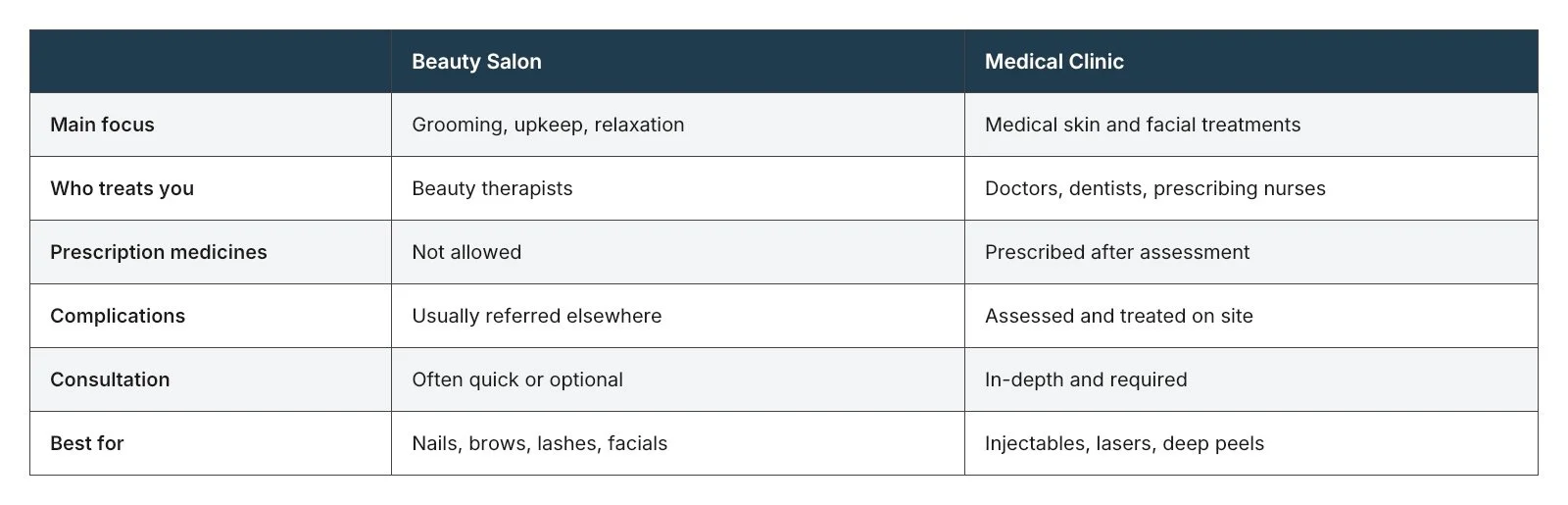
Clinic vs Salon at a Glance
Red Flags to Watch For, Wherever You Book
The rules are tightening for good reason. In October 2026, the Department of Health and Social Care announced plans to limit vampire facials, deep chemical peels, dermal micro-coring and some laser treatments to doctors, dentists and certain prescribing nurses, midwives and pharmacists.
Until those rules land, a low price isn't always a bargain. Walk away if you notice any of these:
No face-to-face consultation before an injectable
Treatments offered in hotel rooms, kitchens, or pop-up venues
Vague answers about the product brand or where it came from
Pushy deals like "book today, half price"
No aftercare plan or emergency contact
A practitioner who can't name the prescriber
How to Choose the Right Place
The best choice starts with being honest about what you actually want changed.
Questions to Ask Before You Book
Who will carry out my treatment, and what are their qualifications?
Which product will you use, and is it licensed in the UK?
What happens if I have a reaction or dislike the result?
Can I see before-and-after photos of your own patients?
Is there time to think between consultation and treatment?
Any reputable aesthetic clinic will answer all five questions without fuss, and a good one will happily explain the thinking behind every product it suggests. If the replies sound rehearsed or slippery, that tells you something too.
Using Both Without Clashing
Salons and clinics don't have to compete. A monthly salon facial can sit happily alongside a plan from an aesthetic skin clinic, as long as both sides know what's going on. Before any salon visit, tell your therapist about:
Recent anti-wrinkle injections or filler
Laser or resurfacing sessions
Prescription skincare, such as retinoids
When a Past Treatment Hasn't Gone Well
Not every story starts with the right choice, and that's okay. If an earlier treatment left lumps, uneven results, or ongoing pain, imaging can show what's really going on. NEU's facial ultrasound assessment maps exactly where product sits, and filler dissolving under ultrasound lets doctors correct it with far more precision than working by touch.
Booking a Consultation With NEU Clinic
NEU Clinic is a doctor-led aesthetic clinic London patients visit just behind Selfridges in Marylebone, with a flagship site opening on Walton Street, Chelsea, in December 2026. Every treatment starts with an honest consultation, and if a salon service (or no treatment at all) would suit you better, you'll hear that too.
Frequently Asked Questions
What's the real difference between a cosmetic clinic and a beauty salon?
Medical training and legal permission. Clinics are led by healthcare professionals who can assess, prescribe, and manage complications. Salons focus on grooming and relaxation treatments that stay on the skin's surface.
Is it safe to get Botox at a beauty salon?
Botox is a prescription-only medicine, so a qualified prescriber should assess you in person first. The safest route is being treated by that same medical professional, using a UK-licensed product, in a proper clinical setting.
How can I check if a cosmetic doctor is qualified?
Search their name on the GMC register, ask about their aesthetic training and insurance, and look for real before-and-after photos of their own patients rather than stock images.
Do clinic treatments hurt?
Most feel like mild discomfort rather than pain. Numbing cream, very fine needles and fillers that contain local anaesthetic help a lot. Lasers can feel warm or prickly for a short time.
How often will I need to go back?
It depends on the treatment. Anti-wrinkle results usually last around three to four months, while fillers can last from several months to a couple of years, depending on the area and product used.
HOW DO YOU FEEL ABOUT FASHION?
COMMENT OR TAKE OUR PAGE READER SURVEY
Featured




For years, smart glasses seemed to ask people to dress around the gadget.