
Are Cats Good for People With Autism? The Best Cat Breeds to Consider
PAGE
By PAGE Editor
Many families with an autistic child, and many autistic adults, reach a point where a pet comes up in conversation. The questions that follow are practical ones: will an animal add calm or chaos, and which kind of animal suits a home that runs on routine?
Those questions affect a large number of households. According to the Centers for Disease Control and Prevention's Autism and Developmental Disabilities Monitoring Network report, published in April 2025, about 1 in 31 eight-year-old children in the U.S. were identified with autism in 2022, up from 1 in 36 in the previous report.
So, are cats good for people with autism? For many, yes, provided the cat's temperament and the household's needs line up. Research is still small, and every autistic person is different, so the right match counts for more than any general rule.
What Research Says About Cats and Autistic Children
What did researchers find when families adopted a cat?
Early studies point to real benefits. A University of Missouri study in the Journal of Pediatric Nursing, reported in January 2021, followed 11 families for 18 weeks after they adopted a cat. Children aged 6 to 14 showed more empathy, less separation anxiety, and fewer problem behaviors.
The sample was small, so the results are a starting point. Lead researcher Gretchen Carlisle noted that cats may suit some children who are sensitive to loud noises, since cats are generally quieter companions than dogs.
Why does a calm temperament make such a difference?
A calm cat tolerates the sudden sounds and movements that can happen in any busy home. The same research team screened every cat for a relaxed temperament before adoption, and a follow-up paper in Frontiers in Veterinary Science found the cats' stress hormone levels dropped over time as they settled in.
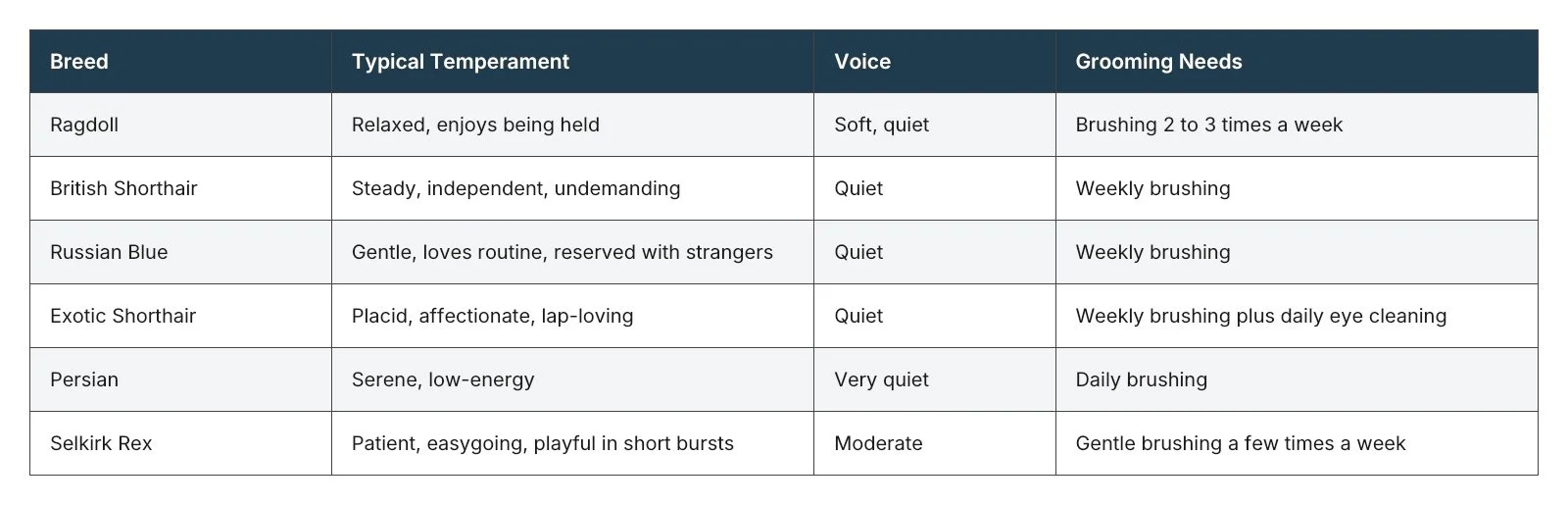
Breeds with a long record of placid behavior give families a head start here. A Ragdoll kitten usually grows into a cat that goes limp and relaxed when held, while a British Shorthair kitten tends to become a steady, undemanding adult who prefers sitting nearby to constant handling.
Traits That Make a Cat a Good Companion for Autistic People
Which qualities should families look for first?
The best cats for autism share a calm temperament, a quiet voice, and patience with handling.
Traits worth prioritizing:
Low vocal volume: a cat that rarely yowls suits sound-sensitive homes
Tolerance for touch: relaxed when picked up, brushed, or petted for long stretches
Predictable moods: steady behavior from day to day, with few sudden swats or bursts of energy
Moderate play drive: enjoys short games without needing constant entertainment
Sociable but not clingy: happy to share a room without demanding attention
How does a cat's coat affect sensory experience?
Texture can be a big part of the bond. Some autistic children find comfort in stroking a dense, plush coat, while others prefer a short, smooth one that feels the same every time.
The curly, soft coat of a Selkirk Rex offers a different texture again. Tip: let the person meet cats with different coat types before deciding, and watch which one they return to.
When might a cat be a harder fit?
A very vocal or high-energy cat can add stress. Breeds such as the Siamese and Oriental are famously talkative, and active breeds like the Bengal need daily vigorous play that some households cannot always give.
Calm, Gentle Breeds Worth Meeting
Which are the best cat breeds for autism?
The best cat breeds for autism tend to be the calm, people-oriented, quiet ones. The table compares breeds often described that way.
Why do flat-faced breeds need extra thought?
Persians and Exotic Shorthairs have shortened faces, which can bring breathing and eye problems. Families should ask about the parents' health history and plan for regular vet checks.
Do breed traits guarantee a calm cat?
No. Lists of the best cat breeds for autism describe tendencies, and individual kittens vary. Meeting the kitten and its mother shows how it reacts to noise, handling, and strangers far better than any breed description.
Preparing for a Smooth First Meeting at Home
How can families introduce a new cat without overwhelming anyone?
Go slowly and make the cat's arrival as predictable as possible.
Talk it through in advance. Use photos, short stories, or a visual schedule to explain when the cat will arrive and what will happen.
Set up a quiet base room. Give the cat its own room with food, water, a litter box, and a hiding spot.
Practice gentle touch. Show how to stroke along the back and let the cat sniff a hand first.
Keep first visits short. A few calm minutes at a time works better than a long, exciting session.
Add the cat to the daily routine. Feeding or brushing at the same time each day gives the new relationship a predictable shape.
What role can the autistic person play in care?
Simple, repeatable tasks often work well. Filling the water bowl, measuring food, or a short brushing session can build confidence and a sense of shared responsibility, with an adult checking that the cat's needs are fully met.
When should you ask a professional?
Talk to the person's therapist or doctor about any concerns over allergies, safety, or strong sensory reactions, and ask a veterinarian about the cat's stress signals.
A Quiet Friend Chosen With Care
Are cats good for people with autism? The research so far is encouraging, and many families describe a cat as a steady, accepting presence in a home that values calm.
The best cats for autism are the ones whose temperament fits the person: quiet, patient, and comfortable with routine. Meet the kitten, involve the person who will live with it, and give the bond time to grow at its own pace.
Frequently Asked Questions
Is a kitten or an adult cat better?
An adult cat's personality is already known. A kitten is livelier for its first year but can grow up with the household's routines.
Can a cat help autistic adults too?
Most studies focus on children, but many autistic adults value a cat's quiet, predictable company.
What if the person has sensory issues with litter smells?
Unscented clumping litter, daily scooping, and placing the box away from bedrooms keep odors low.
Are cats safe around sudden meltdowns?
Give the cat high shelves or a closed room it can retreat to, so it can leave noisy moments on its own.
Should the cat be allowed to sleep in the person's bed?
It can be comforting, but decide early, since cats quickly form habits that are hard to change.
Do male or female cats tend to be calmer?
After spaying or neutering, temperament depends far more on the individual cat than on its sex.
Is a cat a replacement for therapy or support services?
No. A cat can be a comforting companion alongside professional support, never a substitute for it.
HOW DO YOU FEEL ABOUT FASHION?
COMMENT OR TAKE OUR PAGE READER SURVEY
Featured




For years, smart glasses seemed to ask people to dress around the gadget.