
Barbershop Interior Design Trends That Define the Modern Shop
PAGE
By PAGE Editor
Walk into almost any new barbershop opening up in a trendy neighborhood these days, and you'll notice something immediately — it doesn't look like the barbershop your dad went to. Gone are the fluorescent tubes and mismatched vinyl chairs of decades past. In their place: exposed brick, moody lighting, reclaimed wood, and a level of design intentionality that used to be reserved for high-end restaurants or boutique hotels. Barbershops have quietly become one of the most design-forward small business categories out there, and the shift didn't happen by accident.
Why Interior Design Suddenly Matters So Much
For a long time, barbershop design was purely functional — a chair, a mirror, some scissors, done. Nobody expected much beyond cleanliness and decent lighting for the actual haircut. That expectation has completely flipped. Customers now walk in expecting an environment, not just a service, and shop owners have responded by treating their space as seriously as any retail brand would. This isn't vanity spending, either; it's strategic. A well-designed shop signals quality before a single scissor even touches hair, and in a crowded market, that first impression does a lot of heavy lifting.
Industrial Textures Meet Warm Details
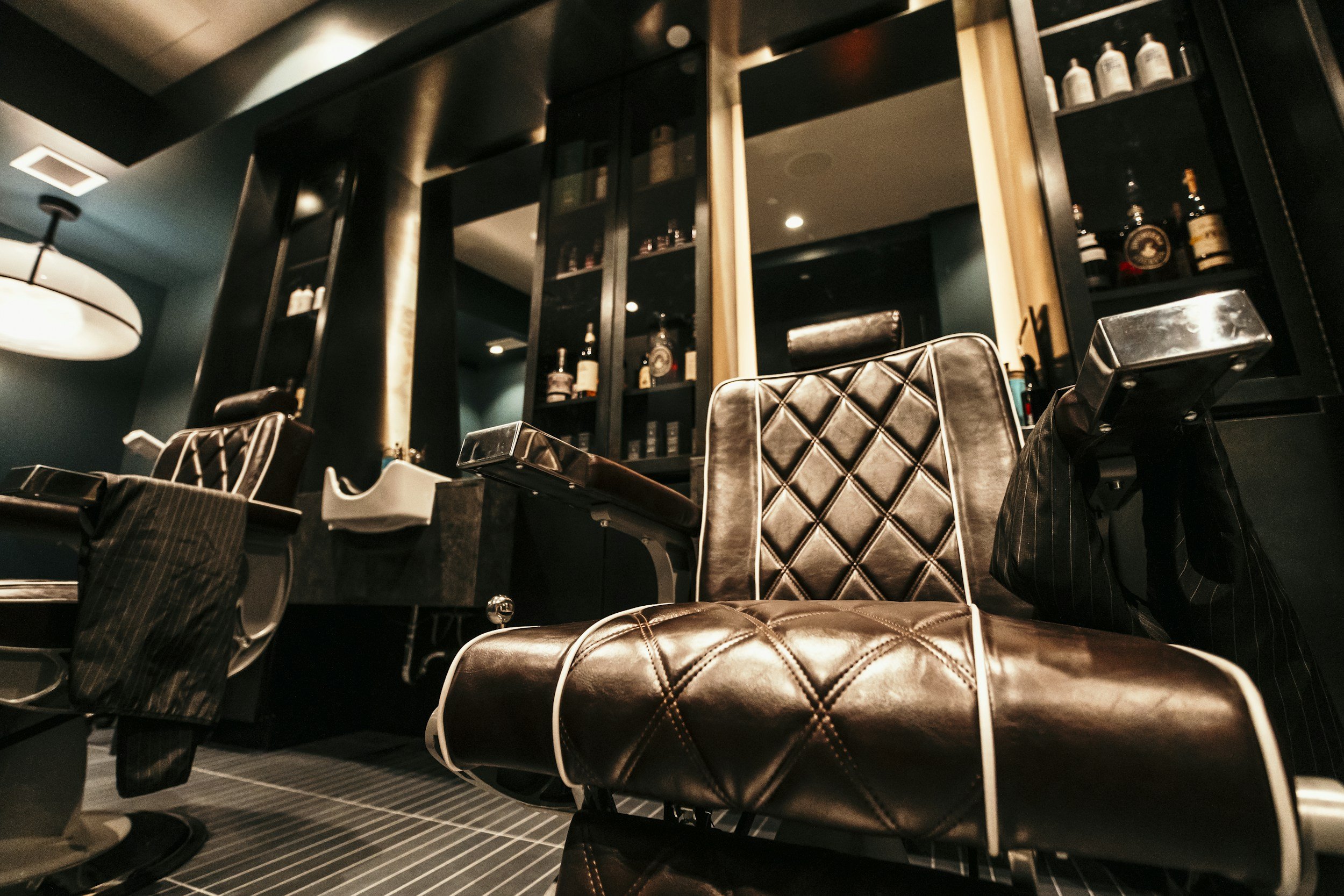
One trend that refuses to fade is the pairing of raw, industrial materials with unexpectedly warm, tactile details. Think concrete floors softened by leather barber chairs, or steel shelving units holding neatly arranged wooden combs and glass bottles. The contrast is deliberate — it keeps a space from feeling either too cold and sterile or too soft and salon-like. Barbershops occupy this interesting middle ground where masculinity and comfort need to coexist, and the best-designed shops nail that balance by mixing hard surfaces with warmer, more inviting textures throughout.
Geometric Lighting Takes Center Stage
Lighting has become one of the most overlooked-yet-powerful tools in modern barbershop design, and nowhere is that clearer than with hexagon light. These honeycomb-shaped fixtures have popped up in shop after shop over the last few years, and it's easy to see why designers keep reaching for them. Hexagon lights bring a geometric, almost architectural quality to a ceiling that would otherwise just be flat and forgettable. They photograph beautifully, too, which matters enormously now that half a shop's marketing happens through Instagram reels of fresh fades under perfectly angled light. Beyond aesthetics, hexagon lights also solve a practical problem — barbers need strong, even illumination to do precise work, and these fixtures deliver that clarity while still looking like a deliberate design choice rather than a boring necessity. It's rare to find a lighting element that pulls double duty this well, functioning as both a workhorse and a centerpiece.
Vintage Touches Without Feeling Dated
Interestingly, plenty of modern shops are pulling design cues straight from the past — barber poles, old leather chairs, vintage signage — but recontextualizing them so they feel fresh rather than nostalgic for nostalgia's sake. It's a careful balancing act. Lean too hard into vintage and a shop risks feeling like a costume rather than a business; lean too far into minimalism and it can feel sterile, stripped of personality. The shops getting this right tend to treat vintage elements as accents rather than the whole story, letting one or two standout pieces do the storytelling.
Color Palettes Are Getting Bolder
Another shift worth mentioning is how barbershops have moved away from the safe, neutral color schemes that used to dominate the industry. Deep greens, matte blacks, burnt oranges — these bolder palettes are showing up more frequently, often paired with brass or gold hardware for contrast. This isn't just a style preference; bolder colors help a shop stand out on a crowded street or a scrolling Instagram feed, where neutral beige interiors tend to blur together into forgettable sameness after the tenth photo.
Function Still Has to Win in the End
For all this design ambition, though, the smartest shop owners never forget that a barbershop still has to function like one. Chairs need proper spacing for barbers to move freely. Lighting, hexagon lights included, needs to genuinely support precision work, not just look good in photos. Storage needs to be practical, not purely decorative. The shops that get remembered and recommended are the ones where design enhances the actual haircutting experience rather than competing with it for attention.
Where Style and Substance Finally Meet
What's happening in barbershop design right now really comes down to one idea: style and functionality no longer have to be traded off against each other. A well-placed hexagon light fixture, a thoughtfully chosen color palette, a mix of industrial and warm textures — none of it matters if the haircut itself falls flat, but when the design actually supports the craft happening underneath it, that's when a shop stops being just a place you visit and starts being a place you tell your friends about.
HOW DO YOU FEEL ABOUT FASHION?
COMMENT OR TAKE OUR PAGE READER SURVEY
Featured


When parents evaluate physical learning kits or STEM toys on an ecommerce storefront, they make purchase decisions under acute time pressure and cognitive overload.