
Cold Water Kiteboarding: Gear and Techniques for Year-Round Riding
PAGE
By PAGE Editor
Kiteboarding in cold water requires different gear and different preparation than warm-weather riding. Here's a complete guide to extending your season into cooler months.
Kiteboarding is a warm-water sport in most people's imagination — tropical flatwater lagoons, trade winds, bikinis and board shorts. But the physics of wind don't shut off when temperatures drop, and some of the most powerful, consistent wind conditions occur in regions and seasons that don't qualify as tropical. Riders who learn to kit in cold water extend their available riding days significantly, often finding less crowded conditions and more consistent winds as fair-weather riders put their gear away for the winter.
Cold water kiteboarding is genuinely different from warm-weather riding — different gear requirements, different physiological demands, and different safety considerations. Understanding these differences is the foundation for riding comfortably and safely in conditions that would be miserable or dangerous without proper preparation.
Understanding Cold Water Exposure Risk
Cold water is a more significant threat to body temperature than cold air at the same temperature, because water conducts heat away from the body approximately 25 times more efficiently than air. Immersion in 55°F water produces incapacitation within minutes without adequate thermal protection; in 40°F water, the window is shorter still. This physiological reality is why cold water kiteboarding requires taking thermal protection seriously — the fall that produces mild inconvenience in warm water produces a genuine survival scenario in cold water without appropriate wetsuit protection.
Hypothermia develops through stages: cooling, then loss of fine motor control (which affects the ability to self-rescue and to operate safety systems on the kite), then loss of gross motor control, then loss of consciousness. The first indication that cooling is progressing is usually difficulty with fine motor tasks — fumbling with kite bar safety releases or struggling to relaunch a kite are early signs that the body is prioritizing core temperature over extremity function.
Wetsuit Selection for Cold Water
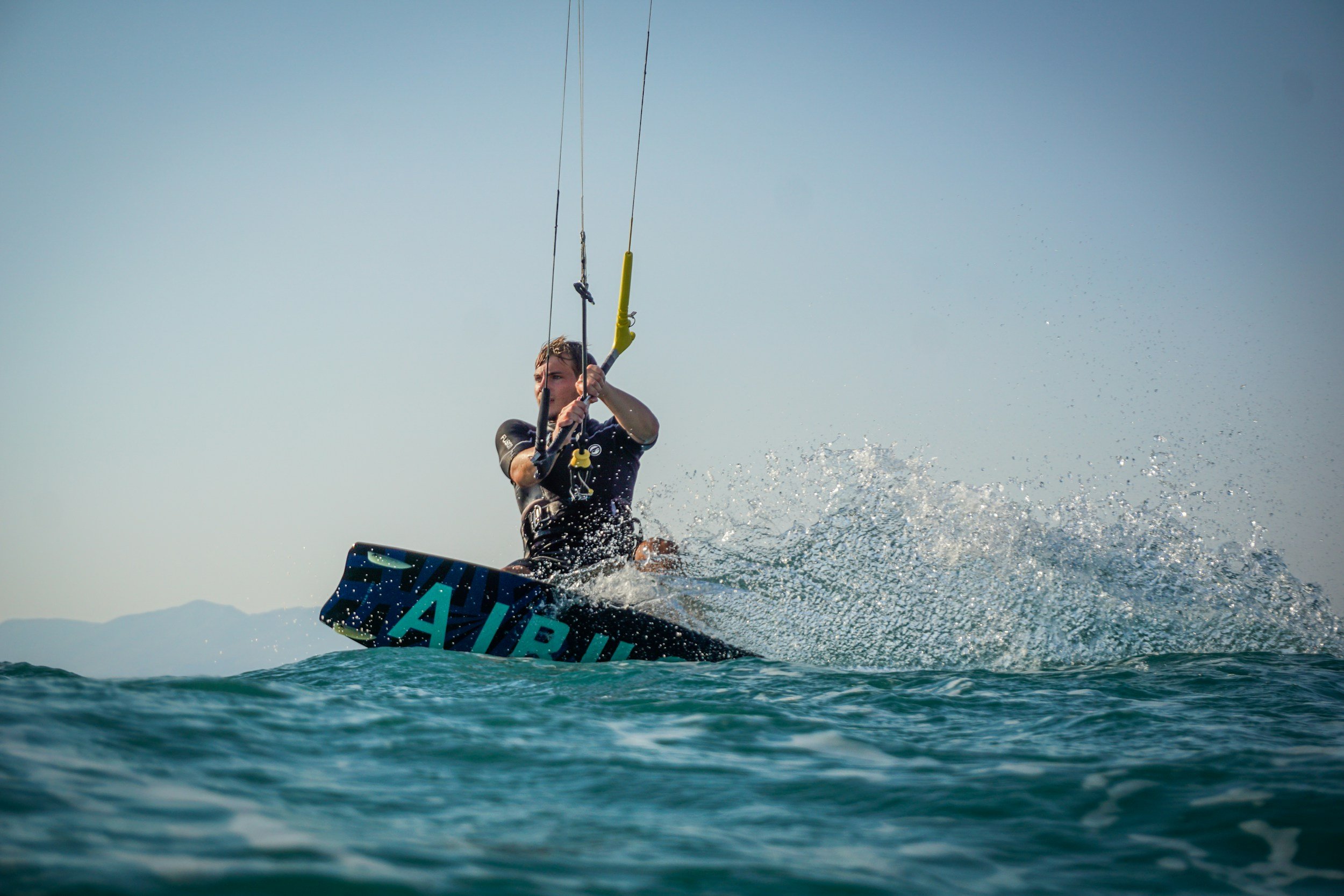
Wetsuits work by trapping a thin layer of water against the body that the body heats, using the wetsuit's neoprene thickness and construction to slow the rate at which that warm water is replaced by cold water from outside. Neoprene thickness (measured in millimeters) determines thermal protection — with thicker suits providing more insulation at the cost of flexibility. A 3/2mm suit (3mm body panels, 2mm limb panels) is generally adequate for water temperatures in the low 60s°F to mid-70s°F. A 5/4mm or 5/4/3mm suit handles water temperatures in the low to mid-50s°F. For water below 50°F, 6/5/4mm suits or drysuit alternatives are appropriate. Kiteboard-specific wetsuit boots complete the system by protecting feet from cold water exposure — quality wetsuit boots significantly extend comfortable riding time in cold conditions.
Wetsuit construction quality matters as much as thickness. Internal seams sealed with tape and glue rather than blind-stitched seams eliminate water channels that flush warm water from the suit. Super-stretch neoprene panels in high-movement areas (armpits, shoulders, behind the knees) maintain flexibility for the dynamic upper body movements kiteboarding requires. Entry systems (back zip, chest zip, zipperless) affect both seal quality and ease of donning and doffing.
Extremity Protection: Boots, Gloves, and Hoods
The extremities — feet, hands, and head — are the primary heat loss points in cold water and the areas where thermal protection most significantly affects riding comfort and capability. Wetsuit boots ranging from 3mm to 7mm neoprene protect feet from cold water and from rocks and reef in shallow water entry and exit zones. Split-toe and round-toe configurations exist; split-toe designs allow better control of foot-specific bindings but round-toe boots provide more warmth.
Kiteboarding gloves or mitts protect hands from cold water and wind chill while maintaining the grip and finger sensitivity needed to operate the kite bar. The trade-off between warmth and dexterity is real: thicker mitts provide more warmth but reduce fine motor control. Many riders accept some dexterity compromise for adequate hand protection in cold conditions, having learned that cold hands impair kite control more than mitts do. Neoprene hoods protect the head and neck — areas of significant heat loss — and are essential below 50°F water temperature.
Kite and Equipment Adjustments for Cold Weather
Cold weather affects kiteboarding equipment in specific ways that riders should be aware of. Bladder inflation systems (kite leading edge and struts) are affected by temperature: a kite inflated warm and then exposed to cold air will have lower pressure as the air inside cools and contracts, requiring re-inflation to maintain proper bladder pressure. Kite fabric and bladder materials become less flexible in cold and may require more care to avoid damage during handling.
Safety systems deserve extra attention in cold water riding. The kite's quick-release safety system should be verified to function correctly before each cold-water session, because the systems must be operable even with cold, less-dexterous hands. Practicing the safety release motion before the session, while fully dressed and gloved, confirms that you can operate it in the conditions you'll actually encounter if you need it.
Self-Rescue Planning in Cold Conditions
Cold water kiteboarding requires more deliberate self-rescue planning than warm-water riding because the consequences of a situation requiring rescue are more severe and the window for self-rescue is shorter. Before every cold-water session, evaluate the conditions against your ability to self-rescue: Can you reach shore or a safety zone without significant swimming if your kite becomes unlaunchable? Is there shore support or another rider who knows your plan?
The self-rescue kite-body drag technique — depowering the kite and using it to body-drag back to shore — is less effective in cold water because the time available for self-rescue is shorter than in warm water. Having a clear abort plan before you need it — knowing which direction to head and how far it is to safety in the current conditions — is a minimum cold-water riding standard.
Post-Session Warming
Post-session warming is an important cold water riding practice that's often rushed or skipped. Getting out of wet neoprene in cold air while the body has been cooled by water is an additional cooling event that can produce shivering and discomfort that discourages future cold-water sessions. Having warm, dry clothes ready at the water's edge, a way to remove the wetsuit that minimizes cold air exposure, and a warm beverage ready makes the post-session experience manageable.
For rides that involve significant time in cold water or conditions below 50°F, monitoring personal warming after the session matters medically. Shivering that persists more than 20-30 minutes after exiting the water and warming up, confusion, or pronounced fatigue warrant attention and potentially medical evaluation. These are signs of significant core cooling that the body's warming mechanisms aren't adequately addressing.
Wrapping Up
Cold water kiteboarding extends the season significantly for riders willing to invest in appropriate gear and plan for the specific demands of cold-water sessions. The barrier is almost entirely equipment and preparation — with proper thermal protection, cold-water sessions can be as enjoyable and safe as warm-weather riding, often with the added bonus of less crowded conditions and more consistent winter winds. The riders who don't let cold water stop them get significantly more riding time and often find the quiet of off-season sessions to be among the most satisfying riding experiences available.
Frequently Asked Questions
How do I know if my wetsuit is warm enough for the conditions?
The fundamental test is whether you feel comfortably warm within the first few minutes of water immersion. A wetsuit that requires 10-15 minutes to warm up, or that never quite gets you to comfortable, is inadequate for the conditions. Shivering after 20-30 minutes in the water, difficulty with fine motor tasks, or blue lips are clear signs of inadequate thermal protection. When in doubt, err toward more neoprene — the penalty for being too warm is minor discomfort; the penalty for being too cold is safety risk.
Can I kite in the snow and winter conditions?
Yes, with appropriate gear. Many kiters ride in winter conditions on snowfields, frozen lakes (with appropriate ice assessment), and coastal locations with heavy wetsuit systems. Snowkiting on appropriate terrain with a kite designed for the snow environment is a distinct discipline with its own equipment and technique considerations. The primary additional consideration in snow and extreme cold is that equipment functions differently — kite materials, bar systems, and pump equipment all require attention to ensure function in very cold conditions.
HOW DO YOU FEEL ABOUT FASHION?
COMMENT OR TAKE OUR PAGE READER SURVEY
Featured



Depop and Burton are celebrating 50 years of snowboard culture with a 50-piece archival resale drop priced at $50.50 and below, bringing vintage outerwear and apparel to a new generation while launching Depop’s Brand Shop Drop series.