
Creating a Coffee Shop Brand Identity From Zero Using Nano Banana for the Visuals
PAGE
By PAGE Editor
I signed the lease on a small coffee shop space in early 2024, in a converted dry cleaner on a corner that had been empty for almost two years. The space was rough — exposed brick, one decent window, an HVAC system that someone described charitably as "vintage." I had savings, a barista certificate from a roastery in Melbourne, and absolutely no brand identity for the business I was about to open in three months.
I had a name, written on a piece of paper in my apartment. I had no logo. I had no color palette. I had no idea what the shop should feel like on Instagram, what the coffee bags should look like, what the cups should say, or how the menu board behind the counter should be designed. I had heard, vaguely, that all of these things would matter. I had also heard that hiring a branding agency to handle them would cost more than my first three months of rent.
This is the story of how I built the entire visual identity for the shop in about six weeks, by myself, using AI image tools as the engine.
Why Brand Identity Matters More Than Indie Café Owners Want to Admit
There is a comforting story that independent coffee shops succeed on the quality of the coffee and the warmth of the service, and that the visual stuff is mostly decoration. I believed this for about the first month of running the shop. Then I started watching customers.
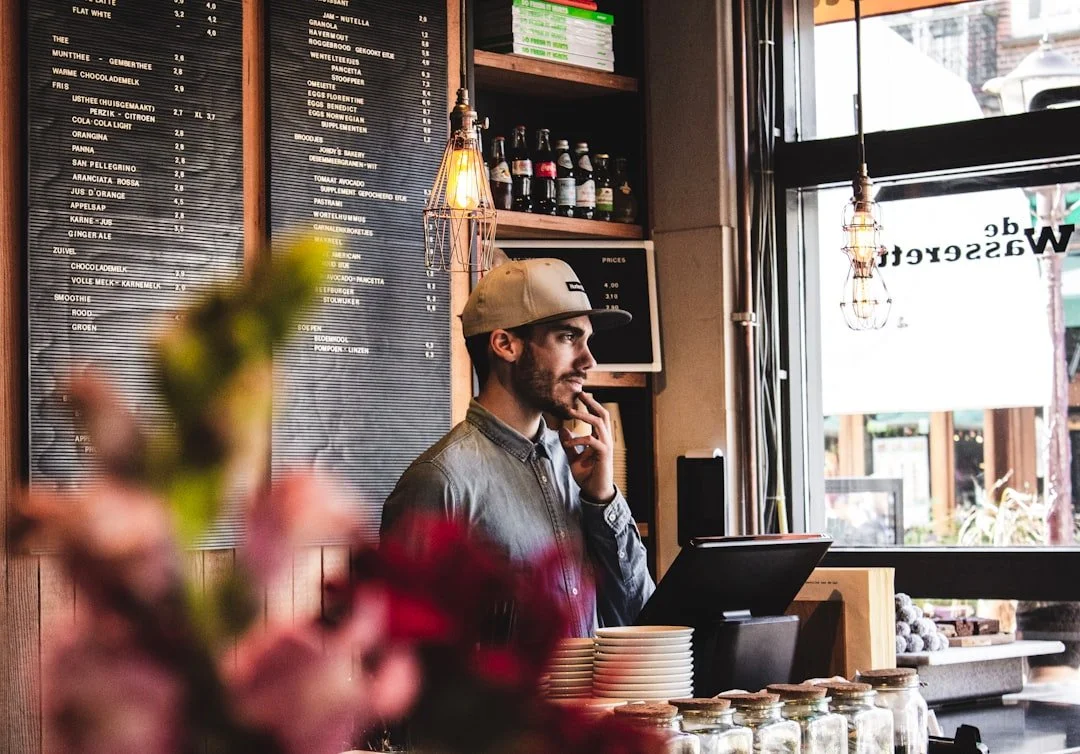
Customers walked past my front door regularly during the first weeks. The coffee was good — better than the chain across the street, by any reasonable measurement — but the people who walked past did not know that, because they had never come in. Something about the storefront was not pulling them in. Something about the logo, the signage, the window display, the general visual impression of the place was failing to communicate "this is a good coffee shop." Without that signal, the coffee quality was irrelevant.
I went back and looked at the cafés in my neighborhood that were thriving. They had distinct visual identities. The logo on the door looked like it belonged to a real business, not a side project. The colors were cohesive. The signage felt designed, not improvised. Every visual touchpoint, from the window to the cups to the receipts, reinforced the same impression.
This is what brand identity actually is. It is not a logo. It is the cumulative effect of every visual decision the shop has made, and customers respond to it before they ever taste the coffee.
What the Old Options for Brand Identity Looked Like
Before AI tools became viable, the options for building a coffee shop brand identity were the same options every small business faces.
Branding agencies are the gold standard and the most expensive option. A full brand identity package from a respected agency runs anywhere from fifteen thousand to seventy-five thousand dollars and takes three to six months. The work is excellent. The price is incompatible with most independent café budgets.
Freelance designers are the middle option. A good freelance brand designer charges three to ten thousand dollars for a full identity package and takes six to ten weeks. This is what most indie cafés do, when they can afford it, and the results are usually solid. The challenge is that you are still committing thousands of dollars upfront, before the shop has earned a single coin, on the strength of vague references and hope.
DIY with Canva and stock fonts is the budget option. The results are universally mediocre. You can spot a Canva-designed café logo at fifty paces, and so can your customers. The signal it sends is "I tried to save money on this," which is not the signal a new café wants to be sending.
I had budgeted a few thousand dollars for branding and had been planning to go the freelance route. Then I started experimenting with Nano Banana as a brief-building exercise, and the experiment quietly turned into the actual identity.
Where Nano Banana Entered the Process
The first thing I tried to generate was the logo. I had a name — let us call it "Marrow," for the sake of the story — and a vague sense that I wanted something warm, slightly old-world, hand-drawn rather than corporate. I described all of that to Nano Banana and asked for thirty logo concepts in roughly that direction.
The first batch was rough. AI image tools are not great at generating actual finished logos, because logos require precise vector control and clean typography that generative tools do not really handle. But the batch was useful in a different way. It surfaced visual directions I had not considered. A logo built around an illustrated coffee plant. A logo using a small woodcut-style mark of a cup. A wordmark in a serif font with a tiny graphic element above one letter. I rejected most of the concepts but the ones that stuck became the anchors of the brand.
I took the three concepts I liked and sketched cleaner versions of them on paper. Then I used Nano Banana to generate mockups of those concepts as they might appear on real surfaces — a hanging shop sign, a paper coffee cup, a small enamel pin. Seeing the concepts in context made the choice easy. One of them clearly belonged on a coffee shop. The other two looked good but felt wrong somehow when I saw them on actual objects.
That logo is now the logo. I finalized the actual vector file in Affinity Designer based on the chosen concept, with help from a freelance designer who charged me three hundred dollars for the final clean-up, instead of the four thousand the full package would have cost.
Building the Wider Brand From a Coherent Visual Language
Once the logo was settled, the rest of the brand identity flowed from it in a way I had not expected.
I wrote a short visual style guide for myself — warm cream and dark forest green as primary colors, a small accent of burnt orange, a slightly imperfect woodcut illustration style, a chunky serif for the wordmark and a clean sans-serif for body text. That style guide became the input to every subsequent Nano Banana generation.
The coffee bag designs came next. I uploaded a photo of a blank kraft paper coffee bag and asked Nano Banana for the same bag with my logo on the front, a small illustration of a coffee plant, and the typography for the bean origin underneath. Different generations for different bean origins, each one tagged with a different illustrated motif but all in the same visual language. I had six bag designs in an afternoon.
The cup design was the same workflow. The to-go cups got a simple wraparound design with the logo and a small repeating leaf pattern. The for-here ceramic mugs needed actual ceramic manufacturing, but I generated mockups of the mug design and sent those to a small pottery studio that did the final glazing. The studio said it was the clearest brief they had ever received.
Menu board layouts, loyalty card designs, sandwich board chalk illustrations, the small artwork that goes on the door, the typography on the receipts — all of it came out of variations on the same visual language, generated and refined over the course of about four weeks.
How the Storefront and Interior Got Designed
The other use case I leaned on heavily was visualizing the shop itself before any contractors got involved.
The space I rented was a blank shell when I signed the lease. I needed to know what it would look like with the bar in different positions, with different paint colors, with different lighting setups, with different signage configurations on the exterior. Hiring an interior designer to mock all of this up would have cost thousands. Doing it myself in 3D modeling software would have taken weeks and produced rough results.
Instead I took photos of the empty space from multiple angles and ran them through Nano Banana with descriptions of the layouts I was considering. Bar against the back wall, customer seating along the windows. Bar in the center, banquette seating along one side. Paint the brick versus leave it raw. Hanging pendant lights versus track lighting. Small chalkboard signage versus a clean carved wooden sign.
Each Nano Banana generation was approximate, not architectural, but each one was good enough to tell me whether the layout felt right. By the time I sat down with the contractor, I had a clear visual reference for what I wanted, and we agreed on the build in a single meeting instead of the usual three or four.
The shop opened on schedule. The build came in under budget. Both of those things are unusual for an indie café opening, and I credit a significant amount of it to having been able to actually see the space before it was built.
The Social Media Identity
The other place this saved real time was the social media presence.
A coffee shop needs to launch on Instagram before it opens, ideally six to eight weeks ahead, with enough content to build anticipation. That used to require either a photographer on retainer or a frantic month of trying to take good photos of coffee that did not yet exist in a shop that did not yet exist.
What I did instead was use Nano Banana to generate a launch grid of stylized images in the shop's visual language. Coffee being poured into a Marrow cup. A bag of beans on a wooden counter with the light coming through a window. A close-up of the espresso machine that was going to be installed but had not been yet. None of these images were literal documentation of the shop, but all of them were in the shop's exact visual language, and all of them set the right expectation.
By the time the shop opened and we started posting real photos of real coffee, customers told me they recognized the place from the launch content. The transition from "imagined coffee shop" to "real coffee shop" was almost invisible because the visual identity was consistent across both.
What I Still Brought a Real Designer In For
I want to be clear about where this workflow stops.
The final logo vector file got cleaned up by a real designer, because a logo needs to scale from a tiny website favicon to a six-foot-tall window decal without falling apart, and Nano Banana cannot produce that kind of clean scalable vector output. The three hundred dollars I paid for that cleanup was the best money I spent in the whole branding process.
The exterior sign — the actual physical sign that hangs on the corner of the building — was fabricated by a local sign-maker who needed clean files to work from. Again, Nano Banana got me to the concept. A human designer got me to the file the fabricator could actually cut.
And the brand guidelines document, the kind of thing you share with a contract designer or a printer to make sure they reproduce things correctly, was written by hand based on the visual decisions I had already made. The AI did not write that, and I would not have wanted it to.
Why This Approach Quietly Works for Small Businesses
The honest truth about indie café branding is that most cafés open with weak visual identities because they cannot afford strong ones. The expensive option is out of reach. The DIY option produces results that customers can recognize as DIY. The middle ground was missing.
What changed for me, and what I think is changing for a lot of small business owners in this category, is that the middle ground exists now. A new café owner with taste, a willingness to iterate, and a tool like Nano Banana can build a brand identity that holds its own next to the chains, on a budget that does not require a second mortgage. The coffee still has to be good. The service still has to be warm. But the visual identity that frames everything else no longer requires fifteen thousand dollars and three months.
The shop has been open about eight months now. Sales are growing. Customers tell us they walked in the first time because something about the storefront pulled them in. That something is the brand identity I built mostly on my own, and the experience of building it is the reason I now think most independent businesses have been quietly held back by visual constraints they did not need to accept.
HOW DO YOU FEEL ABOUT FASHION?
COMMENT OR TAKE OUR PAGE READER SURVEY
Featured



When parents evaluate physical learning kits or STEM toys on an ecommerce storefront, they make purchase decisions under acute time pressure and cognitive overload.