
Dog Grooming Tips Every Columbus Owner Should Know
PAGE
By PAGE Editor
Keeping your dog clean and comfortable takes more than an occasional bath. The best dog grooming tips for owners focus on creating a consistent routine that supports healthy skin, a manageable coat, clean ears, comfortable paws, and properly maintained nails. For Columbus dog owners, seasonal weather changes can also affect grooming needs, especially when dogs spend time outdoors in rain, snow, heat, or mud.
Regular grooming also gives you a chance to notice changes in your dog's body. While brushing, bathing, or checking paws, you may spot unusual lumps, irritated skin, parasites, tender areas, or other concerns that deserve attention. A good grooming routine can help your dog look better while also supporting everyday comfort and hygiene.
Brush Your Dog on a Regular Schedule
Brushing is one of the simplest and most important parts of dog grooming. It removes loose hair, helps prevent tangles, and allows you to check your dog's skin and coat more closely. The ideal brushing schedule depends on coat type, length, shedding patterns, and how easily the fur becomes tangled.
Short-haired dogs may only need brushing once or twice a week, while long-haired or double-coated breeds may require more frequent attention. Dogs with coats that mat easily may need daily brushing in certain areas, especially behind the ears, under the legs, around the collar, and near the tail.
Choose a brush designed for your dog's coat. Slicker brushes, pin brushes, rubber grooming tools, and undercoat rakes serve different purposes, so the best choice depends on your dog's fur and grooming needs.
Learn How to Handle Mats Safely
Matted fur can pull on the skin and become uncomfortable, particularly when mats grow tight or form in sensitive areas. Moisture trapped beneath severe matting can also make it harder to keep the skin clean and dry.
Small, loose tangles may sometimes be gently worked apart with an appropriate comb or detangling tool. However, tightly packed mats should not be aggressively pulled, cut with household scissors, or forced apart if doing so causes discomfort.
If your dog's coat is heavily matted, professional grooming is often the safest option. Groomers have tools and techniques designed to remove difficult mats while minimizing unnecessary pulling and irritation.
Do Not Bathe Your Dog More Often Than Necessary
Bathing helps remove dirt, odors, allergens, and debris from the coat, but dogs do not necessarily need frequent baths. How often your dog should be bathed depends on coat type, lifestyle, skin condition, activity level, and veterinary recommendations.
A dog that spends weekends hiking, swimming, or playing in muddy Columbus parks may need baths more frequently than a mostly indoor dog. At the same time, unnecessary bathing can dry the skin, particularly when harsh products are used.
Use a shampoo formulated specifically for dogs. Human shampoos and soaps may not be appropriate for canine skin and can sometimes contribute to dryness or irritation.
Brush Before You Bathe
One easy grooming mistake is putting a tangled dog directly into the bathtub. Water can cause some tangles and mats to tighten, making them more difficult to remove afterward.
Brush your dog thoroughly before bathing, paying special attention to areas where tangles frequently develop. Removing loose hair beforehand can also make the bathing and drying process easier.
After brushing, check the coat for burrs, plant material, mud, or debris. Columbus dogs that spend time in yards, parks, wooded areas, or on trails may pick up more debris than owners realize.
Rinse Shampoo Thoroughly
Even a high-quality dog shampoo can irritate the skin if residue is left behind. Take enough time to rinse the coat thoroughly, especially on dogs with thick or double coats.
Run your hands through the coat while rinsing to help locate areas where shampoo may remain. Pay close attention to the belly, armpits, chest, neck, and areas around the legs.
Use comfortably warm water rather than excessively hot water. Keeping the bathing experience calm and comfortable can also make future grooming sessions easier.
Dry Your Dog Properly
Allowing a wet dog to stay damp for an extended period can contribute to tangling and discomfort, particularly in thick-coated breeds. Gently towel dry your dog after bathing and avoid aggressive rubbing, which can create knots in longer coats.
Some dogs can be air-dried in a warm, comfortable environment, while others may benefit from a pet-safe dryer. If you use a dryer at home, keep the temperature appropriate and introduce the noise gradually if your dog is nervous.
Professional groomers often use specialized dryers designed for animal coats. These tools can help remove loose undercoat and moisture more efficiently than ordinary household drying methods.
Keep Your Dog's Nails at a Comfortable Length
Nail care is another essential part of a complete grooming routine. Overgrown nails can affect how a dog's paws contact the ground and may become uncomfortable if they grow excessively long.
How often nails need trimming depends on the individual dog. Dogs that regularly walk on abrasive surfaces may naturally wear their nails down more than dogs that spend most of their time indoors or on grass.
If you trim nails at home, learn where the quick is located and use tools designed for dogs. If you are uncomfortable trimming them, a groomer or veterinary professional can often provide nail-trimming services.
Do Not Forget the Dewclaws
Dewclaws are easy to overlook because they may not touch the ground. That means they often receive less natural wear than other nails.
Check them during every nail-care session. If allowed to become excessively long, they can curl and become uncomfortable.
Not all dogs have the same number or placement of dewclaws. Make a habit of checking each paw, so you know what is normal for your dog.
Check and Clean the Ears Carefully
Regular ear checks can help you notice buildup, redness, odor, swelling, or unusual discharge. Some dogs are more prone to ear problems than others, particularly dogs with floppy ears, allergies, or a history of ear infections.
Only use an ear-cleaning product recommended for dogs, and follow product or veterinary instructions. Avoid pushing cotton swabs deep into the ear canal because this can move debris farther inward or cause injury.
Contact your veterinarian if you notice persistent odor, significant discharge, swelling, pain, frequent head shaking, or repeated scratching. These signs may indicate a problem that requires medical evaluation rather than routine grooming.
Pay Attention to Paws Between Grooming Appointments
A dog's paws encounter pavement, grass, snow, ice, dirt, and other surfaces throughout the year. Columbus weather can make paw care particularly important during muddy spring days, hot summer pavement, and winter conditions.
Check your dog's paws for:
Cuts or cracks
Redness or swelling
Debris between the toes
Overgrown nails
Matted fur around the paw pads
Signs of tenderness
Irritation after outdoor walks
Wiping paws after walks can help remove dirt and other residue. During winter, it can also be useful for removing materials picked up from treated sidewalks and roads.
Trim Paw Hair When Needed
Dogs with long hair around their paw pads may collect mud, ice, and debris more easily. Excess hair can also become tangled or matted.
Careful trimming can make paws easier to keep clean. However, owners should avoid cutting near sensitive skin if they are not comfortable using grooming tools.
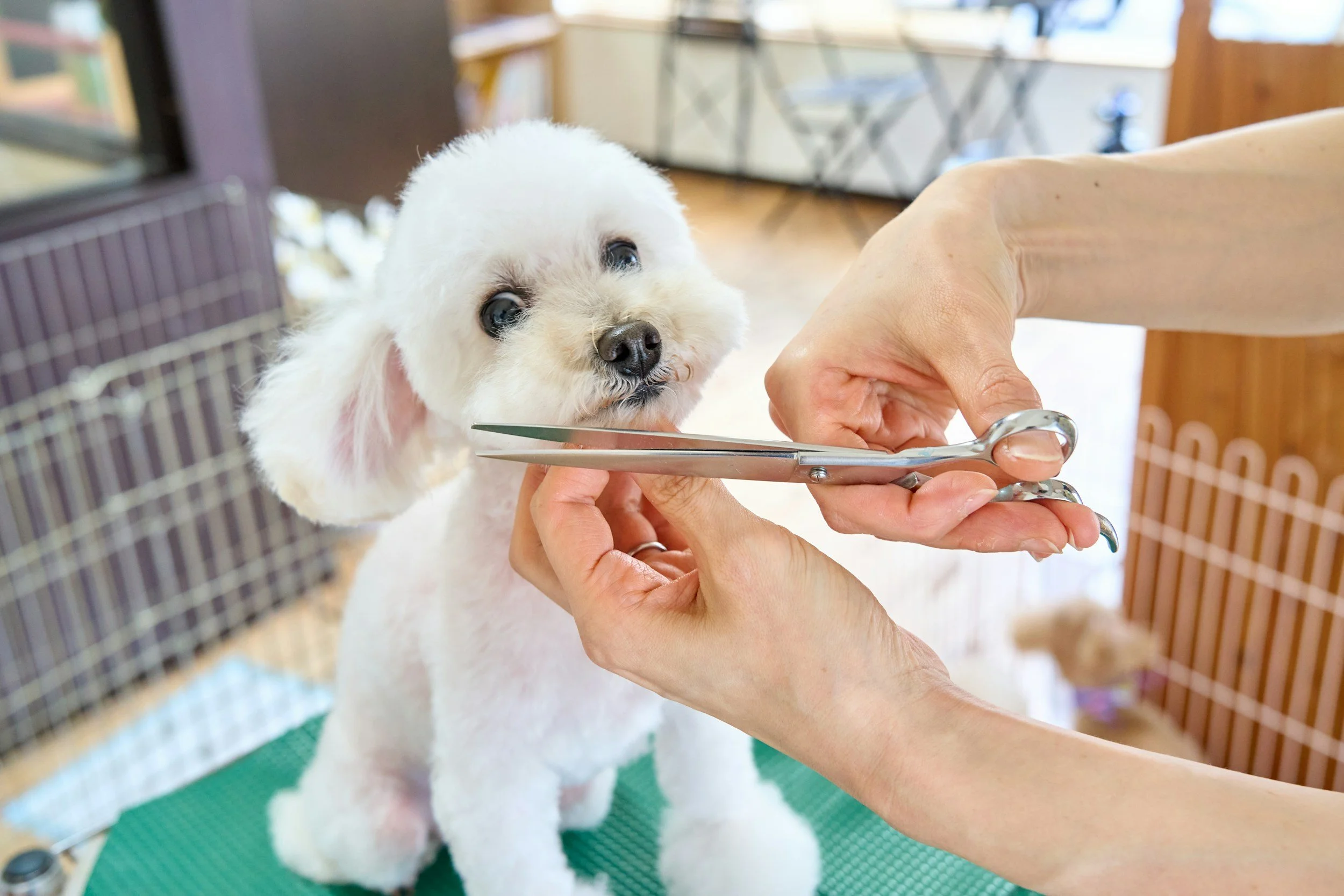
A professional groomer can safely tidy the hair around the feet and paw pads. This can be particularly useful for long-coated breeds that require routine coat maintenance.
Adjust Grooming for Columbus Seasons
Seasonal changes can influence your dog's grooming routine. Spring often brings rain, mud, and increased shedding, while summer may mean more outdoor activity and exposure to dirt or plant debris.
Fall can bring additional shedding in some breeds, and winter may require greater attention to paws and coat cleanliness. Dogs that develop thicker seasonal coats should generally be brushed regularly rather than automatically shaved.
Your grooming routine should respond to your dog's individual coat rather than following a single schedule year-round. A professional groomer can help you determine whether seasonal adjustments are appropriate.
Be Careful About Shaving Double-Coated Dogs
Some owners assume shaving a thick coat will automatically make a dog cooler during summer. However, double-coated breeds have specialized coats that should not necessarily be shaved for routine heat management.
Shaving may alter the way some coats regrow and does not replace other heat-safety practices. Shade, hydration, appropriate exercise timing, and avoiding dangerous temperatures remain essential during warm weather.
If you are considering a major haircut or shave, consult an experienced groomer or veterinarian first. They can explain what is appropriate for your dog's coat type and health needs.
Introduce Grooming Gradually to Puppies
Puppies benefit from learning early that grooming is a normal part of life. Gentle handling of paws, ears, legs, and the face can make professional and at-home grooming easier as the dog matures.
Keep early grooming sessions short and positive. Reward calm behavior and gradually introduce brushes, combs, nail tools, dryers, and other equipment.
You do not need to complete an entire grooming routine during every practice session. The goal is to help your puppy become comfortable with being handled.
Make Grooming Easier for Nervous Dogs
Some dogs dislike grooming because they are sensitive to touch, unfamiliar equipment, restraint, loud dryers, or previous stressful experiences. Forcing a frightened dog through a long grooming session can make future sessions more difficult.
Break grooming into manageable steps whenever possible. You might brush one part of the body, trim a few nails, or practice calmly standing on a grooming surface rather than attempting everything at once.
For dogs with severe fear, anxiety, or aggressive responses, speak with a veterinarian or qualified grooming professional. They can help you develop a safer approach based on your dog's behavior and needs.
Know When to Use a Professional Groomer
At-home grooming can handle many basic tasks, but professional services can be valuable for more complicated coat maintenance. Dogs with long, curly, continuously growing, or easily matted coats often require specialized care.
Professional grooming may include:
Bathing and drying
Brushing and deshedding
Haircuts or coat trimming
Nail trimming
Paw-pad trimming
Sanitary trimming
Ear cleaning when appropriate
Mat removal
When choosing a groomer, ask about experience with your dog's breed or coat type. You should also feel comfortable discussing your dog's temperament, health considerations, and previous grooming experiences.
Frequently Asked Questions About Dog Grooming
How often should I groom my dog?
Grooming frequency depends on your dog's coat, lifestyle, health, and individual needs. Some dogs need frequent brushing and regular professional grooming, while short-haired breeds may require much less coat maintenance.
How often should dogs be bathed?
There is no single schedule that works for every dog. Bathe your dog when needed based on coat condition, activity level, odor, skin health, and veterinary guidance.
Can I use human shampoo on my dog?
It is generally better to use a shampoo formulated specifically for dogs. Canine grooming products are designed with dog skin and coats in mind.
How often should I trim my dog's nails?
Trim them often enough to prevent excessive length. The exact timing varies because activity level, walking surfaces, nail growth, and anatomy differ from dog to dog.
Should I shave my dog in summer?
Not automatically. Some coat types, especially double coats, should not routinely be shaved simply because the weather is warm. Ask a veterinarian or experienced groomer before making a major change to the coat.
What should I do if my dog hates grooming?
Use short, gradual sessions and reward calm behavior. If your dog shows intense fear or aggression, seek guidance from a veterinarian or qualified grooming professional rather than forcing the process.
Build a Grooming Routine Your Dog Can Maintain
The most useful dog grooming tips for owners are the ones that become part of a consistent routine. Regular brushing, sensible bathing, nail maintenance, ear checks, and paw care can make grooming easier while helping you notice changes in your dog's coat, skin, and overall condition.
Columbus weather and your dog's lifestyle may require adjustments throughout the year, so pay attention to what your dog actually needs rather than following a rigid schedule. With regular at-home care and professional grooming when appropriate, you can help keep your dog clean, comfortable, and ready for everything from neighborhood walks to weekend adventures.
HOW DO YOU FEEL ABOUT FASHION?
COMMENT OR TAKE OUR PAGE READER SURVEY
Featured




Your AC rarely dies without warning. Learn the seven early failure signs and the exact first steps to take before you lose cool air entirely.