
Flyknit vs Leather Handbags: Cost, Durability & Sustainability
PAGE
By PAGE Editor
Flyknit and leather sit at opposite ends of the handbag world, and buyers get pushed into picking a side too early. One sounds modern and light. The other sounds premium and safe.
The truth is less tidy. Both can make a good bag, and both can make a disappointing one. What matters is what your customers will actually carry, and how the bag will be made at scale.
What flyknit actually is
Flyknit is a knitted upper, made on a machine that knits yarn into a shaped textile rather than weaving a flat cloth you then cut up. Think of a knitted shoe upper: light, flexible, a bit breathable, and it gives a little when you stuff too much into it.
For handbags, that means a tote or shoulder bag that weighs much less than it looks. The pattern isn't printed on afterwards. It can be woven in as part of the knit itself — stripes, a two-tone panel, a textured section where you grip the bag.
That matters for production, too. You're not cutting separate panels and hoping the pattern lines up. The machine makes something close to the shape you need, and the sewing after that is mostly assembly: lining, handles, zip, base.
What leather gives you — and asks of you
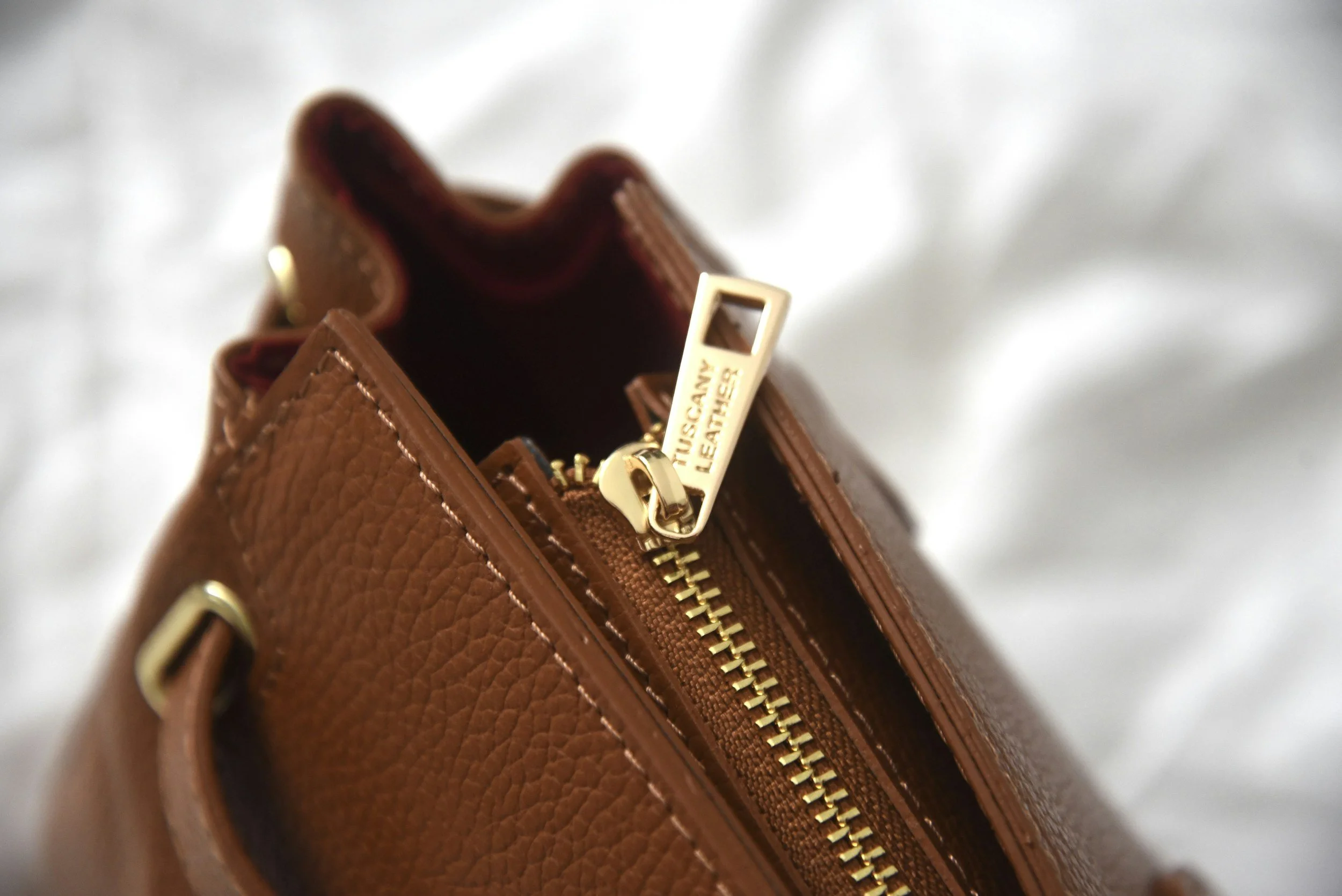
Leather gives a bag its shape. A structured leather handbag stands up on a desk, holds a clean edge, and looks like it cost what it cost. Customers read that as quality before they've touched anything inside.
It asks a lot in return. It's heavier, noticeably so on a larger tote once a laptop and a bottle go in. It needs care — conditioning now and then, keeping it out of long rain, watching light colors for dye transfer from jeans. And good leather costs more per bag.
There's also consistency. Hides vary, take color differently, and have to be cut around scars and weak spots. That means waste — and your tenth run can behave differently from your first if sourcing slips.
Cost: where the money really goes
Leather usually wins on material cost — as in, it costs you more. You pay for the hide, lose some of it in cutting, and stitching is slower because mistakes show. Edge painting, skiving, reinforcing stress points: skilled, slow-ish work.
Flyknit shifts the cost. Yarn and machine time are the main expense, and setup matters more than per-piece cutting. Once a program is set, repeating it is consistent. Changing a pattern is a programming and yarn job, not a new set of cutting dies.
That changes how you think about a custom flyknit bag manufacturer next to a leather style in the same range. Flyknit can carry more color and pattern variation without the price jumping every time you add a version. Leather carries its value in the material itself, so you price it that way.
For Junyuan Bags, the minimum for this sort of custom work is 500 pcs. That hits the two materials differently. With leather, 500 bags ties up a lot of cash in hides before you've sold one. With flyknit, the same run splits more easily across colorways — same base process, different yarn.
Durability and everyday wear
People assume leather lasts longer, full stop. Often it does — a well-made leather bag can be carried for years, pick up a patina, and get repaired. Handles and corners are the usual failure points, not the panels.
But flyknit holds up better than most people expect for daily, lighter use. It doesn't crack in the cold or peel the way coated materials can. It flexes instead of creasing. The weak spots are different: snags, stretching if a bag is overloaded daily, and handles — knitted handles without proper reinforcement will tell on you quickly. A good design adds structure where it counts: a firmer base, reinforced handle attachments, a lining that helps it keep its shape.
Care is simpler with flyknit. A gentle clean, air dry, done. For a commuter bag that gets thrown on a train floor in winter, that low fuss is a real selling point. Be honest either way: tell leather buyers to expect marks and character, and flyknit buyers not to treat a soft bag like a structured one.
Production realities for brands
On the factory floor, these are two different jobs.
Flyknit needs knitting machines and people who can program them. Your freedom is in color, texture, and pattern — you can do a lot without new hardware. Your limit is structure. If you want a boxy silhouette that stands empty on a shelf, knit alone won't get you there. You'll need internal support, and you should sample it loaded, not empty.
Leather needs cutting and stitching skill, and more hand finishing. Your freedom is in shape and finish — structure, hardware, that firm click of a well-set closure. Your limits are cost, weight, and repeatability. Every new shape means fresh checks on how the hide behaves.
Sampling reflects that. A flyknit color change isn't a rebuild, so it can move faster once the program is right. A leather sample shows you the truth about structure straight away — pick it up by one handle, loaded, before you approve anything.
Sustainability, stated carefully
Knitting to shape can produce less cutting waste than cutting panels from flat material, because you're making something nearer the final shape. That's a fair point in flyknit's favor. It doesn't make the bag automatically sustainable. Yarn type matters, dyes matter, and end of life matters. A knitted bag in synthetic yarn is still a synthetic product.
Leather's picture is complicated, too. A bag kept in use for years beats three cheap bags in a landfill. But tanning and sourcing carry real environmental costs, and "leather" on a spec sheet tells you almost nothing about how it was produced. Ask specific questions about sourcing and tanning rather than printing a leaf on the hangtag.
The most defensible claim for either material is a boring one: make a bag people keep.
Which lines each material suits
Flyknit fits everyday totes, lightweight shoulder bags, travel handbags that pack flat, and casual lines where color and pattern are the hook. It's a strong pick for summer ranges, commuter bags, and any customer who complains bags are too heavy — which, if you read your own reviews, is a lot of them.
Leather fits structured work bags, occasion pieces, and premium lines where the customer expects polish and a bag that presents well in a meeting. It suits smaller runs at higher prices better than fast color rotation.
Plenty of brands should carry both, in different roles: flyknit for the high-turnover daily bag in four colorways, leather for the one considered purchase. They stop competing once you give them different jobs.
Still undecided? Sample both, load them with what your customer carries — laptop, purse, bottle, keys, that bulky charger — and live with each for a week. The bag you keep reaching for is usually the one your customers will, too.
HOW DO YOU FEEL ABOUT FASHION?
COMMENT OR TAKE OUR PAGE READER SURVEY
Featured

Flyknit and leather sit at opposite ends of the handbag world, and buyers get pushed into picking a side too early. One sounds modern and light. The other sounds premium and safe.