
Frugal Chic Wants To Make Financial Freedom Part Of Your Personal Style

PAGE
By PAGE Editor
For a generation raised on the visual language of aspiration, the idea of living stylishly has often been inseparable from spending. Social media has only accelerated the relationship. A new outfit, a restaurant reservation, a designer accessory or the latest “must-have” object can become less about the thing itself and more about what owning it appears to say. But Mia Rose McGrath is proposing a different definition of luxury: having enough financial freedom to decide what is actually worth buying.
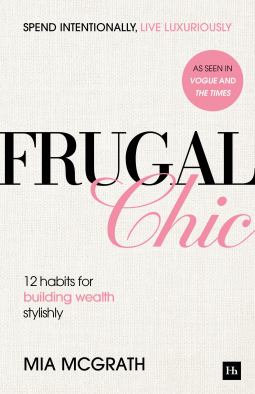
In Frugal Chic: 12 Habits for Building Wealth, Stylishly, McGrath turns the familiar language of personal finance toward the world of taste, identity and intentional living. The book, on sale January 12, 2027, argues that building wealth does not require abandoning personal style—or the occasional luxury—but understanding why we spend in the first place.
McGrath knows the psychology of consumption from both sides. A British Asian digital creator and model, she began her career in luxury fashion sales before documenting her own financial journey online in 2024. What started as an exploration of saving and financial literacy became the viral “Frugal Chic” movement across Instagram and TikTok, eventually helping McGrath build more than £100,000 in savings by the age of 24.
The appeal of the philosophy is its refusal to treat frugality as an aesthetic of deprivation. Instead, McGrath positions restraint as a form of discernment. The question is not whether someone can afford something, but whether the purchase supports the life they are trying to build.
That distinction becomes particularly relevant in an economy of constant visual temptation. Social platforms have collapsed the distance between inspiration and acquisition, making it possible to encounter a product and purchase it within minutes. The resulting cycle can turn shopping into an emotional ritual: boredom becomes a cart, aspiration becomes a checkout screen, and comparison becomes another monthly expense.
Frugal Chic examines that cycle through behavioral psychology and philosophy, suggesting that sustainable financial habits begin with identity rather than spreadsheets. McGrath encourages readers to think of themselves as intentional savers, cultivating rituals and habits that make financial stability feel less like a restriction and more like an extension of personal taste.
There is a certain irony in making wealth-building fashionable, but perhaps that is precisely why the idea resonates. Traditional financial advice can feel detached from the realities of contemporary consumer culture, particularly for younger audiences navigating an internet where aesthetics, status and commerce exist on the same screen. McGrath instead asks readers to consider what happens when taste is applied not only to clothing or interiors, but to time, money and attention.

Her approach also complicates the conventional idea of minimalism. Frugal Chic is not advocating for an empty wardrobe or a life stripped of pleasure. It is about knowing what deserves space. A considered purchase can coexist with saving. A luxury can remain luxurious when it is chosen rather than accumulated. Personal style becomes less about possessing more and more about developing the confidence to know what is enough.
That philosophy reflects McGrath's own evolution. Born in China and adopted into a London family, she describes an upbringing shaped by discipline and resourcefulness. University forced her to make a student loan last; the pandemic further sharpened her frugal habits; and conversations with friends eventually led her toward investing. The resulting framework sits somewhere between financial literacy and lifestyle design.
It is also a timely reframing of what “having it all” might mean. For decades, wealth has been communicated through visible consumption. McGrath proposes that the more compelling flex may be autonomy: having savings, investing with confidence, protecting your time and being able to walk away from the pressures that make consumption feel compulsory.
In that sense, Frugal Chic is less interested in making people cheaper than making them more deliberate. The book's 12-step approach covers saving, investing, spending habits, personal rituals and the psychology behind financial behavior, but its larger proposition is cultural. Style does not have to disappear when spending slows down. In fact, the two may become more meaningful when separated.
The most stylish decision, McGrath suggests, may ultimately be the one that gives you more choices tomorrow.
Frugal Chic: 12 Habits for Building Wealth, Stylishly by Mia Rose McGrath is published January 12, 2027.
HOW DO YOU FEEL ABOUT FASHION?
COMMENT OR TAKE OUR PAGE READER SURVEY
Featured





Gap and rising boy band Just Your Type are reviving the spirit of ’90s mall culture through a nationwide retail tour and co-designed capsule collection that connects fashion, music and fan culture.