
TELFAR SS2027 Turns the Sample Sale Into a Fashion Show
PAGE
By PAGE Editor
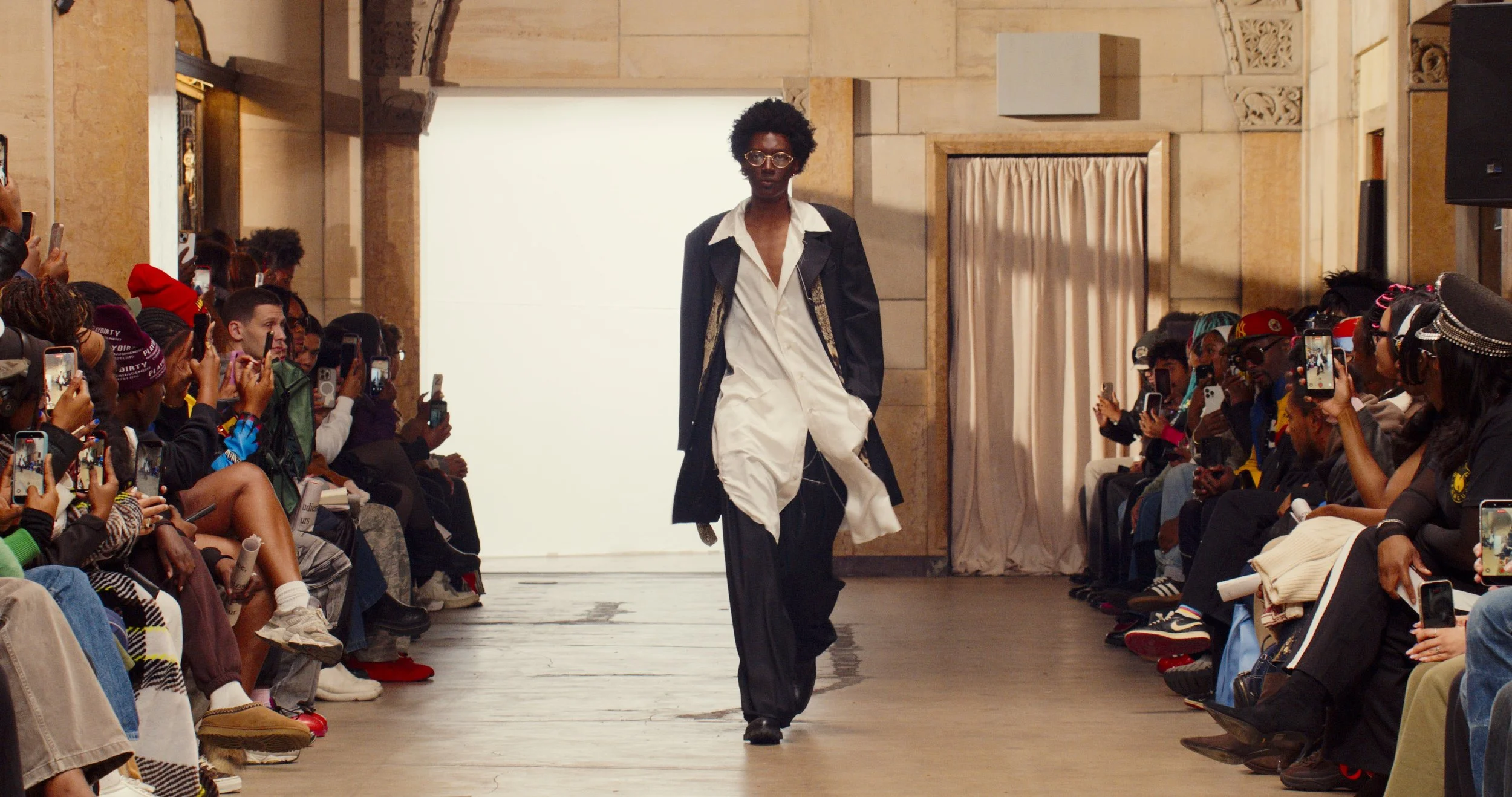
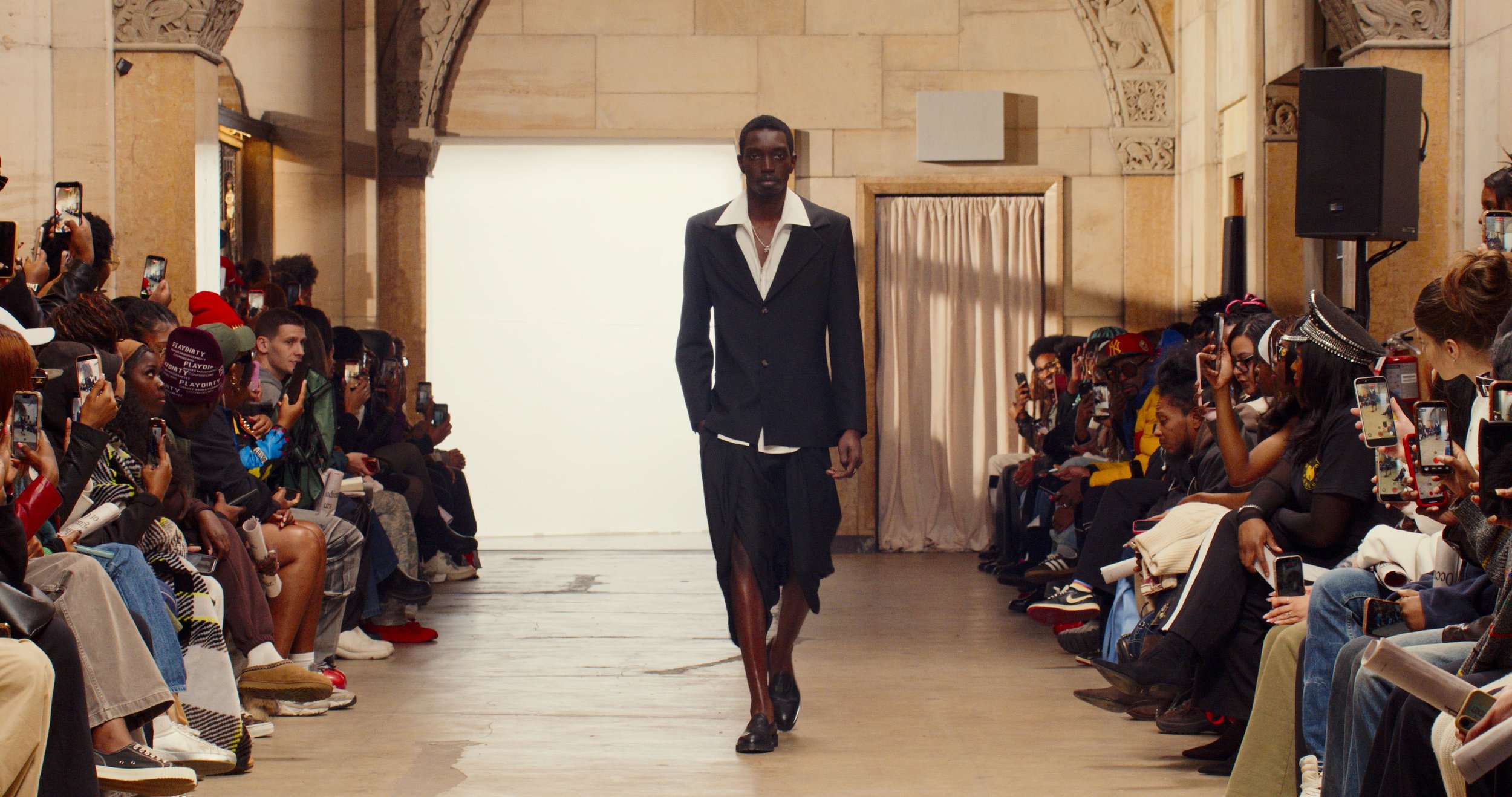
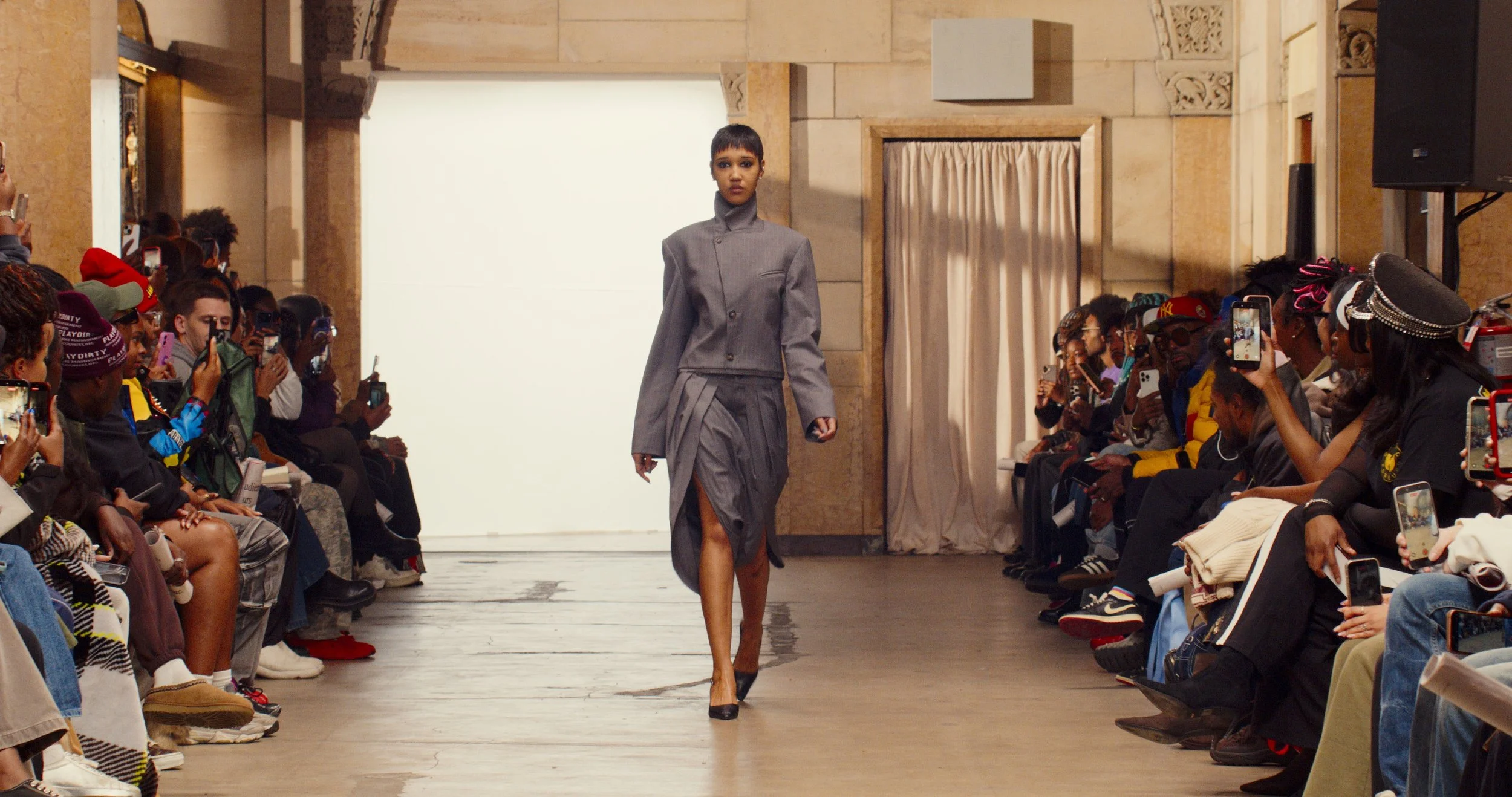
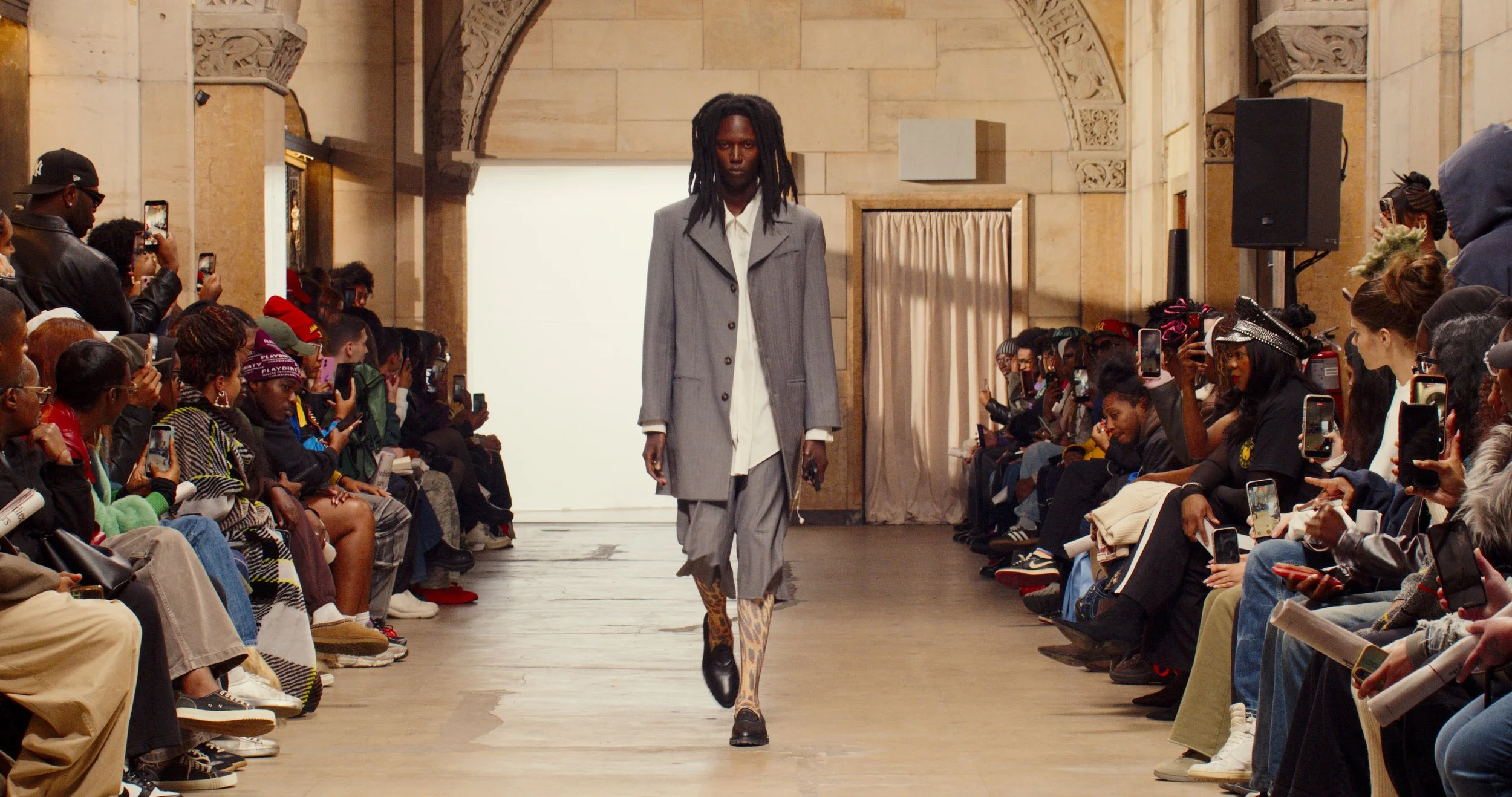
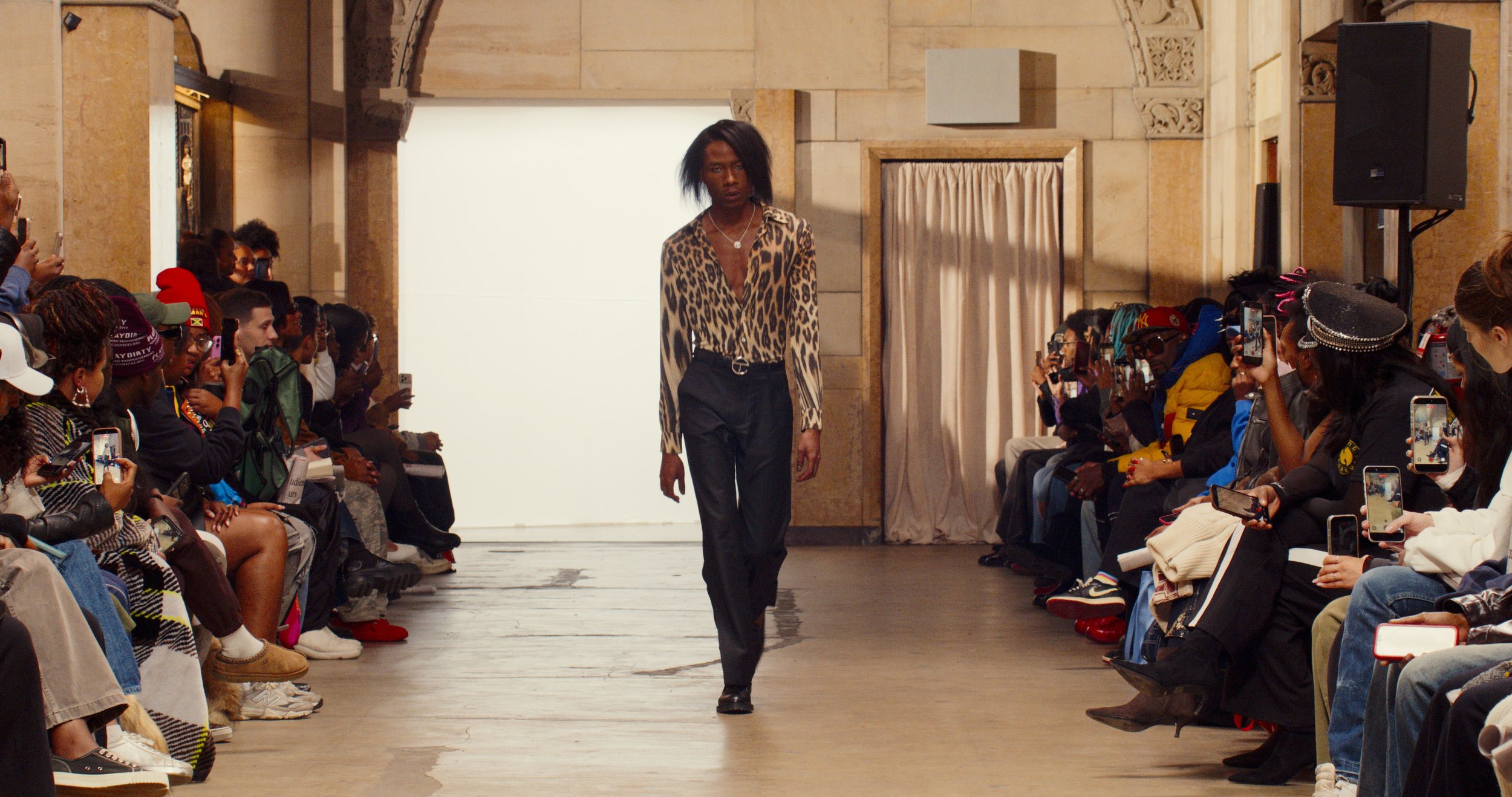
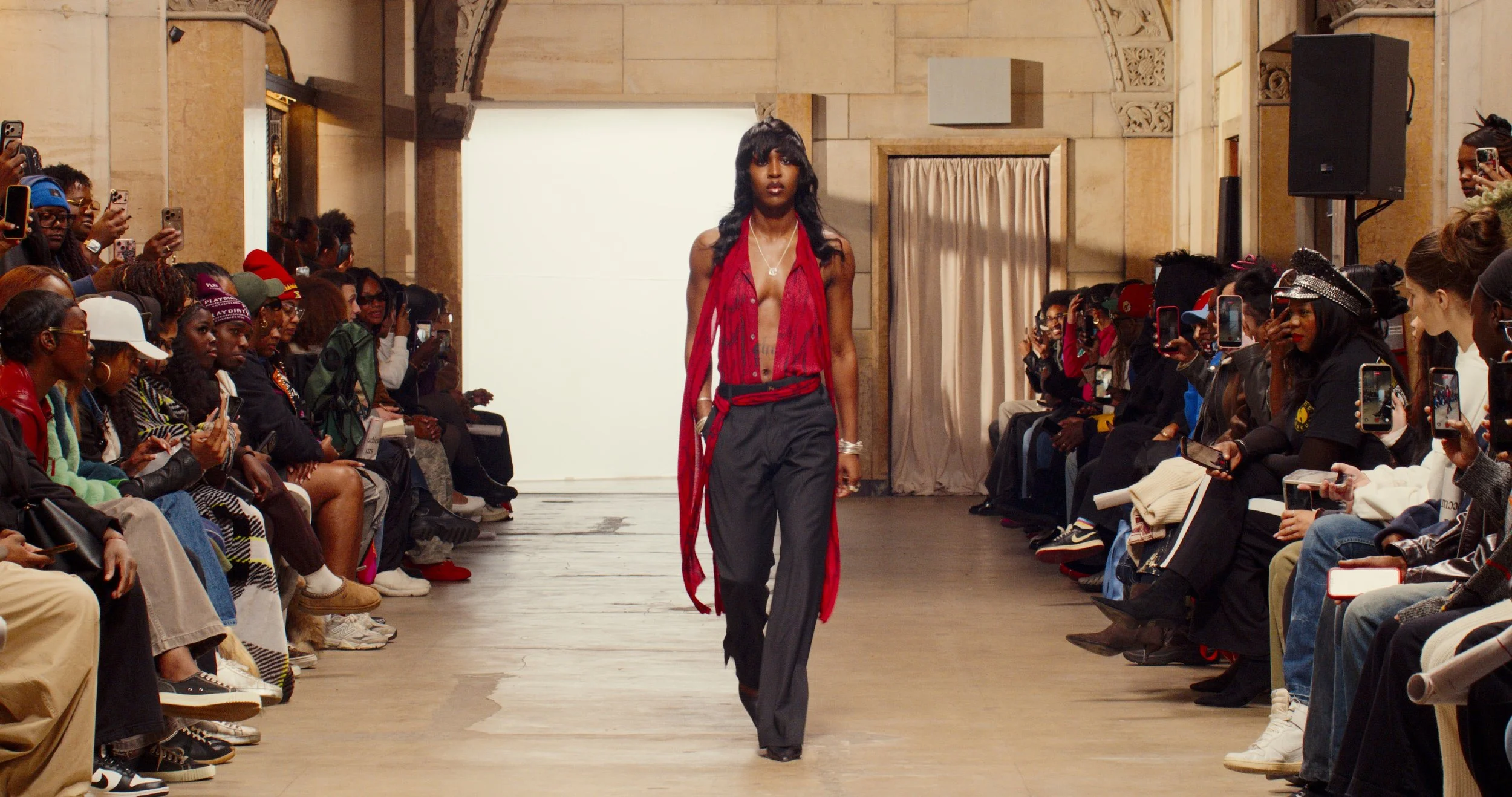
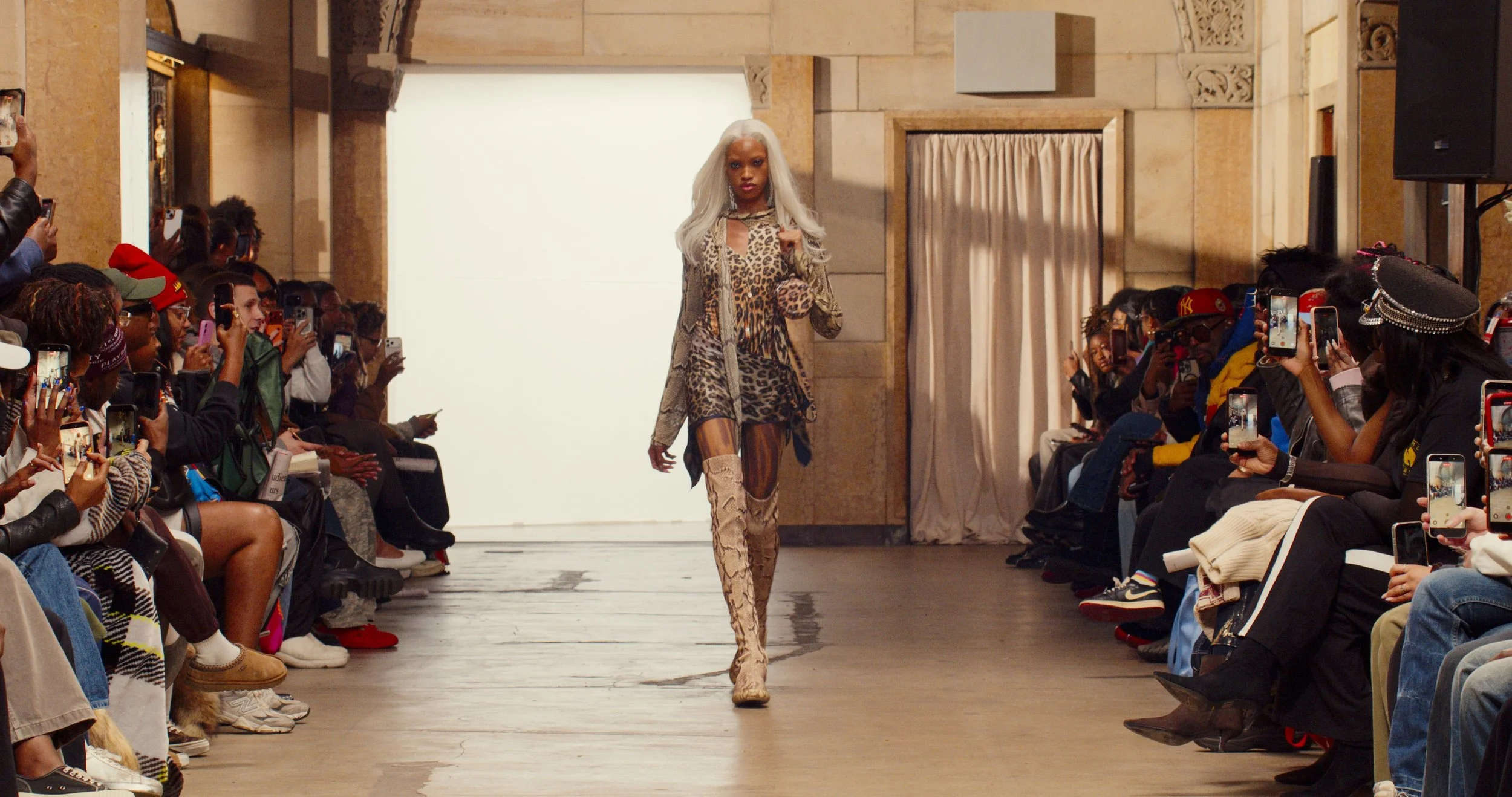
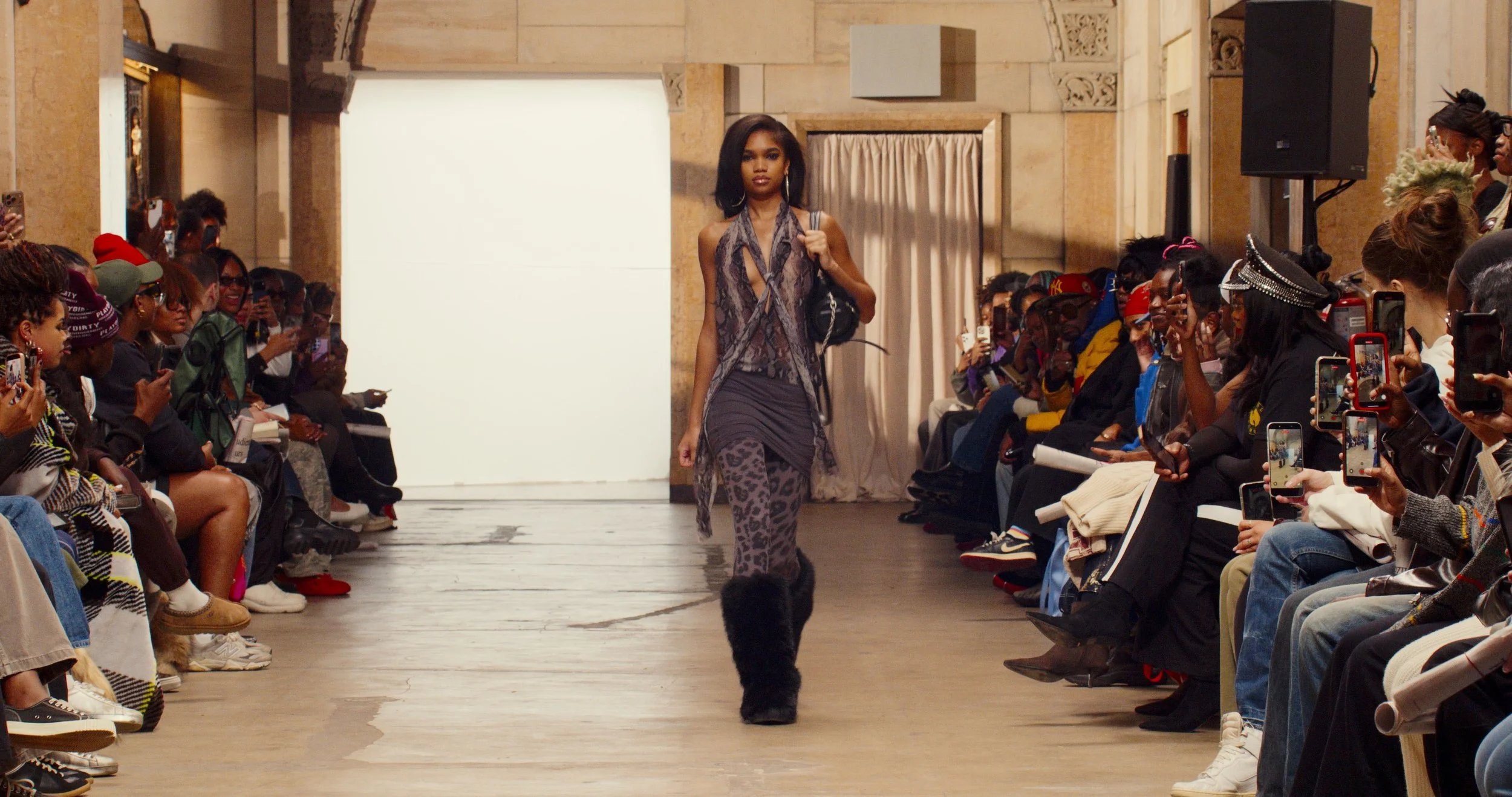
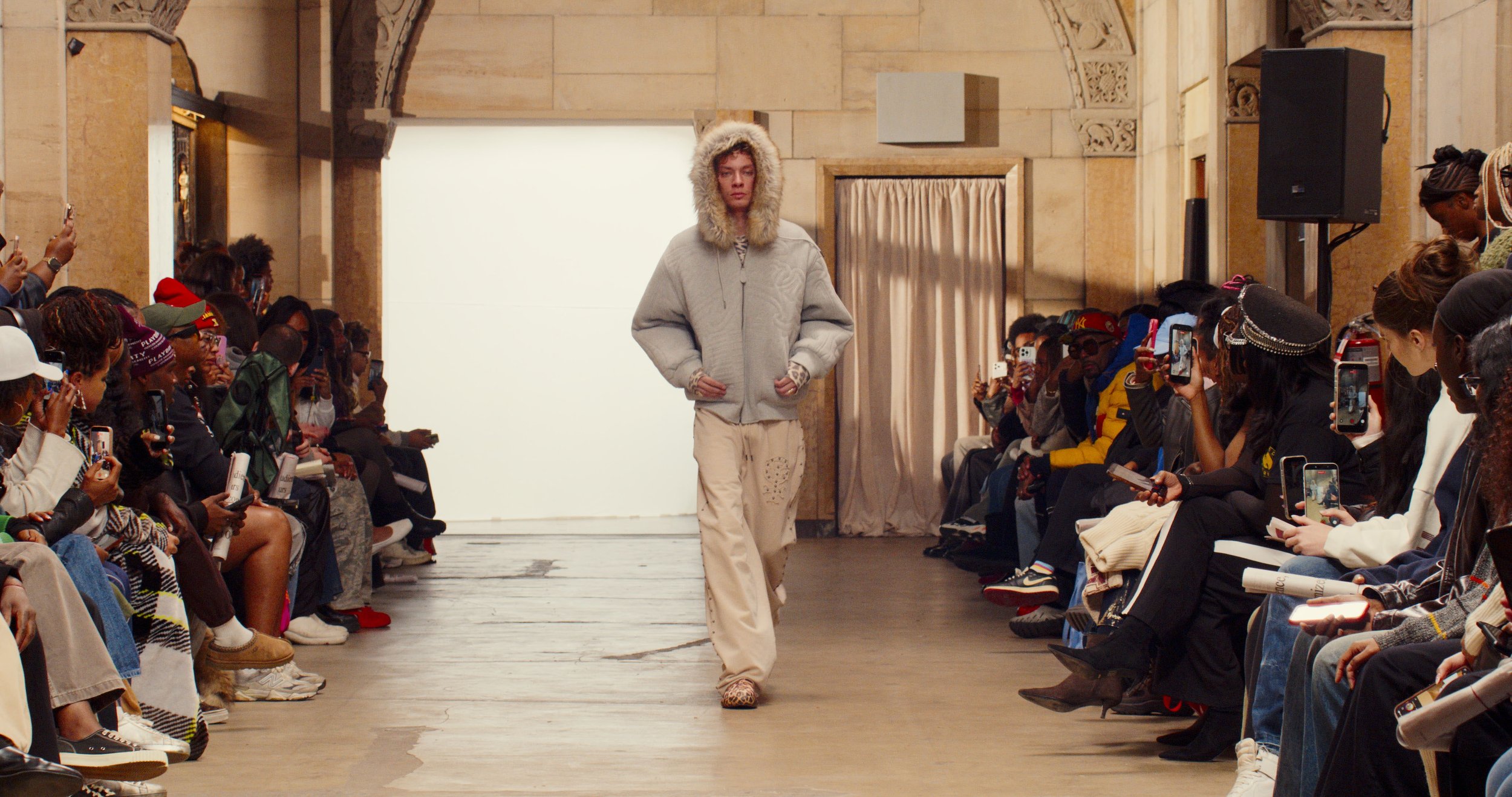
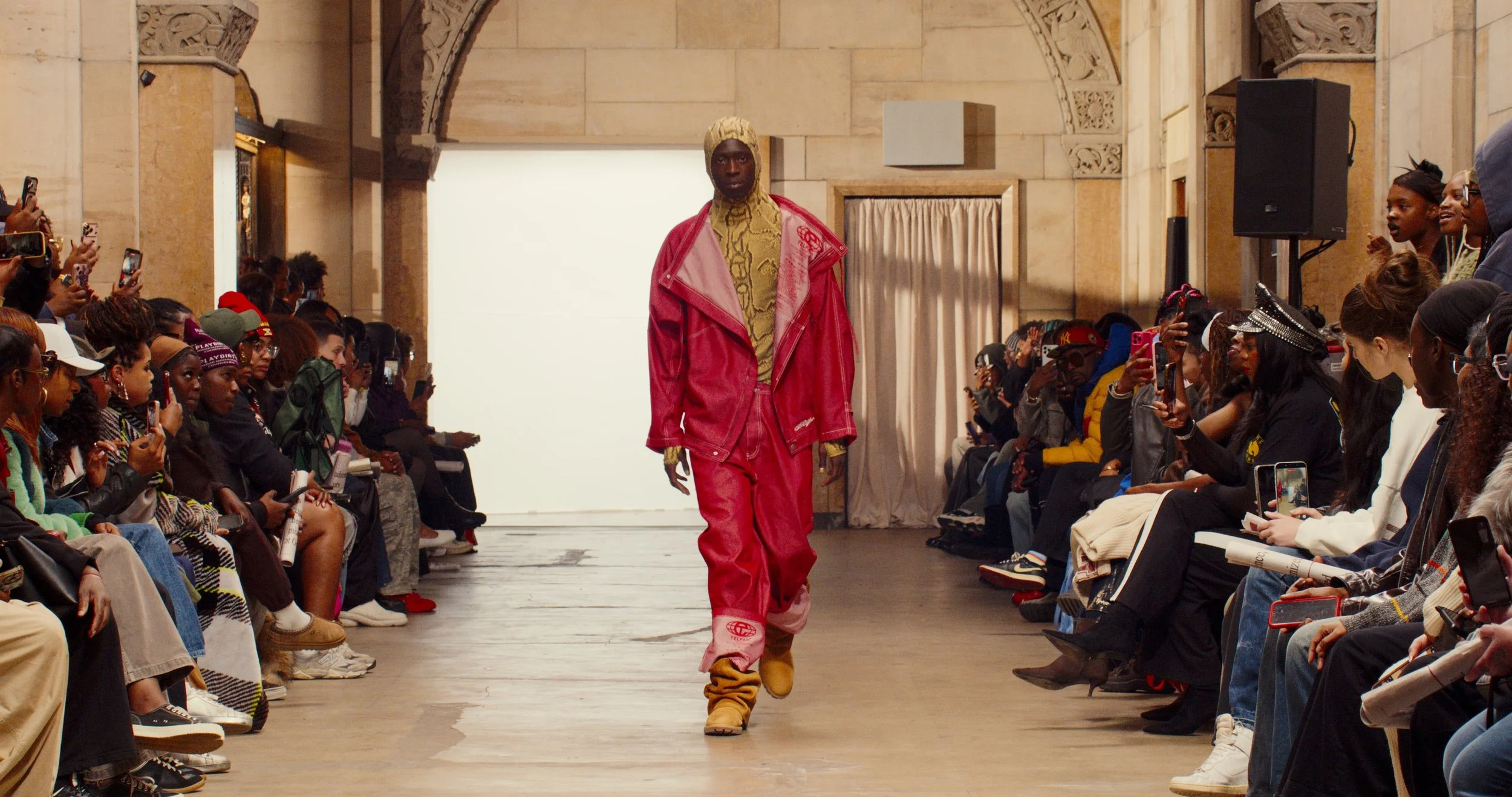
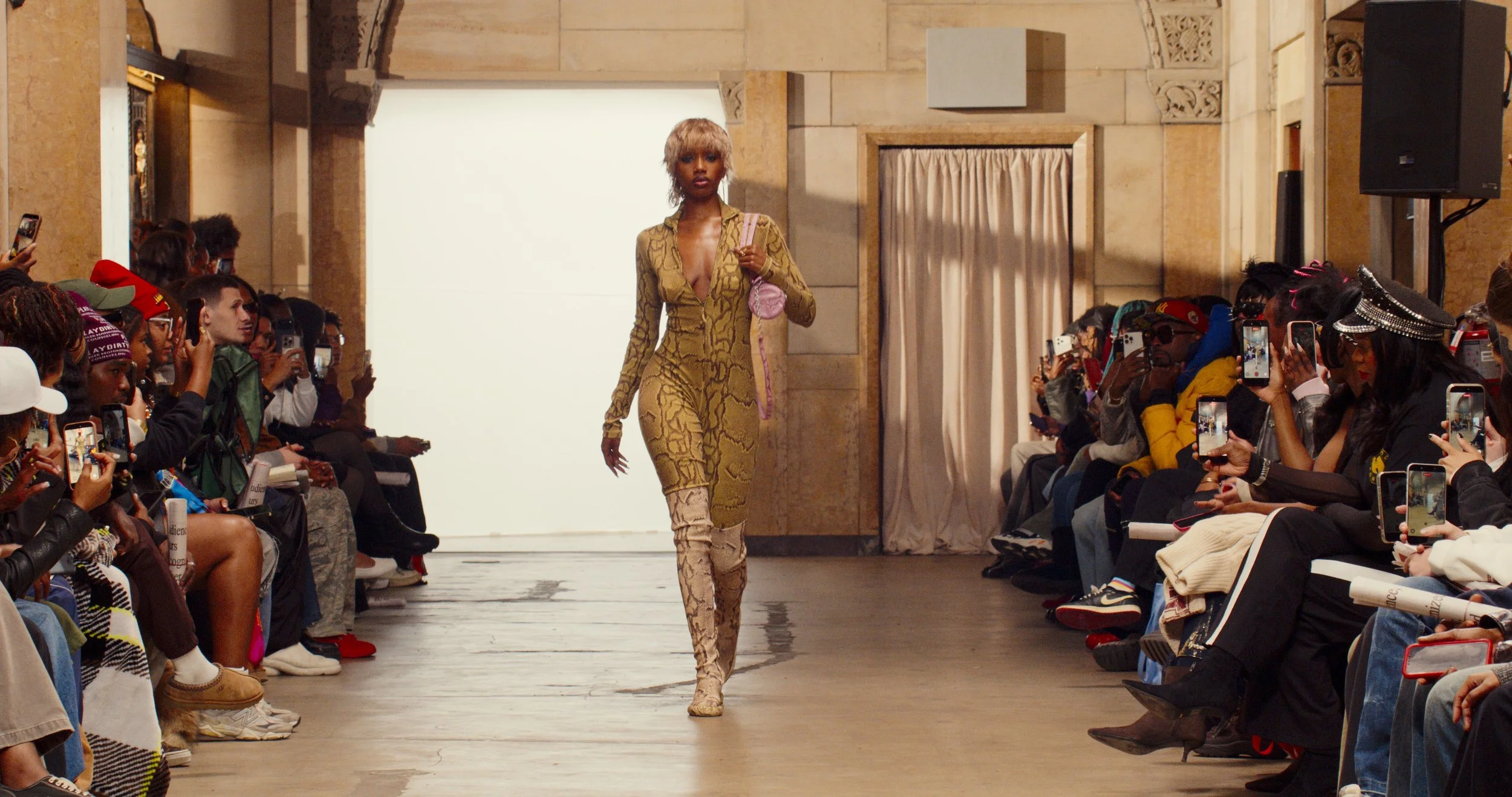
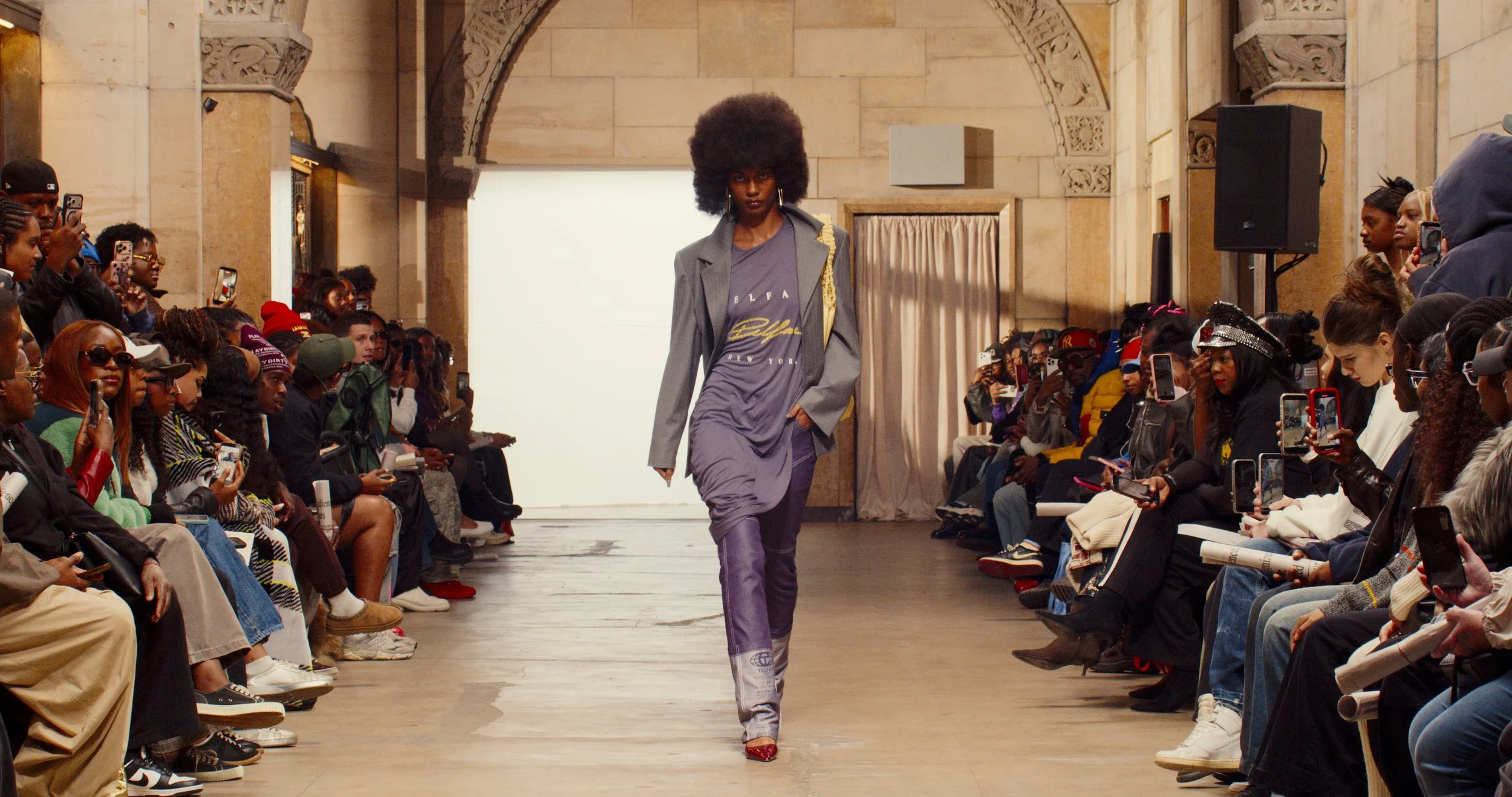
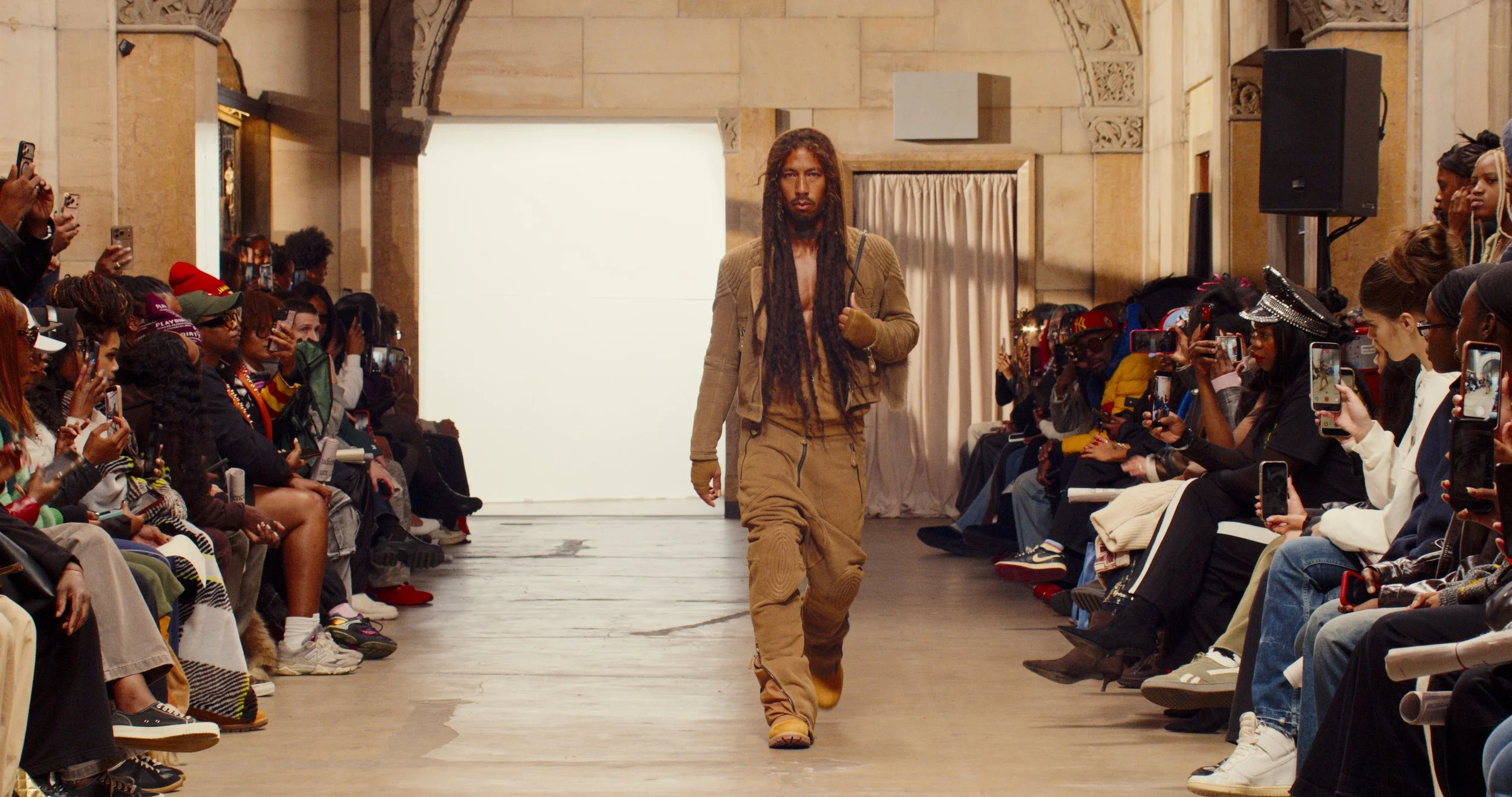
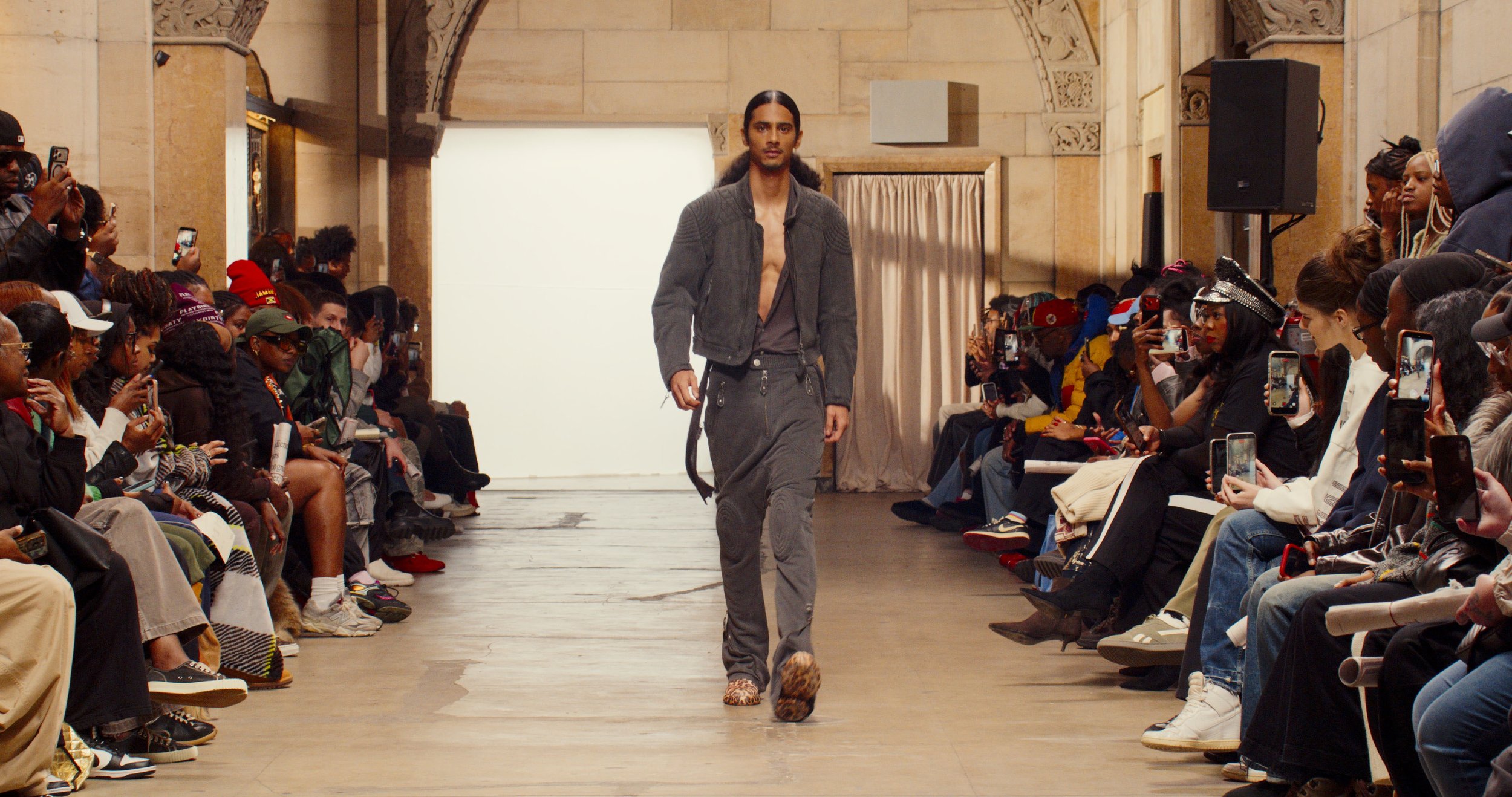
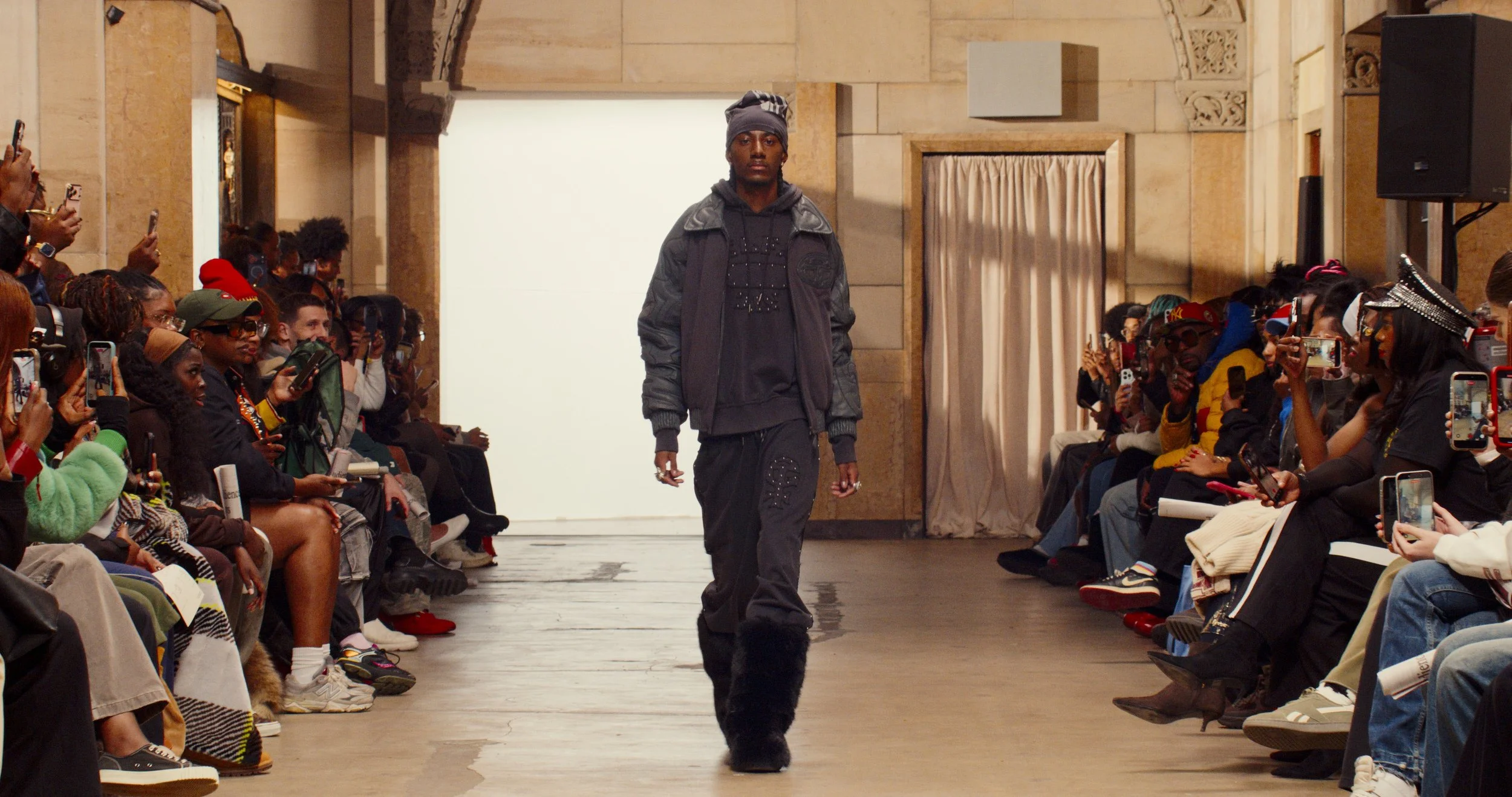
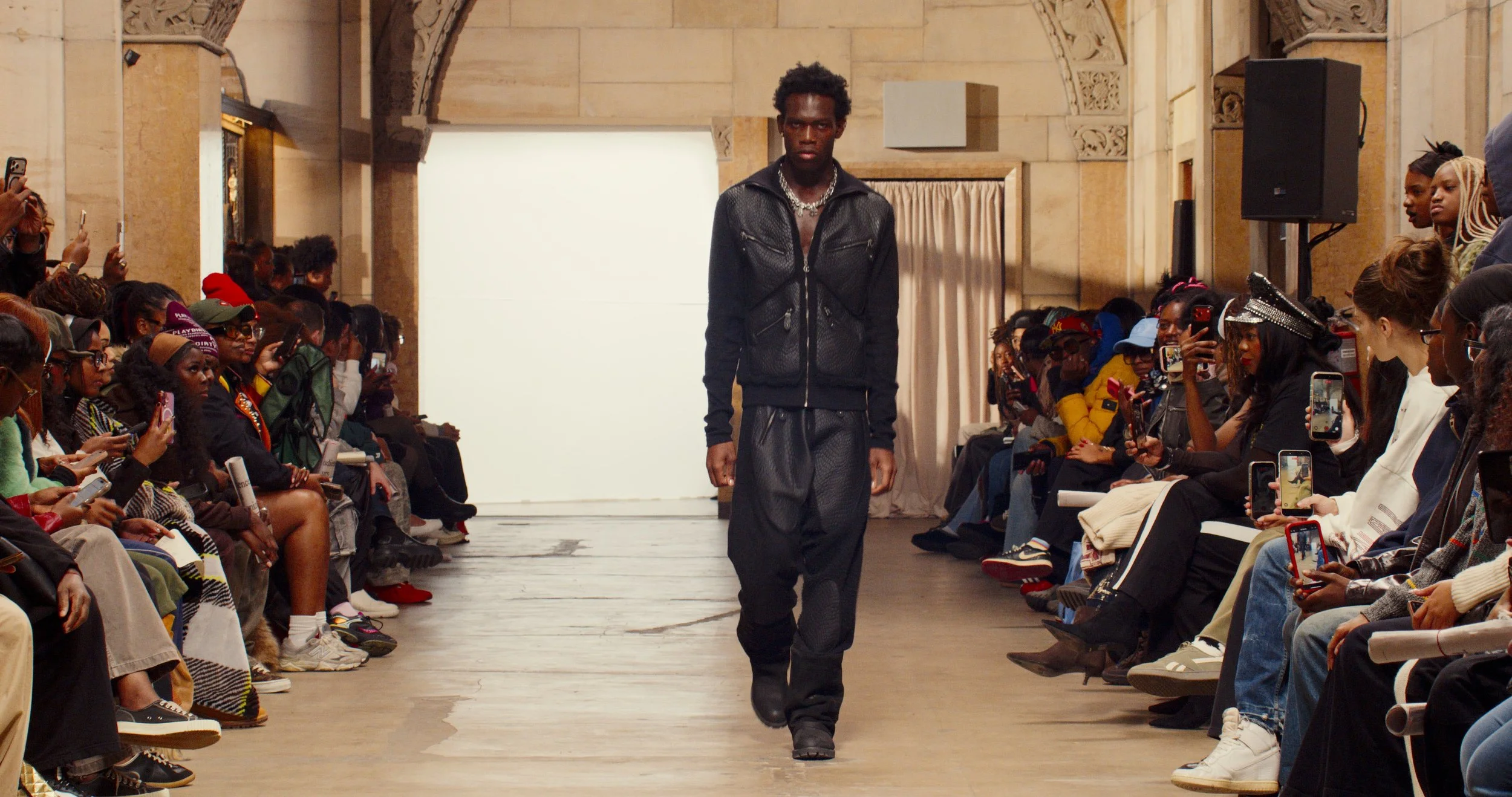
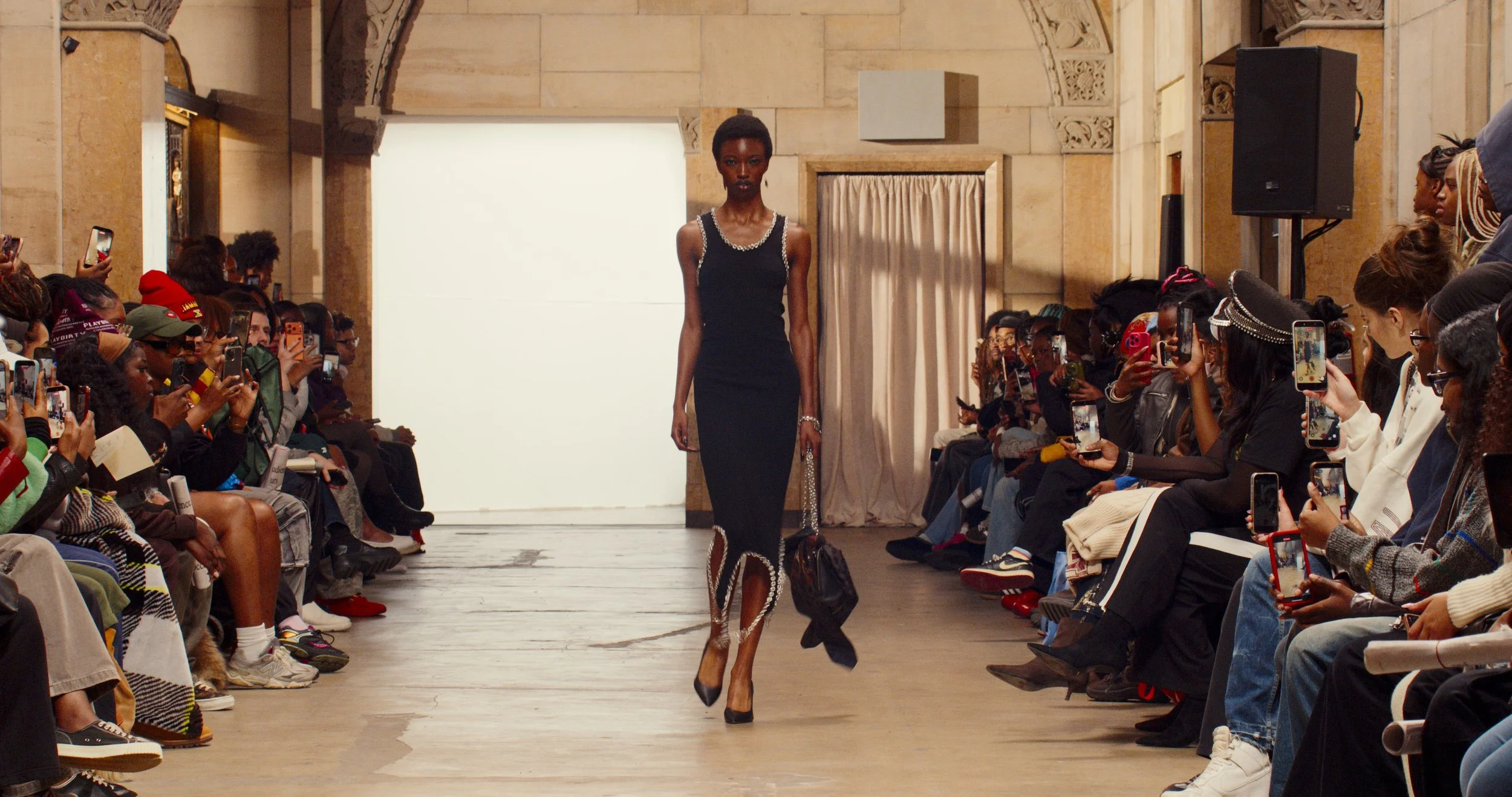
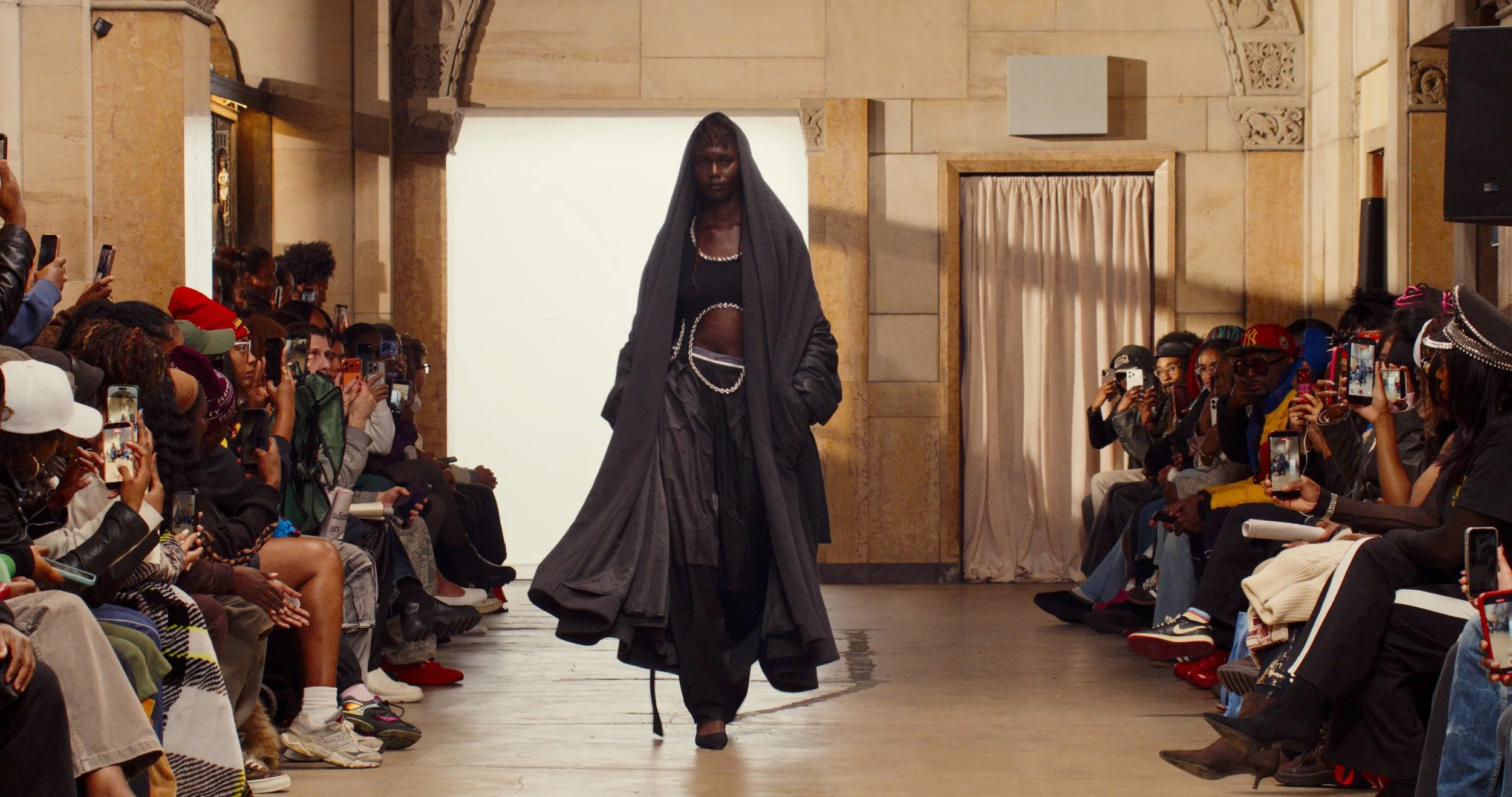
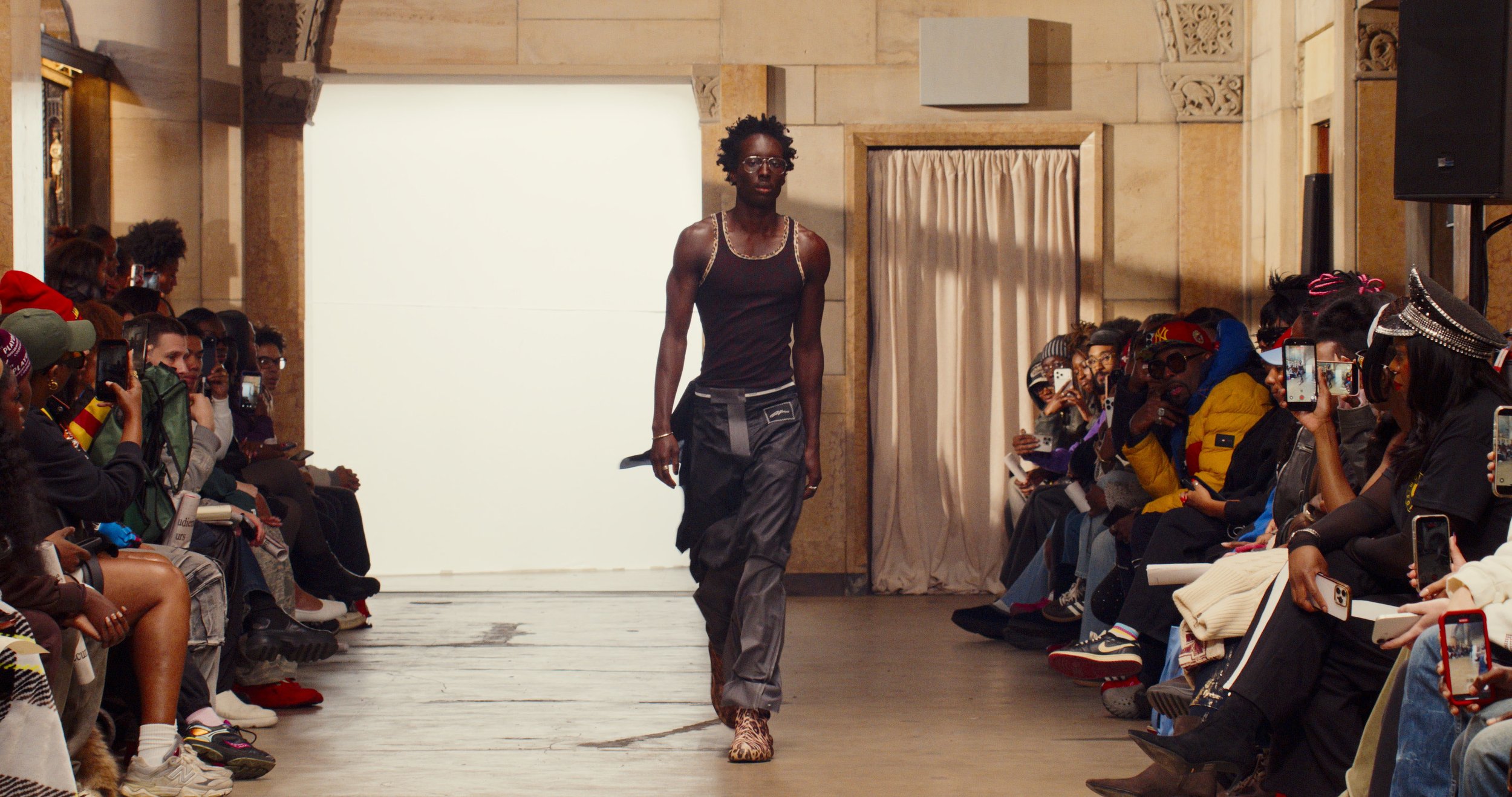
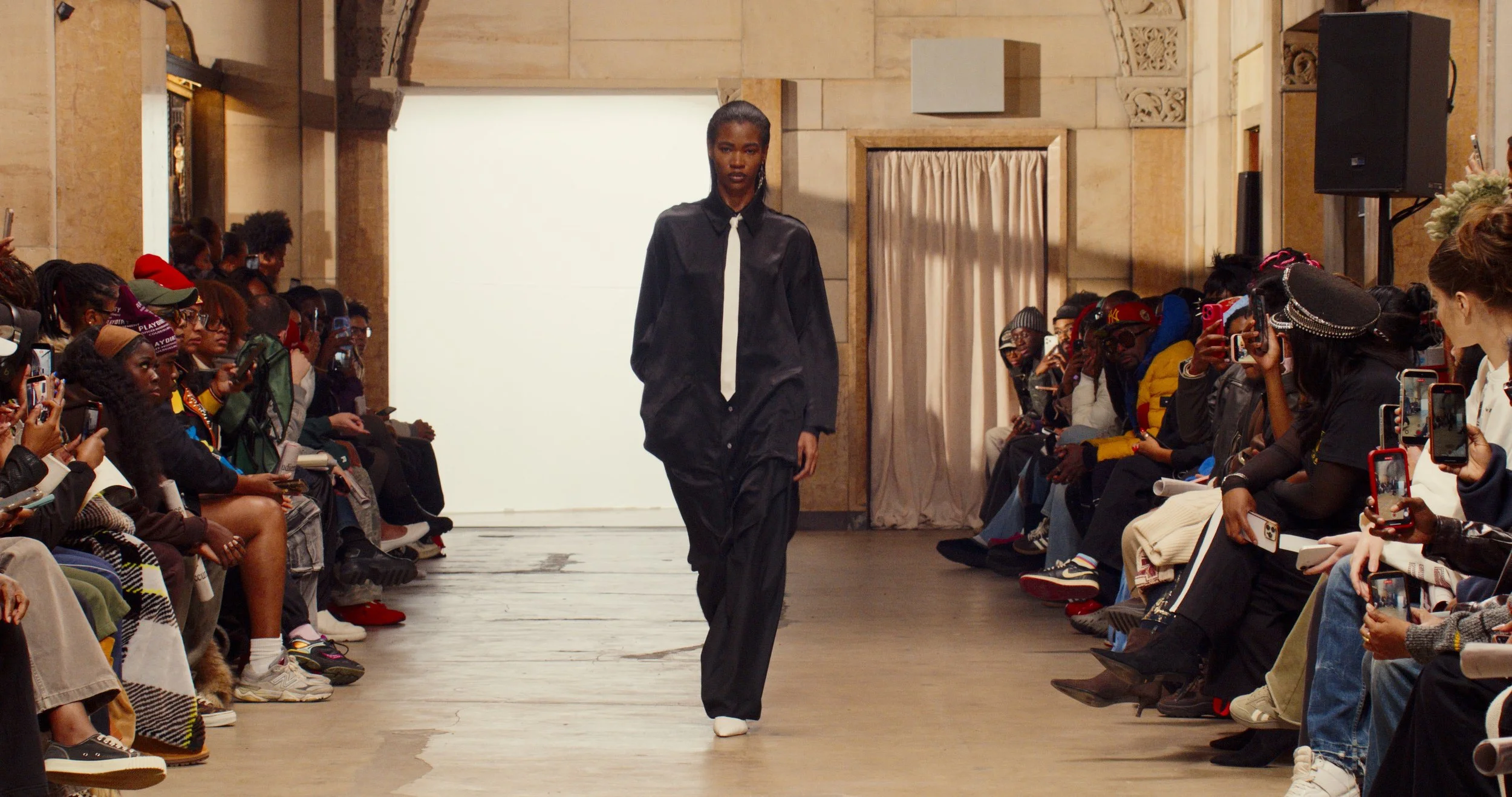
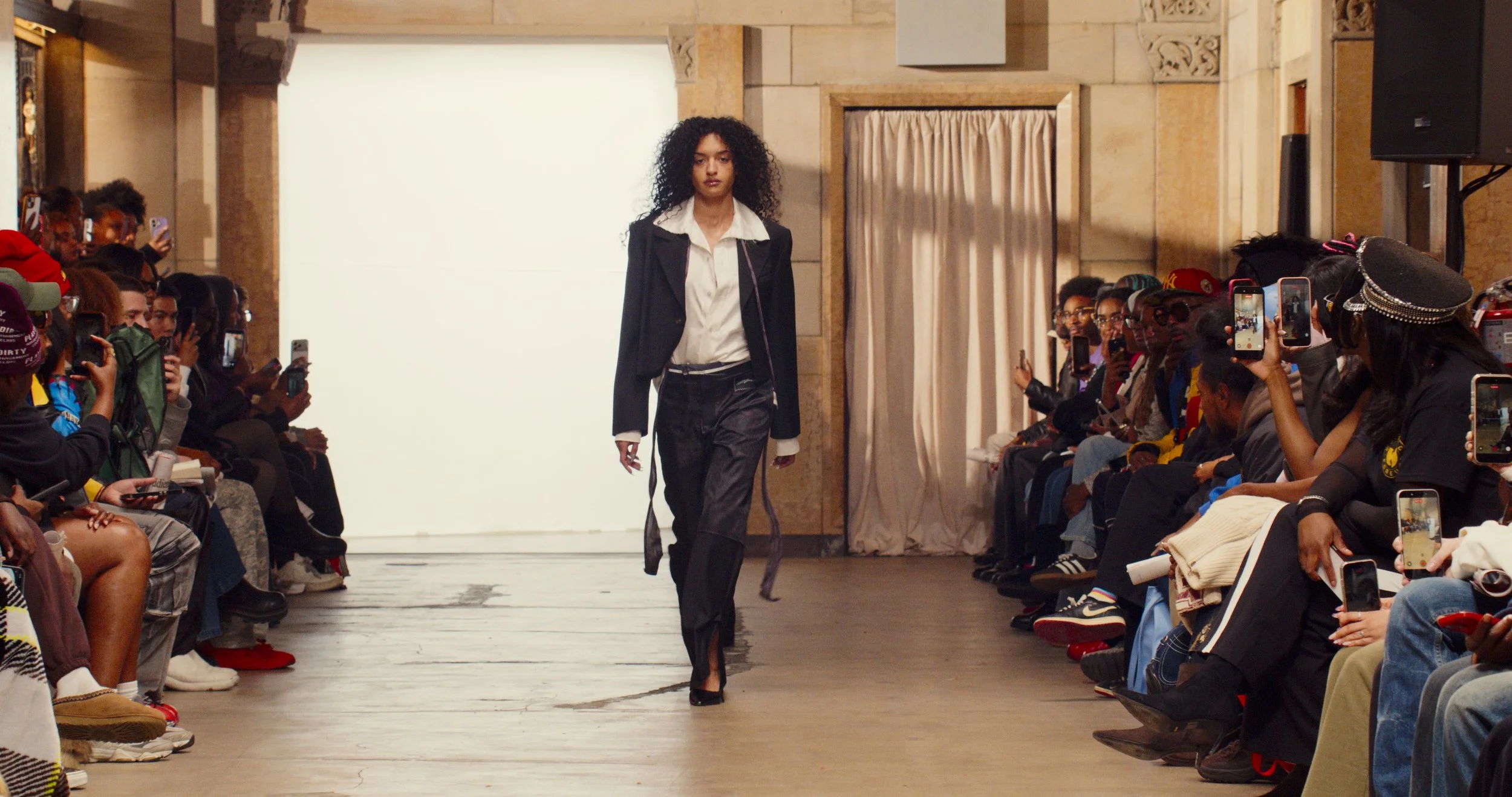
Telfar Clemens has never been particularly interested in separating fashion from the conditions that produce it. For Spring/Summer 2027, the New York-based house took that position literally, collapsing the runway, the sample sale, the street, and the spectacle into one deliberately difficult-to-classify event.
Held simultaneously at One Hanson Place in Brooklyn and projected into Paris, TELFAR SS2027 asked a deceptively simple question: what happens when a fashion show becomes less about who is watching and more about where fashion actually happens?
The invitation offered the first clue: “For One Audience / It Occurs but is / Not Recognized. / For The Other / It is Recognized / But does Not Occur.” The rest was left deliberately unresolved.
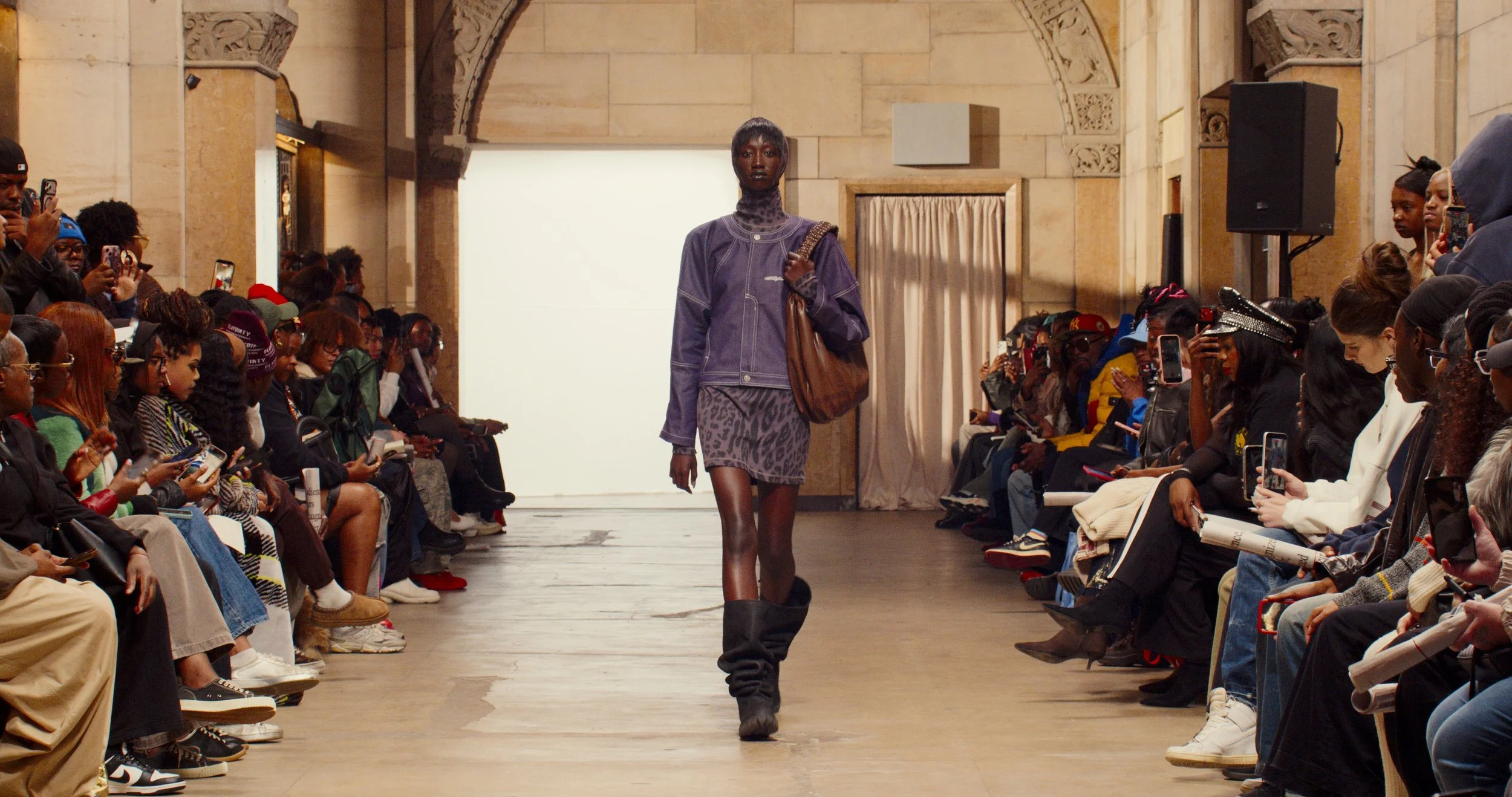
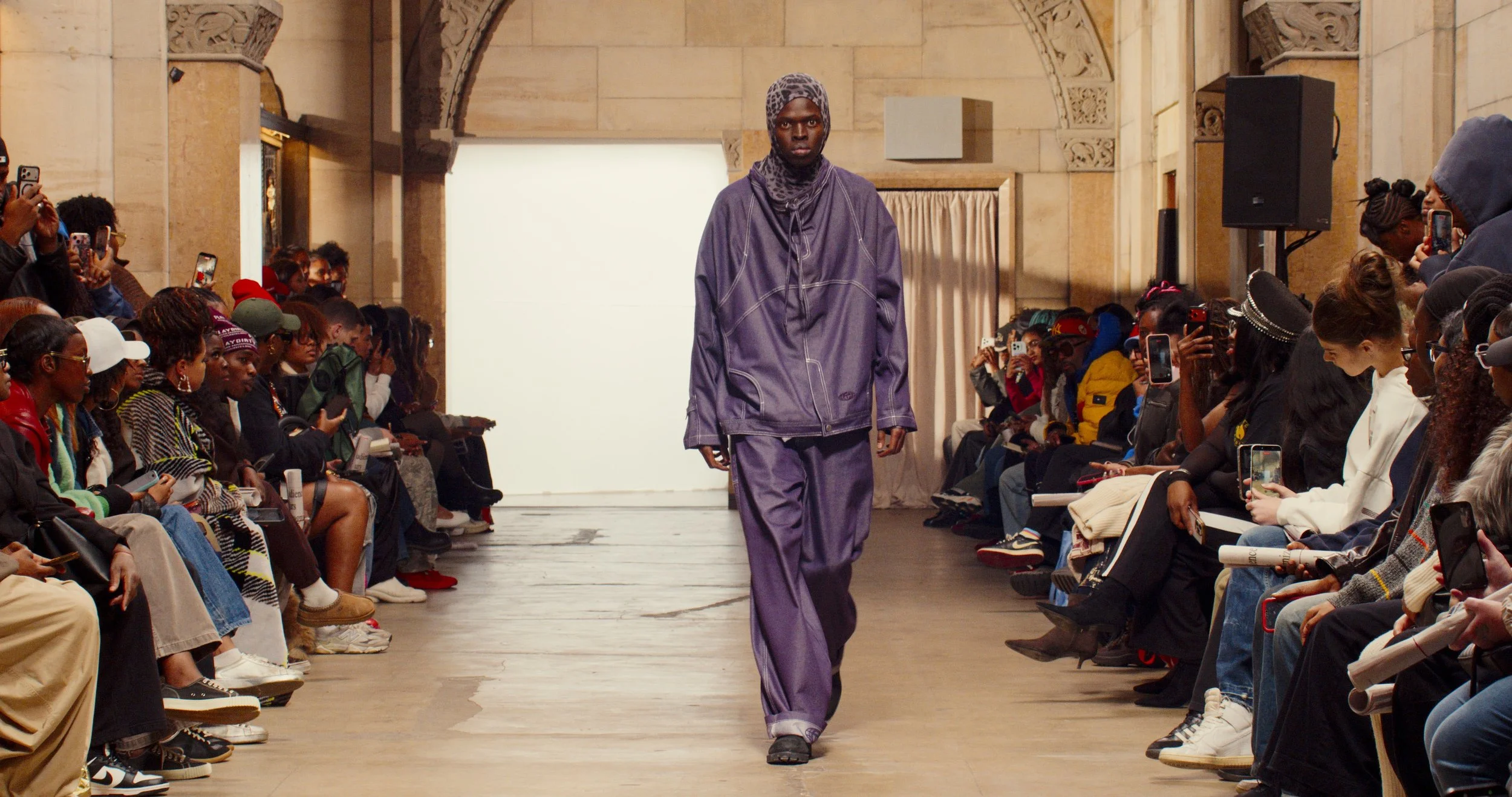
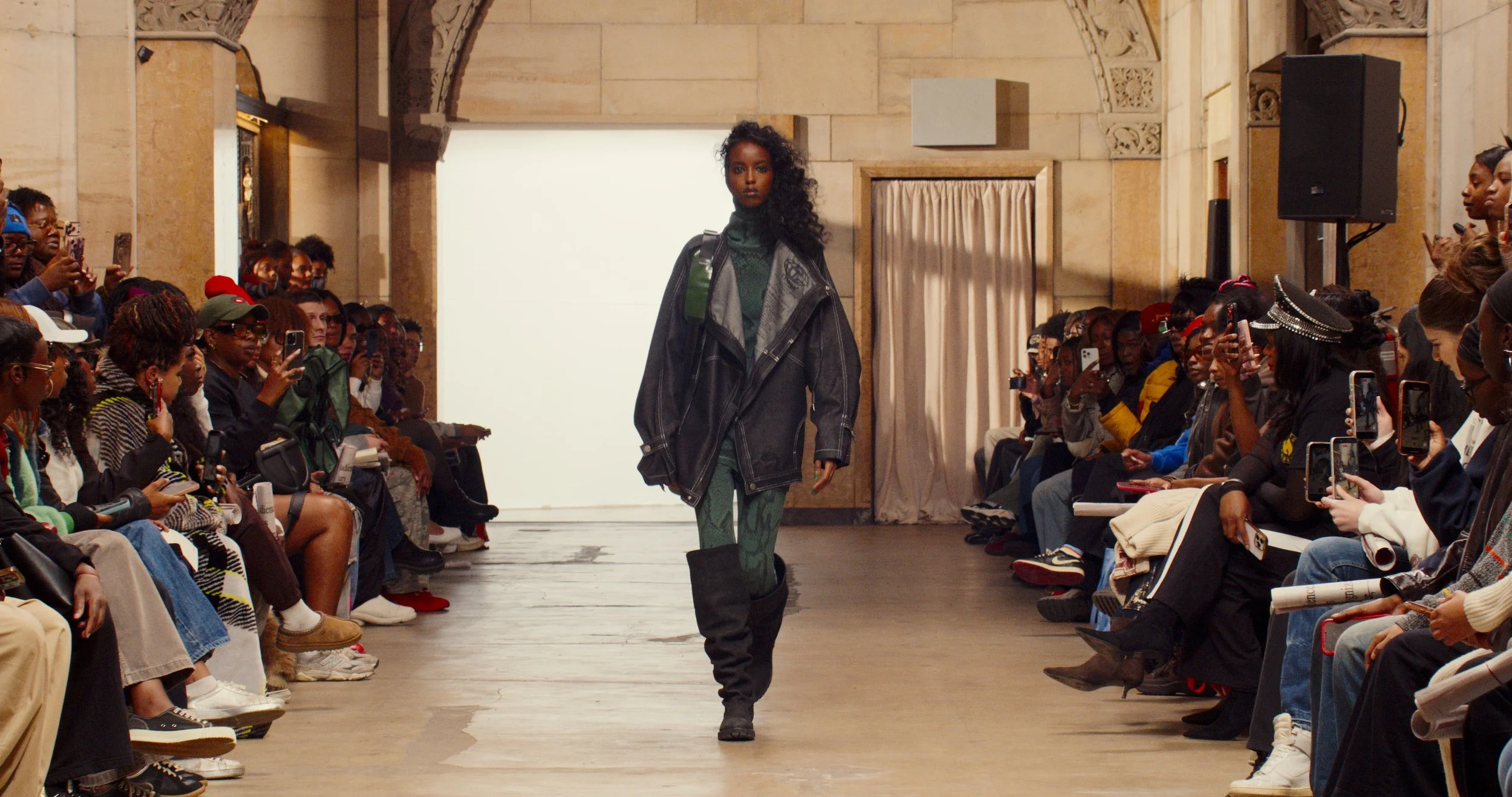
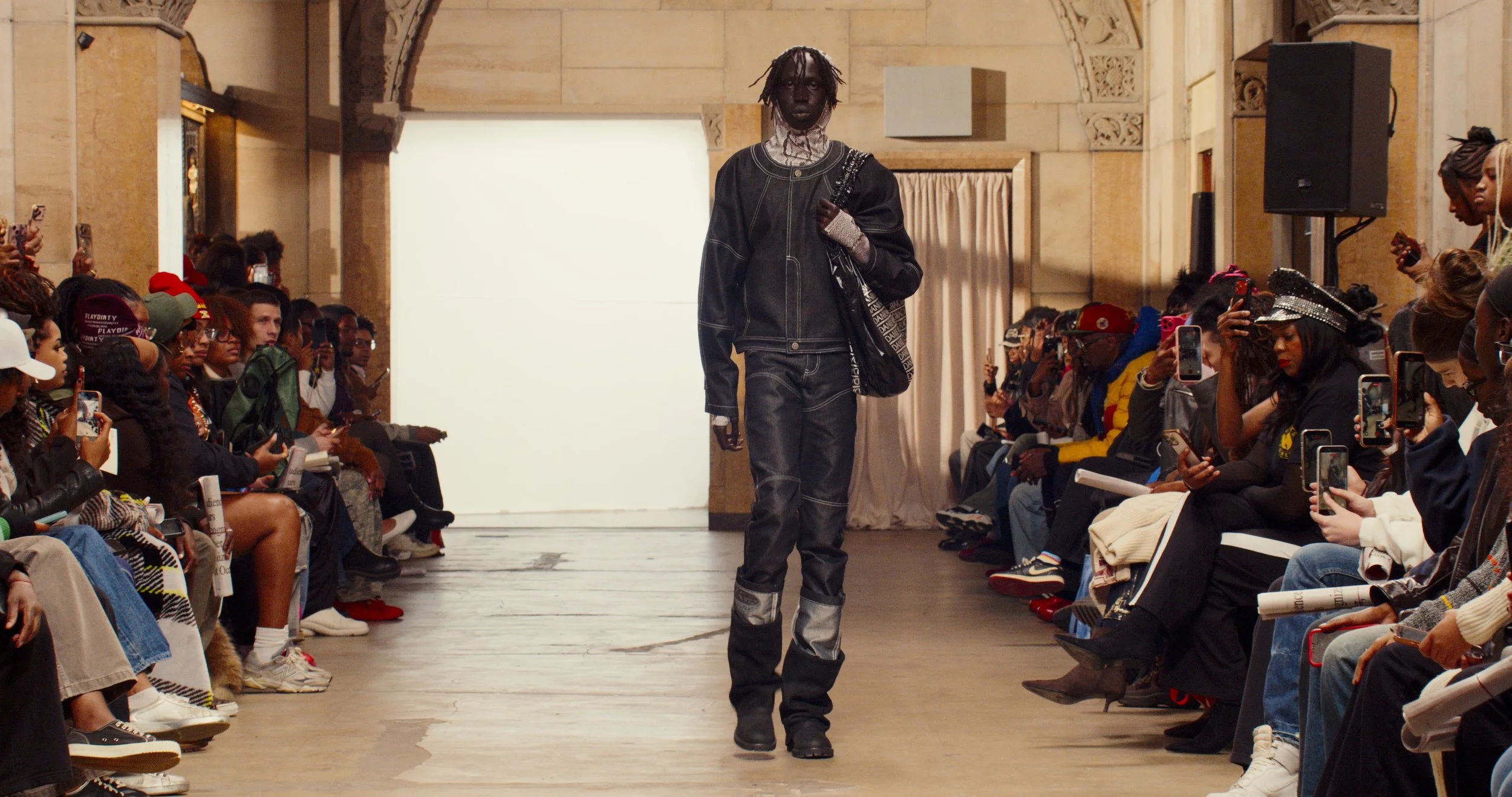
In Brooklyn, the audience was invited to a sample sale where shoppers could trade in old Telfar bags for the opportunity to shop for free. Some began lining up at midnight. Somewhere between commerce and community, the runway appeared. Paris received the image of it.
Whether that constitutes a fashion show, a sample sale, a performance, or some combination of all three is almost beside the point. Telfar has spent more than two decades challenging the conventions that determine what fashion is supposed to look like, who gets access to it, and which audiences are considered legitimate participants.
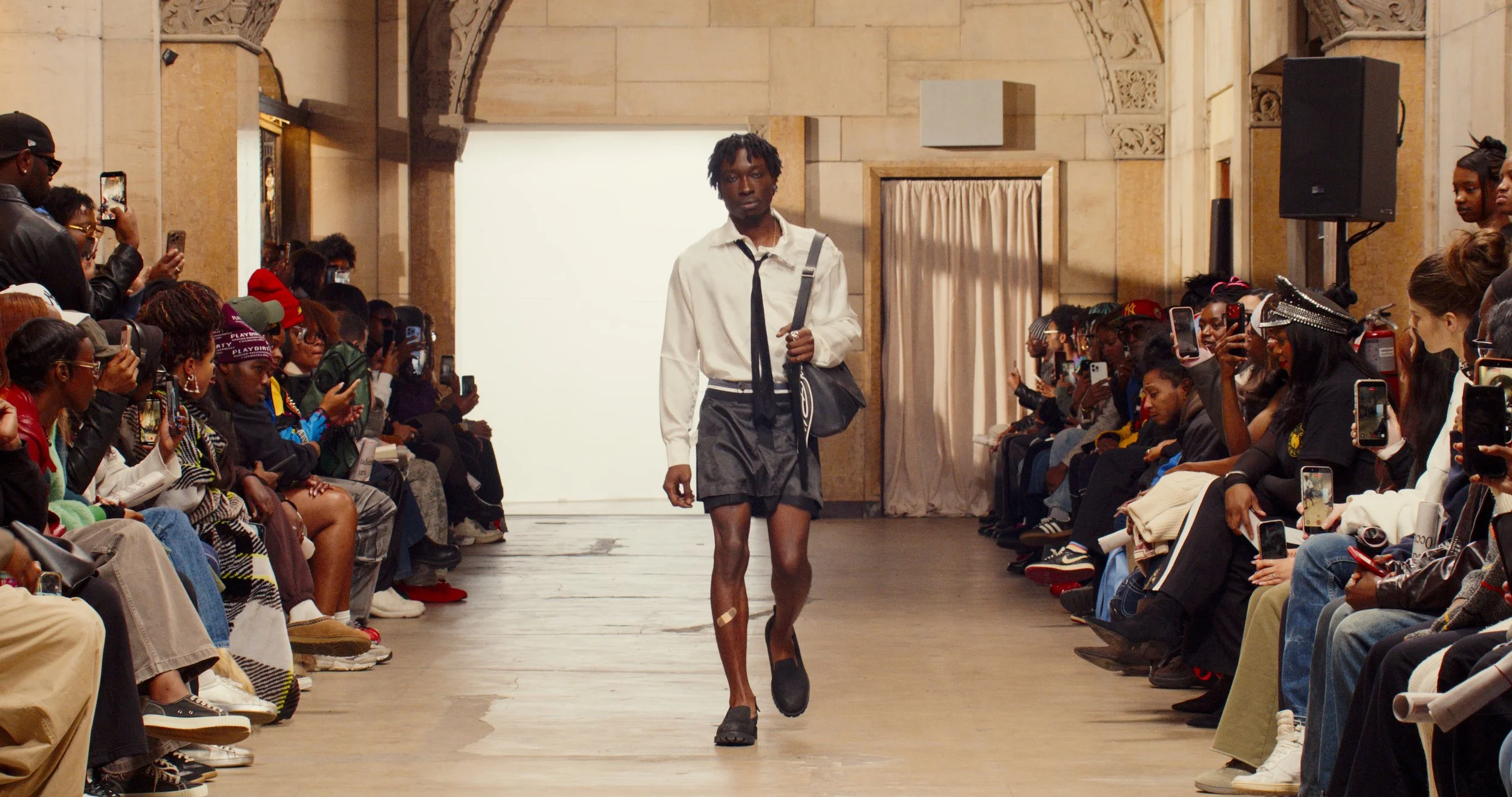
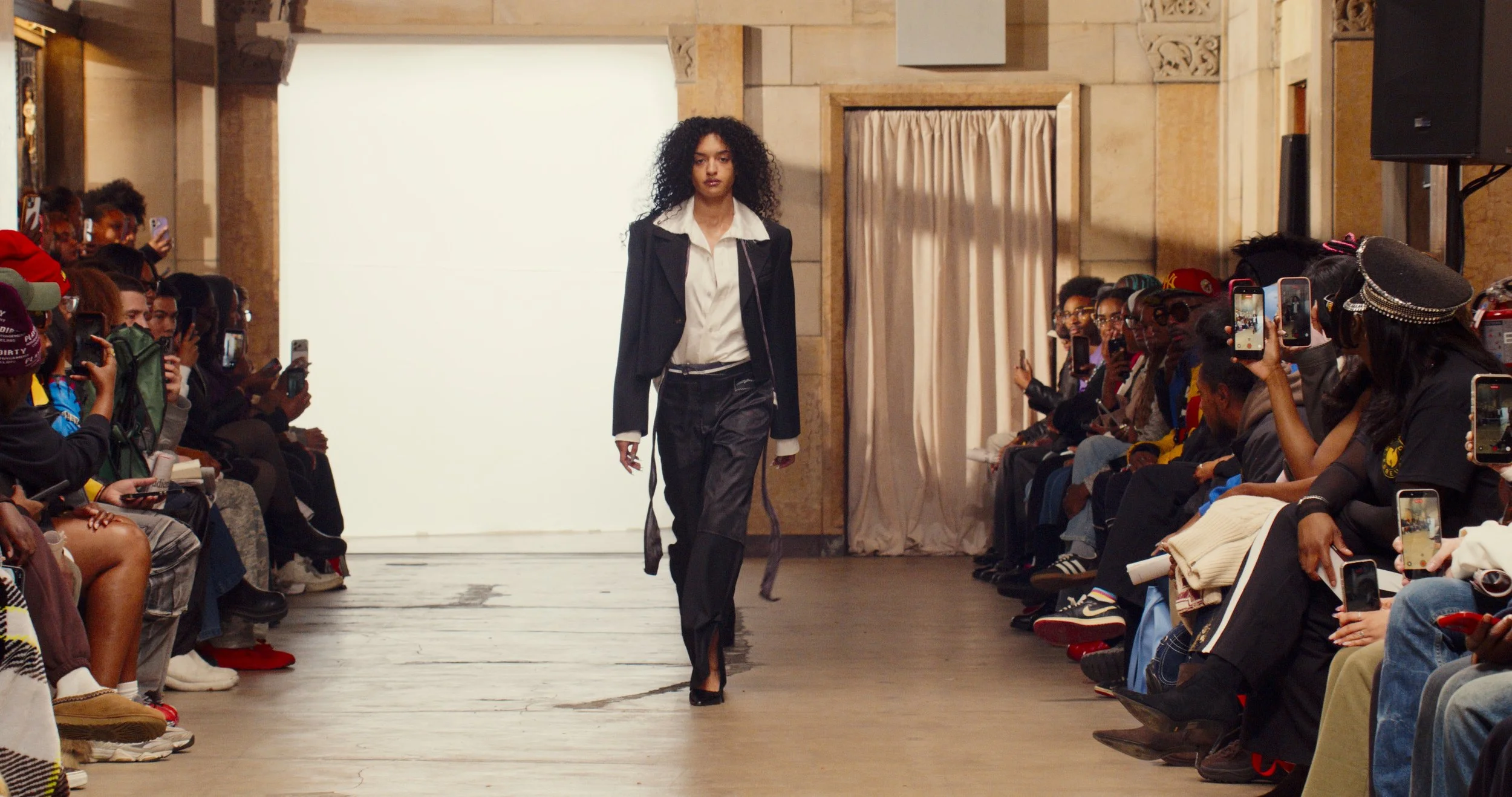
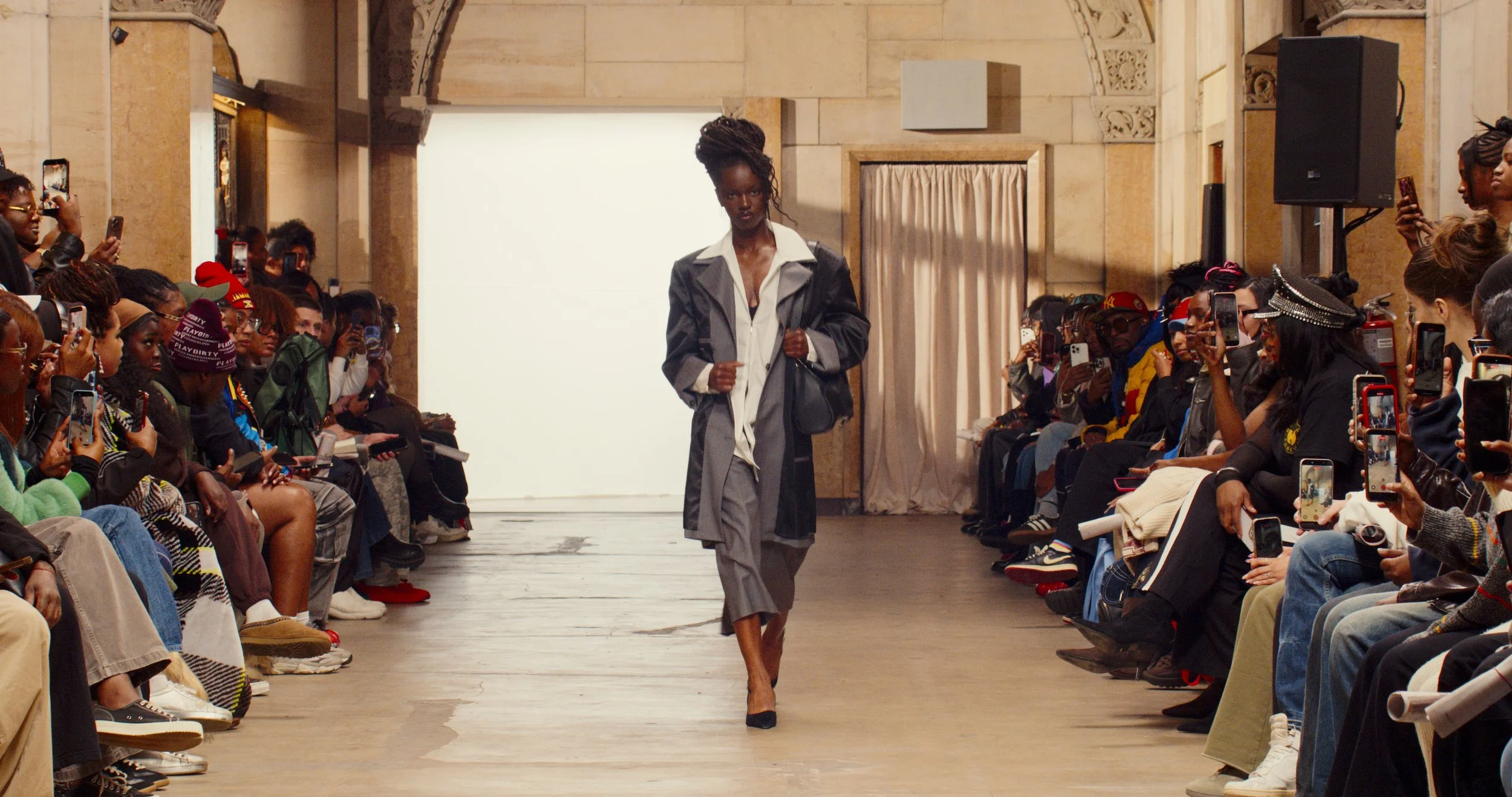
The collection itself continues that interrogation through the suit.
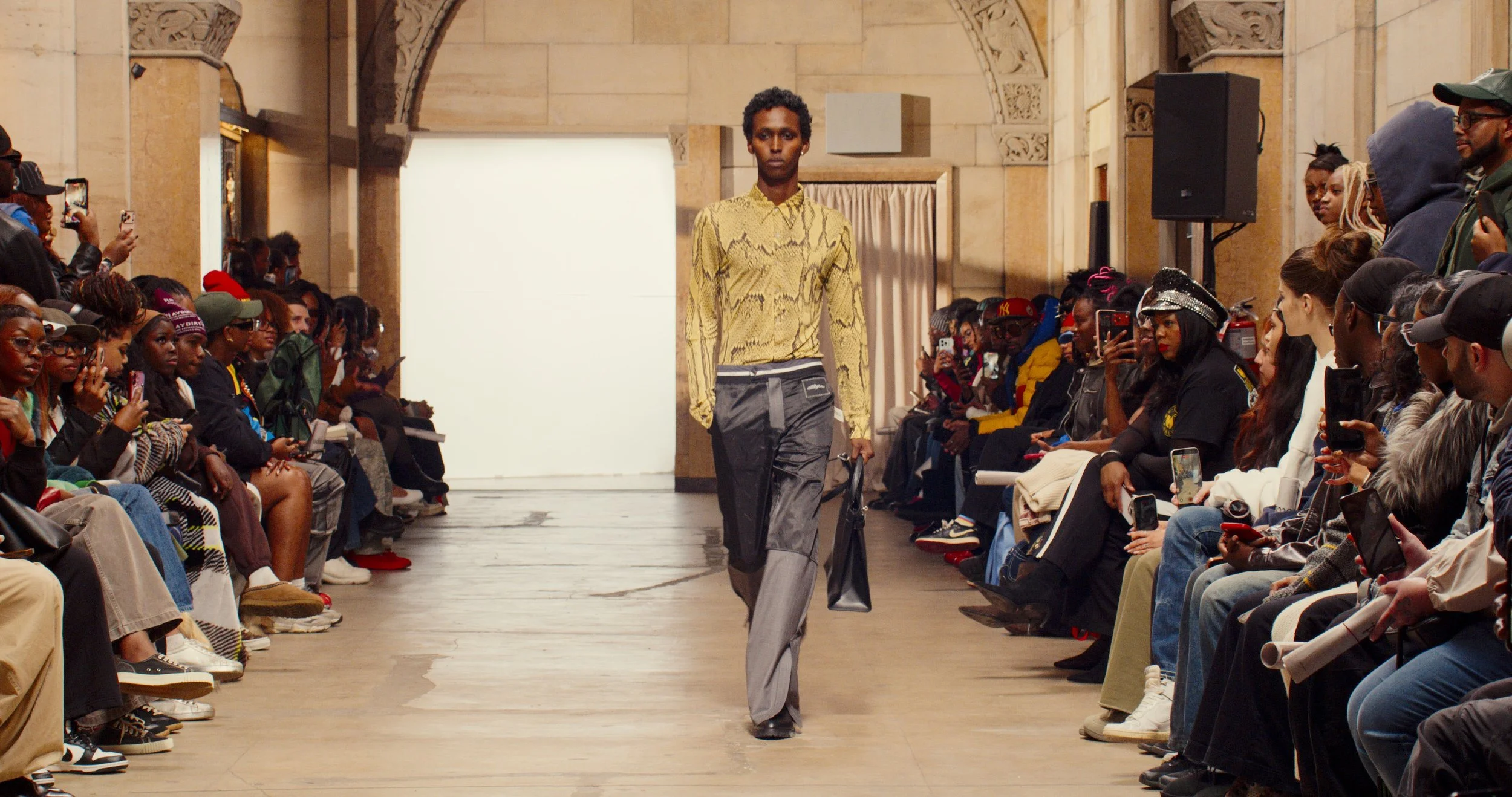
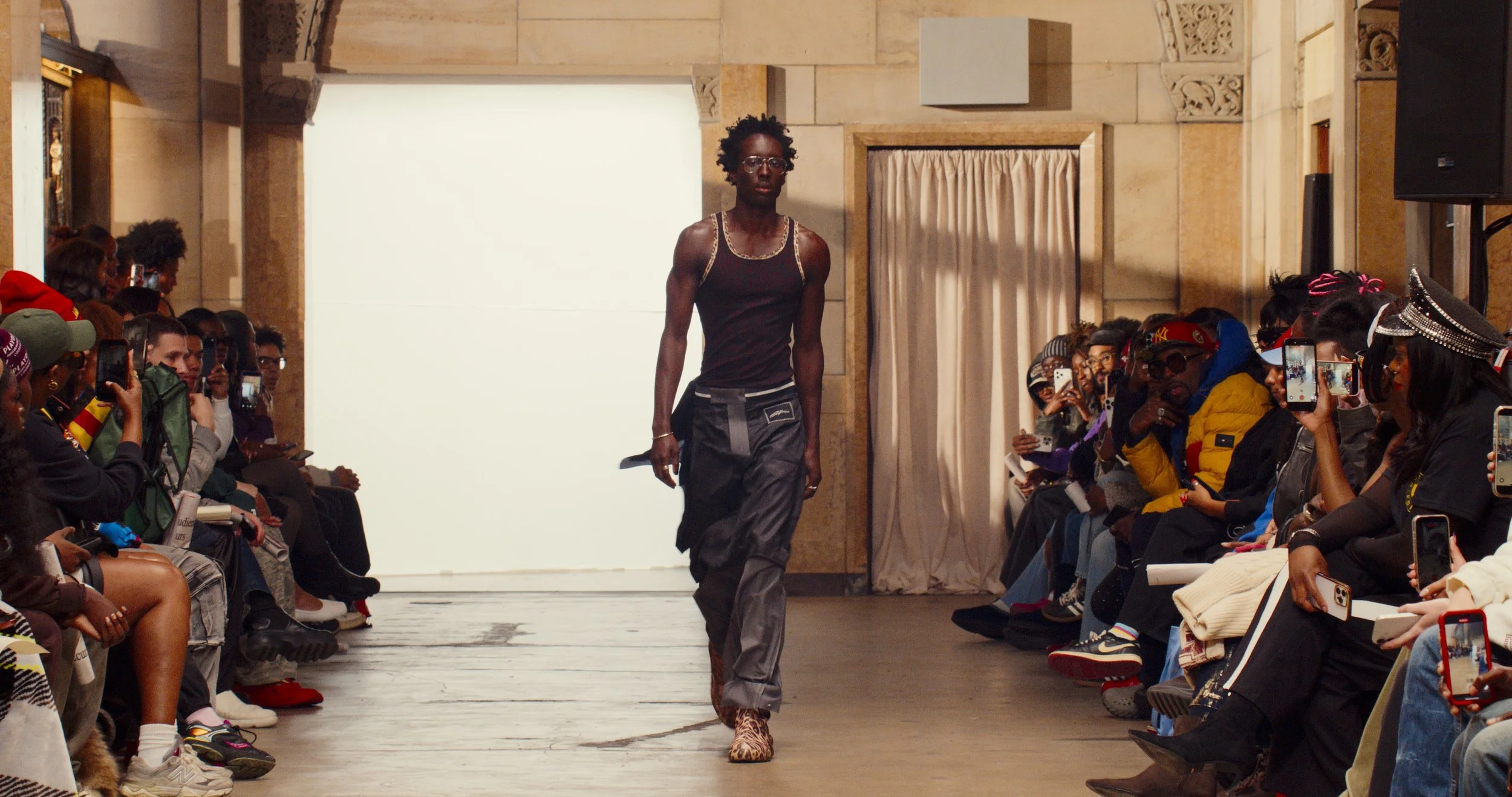
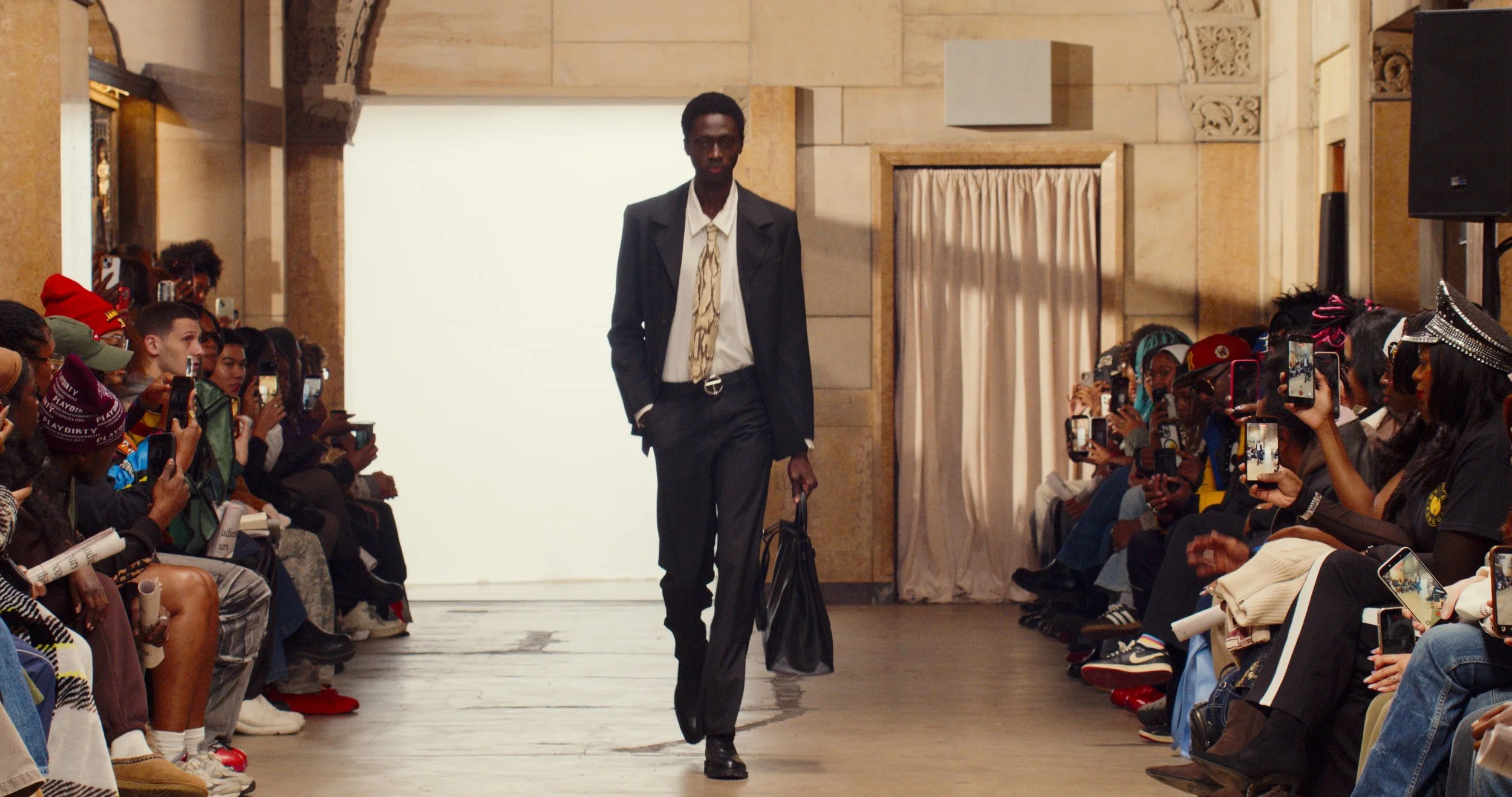
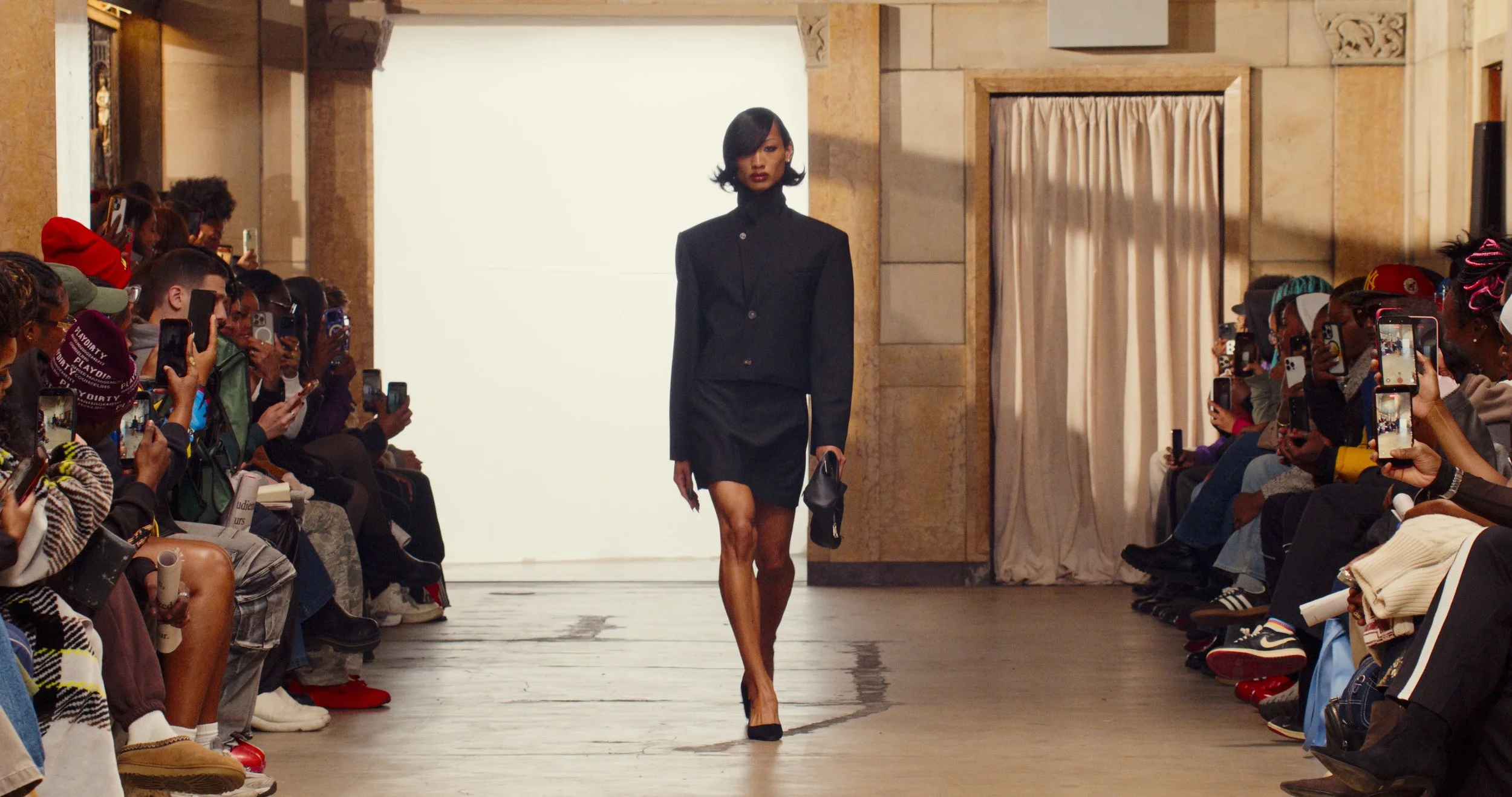
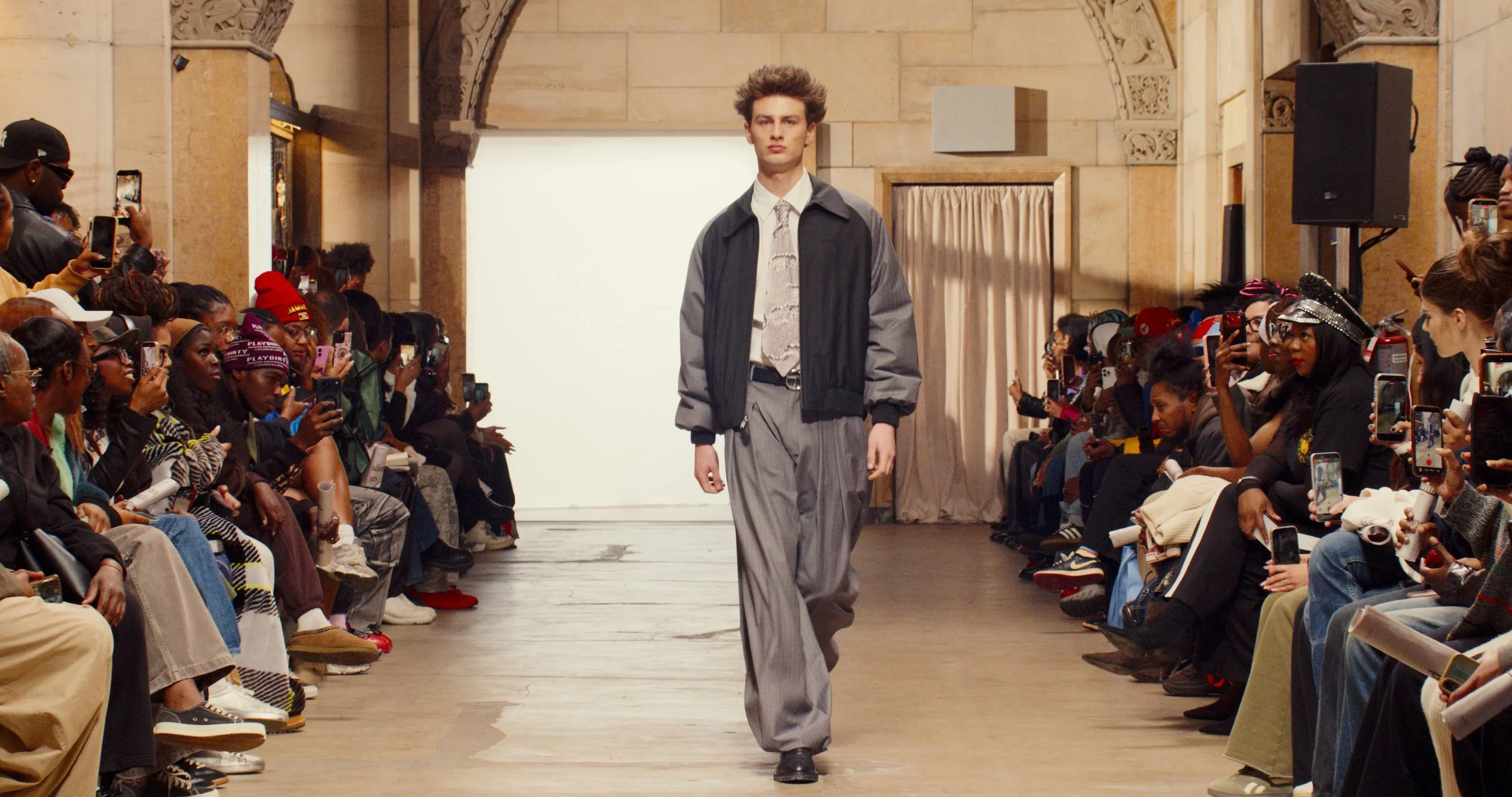
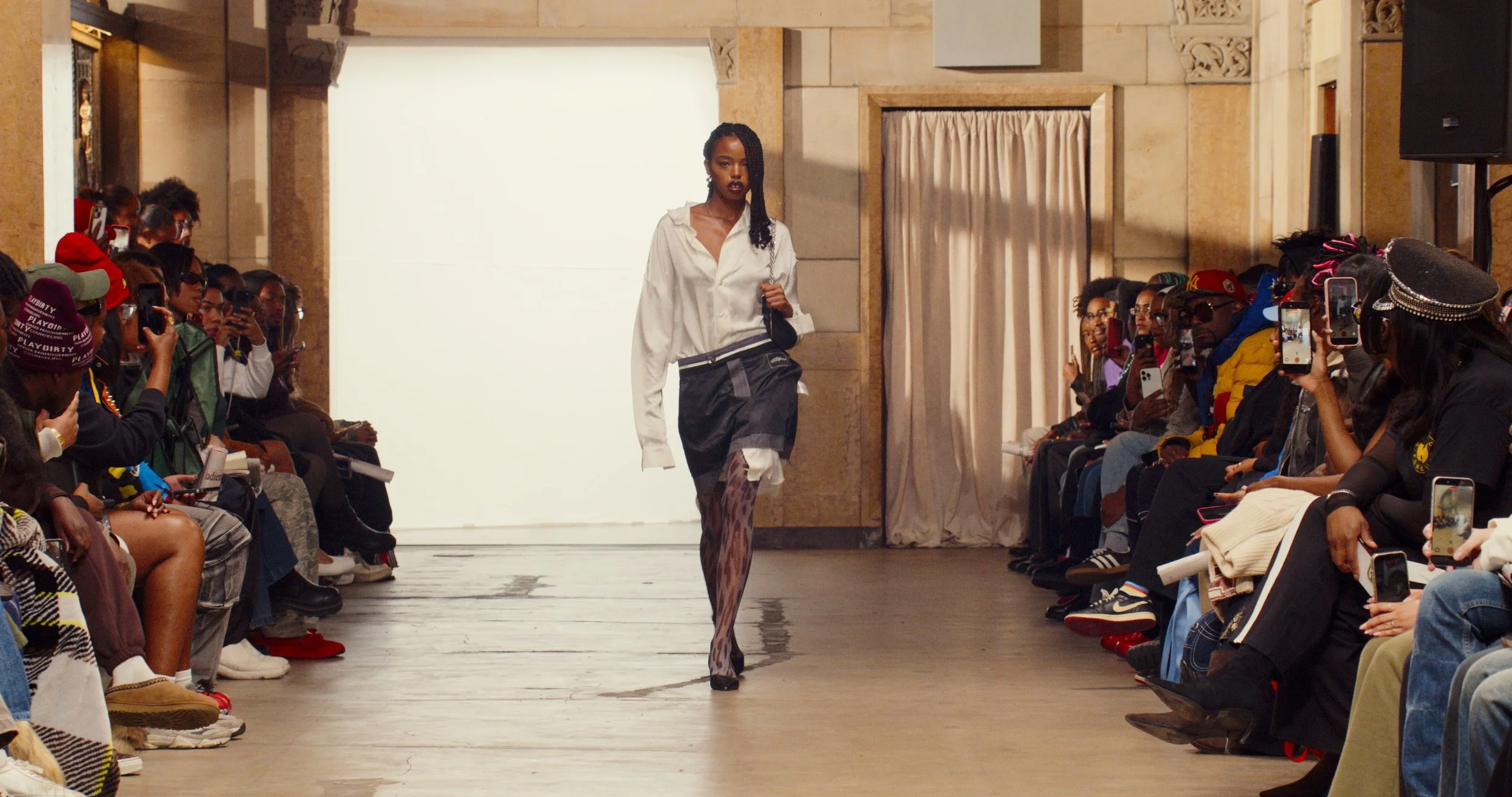
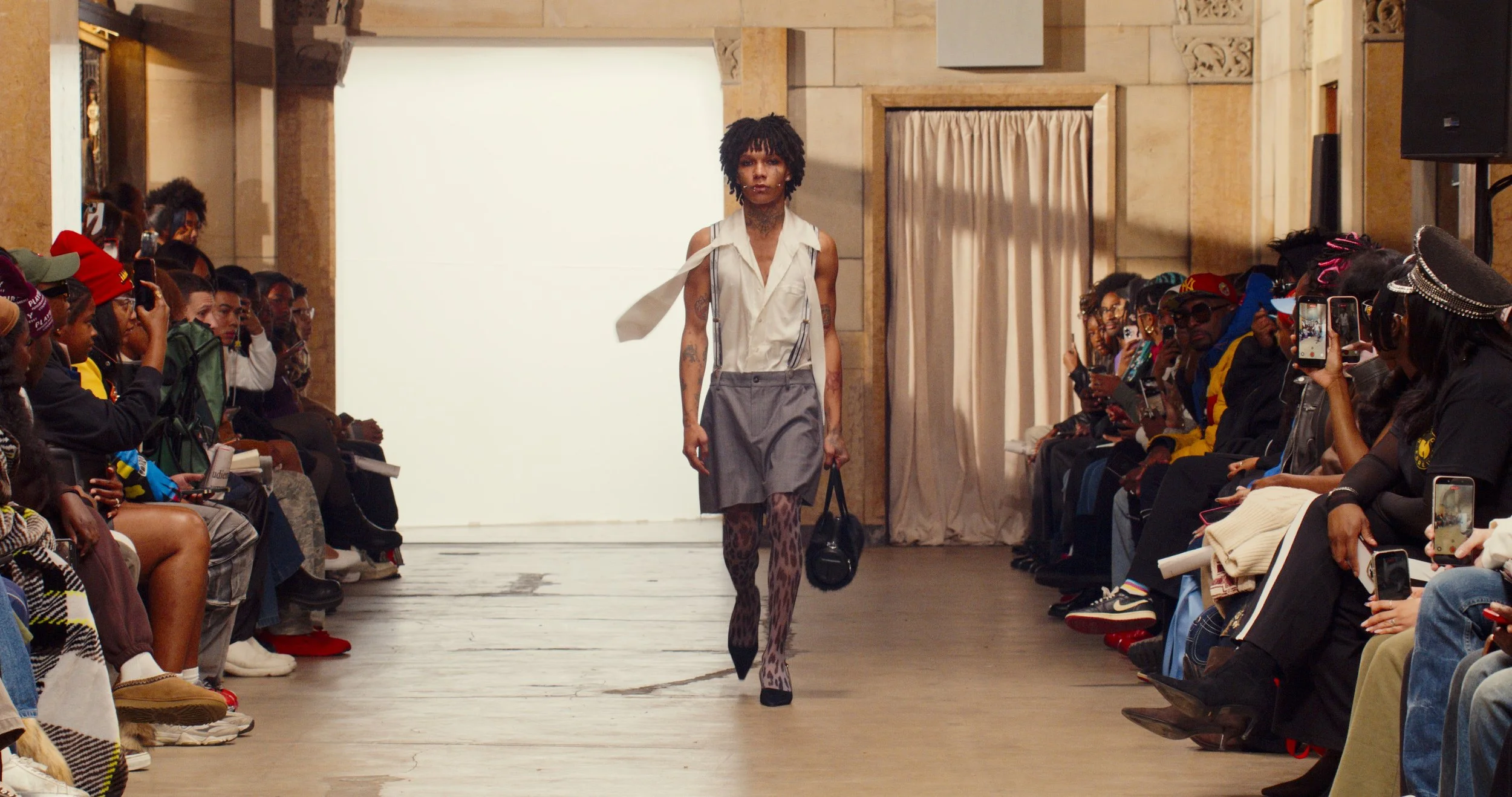
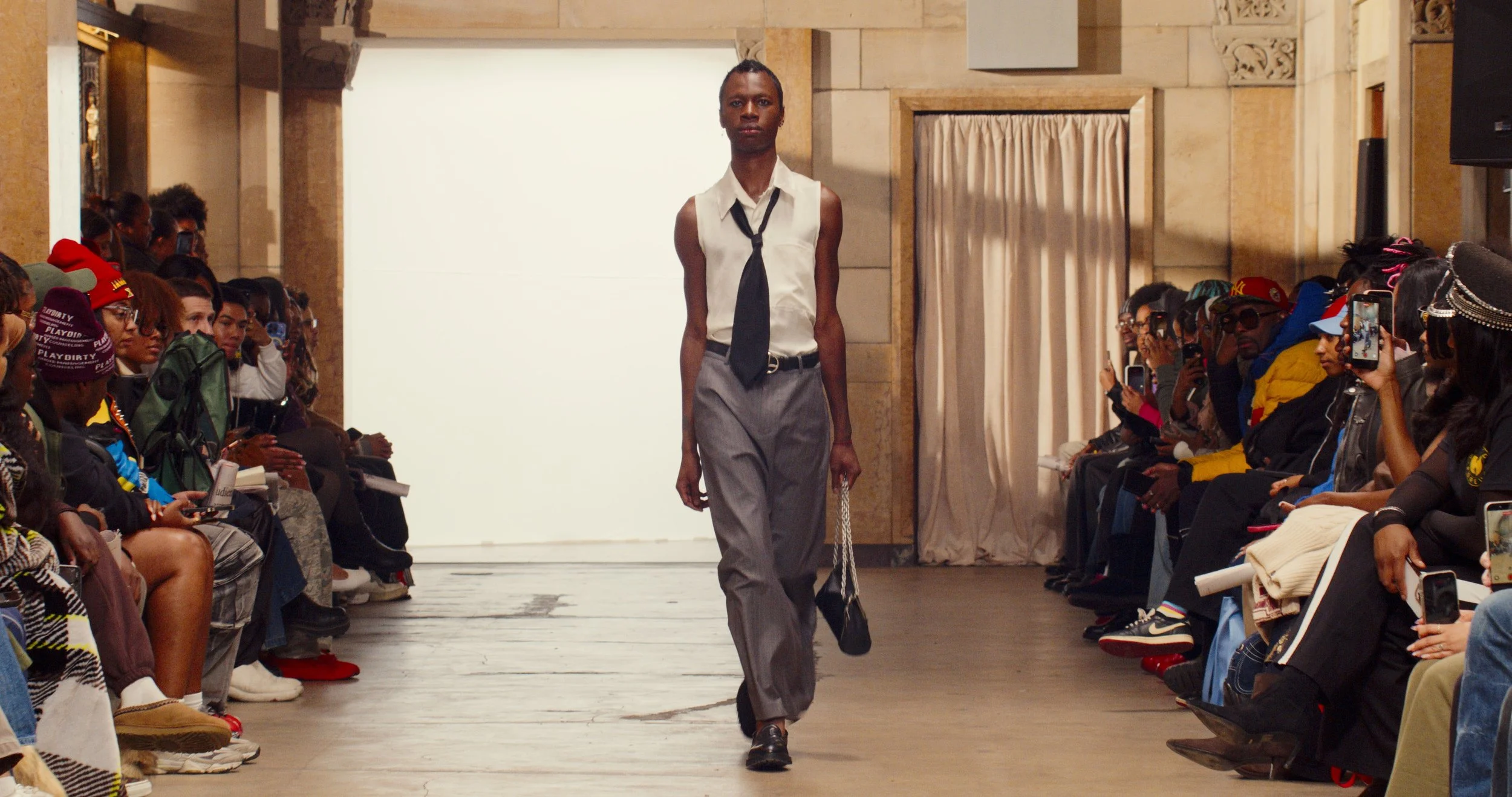
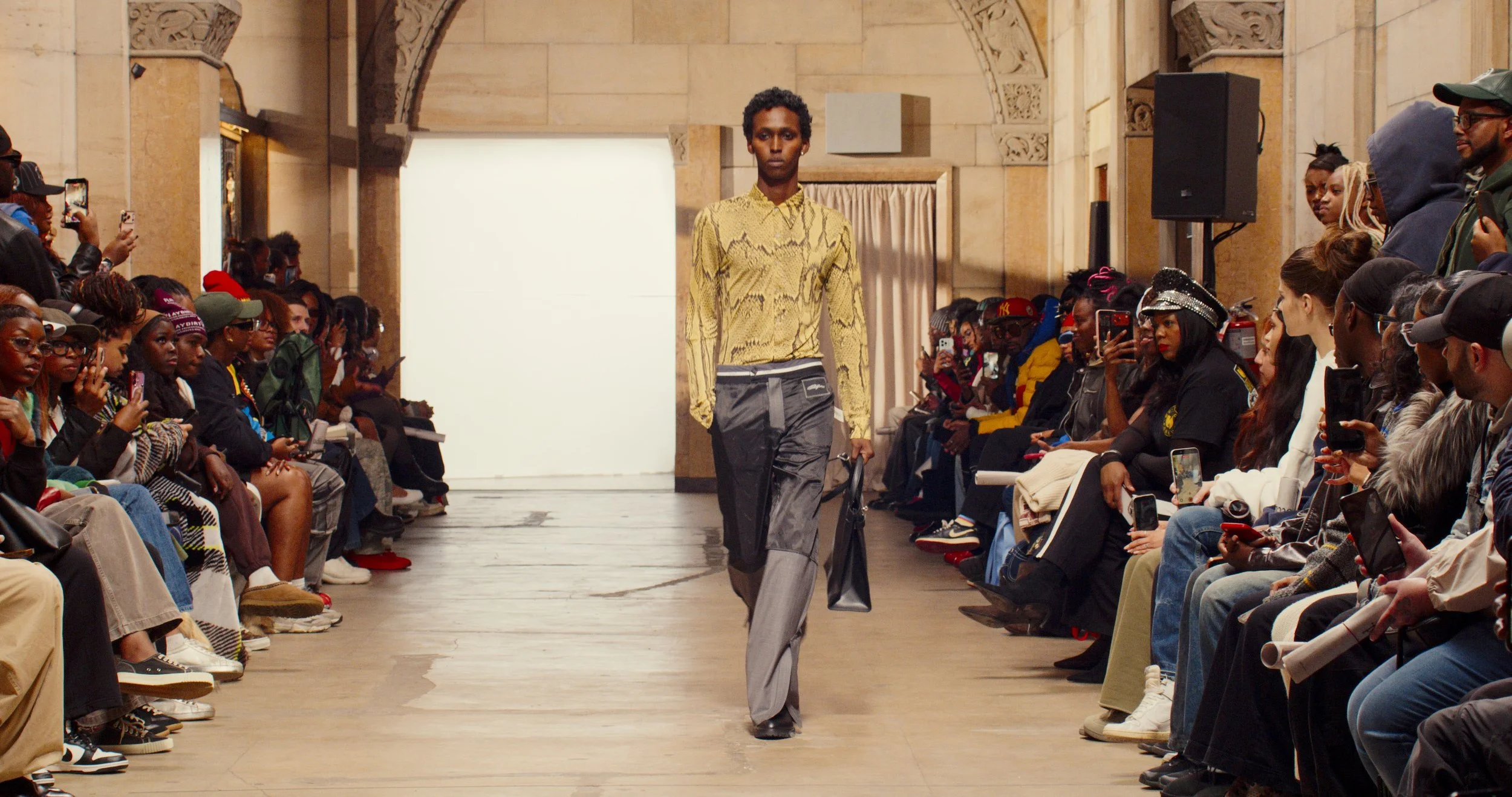
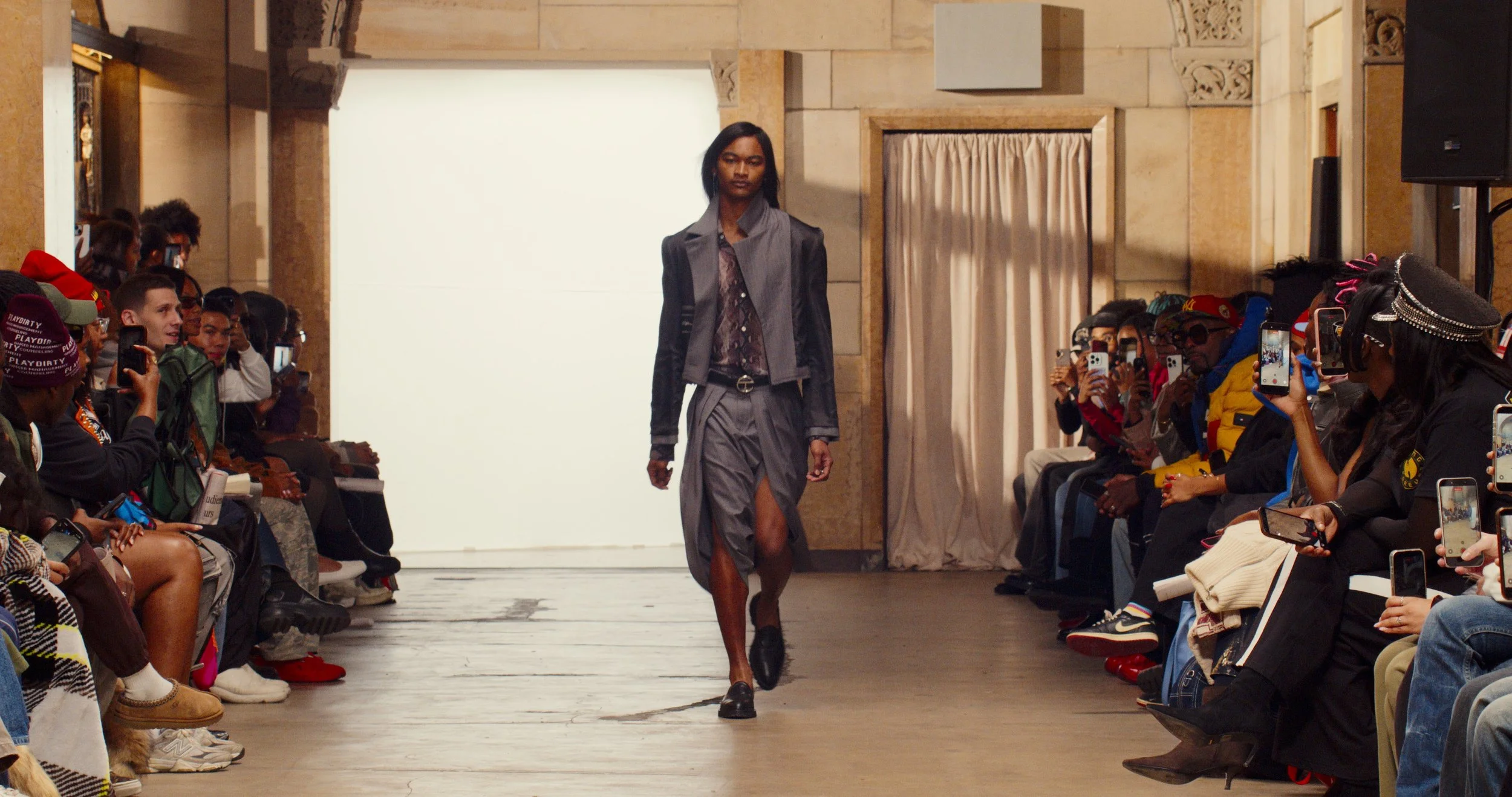
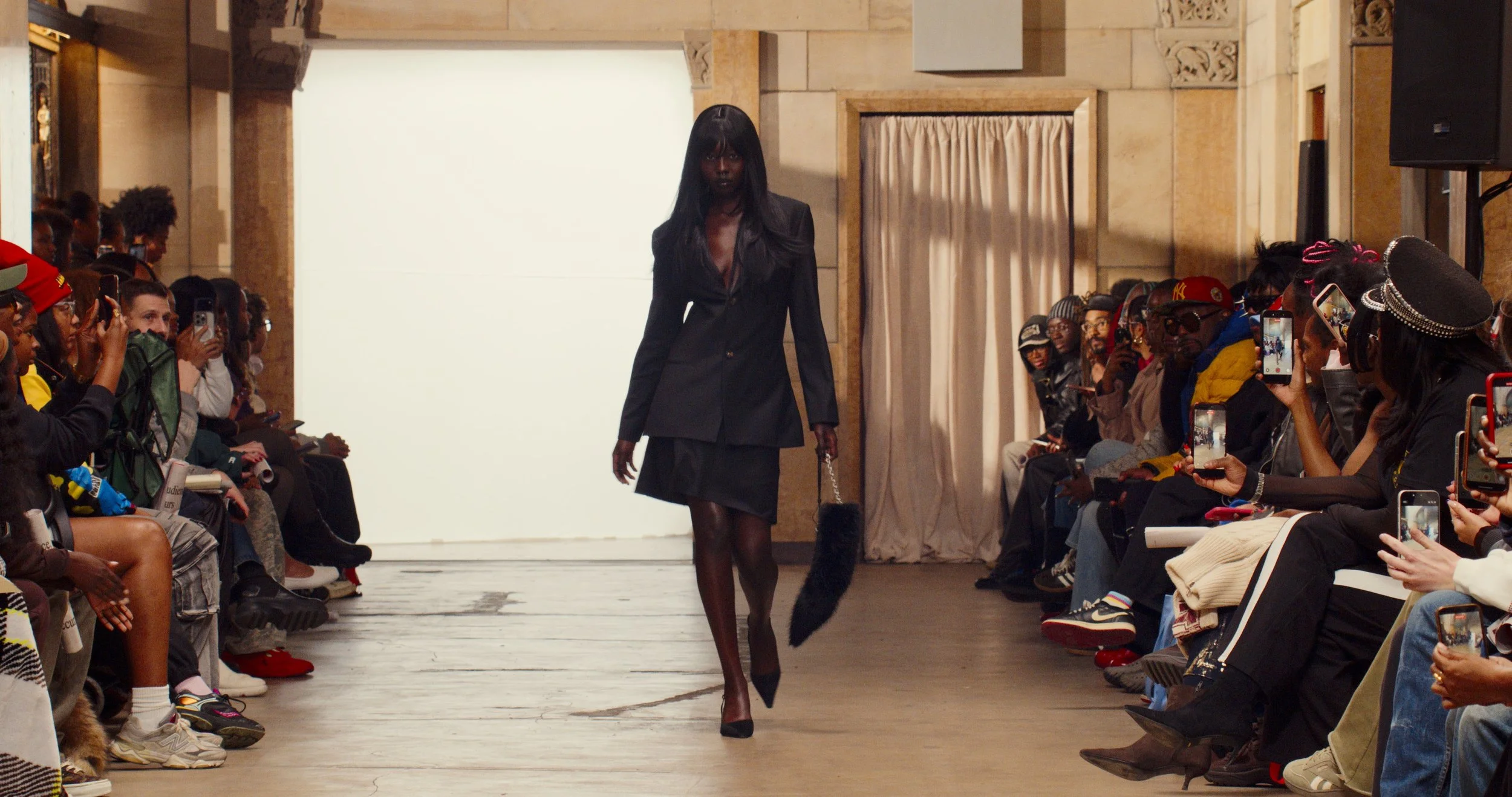
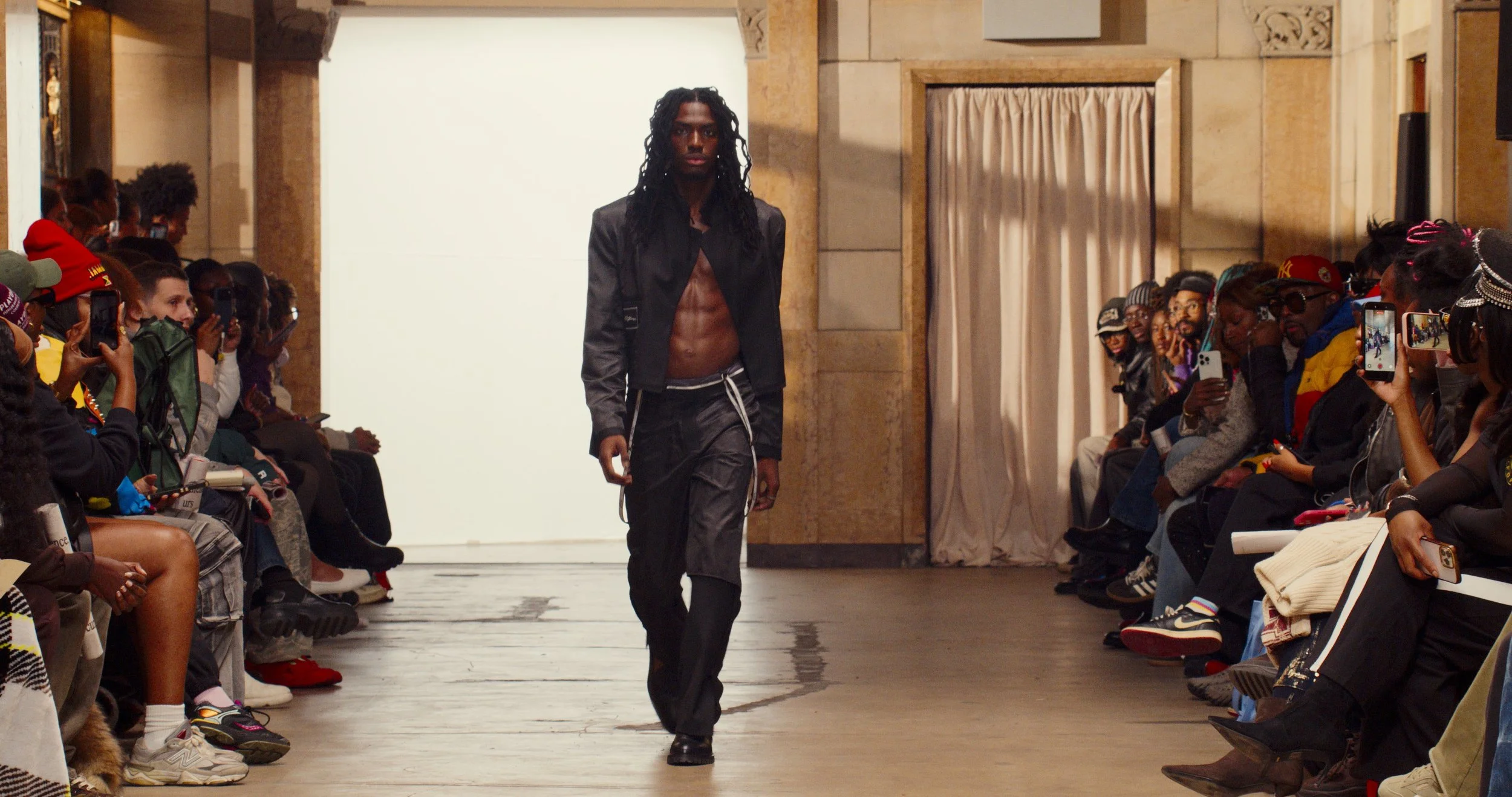
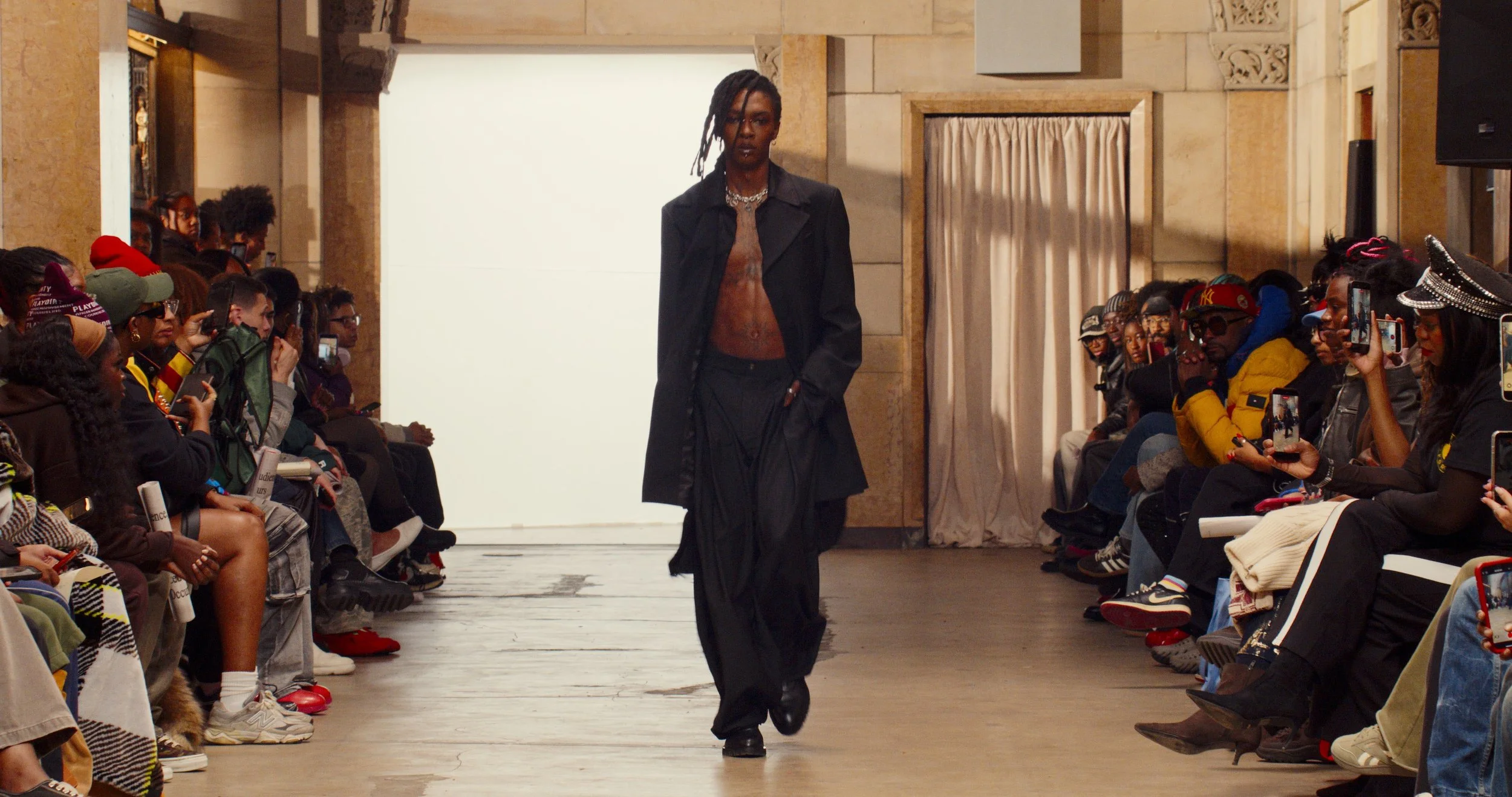
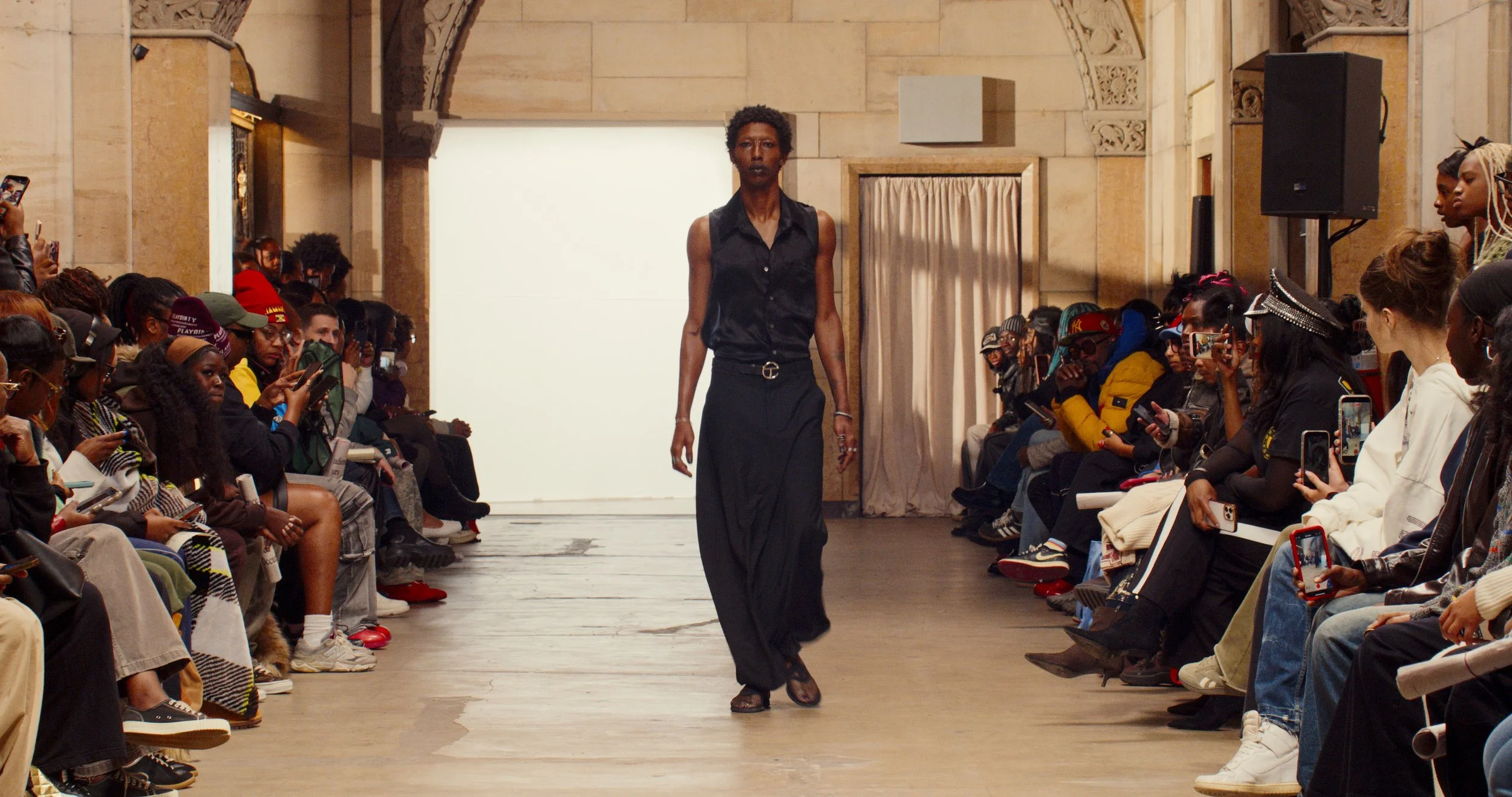
“A suit walking down the street is either coming or going,” the house writes. For SS2027, Telfar makes suits that can be worn inside-out: cropped, classic and zoot jackets paired with balloon and straight trousers, raw-hemmed skirts, culottes and African wrap-shorts in black and checked gray virgin wool-blend. Their immaculate construction—silk-jacquard linings, concealed pockets, double buttons and precise finishing—is intentionally disrupted when the garments are reversed. The inside becomes the outside. The convention becomes the intervention.
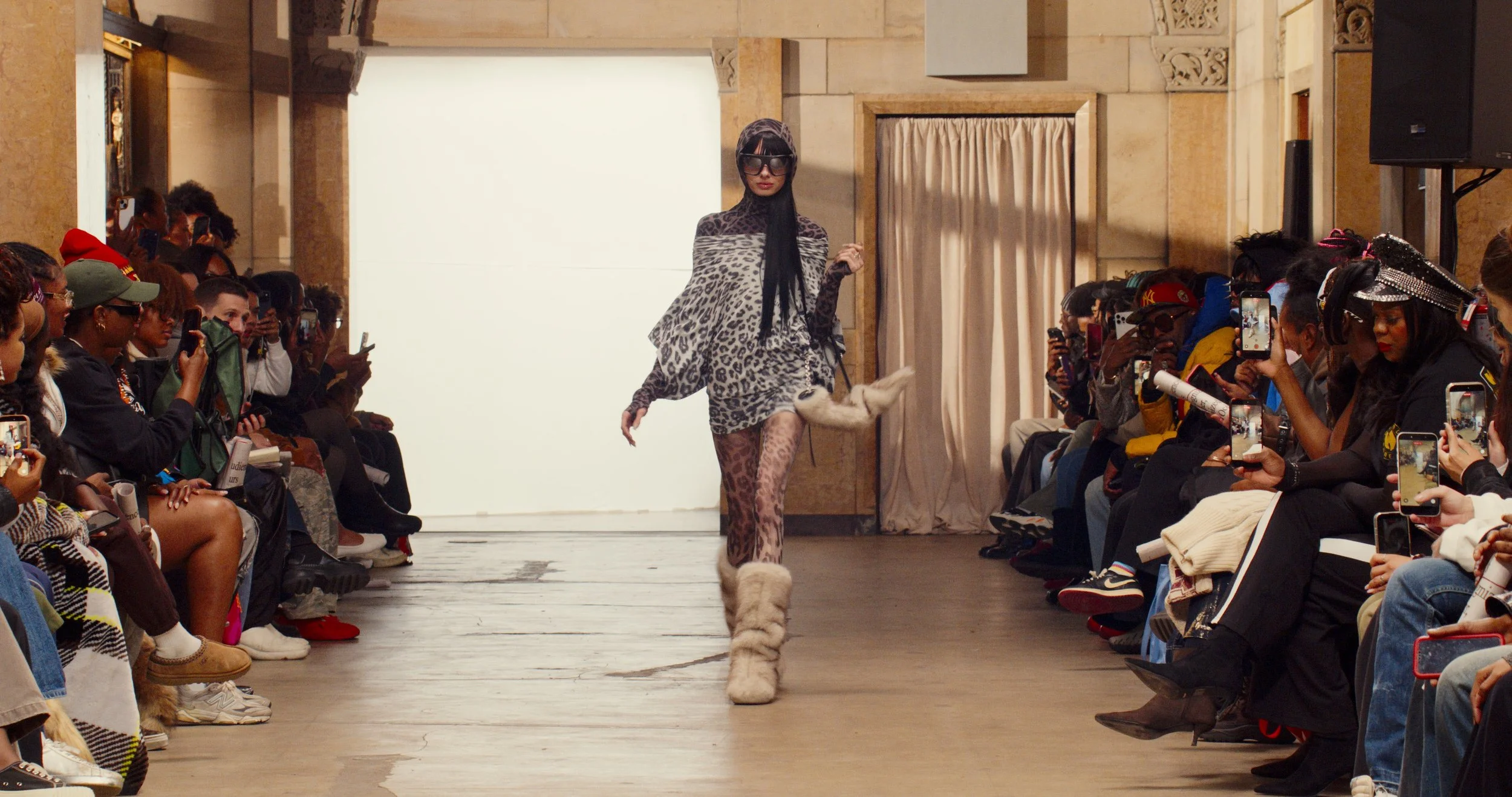
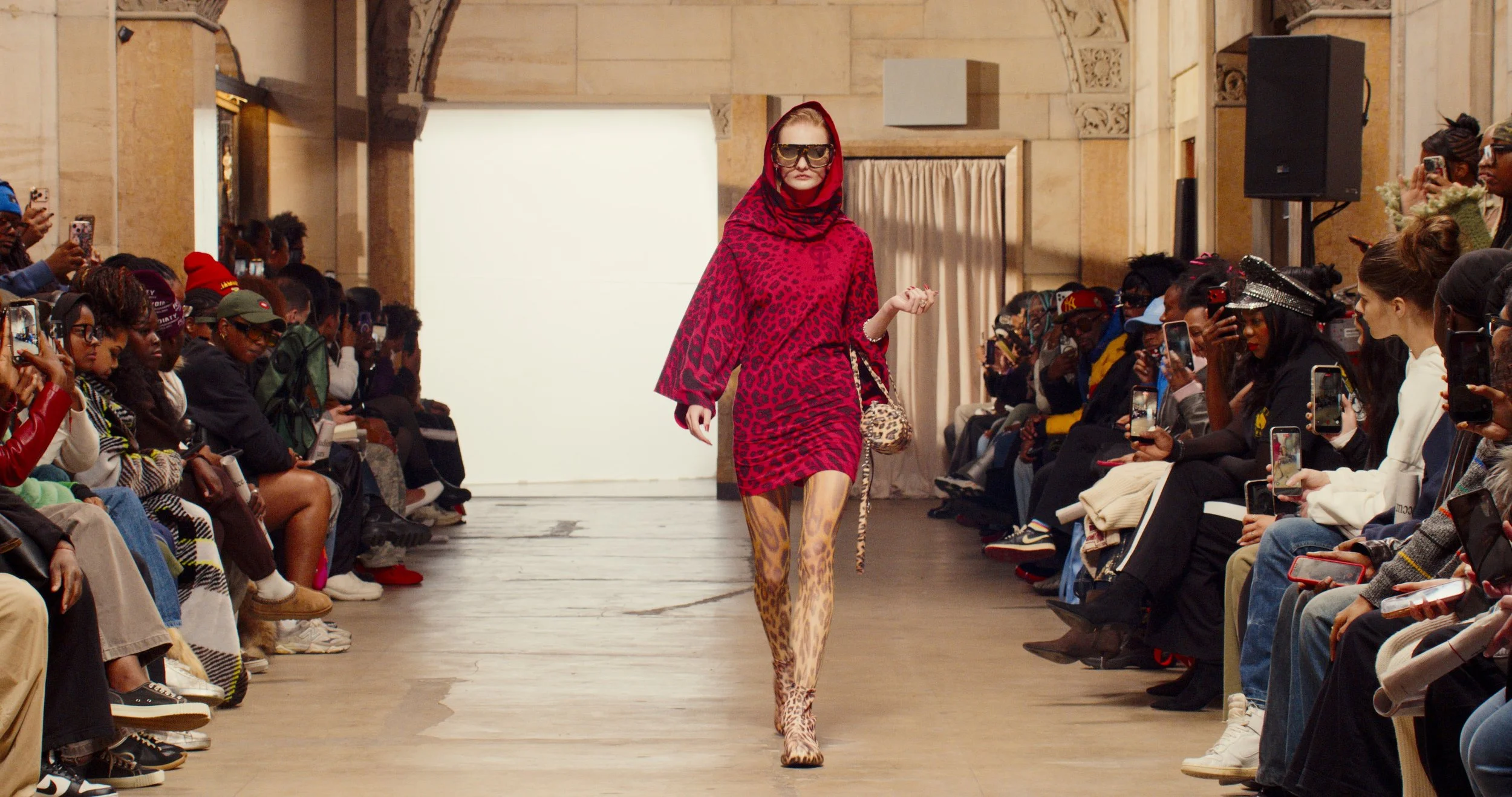
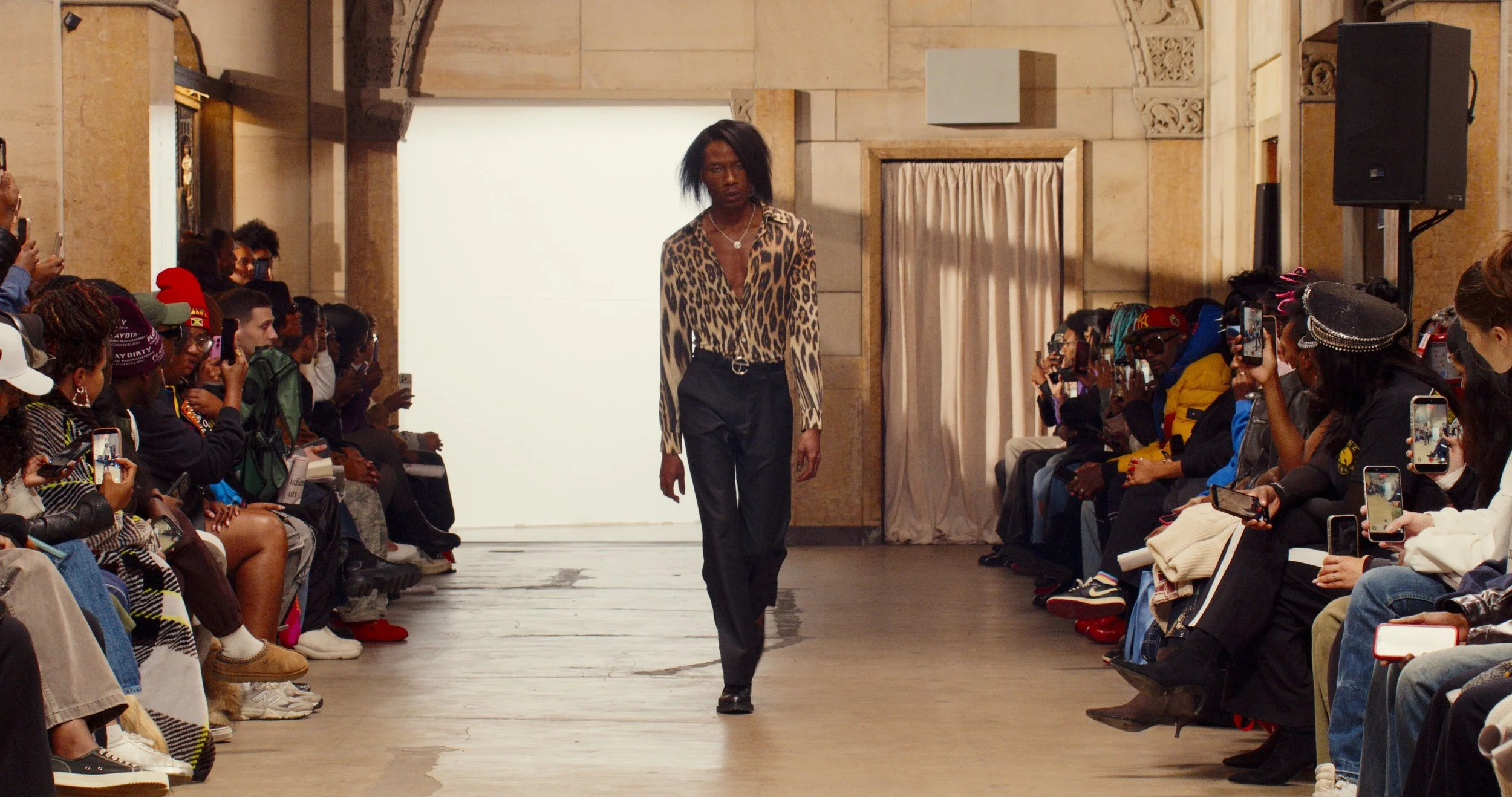
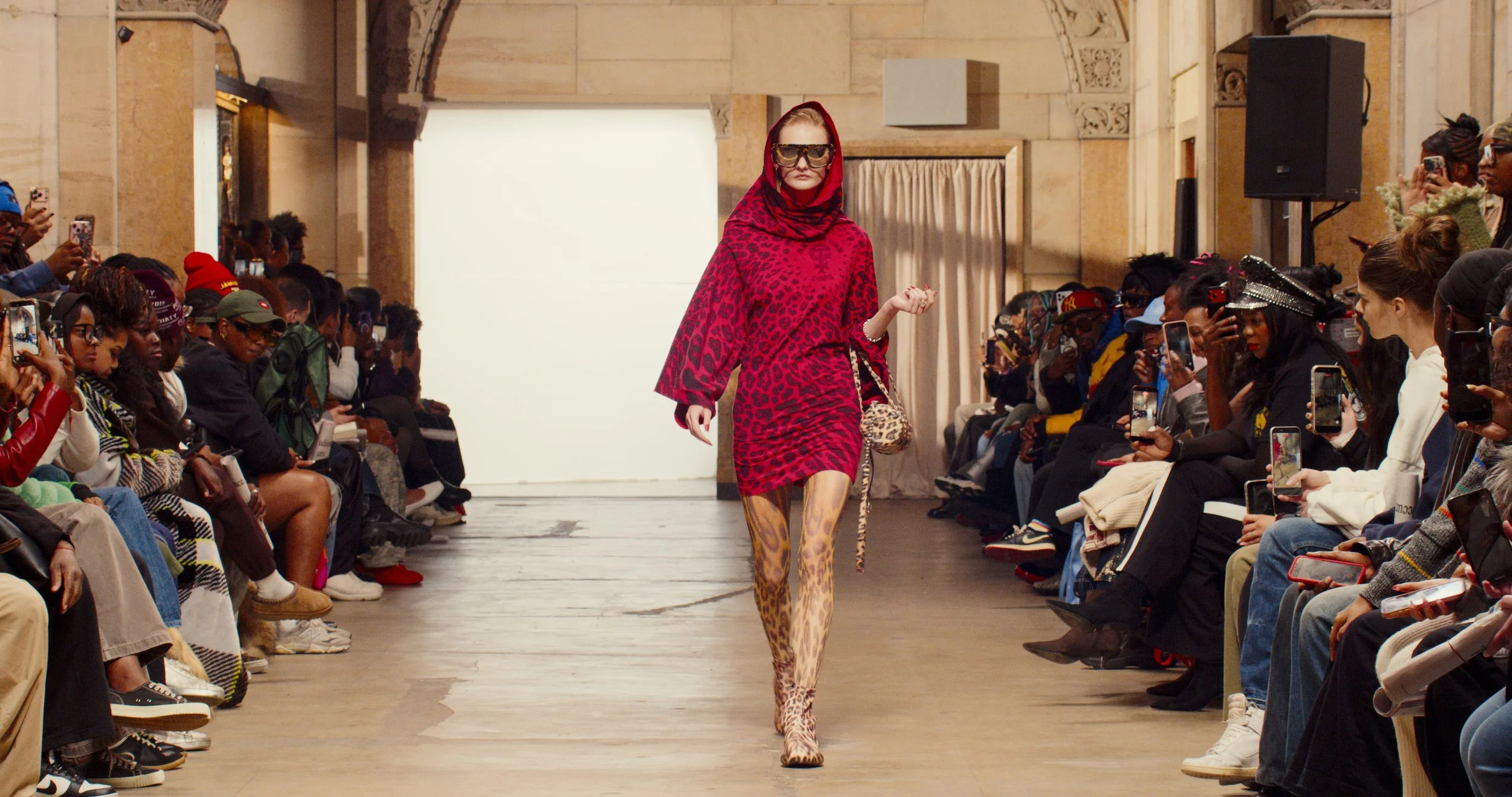
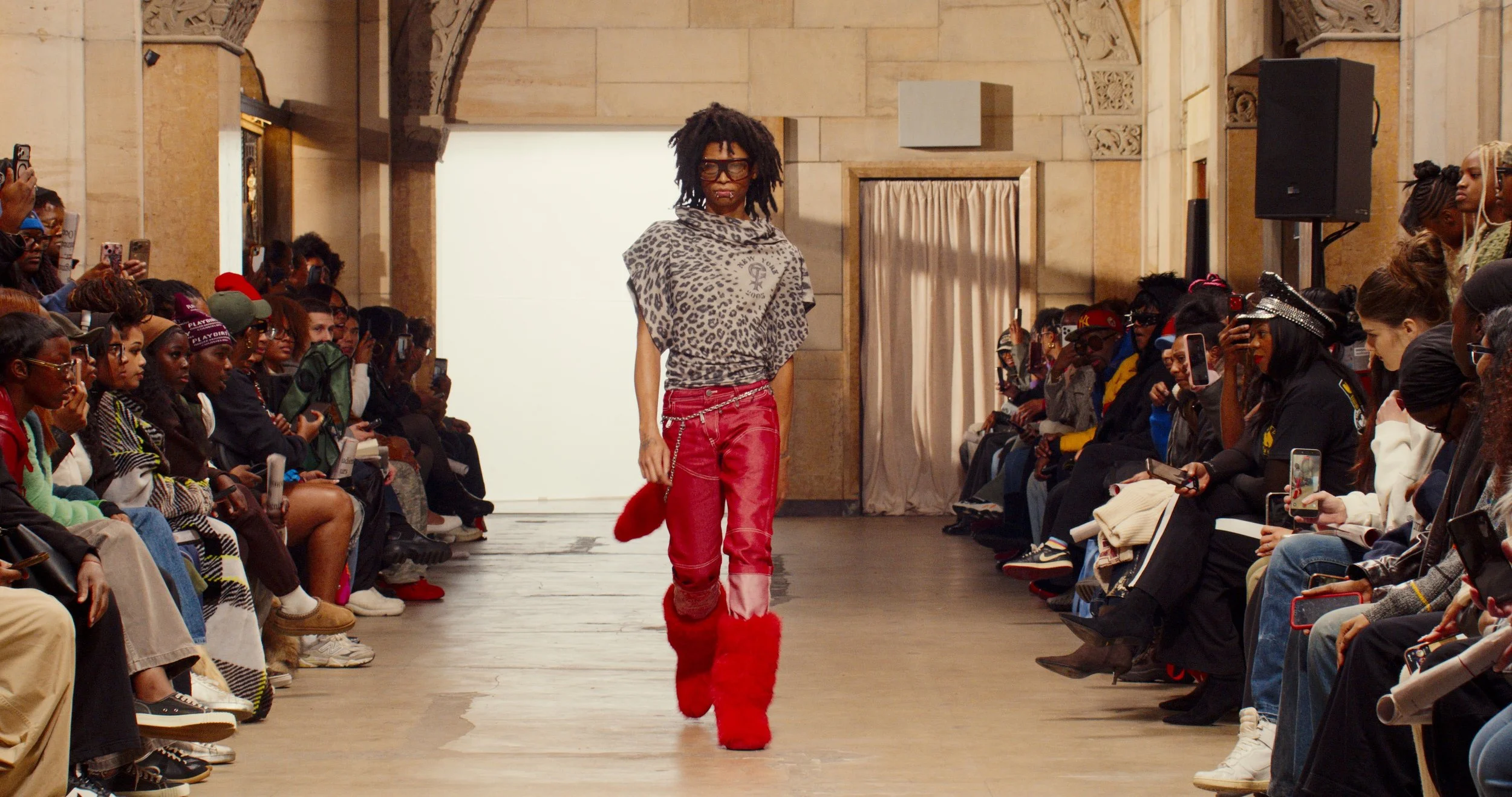
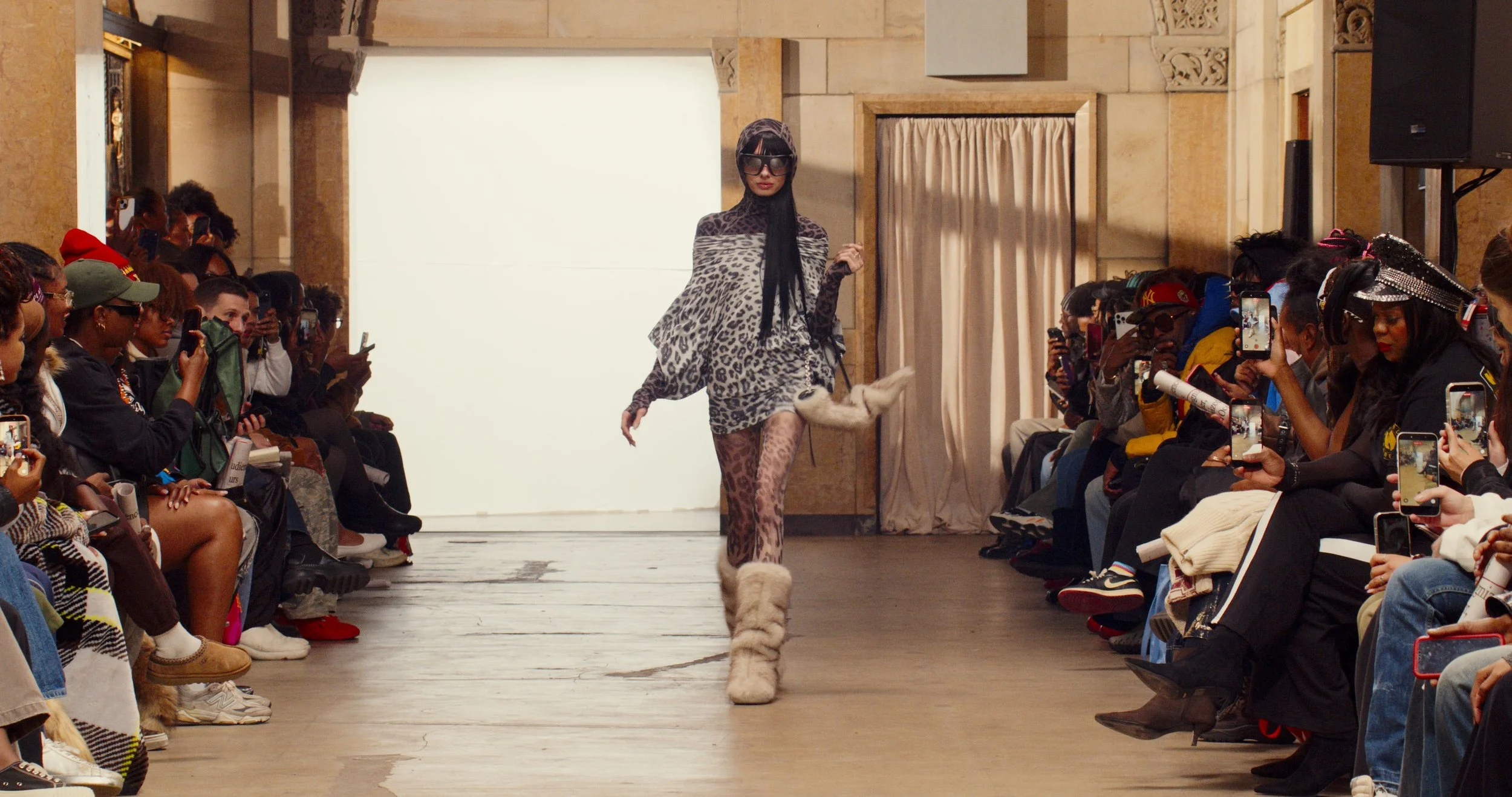
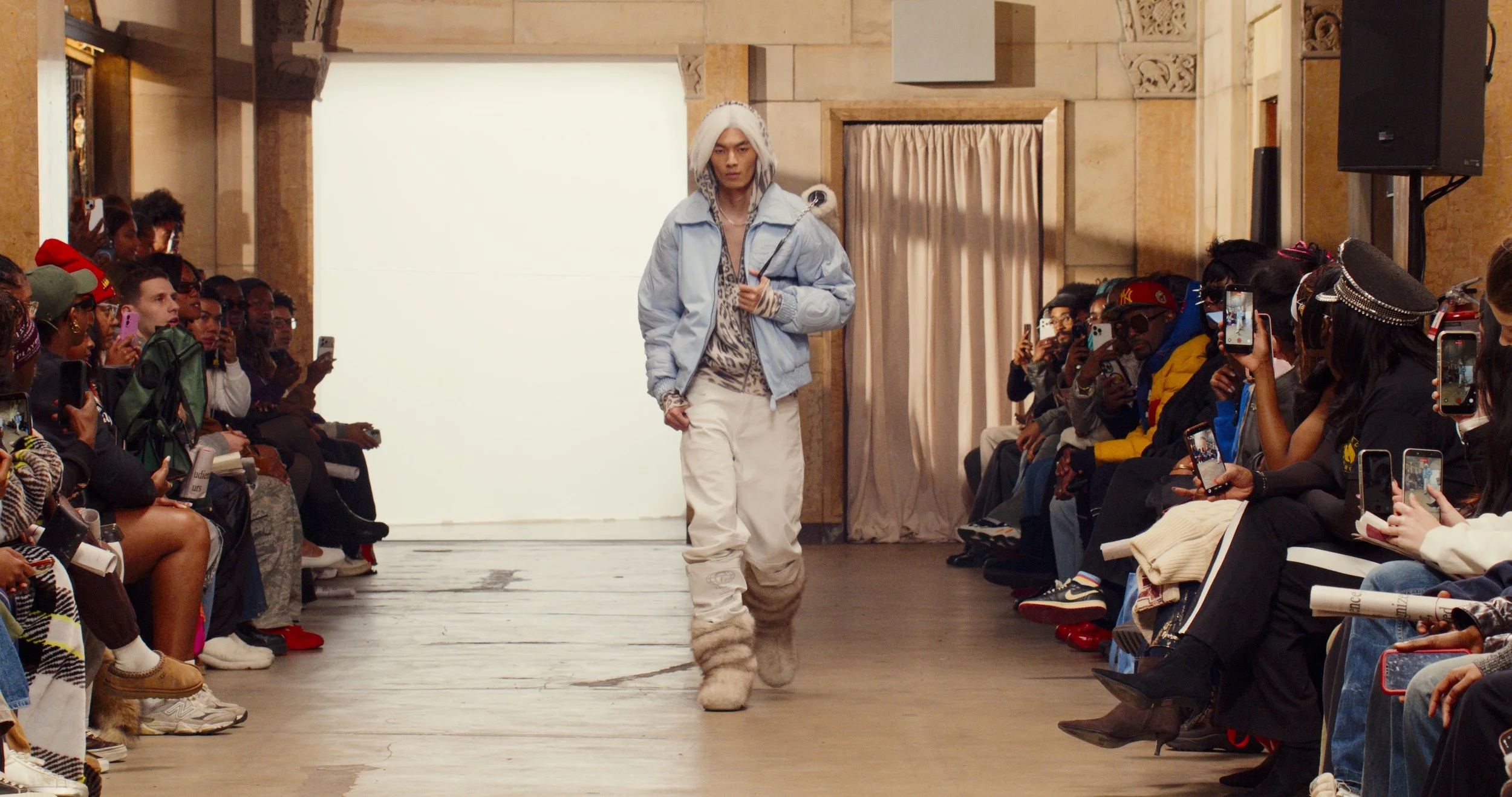
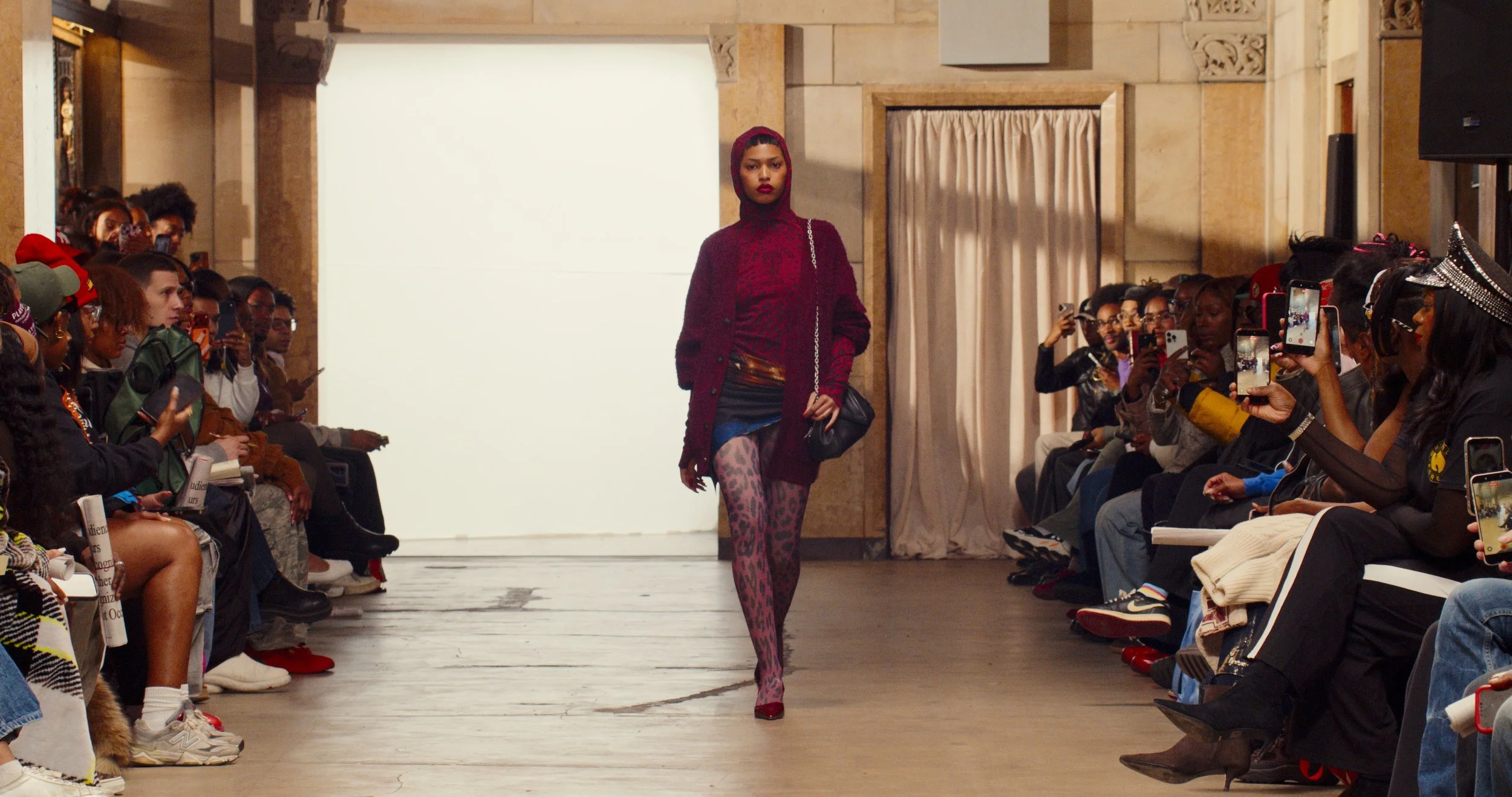
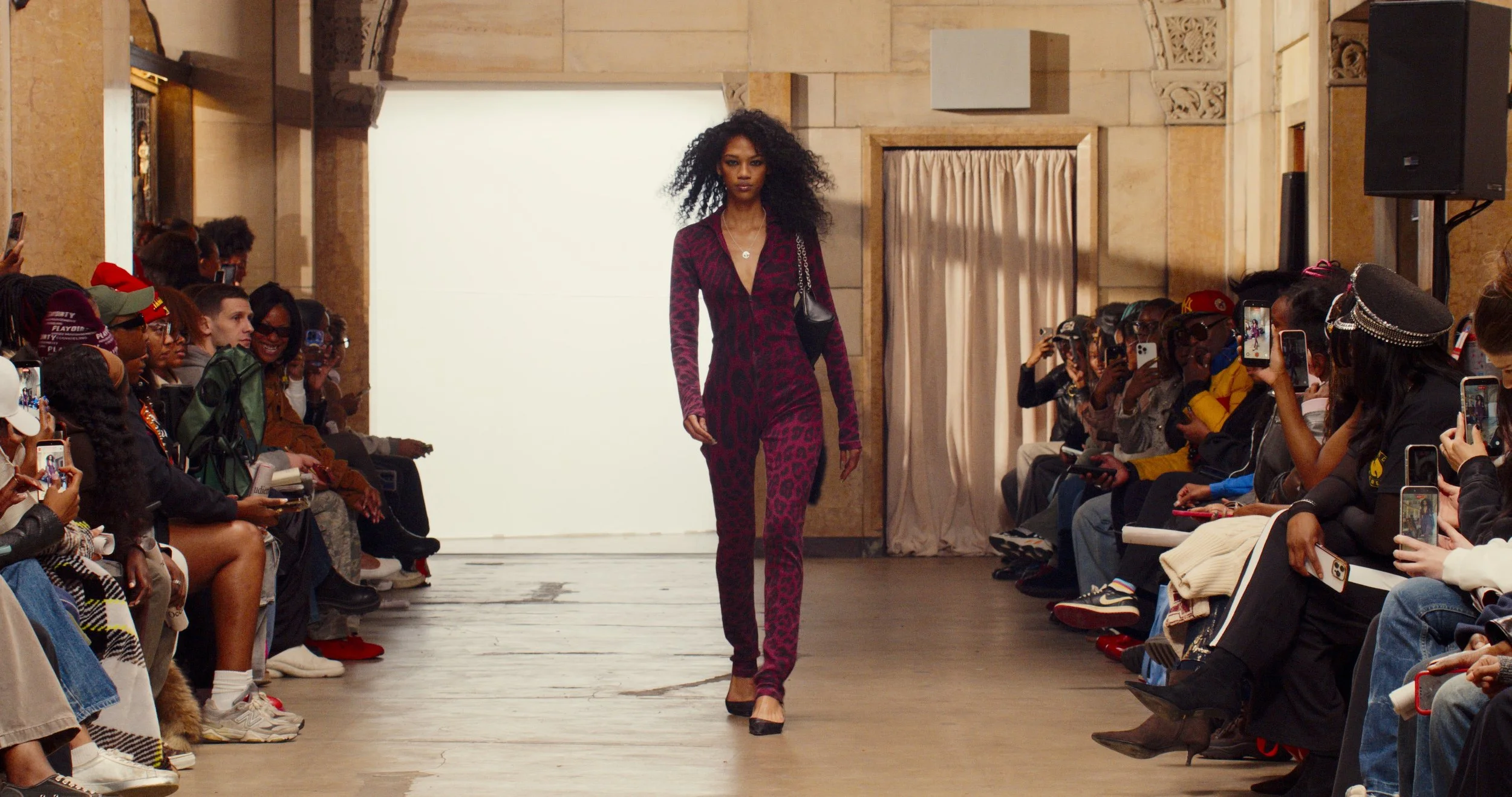
That logic extends throughout the collection. Silk jacquard linings are exposed through raw edges. Crisp poplin shirting is interrupted by zippers. Gauzy shirts, baby T-shirts and scarf-like halters arrive in snake and leopard prints developed from scanned animal skins, manipulated until the house's own markings nearly disappear into the pattern.
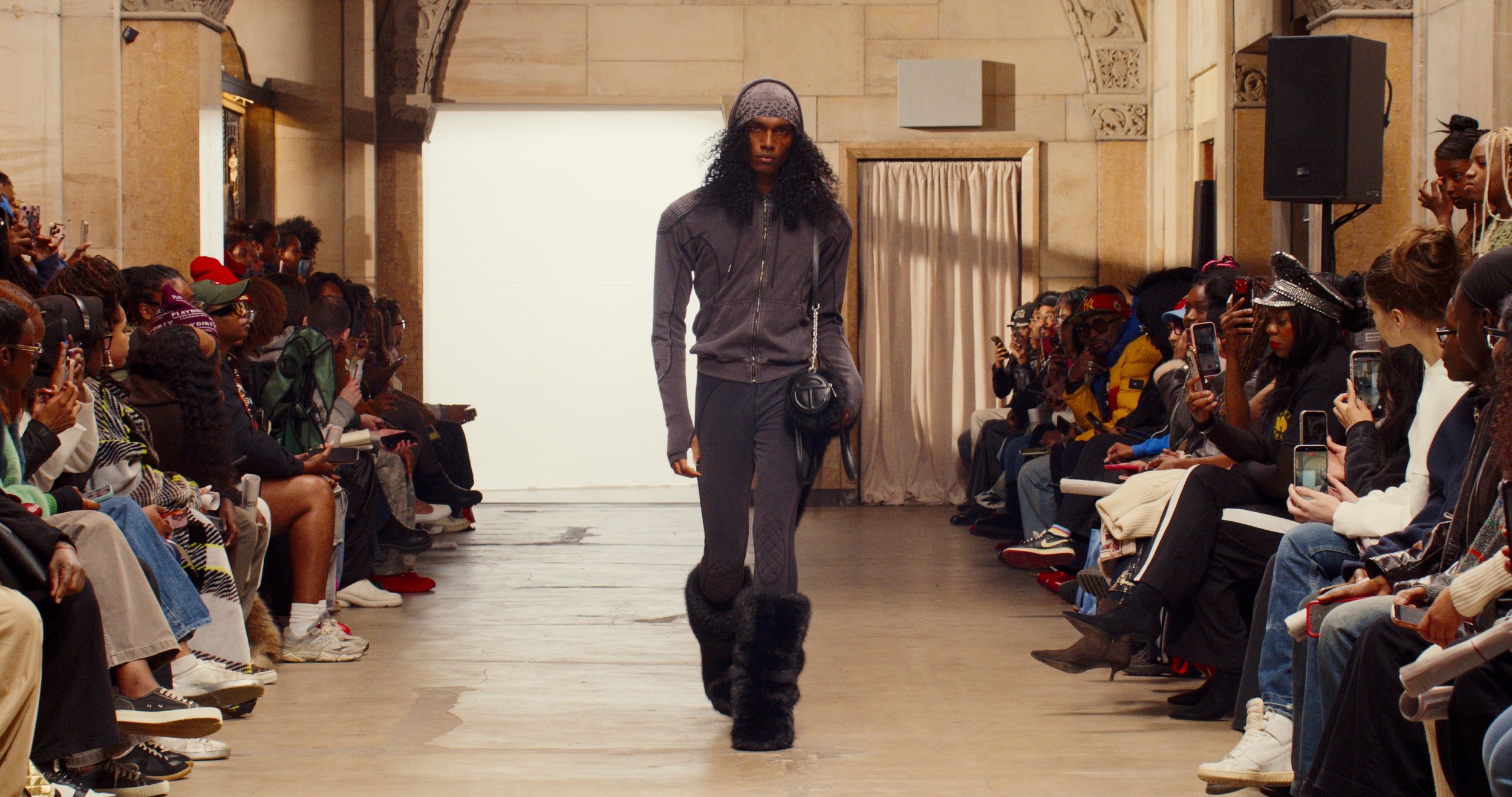
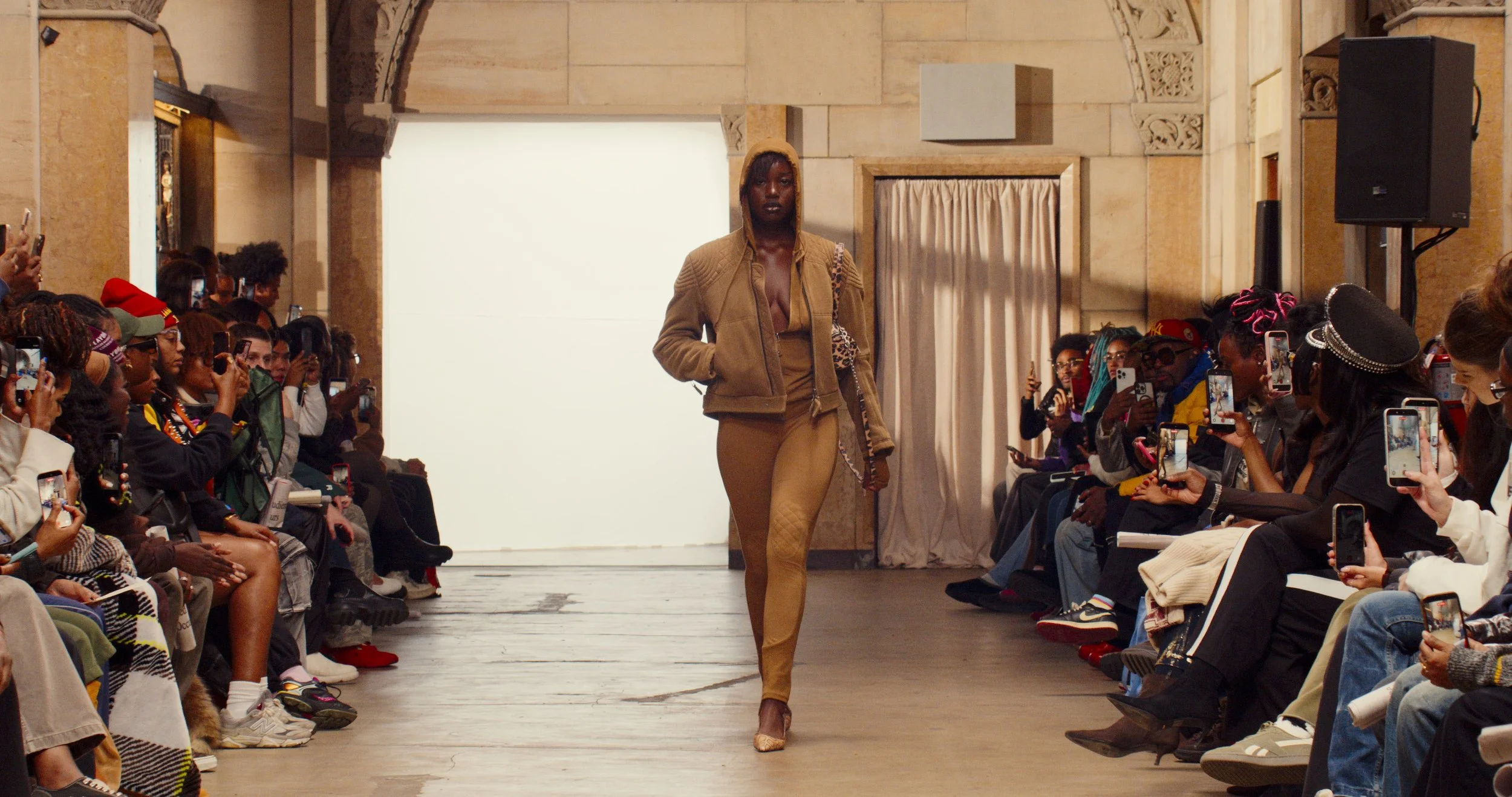
Ribbed and cotton essentials—bodysuits, scuba tops, waffle hoodies, crews and leggings—take on garment-dyed animal prints. The “Cross-T,” a flat construction shaped like a plus sign, can be worn in any direction. The “Skew-T” recalls Telfar's “212” era, when oversized T-shirts were tucked askew for the practical demands of a pre-smartphone New York.
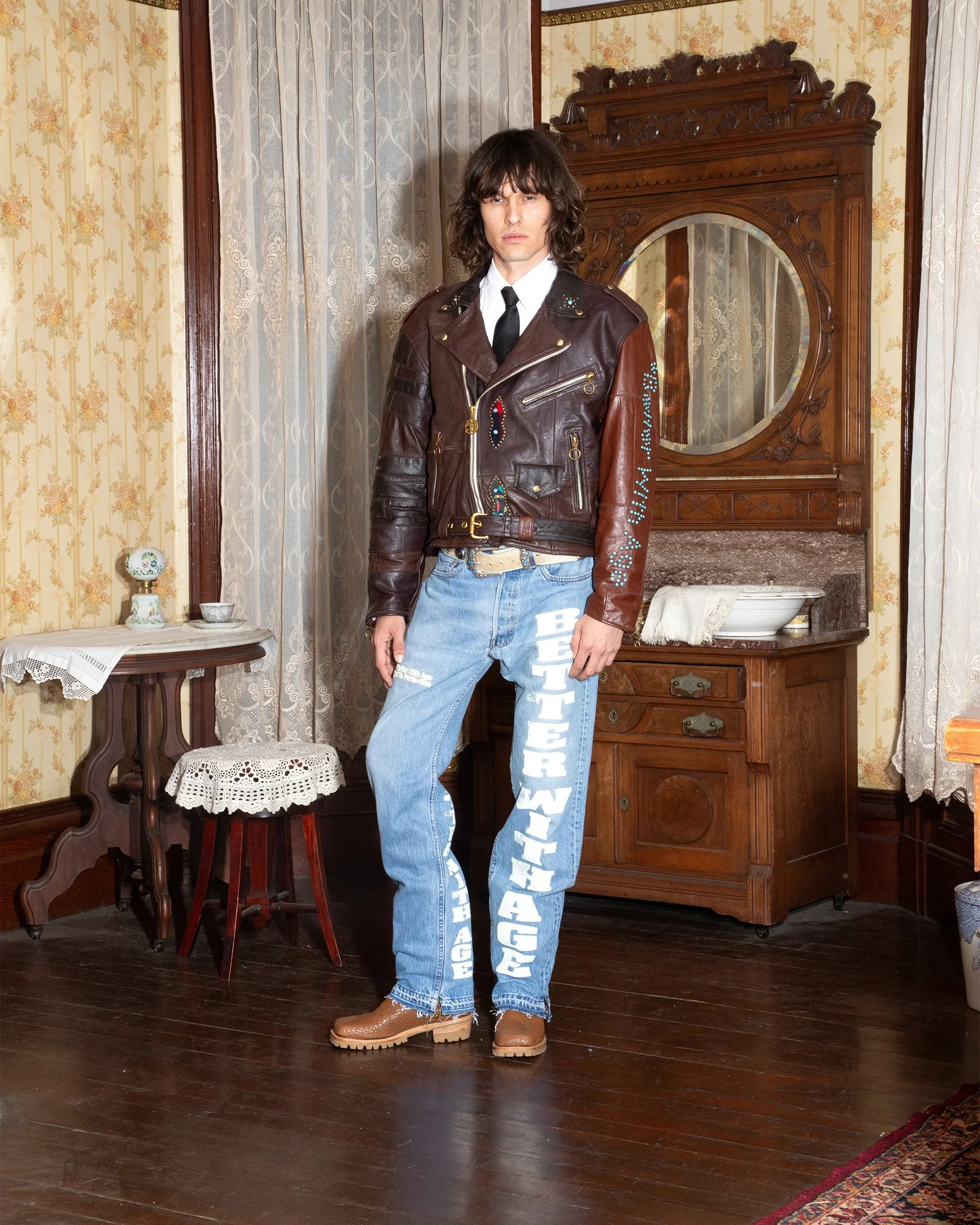
This is fashion as archive without becoming nostalgic. Sharkskin denim arrives in iridescent red, purple, green and black, followed by barrel-leg jeans, stacked skinnies and jackets reconstructed from the proportions of the trousers. Orchard Street bombers are embellished by artist Cake, while cracked T-shirts and trapunto fleece replace conventional leather.
The experiment becomes more pointed when Telfar turns printed sweatshirts inside-out, brushing away the fleece to create cashmere-like cardigans, crews and trousers. The house describes its fixation plainly: “If you can’t determine value you are determined by it.” It is perhaps the most revealing line in the collection.
Telfar's practice has always operated in the space between perceived value and actual value—between luxury and accessibility, exclusivity and participation, the fashion industry and the people who make culture outside of it. SS2027 simply makes that tension material.
The collection moves into motorcycle dressing, reconstructing jackets and pants from worn-in sweats, before closing with a floor-length wool blanket coat, crack-leather sleeves, mirrored tanks, halters and brushed-metal chains connecting the clothing back to the bags that have quietly appeared throughout the show.
One bag, the house hints, has not yet been introduced. That restraint feels intentional. In a culture trained to reveal everything before the product arrives, Telfar leaves something unresolved. And perhaps that is the point of SS2027.
Telfar isn't simply presenting another collection in Paris. It is asking who gets to decide what counts as a runway, where fashion history happens, and whether fashion can still belong to the people who wear it as much as the institutions that document it. Paris may be watching. Brooklyn already was.


HOW DO YOU FEEL ABOUT FASHION?
COMMENT OR TAKE OUR PAGE READER SURVEY
Featured


Mia Rose McGrath’s Frugal Chic reframes wealth-building as an extension of personal style, arguing that financial freedom comes not from deprivation but from developing the taste, discipline and confidence to spend intentionally.