
The Future of Visual Content: Why AI Video Is Becoming Every Brand's Creative Advantage
PAGE
By PAGE Editor
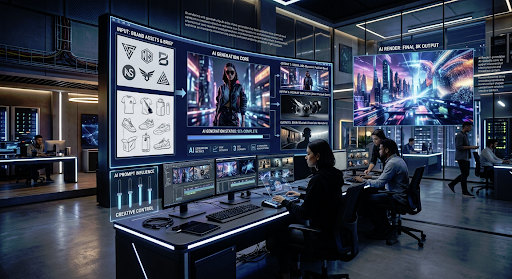
Brands are abandoning traditional visual workflows because static assets no longer capture modern consumer attention, and artificial intelligence is being used in 40% of digital video ads as a result. Generative AI video transforms how organizations engage audiences by collapsing production timelines from weeks into seconds and unlocking hyper-personalized storytelling at scale.
The Shifts Driving AI Video Adoption
Marketing teams face an overwhelming demand for fresh visual media across an expanding network of channels. Manual recording shoots, extensive post-production edits, and costly localization budgets cannot keep pace with modern campaign schedules.
63% of video marketers are adopting AI tools to scale up their visual output without ballooning overhead costs, according to Ngram. When production cycles shrink, your creative team shifts focus from tedious execution to high-level strategy and experimentation.
This technological shift eliminates traditional creative bottlenecks. Instead of waiting weeks for final cuts, brands generate tailored variations for specific buyer personas instantly. So long as brand consistency is maintained, the outcomes are impressive.
Scaling Engagement With Hyper-Personalized Media
Generic broadcast advertising is losing its impact on modern consumers. Buyers expect contextual media tailored to their exact stage in the user journey, whether that involves custom product onboarding or targeted retargeting sequences.
Building thousands of bespoke renders manually used to be financially impossible for mid-market and enterprise teams alike. Deploying an enterprise business video platform allows organizations to merge real-time customer data with dynamic video templates, automatically rendering tailored visual touchpoints. It’s an obvious next step for ambitious organizations.
Personalized media experiences deliver clear, measurable outcomes across every customer touchpoint:
Higher click-through rates on tailored email campaigns
Increased retention during digital customer onboarding
Reduced churn through customized customer support walkthroughs
When data feeds directly into video creation engines, every customer segment receives a unique, compelling message.
Accelerating Content Workflows and ROI
Speed to market dictates which brands dominate digital conversations. When a new industry trend or cultural moment emerges, waiting a month to release a polished video campaign means missing the opportunity entirely.
Recent benchmark data indicates that text-to-video workflows dominate 60% of generative video production, allowing teams to convert written copy into production-ready assets instantly. This agility lets marketers test dozens of hooks, visual styles, and value propositions in real time to see what resonates.
The impact extends directly to conversion rates. Brands implementing interactive, dynamic visuals see AI-generated visual content driving a 30% increase in landing page conversions over standard static imagery, according to Zebracat. Rapid iteration ensures your ad spend targets high-performing assets rather than unverified concepts.
Balancing Automation with Human Creativity
Adopting automated production tools does not mean removing human artists and strategists from the equation. High-performing visual campaigns require strong creative direction, compelling scripts, and thoughtful brand governance to succeed.
Automation handles the repetitive mechanical tasks, such as rendering aspect ratios, generating multiple language tracks, and building dynamic data overlays. Creative directors and writers remain responsible for emotional nuance, brand alignment, and narrative arc.
The ultimate advantage belongs to organizations that pair human imagination with automated scale. By handing off execution bottlenecks to smart platforms, creators focus entirely on big ideas that spark customer action.
Overcoming the Localization Barrier at Scale
Expanding into global markets typically halts creative momentum due to the staggering costs of multi-language adaptation. Enterprise teams spend months coordinating with voice talent, translation agencies, and video editors just to localize a single flagship campaign. Dynamic synthesis engines remove this friction by automatically generating localized audio tracks and matching lip movements across dozens of dialects in minutes.
Global campaigns maintain visual fidelity and brand tone while speaking natively to local audiences instantly. Regional marketing leads can run culturally resonant variations without requesting new studio time or ballooning international budgets. Modern production platforms turn global distribution into a single automated step.
Building a Future-Ready Visual Strategy
Integrating automated video capabilities into your stack is no longer an experimental initiative reserved for tech-forward early adopters. It is a core requirement for staying relevant in a crowded, visually saturated landscape.
The transition starts with identifying repetitive visual tasks across your current customer journey. Mapping out high-impact touchpoints where dynamic content can replace static text reveals immediate opportunities to boost ROI and build deeper audience connections. Explore the guides and workflow breakdowns across our blog to refine your automated media strategy.
HOW DO YOU FEEL ABOUT FASHION?
COMMENT OR TAKE OUR PAGE READER SURVEY
Featured




Decoupling daily work from physical infrastructure transforms operational productivity, lowers fixed real estate expenses, and protects business continuity during unexpected disruptions.